<?xml version="1.0" encoding="utf-8" ?>
<rdf:RDF xmlns:rdf="http://www.w3.org/1999/02/22-rdf-syntax-ns#" xmlns:dc="http://purl.org/dc/elements/1.1/" xmlns:syn="http://purl.org/rss/1.0/modules/syndication/" xmlns="http://purl.org/rss/1.0/">


<channel rdf:about="http://bic.iwlearn.org/en/search_rss">
  <title>English</title>
  <link>http://bic.iwlearn.org</link>

  <description>
    
            These are the search results for the query, showing results 1 to 15.
        
  </description>


  <image rdf:resource="http://bic.iwlearn.org/logo.png"/>

  <items>
    <rdf:Seq>
      
        <rdf:li rdf:resource="http://bic.iwlearn.org/en/atlas/atlas-of-the-baikal-basin-mng"/>
      
      
        <rdf:li rdf:resource="http://bic.iwlearn.org/en/atlas/atlas-of-the-baikal-basin-rus"/>
      
      
        <rdf:li rdf:resource="http://bic.iwlearn.org/en/atlas/atlas-of-the-baikal-basin-eng"/>
      
      
        <rdf:li rdf:resource="http://bic.iwlearn.org/en/documents/state-of-the-environment-report-the-lake-baikal-basin"/>
      
      
        <rdf:li rdf:resource="http://bic.iwlearn.org/en/documents/documents/papers/hydrochemical-and-microbiological-characteristics-of-bog-ecosystems-on-the-isthmus-of-svyatoi-nos-peninsula-lake-baikal-english"/>
      
      
        <rdf:li rdf:resource="http://bic.iwlearn.org/en/documents/documents/papers/economic-geographical-characteristics-of-the-development-of-economic-entities-owned-by-the-population-of-the-republic-of-buryatia-eng"/>
      
      
        <rdf:li rdf:resource="http://bic.iwlearn.org/en/documents/state-of-the-environment-report-the-lake-baikal-basin-1"/>
      
      
        <rdf:li rdf:resource="http://bic.iwlearn.org/en/documents/report-1"/>
      
      
        <rdf:li rdf:resource="http://bic.iwlearn.org/en/documents"/>
      
      
        <rdf:li rdf:resource="http://bic.iwlearn.org/en/documents/state-of-the-environment-report-the-lake-baikal-basin-1/state-regulation-and-public-movement-of-environmental-protection-and-nature-management/summary"/>
      
      
        <rdf:li rdf:resource="http://bic.iwlearn.org/en/documents/state-of-the-environment-report-the-lake-baikal-basin-1/state-regulation-and-public-movement-of-environmental-protection-and-nature-management/5-6-environmental-non-governmental-organizations"/>
      
      
        <rdf:li rdf:resource="http://bic.iwlearn.org/en/documents/state-of-the-environment-report-the-lake-baikal-basin-1/state-regulation-and-public-movement-of-environmental-protection-and-nature-management/5-5-environmental-education"/>
      
      
        <rdf:li rdf:resource="http://bic.iwlearn.org/en/documents/state-of-the-environment-report-the-lake-baikal-basin-1/state-regulation-and-public-movement-of-environmental-protection-and-nature-management/5-4-state-environmental-expertise"/>
      
      
        <rdf:li rdf:resource="http://bic.iwlearn.org/en/documents/state-of-the-environment-report-the-lake-baikal-basin-1/state-regulation-and-public-movement-of-environmental-protection-and-nature-management/5-3-the-system-of-state-environmental-supervision"/>
      
      
        <rdf:li rdf:resource="http://bic.iwlearn.org/en/documents/state-of-the-environment-report-the-lake-baikal-basin-1/state-regulation-and-public-movement-of-environmental-protection-and-nature-management/5-2-environmental-programs-plans-and-their-implementation"/>
      
    </rdf:Seq>
  </items>

</channel>


  <item rdf:about="http://bic.iwlearn.org/en/atlas/atlas-of-the-baikal-basin-mng">
    <title>Atlas of the Baikal Basin (MNG)</title>
    <link>http://bic.iwlearn.org/en/atlas/atlas-of-the-baikal-basin-mng</link>
    <description></description>
    
    <dc:publisher>No publisher</dc:publisher>
    <dc:creator>Dmitry Popov</dc:creator>
    <dc:rights></dc:rights>
    <dc:date>2015-08-20T23:41:42Z</dc:date>
    <dc:type>File</dc:type>
  </item>


  <item rdf:about="http://bic.iwlearn.org/en/atlas/atlas-of-the-baikal-basin-rus">
    <title>Atlas of the Baikal basin (RUS)</title>
    <link>http://bic.iwlearn.org/en/atlas/atlas-of-the-baikal-basin-rus</link>
    <description></description>
    
    <dc:publisher>No publisher</dc:publisher>
    <dc:creator>Dmitry Popov</dc:creator>
    <dc:rights></dc:rights>
    <dc:date>2015-08-20T23:34:02Z</dc:date>
    <dc:type>File</dc:type>
  </item>


  <item rdf:about="http://bic.iwlearn.org/en/atlas/atlas-of-the-baikal-basin-eng">
    <title>Atlas of the Baikal Basin (ENG)</title>
    <link>http://bic.iwlearn.org/en/atlas/atlas-of-the-baikal-basin-eng</link>
    <description></description>
    
    <dc:publisher>No publisher</dc:publisher>
    <dc:creator>Dmitry Popov</dc:creator>
    <dc:rights></dc:rights>
    <dc:date>2015-08-20T23:26:27Z</dc:date>
    <dc:type>File</dc:type>
  </item>


  <item rdf:about="http://bic.iwlearn.org/en/documents/state-of-the-environment-report-the-lake-baikal-basin">
    <title>State of the environment report the lake Baikal basin</title>
    <link>http://bic.iwlearn.org/en/documents/state-of-the-environment-report-the-lake-baikal-basin</link>
    <description></description>
    
    <dc:publisher>No publisher</dc:publisher>
    <dc:creator>Zorigma</dc:creator>
    <dc:rights></dc:rights>
    <dc:date>2015-07-13T05:34:39Z</dc:date>
    <dc:type>File</dc:type>
  </item>


  <item rdf:about="http://bic.iwlearn.org/en/documents/documents/papers/hydrochemical-and-microbiological-characteristics-of-bog-ecosystems-on-the-isthmus-of-svyatoi-nos-peninsula-lake-baikal-english">
    <title>Hydrochemical and Microbiological Characteristics of Bog Ecosystems on the Isthmus of Svyatoi Nos Peninsula (Lake Baikal) (English)</title>
    <link>http://bic.iwlearn.org/en/documents/documents/papers/hydrochemical-and-microbiological-characteristics-of-bog-ecosystems-on-the-isthmus-of-svyatoi-nos-peninsula-lake-baikal-english</link>
    <description></description>
    
    <dc:publisher>No publisher</dc:publisher>
    <dc:creator>Zorigma</dc:creator>
    <dc:rights></dc:rights>
    <dc:date>2015-06-16T02:59:00Z</dc:date>
    <dc:type>File</dc:type>
  </item>


  <item rdf:about="http://bic.iwlearn.org/en/documents/documents/papers/economic-geographical-characteristics-of-the-development-of-economic-entities-owned-by-the-population-of-the-republic-of-buryatia-eng">
    <title>Economic-Geographical Characteristics of the Development of Economic Entities Owned by the Population of the Republic of Buryatia (English)</title>
    <link>http://bic.iwlearn.org/en/documents/documents/papers/economic-geographical-characteristics-of-the-development-of-economic-entities-owned-by-the-population-of-the-republic-of-buryatia-eng</link>
    <description></description>
    
    <dc:publisher>No publisher</dc:publisher>
    <dc:creator>Zorigma</dc:creator>
    <dc:rights></dc:rights>
    <dc:date>2015-06-16T02:57:31Z</dc:date>
    <dc:type>File</dc:type>
  </item>


  <item rdf:about="http://bic.iwlearn.org/en/documents/state-of-the-environment-report-the-lake-baikal-basin-1">
    <title>State of the environment report the lake Baikal basin</title>
    <link>http://bic.iwlearn.org/en/documents/state-of-the-environment-report-the-lake-baikal-basin-1</link>
    <description></description>
    
    <dc:publisher>No publisher</dc:publisher>
    <dc:creator>Zorigma</dc:creator>
    <dc:rights></dc:rights>
    <dc:date>2015-04-24T08:30:56Z</dc:date>
    <dc:type>Folder</dc:type>
  </item>


  <item rdf:about="http://bic.iwlearn.org/en/documents/report-1">
    <title>Report.</title>
    <link>http://bic.iwlearn.org/en/documents/report-1</link>
    <description></description>
    <content:encoded xmlns:content="http://purl.org/rss/1.0/modules/content/"><![CDATA[]]></content:encoded>
    <dc:publisher>No publisher</dc:publisher>
    <dc:creator>Zorigma</dc:creator>
    <dc:rights></dc:rights>
    <dc:date>2015-04-24T07:41:29Z</dc:date>
    <dc:type>Collection</dc:type>
  </item>


  <item rdf:about="http://bic.iwlearn.org/en/documents">
    <title>Report</title>
    <link>http://bic.iwlearn.org/en/documents</link>
    <description></description>
    
    <dc:publisher>No publisher</dc:publisher>
    <dc:creator>Sergey Kudelya</dc:creator>
    <dc:rights></dc:rights>
    <dc:date>2015-04-24T07:41:29Z</dc:date>
    <dc:type>Folder</dc:type>
  </item>


  <item rdf:about="http://bic.iwlearn.org/en/documents/state-of-the-environment-report-the-lake-baikal-basin-1/state-regulation-and-public-movement-of-environmental-protection-and-nature-management/summary">
    <title>Summary</title>
    <link>http://bic.iwlearn.org/en/documents/state-of-the-environment-report-the-lake-baikal-basin-1/state-regulation-and-public-movement-of-environmental-protection-and-nature-management/summary</link>
    <description></description>
    <content:encoded xmlns:content="http://purl.org/rss/1.0/modules/content/"><![CDATA[<p align="center"><b>SUMMARY</b></p>
<p style="text-align: justify; "><span>Lake Baikal is the largest (23 thousand km</span><sup>3</sup><span>) freshwater lake on the planet, with the volume equal to the total runoff of all Russian rivers for a seven-year period and the total runoff of all Eurasian rivers for a three-year period. In 2013, the state of Lake Baikal ecosystem did not undergo any significant changes, and the quality of its waters has remained stable for decades and far exceeds the requirements for drinking water.</span></p>
<p style="text-align: justify; ">In 2013, during the lake filling period the water level indicators were within the mean annual values ​​due to controlled discharge. The water levels did not exceed the levels defined by the Resolution of the Government of the Russian Federation № 234 of March 26, 2001 “On the maximum water levels of Lake Baikal during the implementation of economic and other activities”.</p>
<p style="text-align: justify; ">In 2013, there was a 7% reduction in the total runoff of the five largest rivers within the Lake Baikal basin. The runoff of the rivers Barguzin and Turka decreased by 10%, and that of the rivers Upper Angara and Tyya decreased by 45% and 18%, respectively. On the other hand, the runoff of the Selenga river increased by 9%. In recent years, the fluctuations in the runoff have not exceeded the average long-term fluctuations.</p>
<p style="text-align: justify; ">The average annual air temperature in 2013 was close to the average long-term values, despite significant temperature anomalies observed in some months. Only in the southern part of Irkutsk region the average annual air temperature was higher by 1-1.5 °C.</p>
<p style="text-align: justify; ">In Mongolia, climate change became more noticeable, manifested in the form of more frequent droughts and zuds (severe winters), progressing desertification and water scarcity.</p>
<p style="text-align: justify; ">The 46% decrease in wastewater discharge by Baikalsk Pulp and Paper Mill in 2013, as compared with 2012, due to closure of the main production facilities, helped to improve the water quality of Lake Baikal at the control site 100 meters away from the underwater discharge point.</p>
<p style="text-align: justify; ">Compared with 2012, the input of contaminants into the lake by the 5 most studied rivers (Selenga, Barguzin, Turka, Upper Angara, and Tyyl) increased in 2013. The input of suspended solids, dissolved minerals and petrochemicals increased by 24%, 12%, and 31%, respectively. At the same time, the input of volatile phenols, surfactants and copper reduced significantly – by 55%, 80% and 31%, respectively. The input of easily oxidizable and oxidation-resistant substances, phenolics and asphaltenes remained almost at the same level.</p>
<p style="text-align: justify; ">Exceedances of the maximum permissible concentrations were recorded for 13 out of 17 hydrochemical indicators measured in 2012-2013. In general, hydrological and climatic conditions were the main factors affecting the quality of surface waters within Lake Baikal basin in 2013. The exceptions were the rivers Modonkul (Zakamensky district of the Republic of Buryatia) and Kyakhtinka (Kyakhtinsky district of the Republic of Buryatia) due to intensive anthropogenic impact.</p>
<p style="text-align: justify; ">The Selenga River remained the major supplier of controlled substances into the lake. In 2013, the river brought 87.6% of suspended solids, and 78.0% each of dissolved minerals, oxidation-resistant and easily oxidizable organic substances. The major anthropogenic impact on the river water composition comes from the industrial hubs of the cities Ulaanbaatar, Erdenet and Darkhan, as well as the numerous gold mining enterprises in Mongolia. In Russia, the main impact comes from the Ulan-Ude industrial hub.</p>
<p style="text-align: justify; ">In 2012-2013, no significant changes were observed in the subsurface hydrosphere of Lake Baikal basin.</p>
<p style="text-align: justify; ">The amounts of air emissions in 2013 remained similar to those in the previous years. In both Mongolia and Russia, the main sources of air pollution were enterprises of the energy sector and vehicles. Another significant source of pollution was Selenginsk Pulp and Paper Mill located in close proximity to the lake.</p>
<p style="text-align: justify; ">The intensification of research on hydrocarbon systems of Lake Baikal involving submersibles «Mir» has helped to clarify the spatial distribution of hydrocarbon-oxidizing microorganisms and their ability to process petroleum hydrocarbons entering the lake from natural oil seepages, as well as to explore the distribution and mechanisms of formation of gas hydrate deposits at the bottom of Lake Baikal. This international expedition was the result of cooperation of the international community for conservation of the unique lake.</p>
<p style="text-align: justify; ">The intensity of dangerous endogenous geological processes in 2013 was low, and compared with 2008, when the ten-year maximum total seismic energy was recorded, the geological activity was 500 times less in 2013.</p>
<p style="text-align: justify; ">The existing network of the sites monitoring dangerous endogenous and exogenous geological processes is insufficient. The results of performed observations provide only fragmentary data on the regime of hazardous processes in separate areas. To implement reliable monitoring and forecasting of hazardous endogenous and exogenous geological processes, the number of monitoring stations must be increased by an order of magnitude throughout the basin.</p>
<p style="text-align: justify; ">In Mongolia, due to a combination of rising temperatures, reduced atmospheric precipitation, growing livestock population and other factors, the processes of degradation of steppe and forest ecosystems have intensified and the areas affected by desertification have expanded. One of the factors of degradation of pasture lands in Mongolia is the increased number of goats, associated with the growth in production of high-quality wool (cashmere), which is in demand around the world.</p>
<p style="text-align: justify; ">The bulk of the forest resources of the basin are located within its Russian part (about 90%) and, based on the assessment of the current situation, timber harvest is expected to increase. This is facilitated by the following factors: growing demand for and prices of forest products, including larch timber, in the foreign markets, and increasing illegal logging.</p>
<p style="text-align: justify; ">The forested land area in Mongolia is insignificant. Deforestation is an ongoing problem that has several reasons: legal and illegal logging, forest fires, and insect infestation. These problems are typical for the Russian part of the basin too, but to a lesser extent. However, in both Mongolian and Russian parts of the basin, preserving forests and reforestation are the tasks that require urgent action.</p>
<p style="text-align: justify; ">The extent of mining operations within Lake Baikal basin decreased in 2013, when compared with 2012. This was due the environmental restrictions over the use of natural resources within Baikal Natural Territory (the Law «On Protection of Lake Baikal»). At the same time in 2012-2013, coal production increased at the coal deposits of Buryatia and Zabaikalsky Krai, far from the Central Ecological Zone of BNT.</p>
<p style="text-align: justify; ">In Mongolia, along with a general increase in extraction of mineral resources, the share of illegal mining, especially mining of gold, increased significantly. Illegal gold mining is common in Tuv soum of Zamaar aimag, Bulgan soum of Burenhangay aimag and Tsenkher soum of Arkhangai aimag (Selenga river basin).</p>
<p style="text-align: justify; ">The total population of the Russian part of Lake Baikal basin is 1058.5 thousand people (according to the Russian Census of 2010). Most of the population is concentrated within the Republic of Buryatia. Increased birthrate and reduced mortality resulted in a population growth in 2012-2013. While the total population of Mongolia is 2930.3 thousand people, 65.4% of it lives within the lake basin. The total population growth in 2013 was 2.2%. More than 43% of the entire population lives in Ulaanbaatar city.</p>
<p style="text-align: justify; ">Planned development of a tourist and recreational complex in the basin can provide significant commercial, fiscal and social effects, as well as to compensate for the economic losses of the Irkutsk region and the Republic of Buryatia due to environmental restrictions of economic activity. At the same time, the complex would increase the anthropogenic pressure on the coastal ecosystem of Lake Baikal. The government of the Republic of Buryatia, Irkutsk Region and Zabaikalsky Krai need to utilize the successful experience of Mongolia in state regulation of tourism sector.</p>
<p style="text-align: justify; ">Despite a certain economic growth and improved standard of living in both Russia and Mongolia, the challenges of sustainable development in the region can only be addressed taking into account mutual interests. Among them is the responsibility for damage caused to transboundary natural resources. The Selenga River belongs to such natural resources, being the main tributary of Lake Baikal - a World Natural Heritage Site.</p>
<p style="text-align: justify; ">Russian scientists have developed economic instruments for replenishing international environmental foundations established for protection of the natural environment within a transboundary basin (exemplified by the Selenga River basin). The creation of the Baikal Environmental Fund will ensure the accumulation of resource payments and provide target funding for conservation and restoration of natural objects and biodiversity, implementation of innovations related to environmentally sustainable development in the region.</p>
<p style="text-align: justify; ">Thus, the population of Russia and Mongolia living within the basin of Lake Baikal is facing the challenges of sustainable socio-economic development under conditions of the harsh climate, thermal and electric power shortages, high transport costs, low level of economic innovation, high dependence on natural resources and, more importantly, the contradiction between economic development of the region and the need to protect the environment.</p>]]></content:encoded>
    <dc:publisher>No publisher</dc:publisher>
    <dc:creator>Zorigma</dc:creator>
    <dc:rights></dc:rights>
    <dc:date>2015-04-24T07:20:42Z</dc:date>
    <dc:type>Page</dc:type>
  </item>


  <item rdf:about="http://bic.iwlearn.org/en/documents/state-of-the-environment-report-the-lake-baikal-basin-1/state-regulation-and-public-movement-of-environmental-protection-and-nature-management/5-6-environmental-non-governmental-organizations">
    <title>5.6  Environmental non-governmental organizations</title>
    <link>http://bic.iwlearn.org/en/documents/state-of-the-environment-report-the-lake-baikal-basin-1/state-regulation-and-public-movement-of-environmental-protection-and-nature-management/5-6-environmental-non-governmental-organizations</link>
    <description></description>
    <content:encoded xmlns:content="http://purl.org/rss/1.0/modules/content/"><![CDATA[<p align="center"><b>5.6  Environmental non-governmental organizations</b></p>
<p style="text-align: justify; ">The rights and duties of non-governmental and other non-profit organizations in the field of environmentalism are legally defined in Article 12 of the Federal law «On environmental protection» (№ 7-FL of January 10, 2002).</p>
<p style="text-align: justify; ">Baikal region has more than 100 registered environmental non-government organizations (NGOs). Environmentally-oriented NGOs of Baikal region are among the most active ones in Russia [4,6,11].</p>
<p style="text-align: justify; "><b> <i>Irkutsk region. </i></b>In 2012, Irkutsk-based «Baikal Ecological Wave», a regional non-government organization, organized and held scientific «Baikal expedition», which relied on the involvement of other non-governmental organizations, the local population, academic and educational institutions, to assess the current state of bays of Lake Baikal and to identify indicators of their current state. The members of the project discovered high concentrations of phosphates (up to 0.25 mg/dm<sup>3</sup>), large-scale proliferation of <i>Spirogyra</i> and blue-green algae (<i>Anabaena lemmermanni</i>). In Chivykuysky Bay, they identified excessive proliferation of Elodea, which at some places had the biomass concentration of 26 kg/m<sup>2</sup>. The amount of liquid wastes discharged by tourists in the village of Monakhovo was estimated at 160 tons over a season.</p>
<p style="text-align: justify; ">The NGO conducted:</p>
<p style="text-align: justify; ">-  the conference «The role of civil society in sustainable development of local communities» and webinars on the topic in the villages of Bolshoe Goloustnoe, Maloe Goloustnoe and the town of Baikalsk with the support from the municipal administrations;</p>
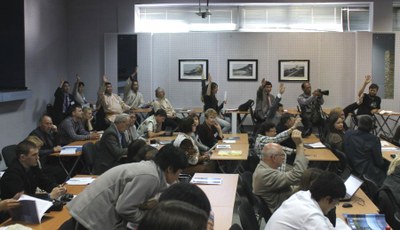
<p style="text-align: justify; ">-  8<sup>th</sup> International conference «Rivers of Siberia and the Far East» (together with WWF), the results of which were published in form of the conference proceedings (pic. 5.6.1).</p>
<p style="text-align: center; "><img class="image-inline" src="../../../resolveuid/62b56d90df1e48129ac7b2e6dec7b862/@@images/image/preview" /> <span> </span></p>
<p align="center">Pic. 5.6.1 A conference session</p>
<p style="text-align: justify; ">In 2013, «Baikal expedition» was continued and resulted in the following outputs:</p>
<p style="text-align: justify; ">-  the assessment of species distribution on Olkhon island was carried out for <i>Astragalus</i> and <i>Craniospermum </i>listed in the Red Books of endangered species of the Russian Federation and Irkutsk region;</p>
<p style="text-align: justify; ">-  the state of the relict grove of <i>Populus suaveolens</i> in the delta of the Goloustnaya river was examined;</p>
<p style="text-align: justify; ">-  the calendar «Save the plants of Olkhon sandy coast» and the postcard «Relict poplar grove» were published.</p>
<p style="text-align: justify; ">The inter-regional non-governmental organization «Greater Baikal Path» (with the support of the group of companies  En+) in 2013 conducted:</p>
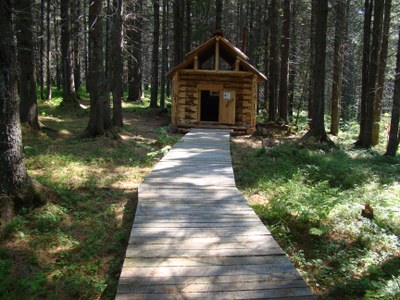
<p style="text-align: justify; ">-  winter project (March 20-29), in which volunteers from Moscow, Murmansk and Kemerovo cities participated. The project participants removed snow off a 500-meter stretch of the path in the village of Tankhoi in Baikalsk Nature Reserve (pic. 5.6.2), and made a board on book-crossing for the visiting center;</p>
<p style="text-align: justify; ">-  on May 25-26, a team of 12 volunteers participated in the reconstruction and clearing of a spring located at the 26<sup>th</sup> km of Baikalsk highway. The campaign was supported by the group of companies En+. The volunteers constructed a bowl for collecting water, cleared the water path, and reconstructed the steps leading to the spring;</p>
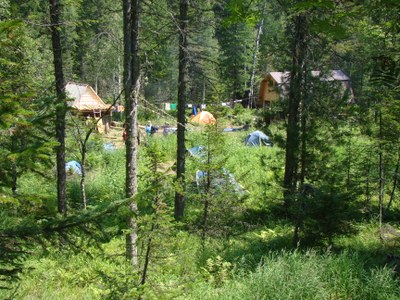
<p style="text-align: justify; ">-  four summer projects were realized, all dealing with the construction of the tourist paths «The path to clean Baikal», «The path to the waterfall land», «Deep into Khamar-Daban-1» (pic. 5.6.3) and «Fairytale land-1» within the Baikalo-Lensky reserve.</p>
<p align="center"><img class="image-inline" src="../../../resolveuid/11fcfa1e46c147ec8b42c5fe09549ae4/@@images/image/preview" /></p>
<p align="center">Pic. 5.6.2 A stretch of a path for the people with reduced mobility</p>
<p align="center"><img class="image-inline" src="../../../resolveuid/ba68883f7f5840a4b4a6e9ef72e6cb3a/@@images/image/preview" /></p>
<p align="center">Pic. 5.6.3 A volunteer camp in Baikalsk Nature Reserve</p>
<p style="text-align: justify; ">On March 28-29, 2012, the non-profit partnership organization «Let’s conserve Baikal together» held the regional children’s environmental festival «Baikal kaleidoscope». The participants of the festival were school children of Irkutsky (2 teams), Slyudyansky, Usolsky, Cheremkhovsky (2 teams), Shelekhovsky, Olkhonsky, Taishetsky, Ust-Kutsky and Angarsky districts of Irkutsk region and the team of Irkutsk Palace of Art. In 2012, the number of participants rose to 96 people, thanks to the financial support of the group of companies En+.</p>
<p style="text-align: justify; ">On March 27-28, 2013, the same organization again conducted the regional children’s environmental festival «Baikal kaleidoscope», in which 14 teams from 8 districts of Irkutsk region took part.  The festival took place in Baikalsk city.</p>
<p style="text-align: justify; ">In 2012, the Center of Additional Education for Children of Irkutsk region conducted the convent of school forestry associations (June 22-26). The 11th convent of school forestry associations of Irkutsk region was held at the Irkutsk sports and recreation complex. The co-organizers of the convent were the Forest Management Agency of Irkutsk region and the Forest Protection Agency of Irkutsk Region. The general sponsor was «Yilim-Group». There were 45 teams from the region’s state autonomous institutions, municipal educational institutions as well as teams from Krasnoyarsk city, Altai region, Zabaikalsky Krai and the Republic of Buryatia.</p>
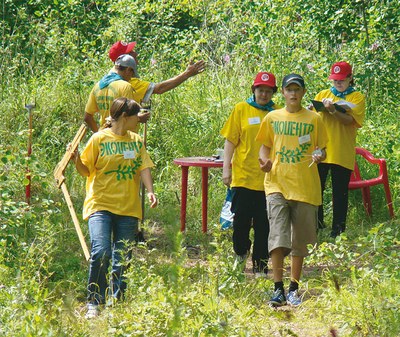
<p style="text-align: justify; ">The Center co-organized the 12<sup>th</sup> regional convent of school forestry associations held (pic. 5.6.4) on July 1-5, 2013. 46 teams took part on the meeting - 39 teams from Irkutsk region, 7 teams from Altaisky, Zabaikalsky, Krasnoyarsky, Omsky, and Novosibirsky regions and the Republics of Buryatia and Sakha-Yakutia. Awards were distributed in the categories «Best school forestry association», «Young zoologist», «Young botanist», «Forest pathfinders», and the category of best means of visual agitation «Lets save forest alive».</p>
<p style="text-align: center; "><img class="image-inline" src="../../../resolveuid/a0c263659152442486d65e4364a4d1be/@@images/image/preview" /></p>
<p align="center">Pic. 5.6.4 Participants of the 12<sup>th</sup> regional convent of school forestry associations</p>
<p style="text-align: justify; ">Irkutsk cinema fund organized the 11th Baikal international festival of documentary and popular-science movies Man and Nature». 116 movies from 28 countries were screened. Apart from the Russian movie-makers who presented 54 movies at the festival, film directors from Austria, Germany, Israel, Spain, Russia, the USA and Japan brought their films.</p>
<p style="text-align: justify; ">The official opening of the 1<sup>st</sup> Water Forum of the participants of the project «Pure waters of Pribaikalie – public water-protection movement» took place on November 30, 2012. The administration of Rosprirodnadzor in Irkutsk region was one of the partners of the water-protection project, launched by the regional branch of the All-Russian Society for Nature Protection. This project was implemented with the support of the Ministry of Natural Resources and the Ministry of Education of Irkutsk region and was recognized as one of the best among socially significant projects. The participants of the «Pure waters of Pribaikalie» included more than 60 environmental associations working at educational institutions of 22 administrative units of the region. During the stay in summer camps and while taking part in expeditions, school children had an opportunity to acquire skills of research work and water body passportization.  The 1st Water Forum was attended by young environmentalists from Ust-Kut, Bratsk, Irkutsk, Cheremkhovo, Sayansk, Ust-Orda Buryat autonomous okrug, Slyudyanka, Kyutunsky, Usolsky and other districts of the Irkutsk region.</p>
<p style="text-align: justify; ">In 2013, the 12<sup>th</sup> Baikal international festival of documentary and popular-science movies «Man and Nature» was conducted. Movies were screened during the period from April 1 to October 30, 2013. The documentary «The great Siberian rivers Lena» directed by Pavel Fattakhutdinov received «The best documentary» award, while the popular science film «Thin Ice» by David Sington and Simon Lamba (Great Britain, New Zealand) received «The best popular science movie» award.</p>
<p style="text-align: justify; "><b><i>Republic of Buryatia. </i></b>The regional non-governmental organization «Gran» is executing a joint UNDP and Coca-Cola project «Every drop matters» (2010 – 2013). The project is intended to preserve water resources, ensure access to pure drinking water, develop ecotourism, and strengthen the sense of environmental responsibility in local people. During the four-year project period, the organizations – grant winners implemented 40 subprojects in Ulan-Ude city and districts of the Republic of Buryatia and Irkutsk region (pic. 5.6.5). Within the framework of the project, «Gran» has published a book for junior and middle school children – «Baikal chest». The book was recommended by Ministry of Education and Science of the Republic of Buryatia to be used as a supplementary school-book.</p>
<p align="center"><img class="image-inline" src="../../../resolveuid/d5fc69b3bdf749ad9bfd951c358b993c/@@images/image/preview" /></p>
<p align="center">Pic. 5.6.5 The environmental campaign “Bon-aqua for Baikal”</p>
<p style="text-align: justify; ">In 2013, «Gran» implemented the project «Why does nerpa cry?». Within the framework of the project, an exposition was created featuring nerpa and composed of the colorful dioramas «Nerpa rookery» with stuffed nerpas from the museum funds and «Winter lair» with a stuffed calf; various children’s activities were organized, including master-classes (sculpturing of nerpa figurines, painting of souvenir magnets in form of nerpa, etc.), games, contests and screening of a movie on nerpa.</p>
<p style="text-align: justify; ">The non-commercial partnership «Greater Baikal Path - Buryatia» organized the following activities in 2012:</p>
<p style="text-align: justify; ">-  launched cooperation with colleges and universities of the Republic, based on the obtained positive experience of educational activities in orphanages;</p>
<p style="text-align: justify; ">-  an ascent to Munku Sardyk Peak. Pollution of White Irkut River was detected, this is because many drivers and mountain climbers use the ice covered channel of the river as a road while ascending, up to the point of confluence of the rivers Muguvek and White Irkut;</p>
<p style="text-align: justify; ">-  construction of the infrastructure on the Sleeping Lion Mountain (Tarbagataisky district) was continued, and it was second year since the works commenced;</p>
<p style="text-align: justify; ">-  an expedition to Shumak (natural park of the regional significance) was organized.</p>
<p style="text-align: justify; ">In 2013, the partnership «Greater Baikal Path – Buryatia» performed works on improving the existing paths (Maksimikha – Ust-Barguzin; Khoito-Gol - Shumal; Arshan – Verkhnyaya Berezovka). Illegal cutting was taking place near the tourist camp Maksimikha. During the three-week period, participants of the work camp cleared the path off cutting waste and placed markings on trees. A model path was built on a stretch between the localities Arshan and Verkhnyaya Beresovka. Within the framework of the ecotourism forum «Baikal+20», a master-class for guests was held at the path. The path is equipped with the modern infrastructure elements - entrance ensembles, signs, viewpoints, and information stands. A stretch of the Moscow highway between the villages Tankhoi and Pereemnaya was explored. Many elements of the old infrastructure have remained intact and the path could be used for building a bicycle road.</p>
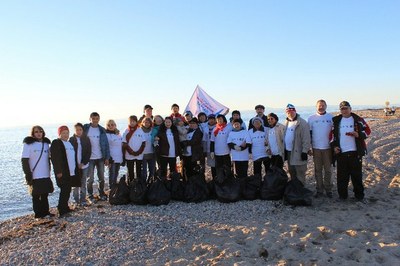
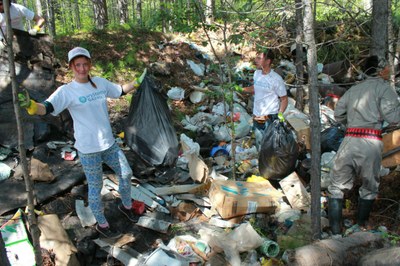
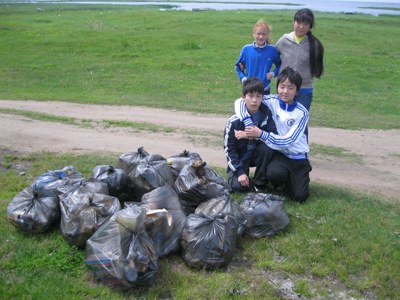
<p style="text-align: justify; ">The team of the project «Let’s conserve Lake Baikal» opened its 10<sup>th</sup> anniversary camp season of the International Baikal Shore Volunteer Service. From July 18 to August 15, 2012 the camp was visited by 47 people. Intensive work of cleaning the shore was done - piles of garbage were excavated and sorted, 43 m<sup>3</sup> of glass, 28.3 m<sup>3</sup> of plastic, 14.6 m<sup>3</sup> of tin and 68.6 m<sup>3</sup> of mixed garbage were collected and shifted for proper disposal (pic. 5.6.6).</p>
<p align="center"><img class="image-inline" src="../../../resolveuid/c677b94d03e245fabede3dfe943bb29d/@@images/image/preview" /></p>
<p align="center">Pic. 5.6.6 Garbage collection</p>
<p style="text-align: justify; ">In 2012, the Lake Baikal Conservation Foundation organized:</p>
<p style="text-align: justify; ">- the ecological camp «Khakusy»;</p>
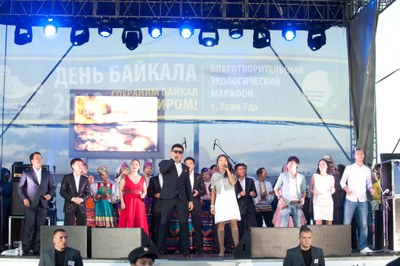
<p style="text-align: justify; ">- the first charity marathon «Preserve Lake Baikal together with the whole world», devoted to the Day of Baikal, was organized on August 17 in cooperation with the Ministry of Natural Resources of the Republic of Buryatia. The raised funds (1 million rubles) would be spent during the next summer season on cleaning and providing necessary facilities at the places of public recreation on the shores of Lake Baikal (in particular, in the towns of Gremyachinsk and Goryachinsk in Pribakalsky district) (pic. 5.7.7).</p>
<p style="text-align: center; "><img class="image-inline" src="../../../resolveuid/0355e0dea2f54c67bb46d8bb6294d685/@@images/image/preview" /></p>
<p style="text-align: justify; ">Pic. 5.6.7 Participants of the first charity marathon «Preserve Lake Baikal together with the whole world»<b> </b></p>
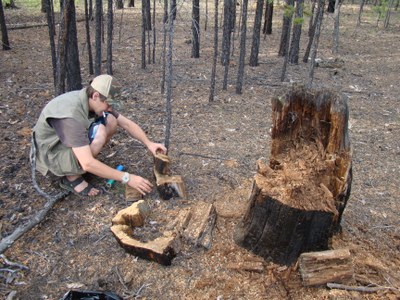
<p style="text-align: justify; ">In 2013, the Fund initiated the research expedition «TransEurasian flight Leman – Baikal». The expedition’s objectives were to develop new methods and devices for air and water sounding, enhance knowledge on the impact of forest fires on carbon cycle, develop proposals on complex environmental protection measures for the area covered by the expedition and attract public attention to the environmental issues common to Europe and Asia.</p>
<p style="text-align: justify; ">Besides, the Fund supported implementation of the following projects:</p>
<p style="text-align: justify; ">-  a winter expedition of the Student’s Science Society of the Geography Department of Moscow State University was organized in the Republic of Buryatia;</p>
<p style="text-align: justify; ">-  an exposition devoted to the expedition «The submersibles MIR in Lake Baikal» was installed in the National Museum of the Republic of Buryatia;</p>
<p style="text-align: justify; ">-  a joint expedition with the Far East Expedition Center of the Russian Geographical Society with the objective of studying the population dynamics of Baikal nerpa;</p>
<p style="text-align: justify; ">-  the environmental campaign «Clean Ice of Lake Baikal» in Barguzinsky district of the Republic of Buryatia;</p>
<p style="text-align: justify; ">-  the international forum on ecology and tourism «Ecotourism in Lake Baikal region».</p>
<p style="text-align: justify; ">In 2013, the Buryat Branch of the Russian Geographical Society took part in the following activities;</p>
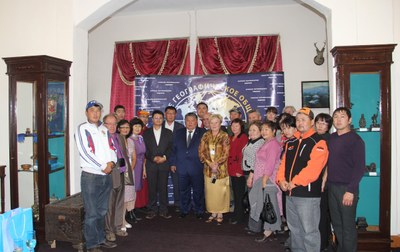
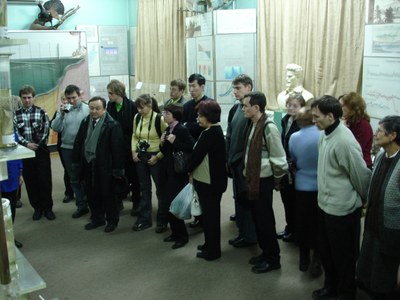
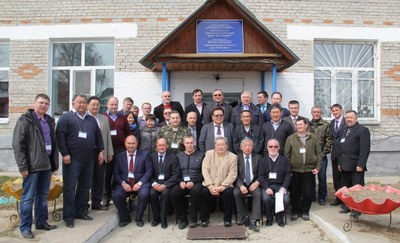
<p style="text-align: justify; ">-  the expedition «In the footsteps of Przhevalsky» (in the honor of the 150th anniversary of the first expedition) (pic. 5.6.8);</p>
<p style="text-align: justify; ">-  summer schools in geography and environmental sciences on the basis of the international ecological and educational center «Istomino» (pic. 5.6.9).</p>
<p style="text-align: center; "><img class="image-inline" src="../../../resolveuid/e383587c474d4b7b91b9162ca8e2295d/@@images/image/preview" /></p>
<p align="center"><b> </b><b> </b></p>
<p align="center">Pic. 5.6.8 Participants of the expedition at the museum of the town of Kyakhta</p>
<p align="center"><img class="image-inline" src="../../../resolveuid/2d1f4016bd31409b938fa1e50cd88314/@@images/image/preview" /></p>
<p align="center">Pic. 5.6.9 A session of the summer ecological school at the conference hall of the International Ecological and Educational Center “Istomino”</p>
<p style="text-align: justify; ">Mongolian Environmental Civil Council (MECC) was established in 2008 at the First National Conference of Non-Governmental Organizations. MECC with 700 NGOs being its members and branches in 21 aimags can be called an umbrella organization. Supreme authority of MECC is the national council of environmental NGOs that convenes once in two years. At the convention, the board of directors and supervisory boards of MECC are selected and policy documents for the next two years are discussed.</p>
<p style="text-align: justify; ">MECC's main functions are the provision of information and services to non-governmental organizations engaged in environmental activities and coordination of cooperation between the government and other organizations [12].</p>
<p style="text-align: justify; ">Besides MECC, there are other NGOs, such as «Greenpeace Mongolia», «Gal-Undesten association», «Golomt TSEKH», «United Movement of Mongolian Rivers and Lakes», «MUEM», «Nogoon Has», «Restoration management», «United TMT movement», «The future without nuclear radiation», that are active in the field of environmental protection. At the web site of the Environmental Information Center, there is a list of Mongolian environmental NGOs with description of their work and directors’ names.</p>
<p style="text-align: justify; ">In addition, within the framework of the project «Integrated Natural Resource Management in the Baikal Basin Transboundary Ecosystem», in 2014 the NGO «Mongolian Water Forum – Ushelts» initiated the establishement of a network of the environmental NGOs that work within the Lake Baikal and Selenga river basins. The list of organizations united into the network is available in the «Friends» section of the «Baikal Information Center» web portal.</p>
<p style="text-align: justify; "><span> </span></p>
<p style="text-align: justify; "><b>Bibliography</b></p>
<p style="text-align: justify; "><span>1. Convention on Biological Diversity </span><a href="http://www.cbd.int/countries/default.shtml_country=mn">www.cbd.int/countries/default.shtml_country=mn</a></p>
<p style="text-align: justify; ">2. Convention on Biological Diversity <a href="http://www.cbd.int/countries/default.shtml">www.cbd.int/countries/default.shtml</a> country=ru</p>
<p style="text-align: justify; ">3. Transboundary diagnostic analysis of the Lake Baikal basin   http//Baikal. Iwlearn.org<b> </b></p>
<p style="text-align: justify; ">4. State report “On the state of Lake Baikal and measures for its protection in 2013” – Irkutsk. Siberian Branch of “Rosgeolfond”, 2014. – 462 pp.: <a href="http://www.mnr.gov.ru/regulatory/list.php?part=1258">http://www.mnr.gov.ru/regulatory/list.php?part=1258</a></p>
<p style="text-align: justify; ">5. Mikheeva A.S., Tulokhonov A.K., Ptitsyn A.B., Tsybekmitova G.T. / Institutional mechanisms of regulating nature management within transboundary territories/ In the book “Environmental cooperation in the transboundary regions: Russia – China – Mongolia”. Chita, Poisk Publishing. 2012. - Part 2. - p. 52-60.</p>
<p style="text-align: justify; ">6. State report “On the state of Lake Baikal and measures for its protection in 2012” – Irkutsk. Siberian Branch of “Rosgeolfond”, 2013. – 436 pp.: <a href="http://www.mnr.gov.ru/regulatory/list.php?part=1258">http://www.mnr.gov.ru/regulatory/list.php?part=1258</a></p>
<p style="text-align: justify; ">7. ФГУНПП «Росгеолфонд», <a href="http://geol.irk.ru/baikal/">http://geol.irk.ru/baikal/</a></p>
<p style="text-align: justify; ">8. Журнал «Мир Байкала», <a href="http://www.mirbaikala.ru/">www.mirbaikala.ru</a></p>
<p style="text-align: justify; ">9. Природа Забайкальского края, <a href="http://www.nature.chita.ru/">http://www.nature.chita.ru</a>)</p>
<p style="text-align: justify; ">10. A website of the “Green Earth – Green Future” NGO, “Ecological education: Environment – friendly children”, <a href="http://veg.mn/page/50">http://veg.mn/page/50</a></p>
<p style="text-align: justify; "><a href="http://veg.mn/page/50"></a><span>11. White book of Baikal basin, </span><a href="http://bic.iwlearn.org/en/ru/druzya/belaya-kniga-basseina-ozera-baikal-obschestvennye-organizacii">http://bic.iwlearn.org/ru/druzya/belaya-kniga-basseina-ozera-baikal-obschestvennye-organizacii</a></p>
<p style="text-align: justify; ">12.  Environmental Information Center, Environmental organizations, human resources information center, Database of NGOs, <a href="http://www.eic.mn/orgstaff/nongovernment.php">http://www.eic.mn/orgstaff/nongovernment.php</a></p>]]></content:encoded>
    <dc:publisher>No publisher</dc:publisher>
    <dc:creator>Zorigma</dc:creator>
    <dc:rights></dc:rights>
    <dc:date>2015-04-24T07:18:27Z</dc:date>
    <dc:type>Page</dc:type>
  </item>


  <item rdf:about="http://bic.iwlearn.org/en/documents/state-of-the-environment-report-the-lake-baikal-basin-1/state-regulation-and-public-movement-of-environmental-protection-and-nature-management/5-5-environmental-education">
    <title>5.5 Environmental education</title>
    <link>http://bic.iwlearn.org/en/documents/state-of-the-environment-report-the-lake-baikal-basin-1/state-regulation-and-public-movement-of-environmental-protection-and-nature-management/5-5-environmental-education</link>
    <description></description>
    <content:encoded xmlns:content="http://purl.org/rss/1.0/modules/content/"><![CDATA[<p align="center"><b>5.5 Environmental education</b></p>
<p style="text-align: justify; ">Environmental education and information dissemination raise public awareness and facilitate public participation in tackling the issues of biodiversity conservation, natural resource management and sustainable development of Baikal region and depend entirely on the educational level of the society in general [3].</p>
<p style="text-align: justify; ">Environmental education and awareness-raising campaigns are aimed at solving the following tasks:</p>
<p style="text-align: justify; ">-  modification of study programs to include/enhance environmental education and publication of textbooks incorporating environmental education aspects;</p>
<p style="text-align: justify; ">-  organization of extracurricular activities, summer schools and conferences;</p>
<p style="text-align: justify; ">-  environmental awareness raising through mass media and publication of specialized journals;</p>
<p style="text-align: justify; ">-  information dissemination and educational activities (for example, festive events during the World Environment Day, World Day of Water Resource Protection, International Birds Day and Day of Baikal);</p>
<p style="text-align: justify; ">-  Training of teachers specializing in environment-related issues at the regional and municipal levels.</p>
<p style="text-align: justify; ">There are two UNESCO chairs in Baikal region (University Twinnings). The chair of water resources was set up according the agreement between the UN (UNESCO) and Irkutsk State University signed on March 30, 2001. This is the only chair for water resources in Russia. Savoy University of France acted as the foreign counterpart. Apart from the departments of Irkutsk State University, the chair cooperates with Buryat State University, Institute of Earth Crust SB RAS, Vinogradov Institute of Geochemistry SB RAS and Baikal Institute of Nature Management SB RAS (the head of the chair is Prof. Smirnov A.I.)</p>
<p style="text-align: justify; ">The research activities of the chair have the following directions:</p>
<p style="text-align: justify; ">-  study of the qualitative and quantitative composition of natural waters within the research area;</p>
<p style="text-align: justify; ">-  development of the theoretical and methodological basis for integrated management and rational use of water resources, research into the interconnectedness and interaction of the surface and underground layers of the hydrosphere;</p>
<p style="text-align: justify; ">-  expansion of the geopolitical analysis of water resources, a field of expertise of Savoy University;</p>
<p style="text-align: justify; ">-  creation of an open access database of water resources within the research area.</p>
<p style="text-align: justify; ">The international project «Water resource network» is considered one of the main ways of implementing the priority tasks. «Water resource network» has been established by Irkutsk State University and Savoy University with UNESCO support and now, besides the universities, includes Mongolian National University, several water resource departments in the Mediterranean region, Institute of Geochemistry SB RAS, Institute of Geography SB RAS, and Buryat State University. In 2009, an agreement on cooperation was signed by UNESCO and «Water resource network» within the frameworks of UNITWIN/UNESCO program.</p>
<p style="text-align: justify; ">In 2013, talks were held in Chambery city (France) regarding further development and expansion (both spatially and functionally) of «Water resource network». Furthermore, in August of 2013, Summer School was conducted at Biology station of Irkutsk State University in the village of Bolshie Koty, near Lake Baikal. During the event, meetings and talks took place over the future of the Network. A fundamental two-volume book «Baikalology» was prepared and published, which was among four best books in the field of natural sciences, technology and medicine at the All-Russian contest «Best books of 2012».</p>
<p style="text-align: justify; "><i>The UNESCO chair for environmental ethics </i>at the East-Siberian State University for Technology and Management («VSGUTU») in Ulan-Ude (Republic of Buryatia) was set up in April 2006 by the decision of UNESCO General Conference (the chair head is Prof. Saktoev V.E., the University President).</p>
<p style="text-align: justify; ">By now, the chair has delivered the following research output:</p>
<p style="text-align: justify; ">-  conceptual basis for the international UN-supported project «Baikal model territory of sustainable development»;</p>
<p style="text-align: justify; ">-  conceptual basis for socio-economic development strategy for the Republic of Buryatia;</p>
<p style="text-align: justify; ">-  Baikal declaration of environmental ethics;</p>
<p style="text-align: justify; ">-  concept of «moral» economy aimed at conservation of Lake Baikal Natural Territory;</p>
<p style="text-align: justify; ">-  conceptual basis for sustainable tourism development in Baikal region.</p>
<p style="text-align: justify; ">The research results are embedded into the educational process along the following directions:</p>
<p style="text-align: justify; ">-  a masters’ program in the field of sustainable development and environmental ethics was developed based on the expertise of the chair personnel and personality-oriented teaching approach;</p>
<p style="text-align: justify; ">-  the lecture course «Philosophy of sustainable development and science ethics in the information age» was developed to be taught to young scientists, Ph.D. and Master students of the East-Siberian State University for Technology and Management;</p>
<p style="text-align: justify; ">-  the club “Millennium” continued its fruitful work with grade 1-9 secondary school students.</p>
<p style="text-align: justify; "><b><i>Irkutsk Oblast.</i></b><i> </i>Baikal Museum of the Siberian Branch of the Russian Academy of Sciences located in the village of Listvyanka receives about 90 thousand visitors per year. The number includes school and university students, teachers, representatives of Russian and foreign companies, governments, and state organizations, and forum/conference participants (pic. 5.5.1).</p>
<p style="text-align: center; "><span> <img class="image-inline" src="../../../resolveuid/5961d63360a34f28bbcd369e3db33c26/@@images/image/preview" /></span></p>
<p align="center">Pic. 5.5.1 An excursion at the Baikal Museum</p>
<p style="text-align: justify; ">Research and educational activities of the Museum rely on 8 expositions and include the following regular events: Oblast-wide ecological summer school on Baikal studies, Day of Knowledge, «Baikal connoisseurs» competition, and an international competition in Baikal studies. In 2012, the Museum hosted 6 thematic expositions.</p>
<p style="text-align: justify; ">Environmental education center of the Museum is equipped with a computer room and the «microscope-computer» system consisting of 21 computers connected into one network, which makes possible interactive classes in ecology and Baikal studies for school and university students as well as makes the Museum resources available to the wide audience.</p>
<p style="text-align: justify; ">In 2013, Baikal museum and the association «Baikal-EcoNetwork» published a workbook «Outline maps of Lake Baikal for grade 5-6 students» as a supplementary teaching resource for teaching Baikal studies.</p>
<p style="text-align: justify; ">Environmental education in the schools of Irkutsk Oblast is realized through the introduction of such disciplines as «Ecology» and «Baikal studies» into curriculum, as well as through organization of integrated classes and extracurricular activities. Additional environmental classes are given as part of the non-mandatory and elective courses, work of children’s environmental associations, hosting of large-scale ecological development-oriented events and the involvement of school children in the activities of ecological summer camps.</p>
<p style="text-align: justify; ">In 2013, more than 23 thousand students in Irkutsk region were enrolled in elective and special courses in ecology, Baikal studies and natural sciences. In municipal institutions of general education, 448 circles of ecological/biological sciences engaging about 7 500 students were functioning. In municipal institutions of additional education of Irkutsk region, 1 055 associations devoted to environmental/natural sciences and engaging about 14 500 teenagers were functioning.  In Irkutsk region, 7 institutions of additional education devoted to environmental/natural sciences and engaging more than 10 thousand children were functioning.</p>
<p style="text-align: justify; ">In 2012, based on the intermediate results of a regional experiment on adapting educational resources to teaching Baikal studies, a new edition of the manual “Baikalology” (Live world of Lake Baikal. Man and Lake Baikal. 6 (7) grade) was published.</p>
<p style="text-align: justify; ">The most important activities included:</p>
<p style="text-align: justify; ">-  a region-wide children’s environmental festival “Baikal kaleidoscope” (March 28-29, 2012);</p>
<p style="text-align: justify; ">-  a region-wide convent of school forestry associations (June 22-26, 2012).</p>
<p style="text-align: justify; ">-  the first international competition among school students in Baikal studies (June 5-8, 2012). Twenty four teams from the educational institutions of Irkutsk Oblast, the Republic of Buryatia, Zabaikalsky Krai and Mongolia took part in the competition. The competition was hosted by Baikal Museum of the Irkutsk Scientific Center SB RAS. Results of the competition were announced during the work of the «Baikal-Huvsgul» creative workshop.</p>
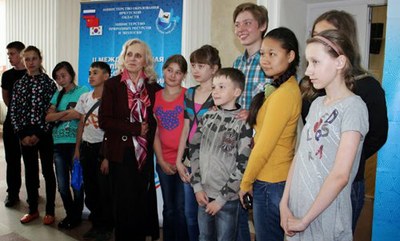
<p style="text-align: justify; ">-  the second international competition in Baikal studies «Let’s save Baikal» (June 5-8, 2013) took place in Baikal Museum of the Irkutsk Scientific Center SB RAS. More than 100 school children from Irkutsk Oblast, Zabaikalsky Krai and the Republic of Buryatia participated in the competition. For the first time school children from Korea and China took part in the competition [4, 6] (рис. 5.5.2).</p>
<p align="center"><img class="image-inline" src="../../../resolveuid/a96cb1000c9547bba1635ff433bf062d/@@images/image/preview" /></p>
<p align="center">Pic. 5.5.2. The winners of the 2<sup>nd</sup> International contest among schoolchildren in Baikal studies</p>
<p align="center">“Let’s save Baikal”.</p>
<p style="text-align: justify; "><b><i> Republic of Buryatia</i></b>. Ministry of Natural Resources of the Republic of Buryatia came up with «Strategy for the Development of Continuous Environmental Education and Formation of Ecological Culture on the Territory of the Republic of Buryatia in 2012-2016» (approved by the resolution of the Government of the Republic of Buryatia № 682 of December 21, 2011). The Strategy is implemented by the public environmental council chaired by the Deputy Head of the Government.</p>
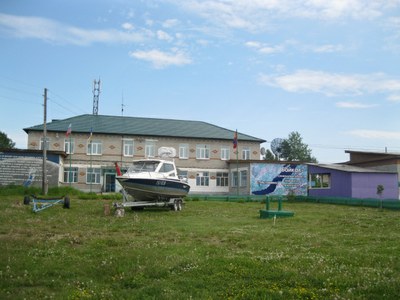
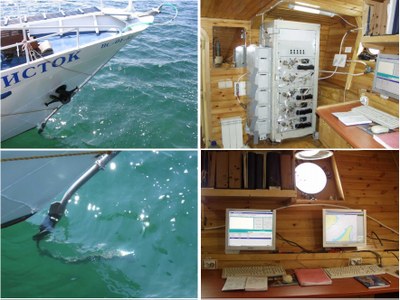
<p style="text-align: justify; ">International ecological and educational center «Istomino» of Baikal Institute of Nature Management, located in the Selenga river delta (Republic of Buryatia, village of Istomino), is one of the biggest in Siberia (pic. 5.5.3).</p>
<p align="center"><img class="image-inline" src="../../../resolveuid/42ad491c12bd45428b2a55df23fdc169/@@images/image/preview" /></p>
<p align="center">Pic. 5.5.3 The international ecological and educational center «Istomino»</p>
<p style="text-align: justify; "><span>Its major activities include:</span></p>
<p style="text-align: justify; ">-  scientific and material/technical support to the fundamental research into Lake Baikal ecosystem and the Selenga river delta as the indicator of anthropogenic impact and natural changes in Lake Baikal basin;</p>
<p style="text-align: justify; ">-   hosting scientific expeditions;</p>
<p style="text-align: justify; ">-  hosting scientific meetings, conferences and workshops on the issues of sustainable development of Baikal region (pic. 5.5.4);</p>
<p style="text-align: justify; ">-  organization of specialized practical courses for science students and summer schools for gifted children in environmental studies, chemistry, physics and mathematics;</p>
<p style="text-align: justify; ">-  development of ecotourism; demonstration of organic farming and production of organic food with the use of renewable energy sources.</p>
<p style="text-align: center; "><span> <img class="image-inline" src="../../../resolveuid/a901cf112a434b33859ce5087c0f702e/@@images/image/preview" /></span></p>
<p align="center">Pic. 5.5.4 Participants of the International conference</p>
<p align="center">«Deltas: genesis, dynamics, modeling and sustainable development»</p>
<p style="text-align: justify; ">Activities:</p>
<p style="text-align: justify; ">- July 26 - August 10, 2012 – International dendroecological expedition in Western Zabaikalie (Republic of Buryatia) with the participation of researchers of the Siberian Federal University (Krasnoyarsk city) and the University of Arizona (USA) (pic. 5.5.5);</p>
<p align="center"><img class="image-inline" src="../../../resolveuid/e1c752e70ffc4001a16dcc8be3be4e11/@@images/image/preview" /></p>
<p align="center">Pic. 5.5.5 A participant of the International dendroecological expedition</p>
<p style="text-align: justify; ">-  July 27 – August 1, 2012 – International workshop with the participation of scientists from Mongolia (12 people) within the frameworks of the project «Study of the spatial-temporal trends in the interaction between landscape and natural-economic complexes in the northern Central Asia under conditions of the contemporary desertification processes»;</p>
<p style="text-align: justify; ">- April 18 – April 20, 2013 – Meeting of the heads of the municipal districts of Pribaikalie and the administration of specially protected natural territories within the frameworks of the Federal target program «Protection of Lake Baikal and socio-economic development of the natural territory in 2012-2020» under the support of the Ministry of Natural Resources of the Republic of Buryatia (pic. 5.5.6);</p>
<p align="center"><img class="image-inline" src="../../../resolveuid/a4c64f6e34d040dc99367eeb5d500d03/@@images/image/preview" /></p>
<p align="center">Pic. 5.5.6 Participants of the Meeting of the heads of the municipal districts of Pribaikalie and the administration of specially protected natural territories</p>
<p style="text-align: justify; ">- June 26 – June 30, 2013 – VII school-seminar of young scientists «The issues of sustainable development in Russian regions»;</p>
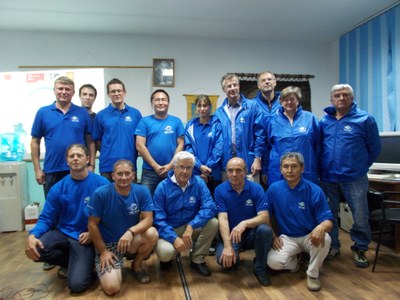
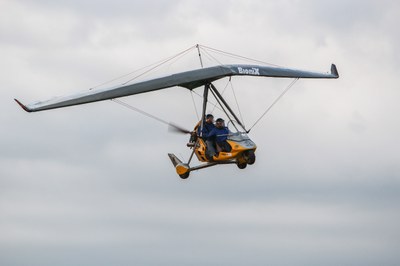
<p style="text-align: justify; ">- June 25 – August 08, 2013 – international expedition within frameworks of the project «Trans-Eurasian Flight Leman-Baikal» with the participation of scholars from France and Switzerland (pic. 5.5.7, pic. 5.5.8);</p>
<p align="center"><img class="image-inline" src="../../../resolveuid/35df1362e9304d90a6a854e15c403e84/@@images/image/preview" /></p>
<p align="center">Pic. 5.5.7 Participants of the international expedition within frameworks of the project «Trans-Eurasian Flight Leman-Baikal»</p>
<p align="center"><img class="image-inline" src="../../../resolveuid/26dc0aeb7358452c97beb7398779f740/@@images/image/preview" /></p>
<p align="center">Pic. 5.5.8 An ultralight trike in the sky</p>
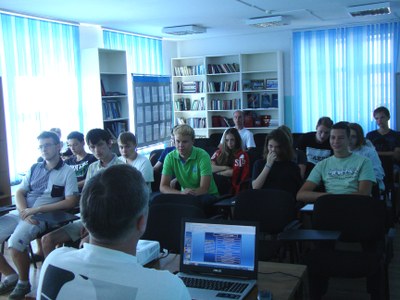
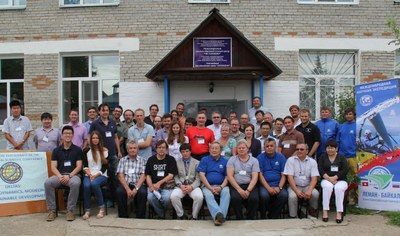
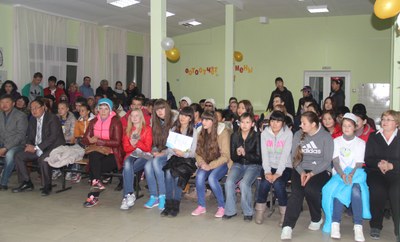
<p style="text-align: justify; ">- July 30 – August 2, 2013 – Workshop «Environmental issues within Lake Baikal basin and the role of «green economy» in their resolution» with the participation of specialists from Mongolia, including officials from the Ministry of Ecology, Green Development and Tourism, and Agency for civil supervision of police, and the Republic of Buryatia was represented by officials from Forest Agency and Burprirodnadzor.</p>
<p style="text-align: justify; ">The educational work of «Ecological and biological center of the Ministry of education and science of the Republic of Buryatia» was realized in 2012-2013 through the activities devoted to raising environmental awareness and reviving environment protection traditions of the people of the Republic – «Preserve forest for the future generations» campaign, ethno-ecological festival «Sagalgan», «Meet birds with love» campaign, «Ecological month» and «Young naturalist» ecological camp.</p>
<p style="text-align: justify; ">The traditional exhibition of children’s works «Live, the Earth» provides an opportunity to more than 500 gifted students from the Republic to display their works on the annual basis. The conference «Earth – our home» was meant to reveal and provide assistance to the talented and gifted children in their further career paths.</p>
<p style="text-align: justify; ">In 2012, as part of the established tradition, students participated in the following activities:</p>
<p style="text-align: justify; ">-  an all-Russian scientific ecological-biological contest in the sphere of children’s additional education;</p>
<p style="text-align: justify; ">-  the international all-Russian children’s ecological forum «Green planet»;</p>
<p style="text-align: justify; ">-  the competition in memory of  Vernadsky V.I.;</p>
<p style="text-align: justify; ">-  the all-Russian forestry competition «Young Growth»;</p>
<p style="text-align: justify; ">-  an all-Russian contest of water-related projects among senior school students;</p>
<p style="text-align: justify; ">-  the all-Russian contest «My smaller homeland: nature, culture and ethnos»;</p>
<p style="text-align: justify; ">-  an all-Russian contest of interdisciplinary projects and programs in environmental and local lore studies.</p>
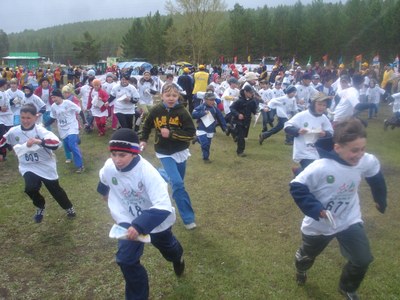
<p style="text-align: justify; ">Orienteering Federation of the Republic of Buryatia (Chairman E.Y. Osipov, <a href="http://www.fso.sdep.ru/">www.fso.sdep.ru</a>) conducts significant educational work among the younger generation. In 2012-2013, the Federation held mass events in Ulan-Ude city, town of Gusinoozersk, in the village of Sagan-Nur and on Lake Schuschiye, attended by more than 600 schoolchildren (pic. 5.5.9).</p>
<p style="text-align: center; "><span> <img class="image-inline" src="../../../resolveuid/c4b7200c9d084fedb10b623da65e2905/@@images/image/preview" /></span></p>
<p style="text-align: center; ">Fig. 5.5.9 All-Russia competitions in orienteering – «Russian azimuth»</p>
<p style="text-align: justify; ">Within the frameworks of celebrating «Year of forests» students organized «Preserve forests from fires» campaign. On May 12, the Day of National Forest Planting, the students of the Center together with the representatives of the Federal Forest Agency (Rosleskhoz), bodies of the executive and legislative power of the Republic of Buryatia planted about 960 pine trees in Izhir, not far from Todokhta village of Zaigraevsky district. In addition to that, within the framework of the international year of forests the roundtable «Promotion of school forest associations in the Republic of Buryatia» was organized by the city forestry association and secondary school № 49.</p>
<p style="text-align: justify; ">On September 27-29, 2013, the 9<sup>th</sup> interregional competition in Baikal studies was held in Ulan-Ude city. 20 teams from 11 districts of the Republic of Buryatia took part in the competition.  The competition had 4 categories – «Baikal flora», «Baikal fauna», «Limnology» and «Environmental monitoring» (pic. 5.5.10). The finalists represented the Republic at the 1<sup>st</sup> All-Russian Youth Conference of the Russian Geographic Society held in Kaluzhskaya Oblast on November 2-6, 2013.</p>
<p align="center"><img class="image-inline" src="../../../resolveuid/ed186c0bde5a486781a1ba0205291e5a/@@images/image/preview" /></p>
<p align="center">Pic. 5.5.10 Participants of the 9<sup>th</sup> interregional competition in Baikal studies</p>
<p style="text-align: justify; "><span>On September 27-28, 2013, the 5</span><sup>th</sup><span> Baikal educational forum of the environmental movement leaders devoted to the Year of Environmental Protection and the Year of Tourism was held in Ulan-Ude city by the school «ECOS» with the support from the Ministry of Natural Resources of the Republic of Buryatia. The forum participants were 8-11 grade students, school teachers and teachers of institutions of additional education of Ulan-Ude city. The following activities were conducted within the framework of the forum: an intellectual Internet-marathon, a photo vernissage «My Baikal», «Antiwaste» campaign (pic. 5.5.11), and «Environmental footprint on Earth» campaign.</span></p>
<p align="center"><img class="image-inline" src="../../../resolveuid/044b21651032432f822fcb54d6571fa4/@@images/image/preview" /></p>
<p align="center">Pic. 5.5.11 Participants of the «Antiwaste» campaign</p>
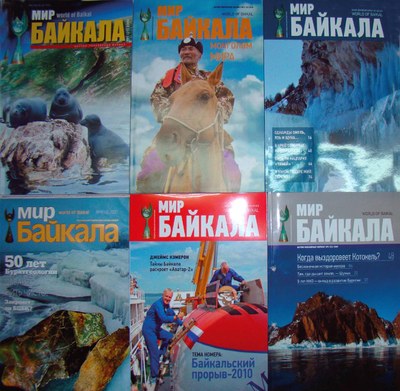
<p style="text-align: justify; ">Since 2004, the journal «World of Baikal» has been published under the aegis of the Ministry of Natural Resources and Baikal Institute of Nature Management SB RAS. Till the end of 2013, 40 issues of the journal have been published [8] (pic. 5.5.12).</p>
<p align="center"><img class="image-inline" src="../../../resolveuid/c9a966504b464fe29330d6ebcf02a13c/@@images/image/preview" /></p>
<p align="center">Pic. 5.5.12  Issues of the journal «World of Baikal»</p>
<p style="text-align: justify; "><b><i>Zabaikalsky Krai. </i></b>In accordance with the regional action plan for implementation of the Strategy for developing the system of environmental education and formation of ecological culture in Zabaikalsly Krai in the period till 2020 approved by the Resolution of the Government of Zabaikalsky Krai № 673-r on October 20, 2009, the funding for activities related to environmental education and formation of «ecological» culture is allocated from municipal budgets. Diverse regional level environmental campaigns, competitions, meetings and expeditions were organized in 2012 – 2013.</p>
<p style="text-align: justify; ">As a way to fulfill the order of the Ministry of Education, Science and Youth Policies of Zabaikalsky Krai № 509а of June 21, 2012, the Center for education quality assessment introduced indicators of environmental education. These indicators will be considered while determining the efficiency ratings of municipal formations.</p>
<p style="text-align: justify; ">The laboratory of environmental education of Zabaikalsky State University in collaboration with pedagogues, education specialists and scientists of Zabaikalsky Krai and other regions of Russia provide scientific support to the system of environmental education, including the development of diverse teaching materials in electronic format, teaching manuals in accordance with the new state standard. The following materials were published: the workbook «My native Zabaikalie: I learn to ask questions» (authors – E.A. Igumnova, I.V. Barakhoeva), a practical manual for organizing independent work of students – «Regional ecology» (authors – E.A. Igumnova, O.V. Korsun), the manuals «Ecological excursions to the nature of Zabaikalie» (author – O.V. Korsun), and the popular science book «Basin of the Amur River in Zabaikalie» (edited by N.V. Pomazkova).</p>
<p style="text-align: justify; ">Annually, on April 22, educational and environmental institutions set up the environmental campaign «To protect nature means to love Homeland». In 2012, 140 organizations participated in the campaign.</p>
<p style="text-align: justify; ">The website «Nature of Zabaikalie» («Zabaikalie is splendid») has been maintained as an innovative information-sharing and educational Internet-resource in Russian and English languages [9].</p>
<p style="text-align: justify; ">The Krai-level ecological newspaper «Preserve the natural environment» is published with the circulation of 999 papers.</p>
<p style="text-align: justify; ">The chair for ecology and environmental education of Zabaikalsky State University, established jointly by the Chernyshevsky Zabaikalsky State Pedagogical University and the local institute of the Russian Academy of Sciences, is functioning in the region.</p>
<p style="text-align: justify; ">A team of secondary school students from Novaya Kuka village representing the club «Young Excursion Guide» took part in the 1<sup>st</sup> International Competition in Baikal studies (2012). The team of Zabaikalsky Krai was awarded the first prize for the project «Lake Kotokel – Gaff disease – Lake Baikal – Lake Kenon».</p>
<p style="text-align: justify; ">On April 18-19, 2013, the 3<sup>rd</sup> regional competition in Baikal studies «Baikal is in my heart» was held.  83 school students from 16 districts of Zabaikalsky Krai and students of the Ecology and Biology Center of Ulan-Ude city, the Republic of Buryatia took part in the competition</p>
<p style="text-align: justify; ">On May 23, 2013, a waste collection campaign was conducted in the Ivano-Arakhleisky natural landscape sanctuary. The campaign was timed to commemorate the international day of biodiversity. Students and teachers of secondary school № 33 of Chita city, staff of «Ecologiya» Ltd. and the sanctuary took part in the campaign.</p>
<p style="text-align: justify; ">In <b>Mongolia</b>, several trainings in environmental protection, environmental awareness raising and dissemination of information were organized during 2012-2014 [10]. The Institute of Teachers’ Professional Development and Mongolian Education Alliance organized the training course «Sustainable development – Eco school on November 18-19, 2013.  The activity was funded by Swiss Development Agency. 20 teachers learned the methods of incorporating environmental studies into various academic subjects. In addition, «Participating community - Eco school» training course to prepare teachers for module training was held on January 27-28, 2014, and it also focused on reflecting the idea of «sustainable development» in each lesson.</p>
<p style="text-align: justify; ">The Institute of Teachers’ Professional Development organized «Professional training for the chemistry teachers who are in their  first year of teaching» during February 4-13, 2014 and «Professional training for the biology teachers who are in their fifth or sixth year of teaching» on May 2-9, 2014. The 115 teachers who participated in the above trainings have also participated in an outdoor training course organized by the freshwater resource agency of the Ministry of Environment and Green development (MEGD) and have listened to lectures and have seen documentary films and museum expositions devoted to environmental pollution and proper utilization of water resources. As a result of these training courses the teachers were introduced to the concepts of sustainable development and environmental education, learned instruction techniques adjusted to children’s age, and learned new teaching approaches overall. The institute conducted 21 training sessions attended by 1270 teachers during 2013-2014.</p>
<p style="text-align: justify; ">In December 2012, UN general assembly announced 2013 as a «Year of Global Water Partnership». Within the framework of the year celebrations, the Ministry of Environment and Green Development focused its attention on water supply services, distribution of water, increasing water demand and usage, and organized awareness raising and advertising campaigns in order to expand international and inter-sectorial partnership and enhance comprehensive cooperation for addressing water management challenges. Moreover, the meeting «Water policy-integrated action» was held on January 29, 2013 in Ulaanbaatar city with the purpose of  facilitating information exchange, enhancing transboundary cooperation over water management issues, defining national and international legal frameworks and consistency with the Millennium Development Goals. Totally, 95 representatives from government and non-governmental institutions participated.</p>
<p style="text-align: justify; ">The seminar «The multi-stake-holder council for improving social involvement in addressing environmental challenges and promoting cooperation by collective decision-making» was held on March 29, 2013 with the objectives of intensifying the work of the multilateral council, promoting the rational and responsible use of natural resources, promoting the overall idea if environmental protection. More than 100 people participated in this seminar and exchanged their opinions.</p>
<p style="text-align: justify; ">The environmental law package adopted during the spring session of State Great Khural in 2012 created the legal framework for implementing Integrated Water Resource Management. 29 river basin authorities were established all over the country. Therefore, the training on «Legal framework for implementing Integrated Water Resource Management in river basins» was organized on April 25, 2013 in Darkhan-Uul aimag. The purpose of the training was to deliver information on specific provisions of the laws and to enhance legal awareness of the local decision makers, water users, and law enforcement agencies. Totally, there were 72 participants, who were mainly officials of the Environment and Tourism Agencies of Orkhon, Selenge, Tuv, and Bulgan aimags and officials of the basin councils for the rivers Eruu and Selenga in Selenge aimag.</p>
<p style="text-align: justify; ">The seminar «Environmental and economic assessment of natural resource and ecosystem services to support the development of an ecosystem based adaptation strategy» was held on October 4, 2012 and was attended by 64 participants from various organizations, including national consultant teams, project implementation units, science institutions, NGOs, universities and project implementation aimags. The purpose of the seminar was consultations over the draft methodology of economic evaluation of climate change-related multilateral arrangements, improving the capacity of national consultant team who will carry out the economic assessment through collecting knowledge and information on best practices in economical assessment model development.</p>
<p style="text-align: justify; ">The seminar «Reformation of rules and regulations following the adoption of a package of environmental laws» was organized on November 28-29, 2012, and was attended by about 100 people. The purpose of the seminar was the discussion of the required changes in laws and regulations for harmonizing the whole body of legislation and implementation of the adopted law package.</p>]]></content:encoded>
    <dc:publisher>No publisher</dc:publisher>
    <dc:creator>Zorigma</dc:creator>
    <dc:rights></dc:rights>
    <dc:date>2015-04-24T07:09:47Z</dc:date>
    <dc:type>Page</dc:type>
  </item>


  <item rdf:about="http://bic.iwlearn.org/en/documents/state-of-the-environment-report-the-lake-baikal-basin-1/state-regulation-and-public-movement-of-environmental-protection-and-nature-management/5-4-state-environmental-expertise">
    <title>5.4 State environmental expertise</title>
    <link>http://bic.iwlearn.org/en/documents/state-of-the-environment-report-the-lake-baikal-basin-1/state-regulation-and-public-movement-of-environmental-protection-and-nature-management/5-4-state-environmental-expertise</link>
    <description></description>
    <content:encoded xmlns:content="http://purl.org/rss/1.0/modules/content/"><![CDATA[<p align="center"><b>5.4 State environmental expertise</b></p>
<p style="text-align: justify; "><b> </b> The system of state environmental expertise (SEE) is regulated by the Federal Law № 174-FL of November 23, 1995 «On environmental expertise». The objects of state environmental expertise of the federal level, including project documentation for construction within specially protected natural territories, are listed in Article 11, while the objects of state environmental expertise of the regional level are listed in Article 12.</p>
<p style="text-align: justify; ">Within Lake Baikal Natural Territory, the branches of Federal Agency for Supervision in the Sphere of Nature Management («Rosprirodnadzor») in Irkutsk Oblast, the Republic of Buryatia and Zabaikalsky Krai jointly with the bodies of executive power are implementing the state policies in the field of environmental expertise [4, 6].</p>
<p style="text-align: justify; ">The central unit of Federal Agency for Supervision in the Sphere of Nature Management conducted state environmental expertise of the entities located within BNT based on the following documents:</p>
<p style="text-align: justify; ">-  documentation substantiating the total permissible catch of aquatic bio-resources in Lake Baikal and its tributaries Barguzin, Selenga, Upper and Angara in 2013 (including the environment impact assessment). The expertise was ordered by Rosrybolovstvo and FSA VNIRO (2012).</p>
<p style="text-align: justify; ">-  remediation of the closed facility of mercury cell electrolysis in the town of Usolye-Sibirskoe (project documentation). The commissioner was Ministry of Natural Resources and Ecology of Irkutsk region  (2013)</p>
<p style="text-align: justify; ">-  documentation substantiating the total permissible catch of aquatic bio-resources in Lake Baikal and its tributaries Barguzin, Selenga, Upper and Angara in 2014. The expertise was ordered by Rosrybolovstvo<b> </b>(2013).<b> </b></p>
<p style="text-align: justify; "><b><i> </i></b><b><i>Irkutsk Oblast. </i></b>In 2012, the branch of Federal Agency for Supervision in the Sphere of Nature Management («Rosprirodnadzor») in Irkutsk Oblast conducted state environmental expertise of 2 entities located within Lake Baikal Natural Territory:</p>
<p style="text-align: justify; ">- documentation substantiating the total permissible catch of aquatic bio-resources in fresh-water bodies of Irkutsk Oblast in 2013;</p>
<p style="text-align: justify; ">- project documentation for «Reconstruction of ferry boat harbor facilities in the village of Sakhyurta, Olkhon Island in Olkhonsky district of Irkutsk Oblast».</p>
<p style="text-align: justify; ">The state environmental expertise approved both the above projects. A negative assessment was given to the project documentation on «Modifications to the design of solid waste landline in the village of Markovo», based on the state environmental expertise conducted in 2011.</p>
<p style="text-align: justify; ">In 2013, state environmental expertise was conducted for one entity:</p>
<p style="text-align: justify; ">- documentation substantiating the maximum permissible catch of aquatic bio-resources in fresh-water bodies of Irkutsk region in 2014-2018. Approval was issued.</p>
<p style="text-align: justify; ">In 2012, Ministry of Natural Resources and Ecology of Irkutsk region conducted the environmental expertise of 2 entities within Lake Baikal Natural Territory, including:</p>
<p style="text-align: justify; ">-  documentation substantiating the limit of procurement of wild hoofed animals, bear and fur-bearing animals during 2012-2013;</p>
<p style="text-align: justify; ">-  documents of complex environmental investigation of the parts of state natural sanctuary «Okunaisky» (Swan lakes) substantiating granting of the legal status of a specially protected natural territory to the sanctuary. State environmental expertise resulted in positive assessments of the above proposals.</p>
<p style="text-align: justify; ">In 2013, regional level state environmental expertise was conducted for the following:</p>
<p style="text-align: justify; ">-  documentation substantiating the limits (quotas) for procurement of animal resources within Irkutsk region during the hunting season from August 1, 2013 to August 1, 2014;</p>
<p style="text-align: justify; ">-  documentation substantiating the introduction of changes into the limits (quotas) for procurement of animal resources within Irkutsk region in the period till August 1, 2014, approved by the order of the Governor of Irkutsk region №264-GO of July 31, 2013;</p>
<p style="text-align: justify; ">-  documentation on complex environmental examination of the territories substantiating granting of the legal status of a specially protected natural territory to “Ulsetskaya Grove” (Batorova Grove) in Alarsky district of Irkutsk region;</p>
<p style="text-align: justify; ">-  documentation substantiating the creation of an area of traditional environmental management in Kachugsky district of Irkutsk region. All the above proposals received positive reviews and were approved.</p>
<p style="text-align: justify; "><b><i>Republic of Buryatia.</i></b><i> </i>In 2012, the branch of Federal Agency for Supervision in the Sphere of Nature Management («Rosprirodnadzor») in the Republic of Buryatia organized and conducted state environmental expertise of 4 entities, 2 of which were located within a specially protected natural territory of the federal level («Tunkinsky national park»):</p>
<p style="text-align: justify; ">-  design documentation for «Construction of an inter-municipal landline for municipal solid waste in the village of Toltoy, Tunkinsky district».</p>
<p style="text-align: justify; ">-  documentation substantiating the amount of total permissible catch of aquatic bio-resources in water bodies of the Republic of Buryatia in 2012;</p>
<p style="text-align: justify; ">-  documentation substantiating the quotas for hunting within «Tunkinsky national park» during the hunting season of 2012-2013;</p>
<p style="text-align: justify; ">-  design documentation for «Constriction of a landline for municipal solid waste in Severobaikalsk city of the Republic of Buryatia». All the proposals received positive assessments.</p>
<p style="text-align: justify; ">In 2013, the branch of Federal Agency for Supervision in the Sphere of Nature Management («Rosprirodnadzor») in the Republic of Buryatia conducted the state environmental expertise of 3 entities within Lake Baikal Natural Territory:</p>
<p style="text-align: justify; ">-  documentation substantiating the amounts of total permissible catch of aquatic bio-resources in water bodies of the Republic of Buryatia in 2014;</p>
<p style="text-align: justify; ">-  documentation substantiating the limits and quotas for hunting within the area of the national park «Tunkinsky», where sport and amateur hunting is allowed, during the hunting season of 2013-2014;</p>
<p style="text-align: justify; ">-  design documentation for «Fire fighting and chemical station of 2<sup>nd</sup> type in Zabaikalsky national park». All the above proposals received positive reviews.</p>
<p style="text-align: justify; ">Ministry of Environment of the Republic of Buryatia conducted the state environmental expertise of 3 regional level entities:</p>
<p style="text-align: justify; ">-  design documentation for «Renovation of housing quarters of the camp «Rovesnik» in the village of Maksimikha»;</p>
<p style="text-align: justify; ">-  documentation substantiating the limits and quotas for hunting within the Republic of Buryatia during the hunting season of 2013-2014;</p>
<p style="text-align: justify; ">-  design documentation for «Reconstruction of the road connecting the main road Shergino – Oymur – Zarechie and the village of Noviy Enkhaluk in Kabansk district of the Republic of Buryatia». The projects received positive assessments.</p>
<p style="text-align: justify; "><b><i> Zabaikalsky Krai</i></b>. In 2012-2013, the branch of Federal Agency for Supervision in the Sphere of Nature Management (“Rosprirodnadzor”) in Zabaikalsky Krai did not receive applications for state environmental expertise.</p>
<p style="text-align: justify; "><i> </i></p>
<p style="text-align: justify; "><b>Environmental monitoring. </b>In 2012-2013, environmental monitoring was carried out by the departments of Rosgydromet, Rosprirodnadzor, Rosvodresursy, Rosnedra, Rosreyestr as well as the competent authorities of the three federation subjects – the Republic of Buryatia, Irkutsk Oblast and Zabaikalksy Krai. In addition to that, the data of Rospotrebnadzor, Rostransnadzor, Rosstat, Rostehnadzor, Ministry of Emergency Situations were used for conducting the monitoring [4,6].</p>
<p style="text-align: justify; ">In 2013, the resolution of the Government of Russian Federation № 681 of August 9, 2013 introduced the Regulations regarding the state environmental monitoring and the data obtained through environmental monitoring. The Regulations establish procedures for meeting the requirements of the Articles 63.1 and 63.2 of the Federal Law №7-FL of January 10, 2002 «On environmental protection» (in its 2011 revision, № 331-FL dated November 21, 2011).</p>
<p style="text-align: justify; ">Creation and maintenance of observation networks and information resources within subsystems of the unified monitoring system is the responsibility of the Federal Agency for Hydrometeorology and Environmental Monitoring, with the help of the federal institutions of executive power authorized to conduct environmental monitoring and the regional institutions of executive power in accordance with their mandate defined by legislation of the Russian Federation.</p>
<p style="text-align: justify; ">According to the Regulations, «State fund is the federal information system ensuring collection, processing and analysis of data», and it includes:</p>
<p style="text-align: justify; ">а) data contained in the databases of the subsystems of the unified monitoring system;</p>
<p style="text-align: justify; ">б) data obtained through industrial monitoring and state environmental supervision;</p>
<p style="text-align: justify; ">в) data of the state register of entities having negative impact on the environment.</p>
<p style="text-align: justify; ">Annex of the Regulations regarding the state environmental monitoring and the data obtained through environmental monitoring contains the List of the types of information to be included into the state fund of environmental monitoring data.</p>
<p style="text-align: justify; ">A type of information included in the list is the data obtained through state environmental monitoring of the unique ecosystem of Lake Baikal as one of the 15 subsystems of the unified system of state environmental monitoring.</p>
<p style="text-align: justify; ">In 2013, the resolution of the Government of the Russian Federation №477 approved the Regulations regarding state monitoring of the environment. The Regulations define the procedures for conducting the state environmental monitoring as well the procedures for establishing a state system of environmental observation.</p>
<p style="text-align: justify; ">The Regulations state that atmospheric air, soils, surface waters, ozone layer, ionosphere and circumterrestrial space are the objects of state environmental monitoring. The state environmental monitoring is organized and conducted by the Federal Agency for Hydrometeorology and Environmental Monitoring, with the help of the federal and regional institutions of executive power in accordance with their mandate.</p>
<p style="text-align: justify; ">In 2012-2013, the special monitoring of Lake Baikal water with respect to hydrochemical and hydrophysicochemical parameters was conducted by «Vostsibregionvodkhoz» of Rosvodresursi. The monitoring was carried out using the measurement complex «Akvatoria-Baikal» installed on the research steam-boat «Istok» (pic. 5.4.1).</p>
<p align="center"><span><img class="image-inline" src="../../../resolveuid/baab6390c6f44357b75e3bfa1fba9865/@@images/image/preview" /> </span></p>
<p align="center">Pic. 5.4.1 The onboard measurement complex «Akvatoria-Baikal»</p>
<p style="text-align: justify; "><span>The conducted comparative analysis of 2012-2013 data and the data acquired in the previous years showed that Lake Baikal is generally clean and that the lake’s water, even in the southern part of the lake, has not experienced the impact leading to irreversible changes. Based on the results of the monitoring, «Analytical report on the results of observations on the state of water bodies within the zone of «Vostsiberregionvodkhoz» activities in 2012» and «Analytical report on the results of observations on the state of water bodies within the zone of «Vostsiberregionvodkhoz» activities in 2013» were compiled. The results of the monitoring were published on the official website of «Vostsiberregionvodkhoz» (</span><a href="http://www.vodhoz38.com/">www.vodhoz38.com</a><span>).</span></p>
<p style="text-align: justify; ">The monitoring results obtained using the measurement complex «Akvatoria-Baikal 2» for 15 most informative sites for Lake Baikal protection (1 – Baikal pulp-and-paper mill, 2 – Slyudyanka, Kultuk, 3- the Selenga delta, 4 – Chivyrkuyski bay, 5 – Yarki islands, Nizheangarsk, 6 – Severobaikalsk, 7 – Zama, 8 – Maloe More, 9 – Mukhor and Olkhon Gate Bay, 10 – Anga, 11 – Buguldeika, 12 – Peschanaya, 13 – Goloustnue, 14 – Listvyanka and Port Baikal, 15 – Irkutsk water reservoir) during 2003-2007 are presented on the official website of the Ministry of Natural Resources of the Russian Federation – «Protection of Lake Baikal»  (<a href="http://www.geol.irk.ru/baikal">www.geol.irk.ru/baikal</a>).</p>
<p style="text-align: justify; ">Space observations of Baikal natural territory in 2012 were continued by «Rosgeolfond» using the equipment capable of receiving information directly from the space apparatus intended for environmental purposes. Since 2002, the results of space observations have been published on the official website of the Ministry of Natural Resources – «Protection of Lake Baikal» (www.geol.irk.ru/baikal) in the section on Space monitoring of Lake Baikal Natural Territory. In 2013, 11 984 information products (11 659 in 2012) were prepared based on the monitoring of Lake Baikal Natural Territory, including 6172 products (6152 in 2012) for loading in GIS.</p>
<p style="text-align: justify; ">Since 2013, a new information product – Lake Baikal surface water temperature [7]. Data for the information product come from the satellites TERRA and AQUA and are processed using the software package IMAPP (International MODIS/AIRS Processing Package).</p>
<p style="text-align: justify; ">An important result of space monitoring is the continued formation of temporary data sets for studying the dynamics of natural conditions and solving scientific and applied tasks.</p>]]></content:encoded>
    <dc:publisher>No publisher</dc:publisher>
    <dc:creator>Zorigma</dc:creator>
    <dc:rights></dc:rights>
    <dc:date>2015-04-24T06:56:54Z</dc:date>
    <dc:type>Page</dc:type>
  </item>


  <item rdf:about="http://bic.iwlearn.org/en/documents/state-of-the-environment-report-the-lake-baikal-basin-1/state-regulation-and-public-movement-of-environmental-protection-and-nature-management/5-3-the-system-of-state-environmental-supervision">
    <title>5.3 The system of state environmental supervision</title>
    <link>http://bic.iwlearn.org/en/documents/state-of-the-environment-report-the-lake-baikal-basin-1/state-regulation-and-public-movement-of-environmental-protection-and-nature-management/5-3-the-system-of-state-environmental-supervision</link>
    <description></description>
    <content:encoded xmlns:content="http://purl.org/rss/1.0/modules/content/"><![CDATA[<p align="center"><b>5.3 The system of state environmental supervision</b></p>
<p><b> </b></p>
<p style="text-align: justify; ">In 2011, according to the Federal law № 242-FL of July 18, 2011 «On the introduction of changes to the separate legislation acts of the Russian Federation on the issues of exercising state control (supervision) and municipal control» changes were introduced to article 65 «State environmental supervision» of the Federal law №7-FL of January 10, 2002 «On environmental protection» [6].</p>
<p style="text-align: justify; ">According to the new edition, the objective of environmental supervision is the organization and conducting of checks, adopting measures stipulated by the legislation for prevention and (or) annihilation of consequences of violations, and systematic observations of compliance with the compulsory requirements.</p>
<p style="text-align: justify; ">State ecological supervision includes:</p>
<p style="text-align: justify; ">- state supervision of geological research, rational use and protection of mineral resources;</p>
<p style="text-align: justify; ">- state supervision in the area of land use;</p>
<p style="text-align: justify; ">- state supervision in the area of waste management;</p>
<p style="text-align: justify; ">- state supervision in the area of atmospheric air;</p>
<p style="text-align: justify; ">- state supervision in the area of use and protection of water objects;</p>
<p style="text-align: justify; ">- state ecological supervision on the continental shelf of the Russian Federation;</p>
<p style="text-align: justify; ">-state environmental supervision in the domestic sees and territorial waters;</p>
<p style="text-align: justify; ">-state environmental supervision in the exclusive ecological zone of the Russian Federation;</p>
<p style="text-align: justify; ">- state environmental supervision in Lake Baikal protection;</p>
<p style="text-align: justify; ">- federal state forest supervision;</p>
<p style="text-align: justify; ">-federal state supervision in the area of protection, reproduction and use of animal world resources and their habitats;</p>
<p style="text-align: justify; ">-federal state supervision in the area of fishing and protection of aquatic bio-resources;</p>
<p style="text-align: justify; ">-federal state hunting supervision;</p>
<p style="text-align: justify; ">- state supervision in the area of protection and use of specially protected natural territories.</p>
<p style="text-align: justify; ">According to Article 19 «State ecological supervision in the area of Lake Baikal protection» of the Federal law № 94-FL of May 1, 1999 «On protection of Lake Baikal», state environmental supervision is performed by the federal bodies of executive power and the bodies of executive power of the Republic of Buryatia, Zabaikalsky Krai and Irkutsk Oblast, based on the legislation of the Russian Federation and the legislation of the respective federation subjects [4, 6].</p>
<p style="text-align: justify; ">In 2013, the number of enterprises under state environmental supervision slightly reduced. There were 551 enterprises (623 in 2012) within Lake Baikal Natural Territory, including 171 (195 in 2012) within the central ecological zone, 101 (112 in 2012) within the zone of atmospheric impact, and 279 (316 n 2012) within the buffer zone. Within Lake Baikal basin there were 511 enterprises. In total, within Lake Baikal Natural Territory there were 2847 units under environmental supervision, among them 1459 in the Republic of Buryatia, 767 in Irkutsk region and 621 in Zabaikalsky Krai.</p>
<p style="text-align: justify; ">In 2012-2013, the federal environmental supervision included 727 inspections (416 in 2012) within Lake Baikal Natural Territory with the purpose of enforcing environmental legislation, including:</p>
<p style="text-align: justify; ">-  state supervision of geological research, rational use and protection of mineral resources – 116 inspections (62 in 2012);</p>
<p style="text-align: justify; ">-  state supervision of land use – 124 inspections (71 in 2012);</p>
<p style="text-align: justify; ">-  state supervision in the area of waste management – 184 inspections (109 in 2012);</p>
<p style="text-align: justify; ">-  state supervision in the area of atmospheric air – 132 inspections (74 in 2012);</p>
<p style="text-align: justify; ">-  state supervision in the area of use and protection of water bodies – 126 inspections (68 in 2012);</p>
<p style="text-align: justify; ">-  federal state supervision of forestry within specially protected natural territories – 23 inspections (11 in 2012);</p>
<p style="text-align: justify; ">-  state supervision in the area of use and protection of specially protected natural territories – 19 inspections (21 in 2012).</p>
<p style="text-align: justify; "> </p>
<p style="text-align: justify; ">As a result of the inspections, 619 violations were identified in 2013, which was 61% more than was recorded in 2012 (385 violations). In 496 violation cases, precepts and fines were issued amounting to 12002.8 thousand rubles (6931 thousand rubles in 2012).  6576.6 thousand rubles of fines were paid (4132 thousand rubles in 2012). 237 individuals were called to administrative responsibility (186 individuals in 2012).</p>
<p style="text-align: justify; ">In 2013, 639 inspections were conducted within the frameworks of regional environmental supervision, the number was 20% less than that in 2012 (794 inspections). The number of identified violations was 599, which was 48% less than in 2012 (1144 violations). In 401 violation cases, legal percepts and fines were issued amounting to 10214 thousand rubles (9 075.4 thousand rubles in 2012), 5 183 thousand rubles of which (5 083.4 thousand rubles in 2012) were paid. 485 individuals (765 individuals in 2012) were called to administrative responsibility.</p>
<p style="text-align: justify; ">In 2012-2013, state control over domestic water transport was performed by East-Siberian branch of the state river supervision service of Rostransnadzor. During the navigation period of 2012-2013, inspections of 169 vessels (161 vessels in 2012) on Lake Baikal were conducted and 642 violations (430 in 2012) of safety standards were identified. 95 percepts (68 in 2012) ordering rectification of the violations were issued, 27 vessels were banned from operating until the violations are eliminated; 14 legal entities and 20 officials (108 in 2012) were fined for a total of 1 054800 rubles (175 200 rubles in 2012).</p>]]></content:encoded>
    <dc:publisher>No publisher</dc:publisher>
    <dc:creator>Zorigma</dc:creator>
    <dc:rights></dc:rights>
    <dc:date>2015-04-24T06:54:31Z</dc:date>
    <dc:type>Page</dc:type>
  </item>


  <item rdf:about="http://bic.iwlearn.org/en/documents/state-of-the-environment-report-the-lake-baikal-basin-1/state-regulation-and-public-movement-of-environmental-protection-and-nature-management/5-2-environmental-programs-plans-and-their-implementation">
    <title>5.2 Environmental programs, plans and their implementation</title>
    <link>http://bic.iwlearn.org/en/documents/state-of-the-environment-report-the-lake-baikal-basin-1/state-regulation-and-public-movement-of-environmental-protection-and-nature-management/5-2-environmental-programs-plans-and-their-implementation</link>
    <description></description>
    <content:encoded xmlns:content="http://purl.org/rss/1.0/modules/content/"><![CDATA[<p style="text-align: center; "><b>5.2 Environmental programs, plans and their implementation </b></p>
<p><b> </b></p>
<p style="text-align: justify; ">In 2012, for the first time after the suspension of financing of the federal target program «Ecology and natural resources of Russia (2002-2010)», including the sub-Program «Protection of Lake Baikal and Lake Baikal Natural Territory», the Federal target program «Protection of Lake Baikal and socio-economic development of Lake Baikal Natural Territory in 2012-2014» was approved by the resolution of the Russian Government № 847 on August 21, 2012 [4].</p>
<p style="text-align: justify; ">The Program states that the objective of protecting the lake, a UNESCO world heritage site, with the achievement of high economic standards as part of the sustainable development strategy is in agreement with the priority tasks of socio-economic development of the Russian Federation. The problems existing within Lake Baikal Natural Territory require an integrated solution. Such a solution would be achieved through the use of program-target method, based on the interrelationship of tasks and objectives, the complex character and unified approaches to the problem resolution.</p>
<p style="text-align: justify; ">The Program includes a set of measures for conducting environmental assessment, developing and implementing the mechanisms of state support to environmental damage mitigation activities, and for developing a system of specially protected natural territories of the federal level.</p>
<p style="text-align: justify; ">Conservation of the unique ecosystem of Lake Baikal is a state mission, therefore funding for the Program is to be provided from the federal budget and the budgets of the Russian Federation subjects.</p>
<p style="text-align: justify; ">The objective of the Program is the protection of Lake Baikal and Lake Baikal Natural Territory from the negative impact of anthropogenic, technogenic and natural factors.</p>
<p style="text-align: justify; ">The total amount of the Program funding for 2012-2020 is 58 158.5 million rubles in the prices of the respective years, including:</p>
<p style="text-align: justify; ">-  funding from the federal budget – 83.2 % (48 381.1 million rubles, including expenditures for capital assets – 33 513  million rubles; scientific research – 464.1 million rubles; other needs – 14 404 million rubles);</p>
<p style="text-align: justify; ">-  funding from consolidated budgets of the subjects of the Russian Federation – 14.4 % (8 374.9 million rubles );</p>
<p style="text-align: justify; ">-  funding from non-budget sources – 2.4 % (1 402.5 million rubles).</p>
<p style="text-align: justify; ">The financing will be allocated to the three regions – Irkutsk region, Republic of Buryatia and Zabaikalsky Krai. This can help to resolve up to 80% of all the environmental problems within Lake Baikal Natural Territory.</p>
<p style="text-align: justify; ">The state commissioner-coordinator of the Program is Ministry of Natural Resources and Ecology of the Russian Federation. The state commissioners of the Program are Ministry of Regional Development, Federal Subsurface Management Agency, Federal Agency for Water Resources, Federal Agency for Fishing, Federal Agency for Supervision in the Sphere of Nature Management, Federal Agency for Hydrometeorology and Environmental Monitoring.</p>
<p style="text-align: justify; ">To achieve the outlined goal, the following tasks are to be realized:</p>
<p style="text-align: justify; ">-  reduction of contaminant discharges into water bodies within Lake Baikal Natural Territory;</p>
<p style="text-align: justify; ">-  reduction of waste volumes and waste-derived pollution within the territory, particularly through remediation of the lands exposed to high and extremely high pollution;</p>
<p style="text-align: justify; ">-  efficient utilization of the recreational potential of specially protected natural territories;</p>
<p style="text-align: justify; ">-  conservation and restoration of biological resources within the territory;</p>
<p style="text-align: justify; ">-  development of the state environmental monitoring within the territory;</p>
<p style="text-align: justify; ">-  development of a shore reinforcement system for Lake Baikal and other water bodies within the territory.</p>
<p style="text-align: justify; ">The Program will be implemented in two stages during 2012-2020. During the stage I (2012-2015), the highest priority tasks will be implemented. As a result of the stage I implementation, approaches for the implementation of environmental protection measures will be designed. During the stage II (2016-2020) it is planned to complete the priority projects as well as widen the scope of environmental activities within Lake Baikal Natural Territory.</p>
<p style="text-align: justify; ">To provide the legal basis for the Program implementation, the Ministry of natural resources issued the following orders in 2012:</p>
<p style="text-align: justify; ">1)                      № 296 issued on September 27, 2012 - «On the format of an agreement on granting subsidies to the subjects of the Russian Federation from the federal budget for co-funding environmental activities, as stipulated by the federal target program “Protection of Lake Baikal and socio-economic development of Lake Baikal Natural Territory during 2012-2020”. The order defined the agreement format, including the procedures and conditions of granting subsidies, rights and duties of the parties;</p>
<p style="text-align: justify; ">2) № 403 issued on November 28, 2012 – «On the approval of Regulations on the management of the federal target program «Protection of Lake Baikal and socio-economic development of Lake Baikal Natural Territory during 2012-2020» approved by the resolution of the Government of the Russian Federation № 847 issued on August 21, 2012».</p>
<p style="text-align: justify; ">The Regulations define:</p>
<p style="text-align: justify; ">- modalities of the Program management and cooperation of state commissioners;</p>
<p style="text-align: justify; ">- modalities of planning activities and budget for the Program implementation;</p>
<p style="text-align: justify; ">- mechanisms for correcting/revising the planned activities and provision of resources for the activities during the course of the Program implementation;</p>
<p style="text-align: justify; ">- procedures for ensuring public access to (openness of) the information on target indicators and parameters, results of the Program implementation monitoring, the Program activities and conditions on which executing agencies take part in them, as well as on tenders/competitions held and their criteria.</p>
<p style="text-align: justify; ">With the purpose of enhancing the efficiency of the Program implementation, on December 26, 2013 the Government of the Russian Federation adopted the Resolution №1295 «On the introduction of changes into the federal target program «Protection of Lake Baikal and socio-economic development of Lake Baikal Natural Territory during 2012-2020». The changes touched upon the program budget [4].</p>
<p style="text-align: justify; ">The program was designed to achieve such targets as up to 50% reduction of pollutant discharges into Lake Baikal and remediation of up to 80% of the polluted lands within Lake Baikal Natural Territory. Besides, it is planned to implement measures aimed at reducing the current negative impact and improving the system of environmental monitoring of Lake Baikal Natural Territory [3].</p>
<p style="text-align: justify; ">Apart from that, the Program includes a set of measures for conservation of biodiversity, minimization of natural hazards characteristic to the region, and development of ecotourism. The Program makes provisions for a set of priority measures to be funded from the federal budget, including the measures aimed at developing the specially protected natural territories and implementing nature protection measures at the site of the former Dzhidinsky plant in the Republic of Buryatia, Baikalsk Pulp and Paper Mill and other sites.</p>
<p style="text-align: justify; ">In 2013, 1 182.2 million rubles were allocated for the Program implementation (including 992.9 million rubles from the federal budget, 49.3 million rubles from the consolidated budget of federation subjects, and 140 million rubles from non-budget sources). The actual expenditures for the Program implementation amounted to 104%. The expenditures covered by the federal budget were 98 %, and expenditures covered by other, non-budget, sources were 144 % (140 million rubles were planned to be spent, but 201.36 million rubles were actually spent). At the cost of non-budget means, 473.6 thousand tons of waste of Dzhidinsky tungsten-molybdenum plant were processed [4].</p>
<p style="text-align: justify; ">In 2013, Lake Baikal protection activities received additional funding, besides the federal target program, of 205.70 million rubles (156.58 million rubles in 2012) from the federal budget.</p>
<p style="text-align: justify; ">The institutions of executive power of the subjects of the Russian Federation located within Lake Baikal Natural Territory provided 62.582 million rubles in 2012 and 235.08 million rubles in 2013 for the following regional activities:</p>
<p style="text-align: justify; ">- Target program «Environmental safety in the Republic of Buryatia during the period till 2017» – the funding provided was 23.823 million rubles in 2012 and 33.264 million rubles in 2013;</p>
<p style="text-align: justify; ">- Long-term target program «Protection of the environment in Irkutsk region in 2011-2015» - 36.639 million rubles were allocated in 2012 and 206.623 million rubles in 2013.</p>
<p style="text-align: justify; ">In <b><i>Zabaikalsky Krai</i></b>, major building renewals were underway in the town of Khilok in 2012-2013. The works were funded from the federal budget, while 2.12 million rubles in 2012 and 1.463 million rubles in 2013 were allocated from the regional budget in co-funding.</p>
<p style="text-align: justify; ">The Republic of Buryatia allocated 112.3 million rubles from its budget for funding environmental activities, 56.1% of that was co-funding for the federal target program «Protection of Lake Baikal and socio-economic development of Lake Baikal Natural Territory during 2012-2020» [4].</p>
<p style="text-align: justify; ">The UNDP-GEF project «Integrated natural resource management of Lake Baikal transboundary ecosystem» is being realized in Russia and Mongolia since 2011. Based on the several decade-long bilateral cooperation between Russia and Mongolia over transboundary water resources and the economic rise of mining and tourism sectors, the support from GEF is catalyzing the development and implementation of the Strategic Action Plan for management and conservation of the transboundary ecosystem of Lake Baikal basin.</p>
<p style="text-align: justify; ">The project supports the efforts of the governments and civil society of both countries to include environment protection measures into their policies and practices with the purpose of protecting and rational use of the unique transboundary ecosystem of the Lake Baikal basin.</p>
<p style="text-align: justify; ">The main aim of the project is to facilitate integrated management of natural resources of Lake Khuvsgul and Lake Baikal for achieving ecosystem resilience and sustaining water quality within the wider context of sustainable development. Since 2012, 65 tenders were organized within the project frameworks, i.e. 65 contracts were signed for implementation of a range of activities in Russia and Mongolia.</p>]]></content:encoded>
    <dc:publisher>No publisher</dc:publisher>
    <dc:creator>Zorigma</dc:creator>
    <dc:rights></dc:rights>
    <dc:date>2015-04-24T06:52:59Z</dc:date>
    <dc:type>Page</dc:type>
  </item>


</rdf:RDF>