<?xml version="1.0" encoding="utf-8" ?>
<rdf:RDF xmlns:rdf="http://www.w3.org/1999/02/22-rdf-syntax-ns#" xmlns:dc="http://purl.org/dc/elements/1.1/" xmlns:syn="http://purl.org/rss/1.0/modules/syndication/" xmlns="http://purl.org/rss/1.0/">


<channel rdf:about="http://bic.iwlearn.org/en/search_rss">
  <title>English</title>
  <link>http://bic.iwlearn.org</link>

  <description>
    
            These are the search results for the query, showing results 131 to 145.
        
  </description>


  <image rdf:resource="http://bic.iwlearn.org/logo.png"/>

  <items>
    <rdf:Seq>
      
        <rdf:li rdf:resource="http://bic.iwlearn.org/en/atlas/atlas/86-3-atmospheric-air-condition-irkutsk_the-isolines-of-excess-frequency-of-the-average-daily-maximum-allowable-concentration-of-nitrogen-dioxide-in-december-map"/>
      
      
        <rdf:li rdf:resource="http://bic.iwlearn.org/en/atlas/atlas/86-3-atmospheric-air-condition-irkutsk_the-isolines-of-excess-frequency-of-the-average-daily-maximum-allowable-concentration-of-nitrogen-dioxide-in-december-map/atmospheric-air-condition-irkutsk_the-isolines-of-excess-frequency-of-the-average-daily-maximum-allowable-concentration-of-nitrogen-dioxide-in-december-map"/>
      
      
        <rdf:li rdf:resource="http://bic.iwlearn.org/en/atlas/atlas/86-2-atmospheric-air-condition-irkutsk_the-isolines/atmospheric-air-condition-irkutsk_the-isolines-map"/>
      
      
        <rdf:li rdf:resource="http://bic.iwlearn.org/en/atlas/atlas/86-2-atmospheric-air-condition-irkutsk_the-isolines"/>
      
      
        <rdf:li rdf:resource="http://bic.iwlearn.org/en/atlas/atlas/86-1-atmospheric-air-condition-irkutsk_the-isolines-of-absolute-concentration-of-soot-in-wintertime-map/atmospheric-air-condition-irkutsk_the-isolines-of-absolute-concentration-of-soot-in-wintertime-map"/>
      
      
        <rdf:li rdf:resource="http://bic.iwlearn.org/en/atlas/atlas/86-1-atmospheric-air-condition-irkutsk_the-isolines-of-absolute-concentration-of-soot-in-wintertime-map"/>
      
      
        <rdf:li rdf:resource="http://bic.iwlearn.org/en/atlas/atlas/85-atmospheric-air-condition-map/atmospheric-air-condition-map"/>
      
      
        <rdf:li rdf:resource="http://bic.iwlearn.org/en/atlas/atlas/85-atmospheric-air-condition-map"/>
      
      
        <rdf:li rdf:resource="http://bic.iwlearn.org/en/atlas/atlas/84-trends-rainfall-map/trends-rainfall-map"/>
      
      
        <rdf:li rdf:resource="http://bic.iwlearn.org/en/atlas/atlas/84-trends-rainfall-map"/>
      
      
        <rdf:li rdf:resource="http://bic.iwlearn.org/en/atlas/atlas/83-trends-in-air-temperature-map/trends-in-air-temperature-map"/>
      
      
        <rdf:li rdf:resource="http://bic.iwlearn.org/en/atlas/atlas/83-trends-in-air-temperature-map"/>
      
      
        <rdf:li rdf:resource="http://bic.iwlearn.org/en/atlas/atlas/82-tourism-map"/>
      
      
        <rdf:li rdf:resource="http://bic.iwlearn.org/en/atlas/atlas/81-religions-map/religions-map"/>
      
      
        <rdf:li rdf:resource="http://bic.iwlearn.org/en/atlas/atlas/81-religions-map"/>
      
    </rdf:Seq>
  </items>

</channel>


  <item rdf:about="http://bic.iwlearn.org/en/atlas/atlas/86-3-atmospheric-air-condition-irkutsk_the-isolines-of-excess-frequency-of-the-average-daily-maximum-allowable-concentration-of-nitrogen-dioxide-in-december-map">
    <title>086-3. Atmospheric air condition - Irkutsk_The isolines of excess frequency of the average daily maximum allowable concentration of nitrogen dioxide in December map</title>
    <link>http://bic.iwlearn.org/en/atlas/atlas/86-3-atmospheric-air-condition-irkutsk_the-isolines-of-excess-frequency-of-the-average-daily-maximum-allowable-concentration-of-nitrogen-dioxide-in-december-map</link>
    <description></description>
    
    <dc:publisher>No publisher</dc:publisher>
    <dc:creator>Alexander Ayurzhanaev</dc:creator>
    <dc:rights></dc:rights>
    <dc:date>2014-10-10T03:25:00Z</dc:date>
    <dc:type>Folder</dc:type>
  </item>


  <item rdf:about="http://bic.iwlearn.org/en/atlas/atlas/86-3-atmospheric-air-condition-irkutsk_the-isolines-of-excess-frequency-of-the-average-daily-maximum-allowable-concentration-of-nitrogen-dioxide-in-december-map/atmospheric-air-condition-irkutsk_the-isolines-of-excess-frequency-of-the-average-daily-maximum-allowable-concentration-of-nitrogen-dioxide-in-december-map">
    <title>Atmospheric air condition - Irkutsk_The isolines of excess frequency of the average daily maximum allowable concentration of nitrogen dioxide in December map</title>
    <link>http://bic.iwlearn.org/en/atlas/atlas/86-3-atmospheric-air-condition-irkutsk_the-isolines-of-excess-frequency-of-the-average-daily-maximum-allowable-concentration-of-nitrogen-dioxide-in-december-map/atmospheric-air-condition-irkutsk_the-isolines-of-excess-frequency-of-the-average-daily-maximum-allowable-concentration-of-nitrogen-dioxide-in-december-map</link>
    <description></description>
    <content:encoded xmlns:content="http://purl.org/rss/1.0/modules/content/"><![CDATA[<p><img class="image-inline" src="../../../resolveuid/ad7b37054d8f43d2a2aac1d7310d35f6/@@images/image/preview" /></p>
<p><a href="http://bic.iwlearn.org/en/atlas/photos/copy_of__863_AtmosphericairconditionIrkutsk_TheisolinesofexcessfrequencyoftheaveragedailymaximumallowableconcentrationofnitrogendioxideinDecember.png" class="internal-link">Open full size</a></p>
<p align="center"><b>Atmospheric air condition</b></p>
<p align="center"><b> </b></p>
<p>The atmospheric air deterioration in populated areas continues to be the result of:</p>
<ol>
<li>Emissions from industrial enterprises:</li>
</ol>
<p>- Due to the use of raw products with a high content of pollutants;</p>
<p>- Due to the substantial aging of equipment and/or absence of the waste treatment facilities;</p>
<p>- Due to breakdowns in technological processes, etc.</p>
<ol>
<li>Vehicle emissions:</li>
</ol>
<p>- Due to the growing number of motor vehicles including old cars;</p>
<p>- Due to poor technical condition of vehicles;</p>
<p>- Due to numerous traffic jams [On the sanitary and epidemiologic situation…, 2012].</p>
<p>Emissions from industrial enterprises and vehicles have a very high concentration of various pollutants, such as sulfur dioxide, dust, carbon oxide, nitrogen oxides, benzopyrene, methylmercaptan, and so on that enter the air basin from numerous sources. As a result of photochemical reactions with oxygen and hydrocarbons, these substances generate other pollutants. Therefore, the study of spatiotemporal volatility of air pollutants remains a topical issue. Moreover, it appears important to determine not only the way pollutants spread through the atmosphere around industrial centers, but also the way they distribute over reference areas, one of which being the Baikal basin.</p>
<p>The wind regime over the Baikal shores is composed of windblasts resulted from the macro-scale processes of general circulation and of local origin that include breezes, highland-valley circulation, and gravity windblasts. The basic large-scale windblast over the Baikal basin and its shores is the northwestern air-mass transport. However, under the influence of complex orographic conditions, some typical Baikal winds are also observed here. In the cold period of the year, off-shore winds along with a large-scale air transport are observed at the coast. In the warm period – onshore winds, which is common to seashores. This fact has an apparent impact on the spread of pollutants from industrial enterprises of Irkutsk oblast and the Republic of Buryatia.</p>
<p>Today, almost entire coastal territory of the lake is under a protected status aiming to preserve Lake Baikal and its surroundings. However, despite the existence of specially protected territories around the lake, industrial activity continues to negatively impact the lake’s environment.</p>
<p class="NormalWeb">The main economic specialization of the Baikal Region is determined by its considerable fuel-and-power and primary natural resources. This fact stipulated the development of energy-intensive industries – ferrous and non-ferrous metallurgy, mining, chemical, wood-processing, pulp and paper, and fuel and energy industries. Enterprises of the above-listed industries emit such common pollutants as dust, channel black, sulfur and nitrogen oxides, heavy metals, etc. Moreover, every production has its own specific list of pollutants.</p>
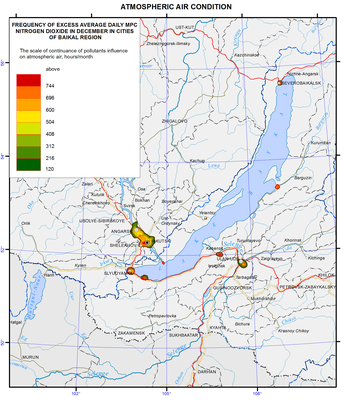
<p>Atmospheric pollution in the basin of Lake Baikal was assessed using a numerically simulated model based on analytical calculations of the differential equation of the transmission and eddy mixing of pollutants. The characteristics of the area of the atmosphere polluted from anthropogenic sources were evaluated. In addition, the critical concentration excess zones (MPC daily average), as well as the duration of such excess in hours per month were determined.</p>
<p>Inventory data on the parameters of the emission sources and long-term data of wind velocity and air temperature derived from daily weather observations conducted every 8 hours<b> </b>were used as input information for calculations to obtain statistically stable climatological characteristics.</p>
<p>The results demonstrate that the environmental situation in several settlements of the Baikal region does not meet the established standard (MPC daily average) for air quality. Furthermore, pollutants from industrial enterprises spread not only over the territory of the settlement, but go far beyond it.</p>
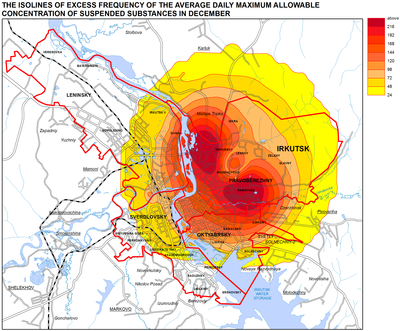
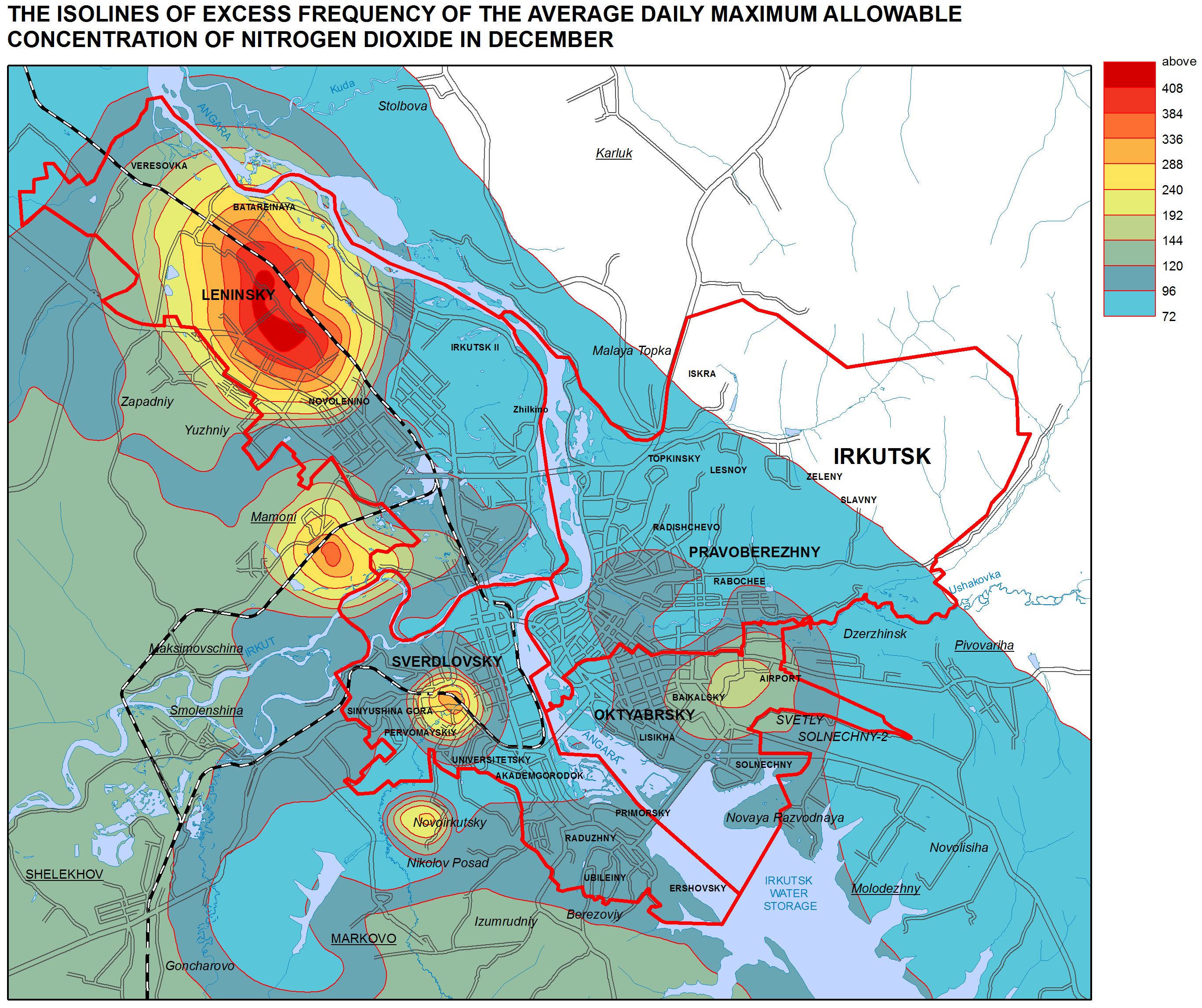
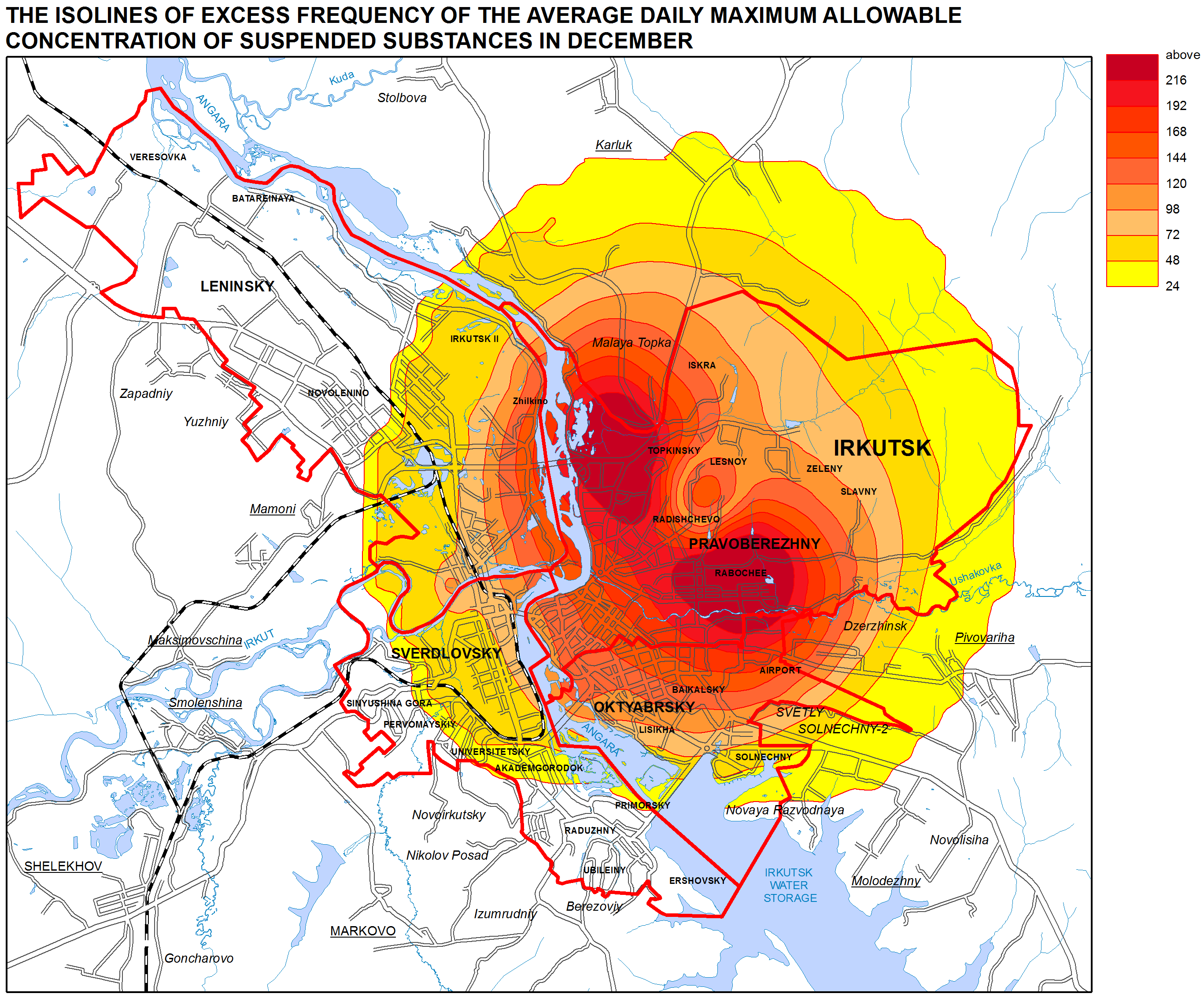
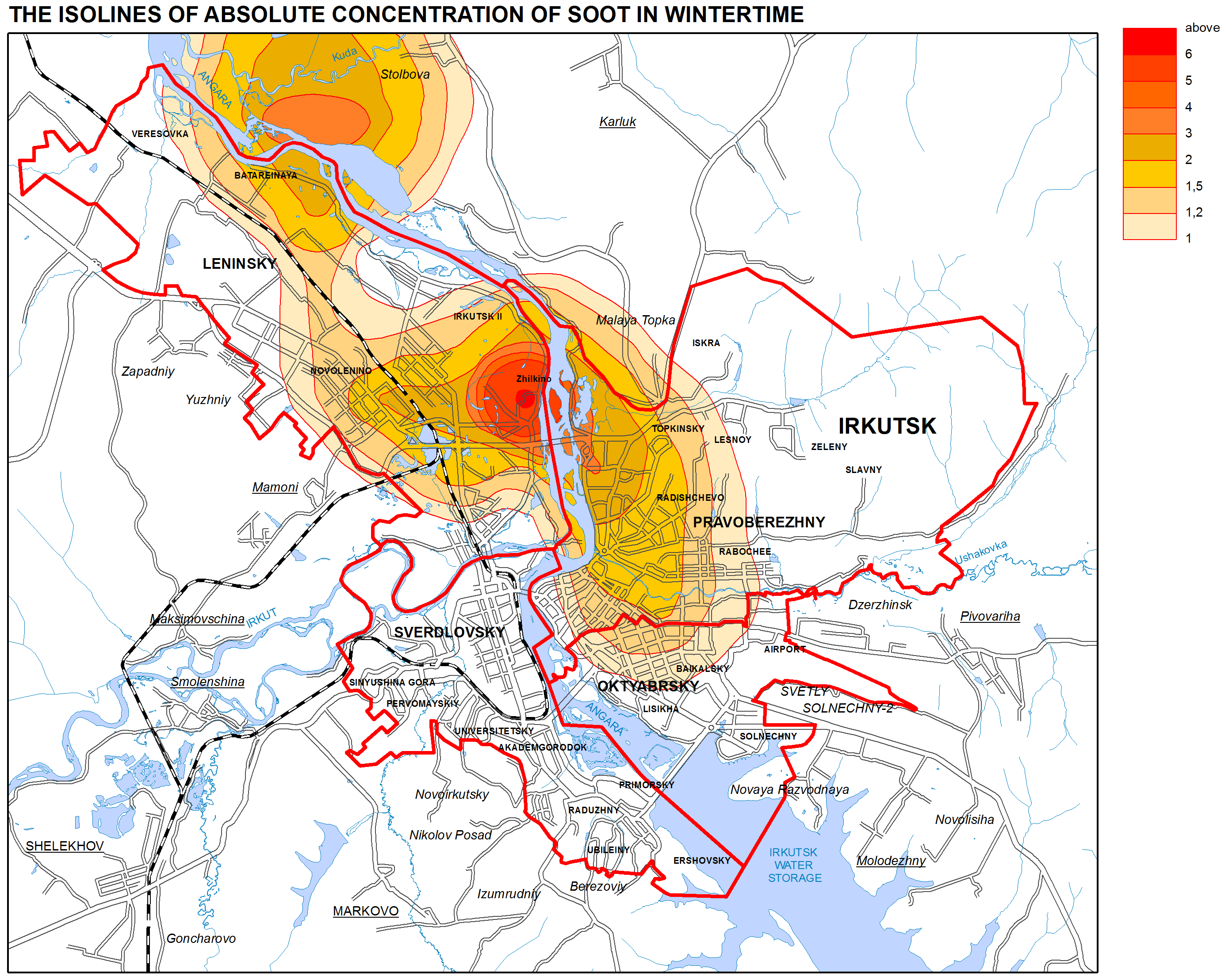
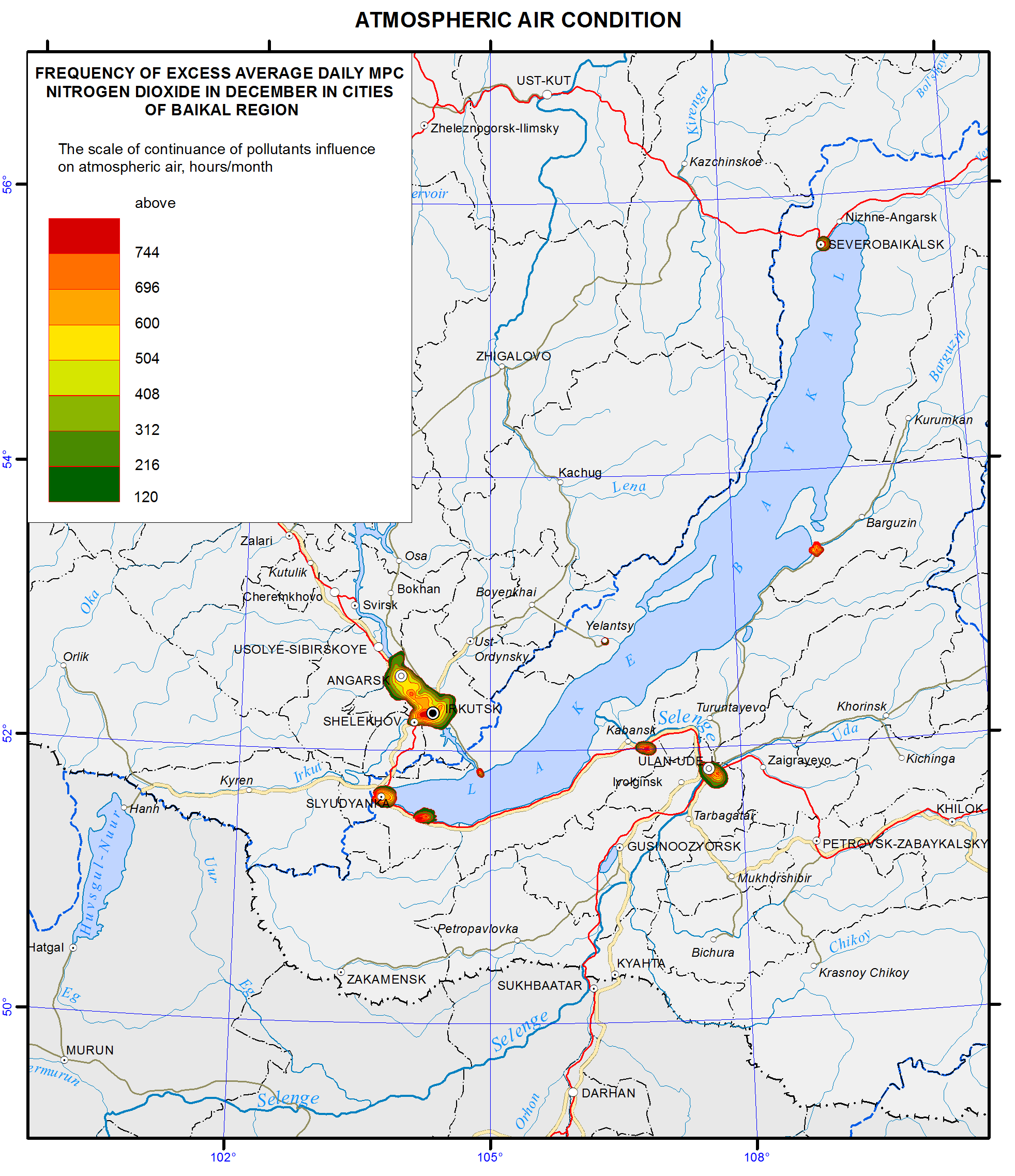
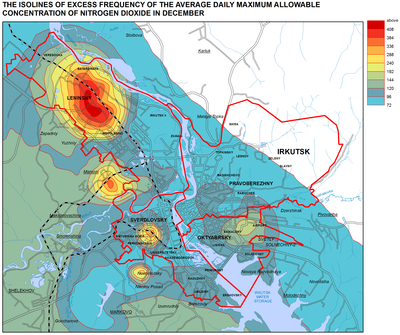
<p class="NormalWeb">In Irkutsk, there are approximately 250 industrial enterprises with over 3,000 stationary anthropogenic air pollution sources. They emit 113 different pollutants and cause a high level of pollution. It is proved by the fact that for the past 10 years Irkutsk has been regularly listed as a top-priority Russian city with the highest level of air pollution. The main production enterprises contributing to the increase of the concentration of harmful substances are JSC “Irkutskenergo” (contributes about 52.9% of pollutants), JSC “Baikalenergo”, and JSC “Irkut Corporation”. It should be noted that the energy sector is the leading industry in terms of air pollution emissions accounting for 82.7% of the total emissions of pollutants into the atmosphere of Irkutsk [Akhtimankina, 2013]. According to the results of calculations, almost the whole territory of the city is affected by the concentration of air pollutants exceeding the established hygienic standards and reaching maximum values in the vicinity of emission sources. Especially difficult situation takes place in winter months (Fig.1, 2).</p>
<p class="NormalWeb">The main stationary air pollution sources in Ulan-Ude are the city’s Central Heating and Power Plant (CHHP)-1 and CHPP-2, Locomotive Repair Plant, Aviation Plant, as well as construction and food processing companies and other enterprises [On the state of …, 2009] that have about 2,000 point-source and distributed pollution sources. The fuel-and-power complex of Ulan-Ude emits almost half of the total volume of the citywide pollution. Combustion gases from cogeneration and boiler plants and other power facilities travel long distances with the prevailing winds (about several kilometers) contributing to the regional environmental pollution. However, the most harmful emissions in Ulan-Ude are those that settle on the territory in the immediate vicinity of the pollution sources within the area of the so-called intensive technogenic pollution. This risk is further compounded by the fact that the majority of the fuel-and-power enterprises are located near the densely populated areas of the city (e.g. CHPP-1). Together with flue gases from power plants, a great number of solid and gaseous pollutants, such as refuse burnout, carbon oxide, and sulfur and nitrogen dioxides also get into the air basin (Fig. 3). Machine building enterprises emit dust, various acids and lye, nitriles and other compounds, phenol, methanol, polycyclic aromatic hydrocarbons, solvents vapors (toluene, xylol, paint thinner, benzene chloride, dichloroethane, spirits, acetates, etc.), ingredients of organic and inorganic fillers (salts and oxides of titanium, zinc, lead, chrome and other metals), as well as components of the film-forming agents (styrole, formaldehyde, etc.). Major contamination sources are galvanizing, paint, and foundry plants, galvanic and accumulator shops, repair workshops, etc [Imetkhenov, 2001]. The research has also demonstrated that the environmental situation in Ulan-Ude is unfavorable due to, on the one hand, the high level of technogenic stress, and, on the other, poor dissipative capacity of the atmosphere resulting in the long-lasting persistence of polluted air. The city’s location in an intermountain basin contributes to the accumulation of industrial emissions.</p>
<p class="NormalWeb">In Ulaanbaatar, there are 860 areal sources of pollution that mostly represent household ovens [Arguchintseva, 2011]. According to the results of calculations, the highest level of air pollution was registered in the areas of concentration of gers (traditional mobile homes) that make up the entire northern part of the city and stretch from the west to the east from the center of Ulaanbaatar. Another high-level air pollution zone is situated on the southwestern edge of the city near Buyant-Ukhaa Airport, where there is a ger village. Here, the wind direction and relief facilitate the transmission of emissions towards the airport (Fig. 4, 5). Air emissions from heating in the ger village lead to the continuous excess of maximum permissible concentrations of pollutants in the area of the airport. Combined with unfavorable meteorological conditions, this means that the airport can experience difficulties with take-off and landing operations for almost half a month, which leads to risks and considerable financial losses due to the idling of aircrafts.</p>
<p class="NormalWeb">These data demonstrate that many settlements in the Baikal basin, especially large ones, have an unfavorable environmental situation, which undoubtedly affects the health of local communities. The population continuously living in the conditions of atmospheric pollution experiences an overall deterioration of health and higher disease incidence especially affecting the respiratory system.</p>
<p class="NormalWeb"> </p>
<p align="center" class="2">References:</p>
<p>Akhtimankina, A. V., Arguchintseva, A. V. (2013). Air pollution from industrial plants of Irkutsk. <i>The Bulletin of Irkutsk State University: Earth Sciences, 6</i>(1), 3-19.</p>
<p>Arguchintseva, A. V., Arguchintsev, V. K., &amp; Ariunsanaa, B-E. (2011). Distribution of pollutants in the atmosphere of Ulaanbaatar. <i>The Bulletin of Irkutsk State University: Earth Sciences 4</i>(2), 17-27.</p>
<p>Imetkhenov, A. B., Kulkov, A. I., &amp; Atutov, A. A. (2001). <i>Ecology, nature protection, and environmental management: Textbook for universities.</i> Ulan-Ude: ESSTU Publishing. p 422.</p>
<p>Russian Agency for Health and Consumer Rights (Rospotrebnadzor). (2012). <i>On the sanitary and epidemiologic situation in Irkutsk oblast in 2011: State report</i>. Irkutsk. p 256.</p>
<p>Ministry of Natural Resources of the Russian Federation. (2009). <i>On the state of Lake Baikal and measures for its protection in 2008: State report</i>. Irkutsk. p 455.</p>]]></content:encoded>
    <dc:publisher>No publisher</dc:publisher>
    <dc:creator>Alexander Ayurzhanaev</dc:creator>
    <dc:rights></dc:rights>
    <dc:date>2014-10-10T03:25:00Z</dc:date>
    <dc:type>Page</dc:type>
  </item>


  <item rdf:about="http://bic.iwlearn.org/en/atlas/atlas/86-2-atmospheric-air-condition-irkutsk_the-isolines/atmospheric-air-condition-irkutsk_the-isolines-map">
    <title>Atmospheric air condition - Irkutsk_The isolines map</title>
    <link>http://bic.iwlearn.org/en/atlas/atlas/86-2-atmospheric-air-condition-irkutsk_the-isolines/atmospheric-air-condition-irkutsk_the-isolines-map</link>
    <description></description>
    <content:encoded xmlns:content="http://purl.org/rss/1.0/modules/content/"><![CDATA[<p><img class="image-inline" src="../../../resolveuid/7780d1cf564f4234a52423cc7a64133b/@@images/image/preview" /></p>
<p><a href="http://bic.iwlearn.org/en/atlas/photos/copy_of__862_AtmosphericairconditionIrkutsk_Theisolines_73.png" class="internal-link">Open full size</a></p>
<p align="center"><b>Atmospheric air condition</b></p>
<p align="center"><b> </b></p>
<p>The atmospheric air deterioration in populated areas continues to be the result of:</p>
<ol>
<li>Emissions from industrial enterprises:</li>
</ol>
<p>- Due to the use of raw products with a high content of pollutants;</p>
<p>- Due to the substantial aging of equipment and/or absence of the waste treatment facilities;</p>
<p>- Due to breakdowns in technological processes, etc.</p>
<ol>
<li>Vehicle emissions:</li>
</ol>
<p>- Due to the growing number of motor vehicles including old cars;</p>
<p>- Due to poor technical condition of vehicles;</p>
<p>- Due to numerous traffic jams [On the sanitary and epidemiologic situation…, 2012].</p>
<p>Emissions from industrial enterprises and vehicles have a very high concentration of various pollutants, such as sulfur dioxide, dust, carbon oxide, nitrogen oxides, benzopyrene, methylmercaptan, and so on that enter the air basin from numerous sources. As a result of photochemical reactions with oxygen and hydrocarbons, these substances generate other pollutants. Therefore, the study of spatiotemporal volatility of air pollutants remains a topical issue. Moreover, it appears important to determine not only the way pollutants spread through the atmosphere around industrial centers, but also the way they distribute over reference areas, one of which being the Baikal basin.</p>
<p>The wind regime over the Baikal shores is composed of windblasts resulted from the macro-scale processes of general circulation and of local origin that include breezes, highland-valley circulation, and gravity windblasts. The basic large-scale windblast over the Baikal basin and its shores is the northwestern air-mass transport. However, under the influence of complex orographic conditions, some typical Baikal winds are also observed here. In the cold period of the year, off-shore winds along with a large-scale air transport are observed at the coast. In the warm period – onshore winds, which is common to seashores. This fact has an apparent impact on the spread of pollutants from industrial enterprises of Irkutsk oblast and the Republic of Buryatia.</p>
<p>Today, almost entire coastal territory of the lake is under a protected status aiming to preserve Lake Baikal and its surroundings. However, despite the existence of specially protected territories around the lake, industrial activity continues to negatively impact the lake’s environment.</p>
<p class="NormalWeb">The main economic specialization of the Baikal Region is determined by its considerable fuel-and-power and primary natural resources. This fact stipulated the development of energy-intensive industries – ferrous and non-ferrous metallurgy, mining, chemical, wood-processing, pulp and paper, and fuel and energy industries. Enterprises of the above-listed industries emit such common pollutants as dust, channel black, sulfur and nitrogen oxides, heavy metals, etc. Moreover, every production has its own specific list of pollutants.</p>
<p>Atmospheric pollution in the basin of Lake Baikal was assessed using a numerically simulated model based on analytical calculations of the differential equation of the transmission and eddy mixing of pollutants. The characteristics of the area of the atmosphere polluted from anthropogenic sources were evaluated. In addition, the critical concentration excess zones (MPC daily average), as well as the duration of such excess in hours per month were determined.</p>
<p>Inventory data on the parameters of the emission sources and long-term data of wind velocity and air temperature derived from daily weather observations conducted every 8 hours<b> </b>were used as input information for calculations to obtain statistically stable climatological characteristics.</p>
<p>The results demonstrate that the environmental situation in several settlements of the Baikal region does not meet the established standard (MPC daily average) for air quality. Furthermore, pollutants from industrial enterprises spread not only over the territory of the settlement, but go far beyond it.</p>
<p class="NormalWeb">In Irkutsk, there are approximately 250 industrial enterprises with over 3,000 stationary anthropogenic air pollution sources. They emit 113 different pollutants and cause a high level of pollution. It is proved by the fact that for the past 10 years Irkutsk has been regularly listed as a top-priority Russian city with the highest level of air pollution. The main production enterprises contributing to the increase of the concentration of harmful substances are JSC “Irkutskenergo” (contributes about 52.9% of pollutants), JSC “Baikalenergo”, and JSC “Irkut Corporation”. It should be noted that the energy sector is the leading industry in terms of air pollution emissions accounting for 82.7% of the total emissions of pollutants into the atmosphere of Irkutsk [Akhtimankina, 2013]. According to the results of calculations, almost the whole territory of the city is affected by the concentration of air pollutants exceeding the established hygienic standards and reaching maximum values in the vicinity of emission sources. Especially difficult situation takes place in winter months (Fig.1, 2).</p>
<p class="NormalWeb">The main stationary air pollution sources in Ulan-Ude are the city’s Central Heating and Power Plant (CHHP)-1 and CHPP-2, Locomotive Repair Plant, Aviation Plant, as well as construction and food processing companies and other enterprises [On the state of …, 2009] that have about 2,000 point-source and distributed pollution sources. The fuel-and-power complex of Ulan-Ude emits almost half of the total volume of the citywide pollution. Combustion gases from cogeneration and boiler plants and other power facilities travel long distances with the prevailing winds (about several kilometers) contributing to the regional environmental pollution. However, the most harmful emissions in Ulan-Ude are those that settle on the territory in the immediate vicinity of the pollution sources within the area of the so-called intensive technogenic pollution. This risk is further compounded by the fact that the majority of the fuel-and-power enterprises are located near the densely populated areas of the city (e.g. CHPP-1). Together with flue gases from power plants, a great number of solid and gaseous pollutants, such as refuse burnout, carbon oxide, and sulfur and nitrogen dioxides also get into the air basin (Fig. 3). Machine building enterprises emit dust, various acids and lye, nitriles and other compounds, phenol, methanol, polycyclic aromatic hydrocarbons, solvents vapors (toluene, xylol, paint thinner, benzene chloride, dichloroethane, spirits, acetates, etc.), ingredients of organic and inorganic fillers (salts and oxides of titanium, zinc, lead, chrome and other metals), as well as components of the film-forming agents (styrole, formaldehyde, etc.). Major contamination sources are galvanizing, paint, and foundry plants, galvanic and accumulator shops, repair workshops, etc [Imetkhenov, 2001]. The research has also demonstrated that the environmental situation in Ulan-Ude is unfavorable due to, on the one hand, the high level of technogenic stress, and, on the other, poor dissipative capacity of the atmosphere resulting in the long-lasting persistence of polluted air. The city’s location in an intermountain basin contributes to the accumulation of industrial emissions.</p>
<p class="NormalWeb">In Ulaanbaatar, there are 860 areal sources of pollution that mostly represent household ovens [Arguchintseva, 2011]. According to the results of calculations, the highest level of air pollution was registered in the areas of concentration of gers (traditional mobile homes) that make up the entire northern part of the city and stretch from the west to the east from the center of Ulaanbaatar. Another high-level air pollution zone is situated on the southwestern edge of the city near Buyant-Ukhaa Airport, where there is a ger village. Here, the wind direction and relief facilitate the transmission of emissions towards the airport (Fig. 4, 5). Air emissions from heating in the ger village lead to the continuous excess of maximum permissible concentrations of pollutants in the area of the airport. Combined with unfavorable meteorological conditions, this means that the airport can experience difficulties with take-off and landing operations for almost half a month, which leads to risks and considerable financial losses due to the idling of aircrafts.</p>
<p class="NormalWeb">These data demonstrate that many settlements in the Baikal basin, especially large ones, have an unfavorable environmental situation, which undoubtedly affects the health of local communities. The population continuously living in the conditions of atmospheric pollution experiences an overall deterioration of health and higher disease incidence especially affecting the respiratory system.</p>
<p class="NormalWeb"> </p>
<p align="center" class="2">References:</p>
<p>Akhtimankina, A. V., Arguchintseva, A. V. (2013). Air pollution from industrial plants of Irkutsk. <i>The Bulletin of Irkutsk State University: Earth Sciences, 6</i>(1), 3-19.</p>
<p>Arguchintseva, A. V., Arguchintsev, V. K., &amp; Ariunsanaa, B-E. (2011). Distribution of pollutants in the atmosphere of Ulaanbaatar. <i>The Bulletin of Irkutsk State University: Earth Sciences 4</i>(2), 17-27.</p>
<p>Imetkhenov, A. B., Kulkov, A. I., &amp; Atutov, A. A. (2001). <i>Ecology, nature protection, and environmental management: Textbook for universities.</i> Ulan-Ude: ESSTU Publishing. p 422.</p>
<p>Russian Agency for Health and Consumer Rights (Rospotrebnadzor). (2012). <i>On the sanitary and epidemiologic situation in Irkutsk oblast in 2011: State report</i>. Irkutsk. p 256.</p>
<p>Ministry of Natural Resources of the Russian Federation. (2009). <i>On the state of Lake Baikal and measures for its protection in 2008: State report</i>. Irkutsk. p 455.</p>]]></content:encoded>
    <dc:publisher>No publisher</dc:publisher>
    <dc:creator>Alexander Ayurzhanaev</dc:creator>
    <dc:rights></dc:rights>
    <dc:date>2014-10-10T03:15:00Z</dc:date>
    <dc:type>Page</dc:type>
  </item>


  <item rdf:about="http://bic.iwlearn.org/en/atlas/atlas/86-2-atmospheric-air-condition-irkutsk_the-isolines">
    <title>086-2. Atmospheric air condition - Irkutsk_The isolines map</title>
    <link>http://bic.iwlearn.org/en/atlas/atlas/86-2-atmospheric-air-condition-irkutsk_the-isolines</link>
    <description></description>
    
    <dc:publisher>No publisher</dc:publisher>
    <dc:creator>Alexander Ayurzhanaev</dc:creator>
    <dc:rights></dc:rights>
    <dc:date>2014-10-10T03:15:00Z</dc:date>
    <dc:type>Folder</dc:type>
  </item>


  <item rdf:about="http://bic.iwlearn.org/en/atlas/atlas/86-1-atmospheric-air-condition-irkutsk_the-isolines-of-absolute-concentration-of-soot-in-wintertime-map/atmospheric-air-condition-irkutsk_the-isolines-of-absolute-concentration-of-soot-in-wintertime-map">
    <title>Atmospheric air condition - Irkutsk_The isolines of absolute concentration of soot in wintertime map</title>
    <link>http://bic.iwlearn.org/en/atlas/atlas/86-1-atmospheric-air-condition-irkutsk_the-isolines-of-absolute-concentration-of-soot-in-wintertime-map/atmospheric-air-condition-irkutsk_the-isolines-of-absolute-concentration-of-soot-in-wintertime-map</link>
    <description></description>
    <content:encoded xmlns:content="http://purl.org/rss/1.0/modules/content/"><![CDATA[<p><img class="image-inline" src="../../../resolveuid/6e2e7efdd89a47469b7384667ab4a4a1/@@images/image/preview" /></p>
<p><a href="http://bic.iwlearn.org/en/atlas/photos/copy_of__861_AtmosphericairconditionIrkutsk_Theisolinesofabsoluteconcentrationofsootinwintertime.png" class="internal-link">Open full size</a></p>
<p align="center"><strong><strong>Atmospheric air condition</strong></strong></p>
<p>The atmospheric air deterioration in populated areas continues to be the result of:</p>
<ol>
<li>Emissions from industrial enterprises:</li>
</ol>
<p>- Due to the use of raw products with a high content of pollutants;</p>
<p>- Due to the substantial aging of equipment and/or absence of the waste treatment facilities;</p>
<p>- Due to breakdowns in technological processes, etc.</p>
<ol>
<li>Vehicle emissions:</li>
</ol>
<p>- Due to the growing number of motor vehicles including old cars;</p>
<p>- Due to poor technical condition of vehicles;</p>
<p>- Due to numerous traffic jams [On the sanitary and epidemiologic situation…, 2012].</p>
<p>Emissions from industrial enterprises and vehicles have a very high concentration of various pollutants, such as sulfur dioxide, dust, carbon oxide, nitrogen oxides, benzopyrene, methylmercaptan, and so on that enter the air basin from numerous sources. As a result of photochemical reactions with oxygen and hydrocarbons, these substances generate other pollutants. Therefore, the study of spatiotemporal volatility of air pollutants remains a topical issue. Moreover, it appears important to determine not only the way pollutants spread through the atmosphere around industrial centers, but also the way they distribute over reference areas, one of which being the Baikal basin.</p>
<p>The wind regime over the Baikal shores is composed of windblasts resulted from the macro-scale processes of general circulation and of local origin that include breezes, highland-valley circulation, and gravity windblasts. The basic large-scale windblast over the Baikal basin and its shores is the northwestern air-mass transport. However, under the influence of complex orographic conditions, some typical Baikal winds are also observed here. In the cold period of the year, off-shore winds along with a large-scale air transport are observed at the coast. In the warm period – onshore winds, which is common to seashores. This fact has an apparent impact on the spread of pollutants from industrial enterprises of Irkutsk oblast and the Republic of Buryatia.</p>
<p>Today, almost entire coastal territory of the lake is under a protected status aiming to preserve Lake Baikal and its surroundings. However, despite the existence of specially protected territories around the lake, industrial activity continues to negatively impact the lake’s environment.</p>
<p class="NormalWeb">The main economic specialization of the Baikal Region is determined by its considerable fuel-and-power and primary natural resources. This fact stipulated the development of energy-intensive industries – ferrous and non-ferrous metallurgy, mining, chemical, wood-processing, pulp and paper, and fuel and energy industries. Enterprises of the above-listed industries emit such common pollutants as dust, channel black, sulfur and nitrogen oxides, heavy metals, etc. Moreover, every production has its own specific list of pollutants.</p>
<p>Atmospheric pollution in the basin of Lake Baikal was assessed using a numerically simulated model based on analytical calculations of the differential equation of the transmission and eddy mixing of pollutants. The characteristics of the area of the atmosphere polluted from anthropogenic sources were evaluated. In addition, the critical concentration excess zones (MPC daily average), as well as the duration of such excess in hours per month were determined.</p>
<p>Inventory data on the parameters of the emission sources and long-term data of wind velocity and air temperature derived from daily weather observations conducted every 8 hours<strong> </strong>were used as input information for calculations to obtain statistically stable climatological characteristics.</p>
<p>The results demonstrate that the environmental situation in several settlements of the Baikal region does not meet the established standard (MPC daily average) for air quality. Furthermore, pollutants from industrial enterprises spread not only over the territory of the settlement, but go far beyond it.</p>
<p class="NormalWeb">In Irkutsk, there are approximately 250 industrial enterprises with over 3,000 stationary anthropogenic air pollution sources. They emit 113 different pollutants and cause a high level of pollution. It is proved by the fact that for the past 10 years Irkutsk has been regularly listed as a top-priority Russian city with the highest level of air pollution. The main production enterprises contributing to the increase of the concentration of harmful substances are JSC “Irkutskenergo” (contributes about 52.9% of pollutants), JSC “Baikalenergo”, and JSC “Irkut Corporation”. It should be noted that the energy sector is the leading industry in terms of air pollution emissions accounting for 82.7% of the total emissions of pollutants into the atmosphere of Irkutsk [Akhtimankina, 2013]. According to the results of calculations, almost the whole territory of the city is affected by the concentration of air pollutants exceeding the established hygienic standards and reaching maximum values in the vicinity of emission sources. Especially difficult situation takes place in winter months (Fig.1, 2).</p>
<p class="NormalWeb">The main stationary air pollution sources in Ulan-Ude are the city’s Central Heating and Power Plant (CHHP)-1 and CHPP-2, Locomotive Repair Plant, Aviation Plant, as well as construction and food processing companies and other enterprises [On the state of …, 2009] that have about 2,000 point-source and distributed pollution sources. The fuel-and-power complex of Ulan-Ude emits almost half of the total volume of the citywide pollution. Combustion gases from cogeneration and boiler plants and other power facilities travel long distances with the prevailing winds (about several kilometers) contributing to the regional environmental pollution. However, the most harmful emissions in Ulan-Ude are those that settle on the territory in the immediate vicinity of the pollution sources within the area of the so-called intensive technogenic pollution. This risk is further compounded by the fact that the majority of the fuel-and-power enterprises are located near the densely populated areas of the city (e.g. CHPP-1). Together with flue gases from power plants, a great number of solid and gaseous pollutants, such as refuse burnout, carbon oxide, and sulfur and nitrogen dioxides also get into the air basin (Fig. 3). Machine building enterprises emit dust, various acids and lye, nitriles and other compounds, phenol, methanol, polycyclic aromatic hydrocarbons, solvents vapors (toluene, xylol, paint thinner, benzene chloride, dichloroethane, spirits, acetates, etc.), ingredients of organic and inorganic fillers (salts and oxides of titanium, zinc, lead, chrome and other metals), as well as components of the film-forming agents (styrole, formaldehyde, etc.). Major contamination sources are galvanizing, paint, and foundry plants, galvanic and accumulator shops, repair workshops, etc [Imetkhenov, 2001]. The research has also demonstrated that the environmental situation in Ulan-Ude is unfavorable due to, on the one hand, the high level of technogenic stress, and, on the other, poor dissipative capacity of the atmosphere resulting in the long-lasting persistence of polluted air. The city’s location in an intermountain basin contributes to the accumulation of industrial emissions.</p>
<p class="NormalWeb">In Ulaanbaatar, there are 860 areal sources of pollution that mostly represent household ovens [Arguchintseva, 2011]. According to the results of calculations, the highest level of air pollution was registered in the areas of concentration of gers (traditional mobile homes) that make up the entire northern part of the city and stretch from the west to the east from the center of Ulaanbaatar. Another high-level air pollution zone is situated on the southwestern edge of the city near Buyant-Ukhaa Airport, where there is a ger village. Here, the wind direction and relief facilitate the transmission of emissions towards the airport (Fig. 4, 5). Air emissions from heating in the ger village lead to the continuous excess of maximum permissible concentrations of pollutants in the area of the airport. Combined with unfavorable meteorological conditions, this means that the airport can experience difficulties with take-off and landing operations for almost half a month, which leads to risks and considerable financial losses due to the idling of aircrafts.</p>
<p class="NormalWeb">These data demonstrate that many settlements in the Baikal basin, especially large ones, have an unfavorable environmental situation, which undoubtedly affects the health of local communities. The population continuously living in the conditions of atmospheric pollution experiences an overall deterioration of health and higher disease incidence especially affecting the respiratory system.</p>
<p class="NormalWeb"> </p>
<p align="center" class="2">References:</p>
<p>Akhtimankina, A. V., Arguchintseva, A. V. (2013). Air pollution from industrial plants of Irkutsk. <i>The Bulletin of Irkutsk State University: Earth Sciences, 6</i>(1), 3-19.</p>
<p>Arguchintseva, A. V., Arguchintsev, V. K., &amp; Ariunsanaa, B-E. (2011). Distribution of pollutants in the atmosphere of Ulaanbaatar. <i>The Bulletin of Irkutsk State University: Earth Sciences 4</i>(2), 17-27.</p>
<p>Imetkhenov, A. B., Kulkov, A. I., &amp; Atutov, A. A. (2001). <i>Ecology, nature protection, and environmental management: Textbook for universities.</i> Ulan-Ude: ESSTU Publishing. p 422.</p>
<p>Russian Agency for Health and Consumer Rights (Rospotrebnadzor). (2012). <i>On the sanitary and epidemiologic situation in Irkutsk oblast in 2011: State report</i>. Irkutsk. p 256.</p>
<p>Ministry of Natural Resources of the Russian Federation. (2009). <i>On the state of Lake Baikal and measures for its protection in 2008: State report</i>. Irkutsk. p 455.</p>]]></content:encoded>
    <dc:publisher>No publisher</dc:publisher>
    <dc:creator>Alexander Ayurzhanaev</dc:creator>
    <dc:rights></dc:rights>
    <dc:date>2014-10-10T03:10:00Z</dc:date>
    <dc:type>Page</dc:type>
  </item>


  <item rdf:about="http://bic.iwlearn.org/en/atlas/atlas/86-1-atmospheric-air-condition-irkutsk_the-isolines-of-absolute-concentration-of-soot-in-wintertime-map">
    <title>086-1. Atmospheric air condition - Irkutsk_The isolines of absolute concentration of soot in wintertime map</title>
    <link>http://bic.iwlearn.org/en/atlas/atlas/86-1-atmospheric-air-condition-irkutsk_the-isolines-of-absolute-concentration-of-soot-in-wintertime-map</link>
    <description></description>
    
    <dc:publisher>No publisher</dc:publisher>
    <dc:creator>Alexander Ayurzhanaev</dc:creator>
    <dc:rights></dc:rights>
    <dc:date>2014-10-10T03:05:00Z</dc:date>
    <dc:type>Folder</dc:type>
  </item>


  <item rdf:about="http://bic.iwlearn.org/en/atlas/atlas/85-atmospheric-air-condition-map/atmospheric-air-condition-map">
    <title>Atmospheric air condition map</title>
    <link>http://bic.iwlearn.org/en/atlas/atlas/85-atmospheric-air-condition-map/atmospheric-air-condition-map</link>
    <description></description>
    <content:encoded xmlns:content="http://purl.org/rss/1.0/modules/content/"><![CDATA[<p><img class="image-inline" src="../../../resolveuid/c03172eef48f4c6381d12f54ae2048b4/@@images/image/preview" /></p>
<p><a href="http://bic.iwlearn.org/en/atlas/photos/copy_of__85_Atmosphericaircondition.png" class="internal-link">Open full size</a></p>
<p align="center"><strong><strong>Atmospheric air condition</strong></strong></p>
<p>The atmospheric air deterioration in populated areas continues to be the result of:</p>
<ol>
<li>Emissions from industrial enterprises:</li>
</ol>
<p>- Due to the use of raw products with a high content of pollutants;</p>
<p>- Due to the substantial aging of equipment and/or absence of the waste treatment facilities;</p>
<p>- Due to breakdowns in technological processes, etc.</p>
<ol>
<li>Vehicle emissions:</li>
</ol>
<p>- Due to the growing number of motor vehicles including old cars;</p>
<p>- Due to poor technical condition of vehicles;</p>
<p>- Due to numerous traffic jams [On the sanitary and epidemiologic situation…, 2012].</p>
<p>Emissions from industrial enterprises and vehicles have a very high concentration of various pollutants, such as sulfur dioxide, dust, carbon oxide, nitrogen oxides, benzopyrene, methylmercaptan, and so on that enter the air basin from numerous sources. As a result of photochemical reactions with oxygen and hydrocarbons, these substances generate other pollutants. Therefore, the study of spatiotemporal volatility of air pollutants remains a topical issue. Moreover, it appears important to determine not only the way pollutants spread through the atmosphere around industrial centers, but also the way they distribute over reference areas, one of which being the Baikal basin.</p>
<p>The wind regime over the Baikal shores is composed of windblasts resulted from the macro-scale processes of general circulation and of local origin that include breezes, highland-valley circulation, and gravity windblasts. The basic large-scale windblast over the Baikal basin and its shores is the northwestern air-mass transport. However, under the influence of complex orographic conditions, some typical Baikal winds are also observed here. In the cold period of the year, off-shore winds along with a large-scale air transport are observed at the coast. In the warm period – onshore winds, which is common to seashores. This fact has an apparent impact on the spread of pollutants from industrial enterprises of Irkutsk oblast and the Republic of Buryatia.</p>
<p>Today, almost entire coastal territory of the lake is under a protected status aiming to preserve Lake Baikal and its surroundings. However, despite the existence of specially protected territories around the lake, industrial activity continues to negatively impact the lake’s environment.</p>
<p class="NormalWeb">The main economic specialization of the Baikal Region is determined by its considerable fuel-and-power and primary natural resources. This fact stipulated the development of energy-intensive industries – ferrous and non-ferrous metallurgy, mining, chemical, wood-processing, pulp and paper, and fuel and energy industries. Enterprises of the above-listed industries emit such common pollutants as dust, channel black, sulfur and nitrogen oxides, heavy metals, etc. Moreover, every production has its own specific list of pollutants.</p>
<p>Atmospheric pollution in the basin of Lake Baikal was assessed using a numerically simulated model based on analytical calculations of the differential equation of the transmission and eddy mixing of pollutants. The characteristics of the area of the atmosphere polluted from anthropogenic sources were evaluated. In addition, the critical concentration excess zones (MPC daily average), as well as the duration of such excess in hours per month were determined.</p>
<p>Inventory data on the parameters of the emission sources and long-term data of wind velocity and air temperature derived from daily weather observations conducted every 8 hours<strong> </strong>were used as input information for calculations to obtain statistically stable climatological characteristics.</p>
<p>The results demonstrate that the environmental situation in several settlements of the Baikal region does not meet the established standard (MPC daily average) for air quality. Furthermore, pollutants from industrial enterprises spread not only over the territory of the settlement, but go far beyond it.</p>
<p class="NormalWeb">In Irkutsk, there are approximately 250 industrial enterprises with over 3,000 stationary anthropogenic air pollution sources. They emit 113 different pollutants and cause a high level of pollution. It is proved by the fact that for the past 10 years Irkutsk has been regularly listed as a top-priority Russian city with the highest level of air pollution. The main production enterprises contributing to the increase of the concentration of harmful substances are JSC “Irkutskenergo” (contributes about 52.9% of pollutants), JSC “Baikalenergo”, and JSC “Irkut Corporation”. It should be noted that the energy sector is the leading industry in terms of air pollution emissions accounting for 82.7% of the total emissions of pollutants into the atmosphere of Irkutsk [Akhtimankina, 2013]. According to the results of calculations, almost the whole territory of the city is affected by the concentration of air pollutants exceeding the established hygienic standards and reaching maximum values in the vicinity of emission sources. Especially difficult situation takes place in winter months (Fig.1, 2).</p>
<p class="NormalWeb">The main stationary air pollution sources in Ulan-Ude are the city’s Central Heating and Power Plant (CHHP)-1 and CHPP-2, Locomotive Repair Plant, Aviation Plant, as well as construction and food processing companies and other enterprises [On the state of …, 2009] that have about 2,000 point-source and distributed pollution sources. The fuel-and-power complex of Ulan-Ude emits almost half of the total volume of the citywide pollution. Combustion gases from cogeneration and boiler plants and other power facilities travel long distances with the prevailing winds (about several kilometers) contributing to the regional environmental pollution. However, the most harmful emissions in Ulan-Ude are those that settle on the territory in the immediate vicinity of the pollution sources within the area of the so-called intensive technogenic pollution. This risk is further compounded by the fact that the majority of the fuel-and-power enterprises are located near the densely populated areas of the city (e.g. CHPP-1). Together with flue gases from power plants, a great number of solid and gaseous pollutants, such as refuse burnout, carbon oxide, and sulfur and nitrogen dioxides also get into the air basin (Fig. 3). Machine building enterprises emit dust, various acids and lye, nitriles and other compounds, phenol, methanol, polycyclic aromatic hydrocarbons, solvents vapors (toluene, xylol, paint thinner, benzene chloride, dichloroethane, spirits, acetates, etc.), ingredients of organic and inorganic fillers (salts and oxides of titanium, zinc, lead, chrome and other metals), as well as components of the film-forming agents (styrole, formaldehyde, etc.). Major contamination sources are galvanizing, paint, and foundry plants, galvanic and accumulator shops, repair workshops, etc [Imetkhenov, 2001]. The research has also demonstrated that the environmental situation in Ulan-Ude is unfavorable due to, on the one hand, the high level of technogenic stress, and, on the other, poor dissipative capacity of the atmosphere resulting in the long-lasting persistence of polluted air. The city’s location in an intermountain basin contributes to the accumulation of industrial emissions.</p>
<p class="NormalWeb">In Ulaanbaatar, there are 860 areal sources of pollution that mostly represent household ovens [Arguchintseva, 2011]. According to the results of calculations, the highest level of air pollution was registered in the areas of concentration of gers (traditional mobile homes) that make up the entire northern part of the city and stretch from the west to the east from the center of Ulaanbaatar. Another high-level air pollution zone is situated on the southwestern edge of the city near Buyant-Ukhaa Airport, where there is a ger village. Here, the wind direction and relief facilitate the transmission of emissions towards the airport (Fig. 4, 5). Air emissions from heating in the ger village lead to the continuous excess of maximum permissible concentrations of pollutants in the area of the airport. Combined with unfavorable meteorological conditions, this means that the airport can experience difficulties with take-off and landing operations for almost half a month, which leads to risks and considerable financial losses due to the idling of aircrafts.</p>
<p class="NormalWeb">These data demonstrate that many settlements in the Baikal basin, especially large ones, have an unfavorable environmental situation, which undoubtedly affects the health of local communities. The population continuously living in the conditions of atmospheric pollution experiences an overall deterioration of health and higher disease incidence especially affecting the respiratory system.</p>
<p class="NormalWeb"> </p>
<p align="center" class="2">References:</p>
<p>Akhtimankina, A. V., Arguchintseva, A. V. (2013). Air pollution from industrial plants of Irkutsk. <i>The Bulletin of Irkutsk State University: Earth Sciences, 6</i>(1), 3-19.</p>
<p>Arguchintseva, A. V., Arguchintsev, V. K., &amp; Ariunsanaa, B-E. (2011). Distribution of pollutants in the atmosphere of Ulaanbaatar. <i>The Bulletin of Irkutsk State University: Earth Sciences 4</i>(2), 17-27.</p>
<p>Imetkhenov, A. B., Kulkov, A. I., &amp; Atutov, A. A. (2001). <i>Ecology, nature protection, and environmental management: Textbook for universities.</i> Ulan-Ude: ESSTU Publishing. p 422.</p>
<p>Russian Agency for Health and Consumer Rights (Rospotrebnadzor). (2012). <i>On the sanitary and epidemiologic situation in Irkutsk oblast in 2011: State report</i>. Irkutsk. p 256.</p>
<p>Ministry of Natural Resources of the Russian Federation. (2009). <i>On the state of Lake Baikal and measures for its protection in 2008: State report</i>. Irkutsk. p 455.</p>]]></content:encoded>
    <dc:publisher>No publisher</dc:publisher>
    <dc:creator>Alexander Ayurzhanaev</dc:creator>
    <dc:rights></dc:rights>
    <dc:date>2014-10-10T02:55:00Z</dc:date>
    <dc:type>Page</dc:type>
  </item>


  <item rdf:about="http://bic.iwlearn.org/en/atlas/atlas/85-atmospheric-air-condition-map">
    <title>085. Atmospheric air condition map</title>
    <link>http://bic.iwlearn.org/en/atlas/atlas/85-atmospheric-air-condition-map</link>
    <description></description>
    
    <dc:publisher>No publisher</dc:publisher>
    <dc:creator>Alexander Ayurzhanaev</dc:creator>
    <dc:rights></dc:rights>
    <dc:date>2014-10-10T02:10:00Z</dc:date>
    <dc:type>Folder</dc:type>
  </item>


  <item rdf:about="http://bic.iwlearn.org/en/atlas/atlas/84-trends-rainfall-map/trends-rainfall-map">
    <title>Trends rainfall map</title>
    <link>http://bic.iwlearn.org/en/atlas/atlas/84-trends-rainfall-map/trends-rainfall-map</link>
    <description></description>
    <content:encoded xmlns:content="http://purl.org/rss/1.0/modules/content/"><![CDATA[<p><img class="image-inline" src="../../../resolveuid/2257bbd647bc4392a5a17b47f2af2c63/@@images/image/preview" /></p>
<p><a href="http://bic.iwlearn.org/en/atlas/photos/copy_of__84_TRENDSrainfall.png" class="internal-link">Open full size</a></p>
<p align="center"><strong>C</strong><strong>limate change</strong></p>
<p align="center"><strong> </strong></p>
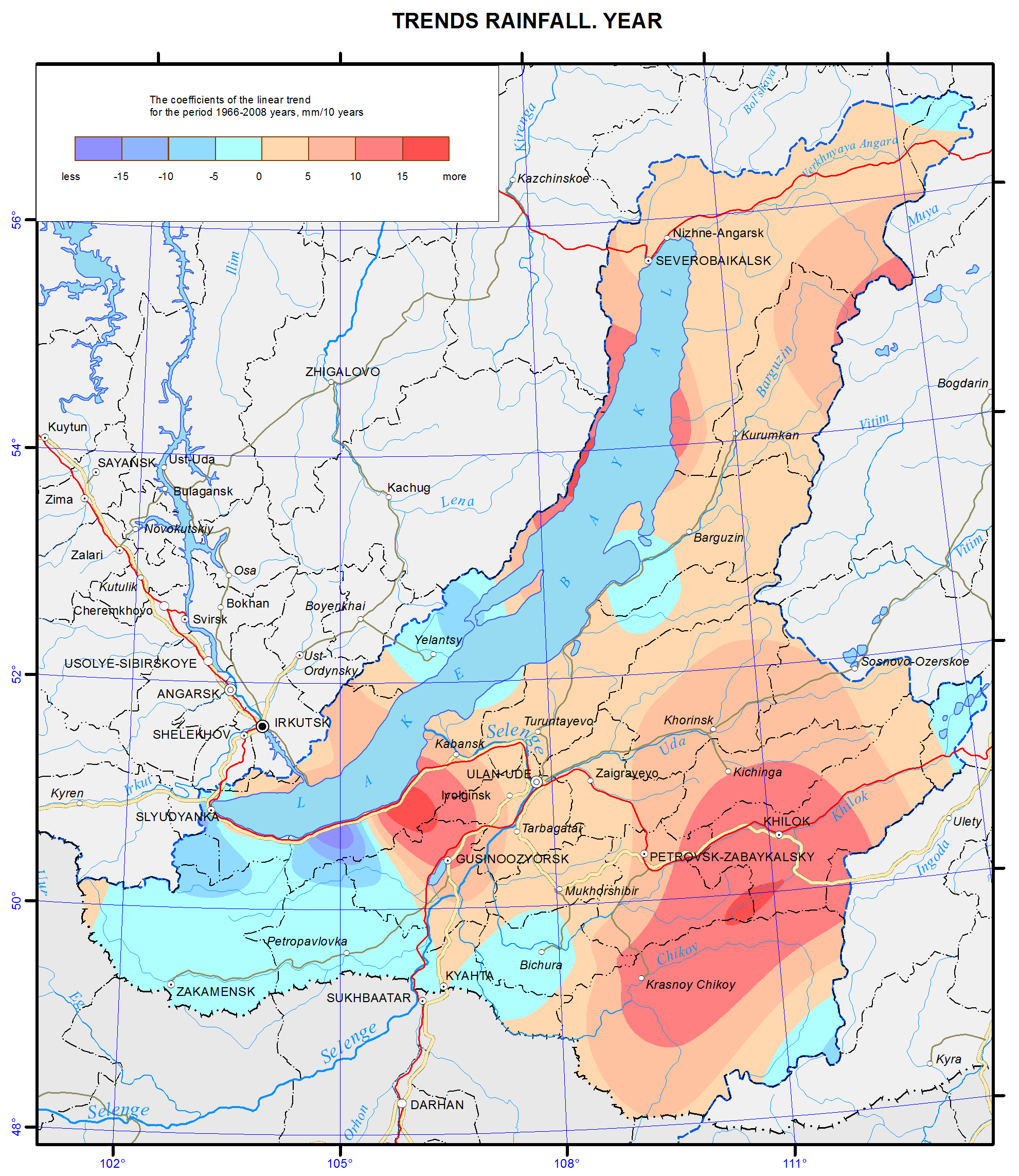
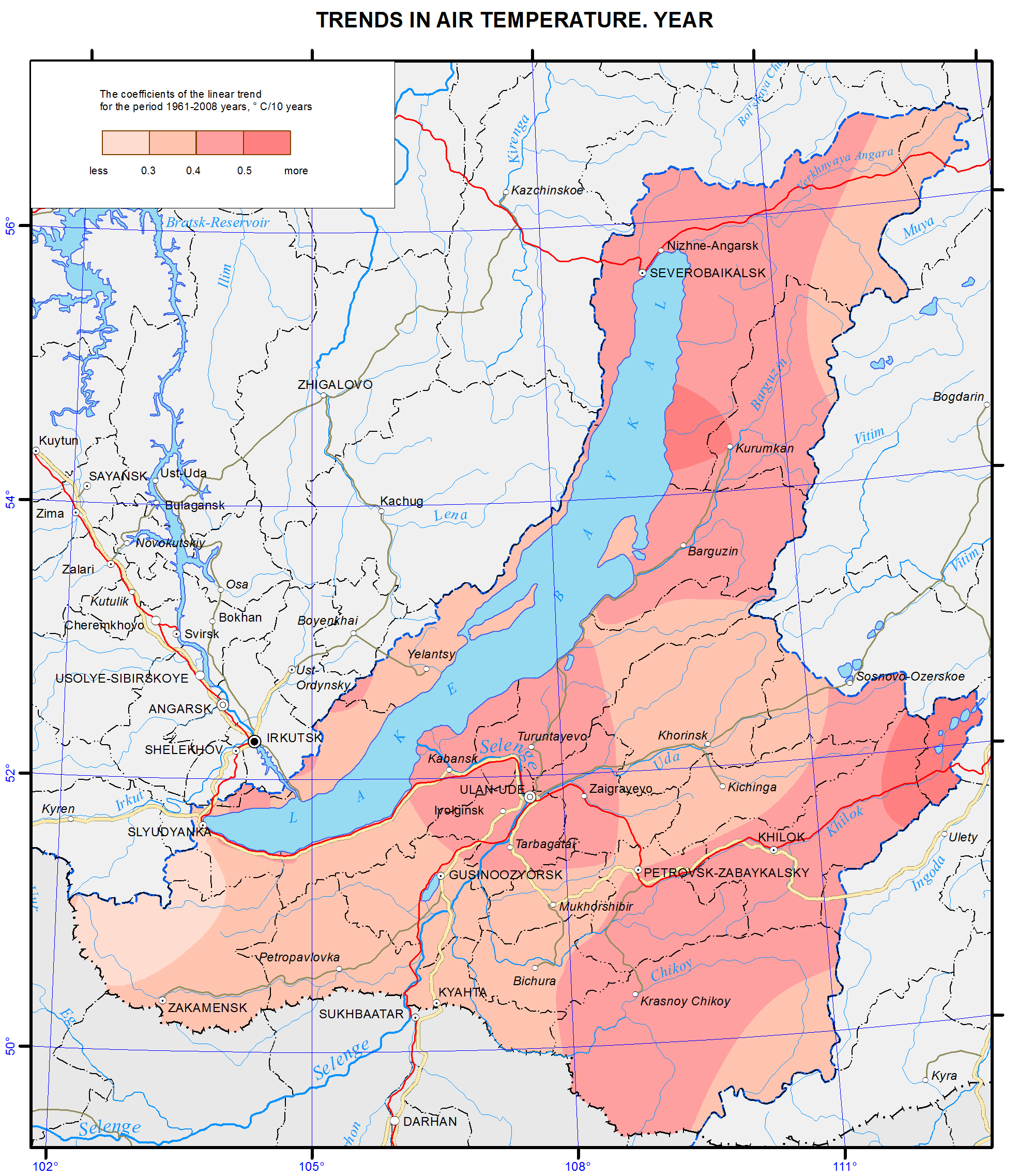
<p>The ratio of a linear trend, which is determined by the least square technique and characterizes the average rate of the climatic variable corresponding to the trend, was used as a measure of intensity of climatic changes within a specified period of time.</p>
<p>Annual temperature of the lower layer of air is used to describe the current climatic changes. The physical sense of this climatic characteristic is determined by an almost linear dependence of longwave radiation coming from the top border of the atmosphere on the temperature of the lower air layer. Given this dependence, the assessment of the indicated temperature is largely analogous to the estimation of the average outgoing longwave radiation, which can be used to determine the speed of heating or cooling of the Earth's surface.</p>
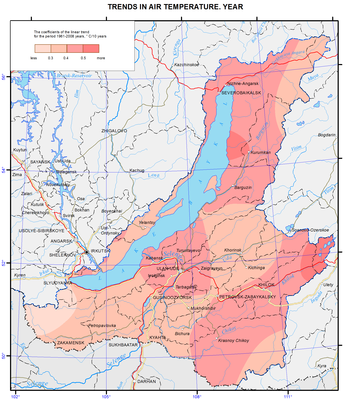
<p>Annual temperature trend values in 1961-2008 were positive and ranged from 0.24° to 0.52° C/10 years, which is an order of magnitude higher than similar ratios calculated on the average for the Northern Hemisphere. Maximum values of the trend are observed in the north of the study area. One of the centers is located in the Barguzinsky reserve. This area (on the northeastern coast of Lake Baikal) is also interesting, as unlike other weather stations it has the same high trends throughout the year. The majority of these locations is characterized by the annual variation of the coefficients describing the linear trend of air temperature, with a peak in February and a minimum in the summer months. July has an asymmetric distribution of trend values. Although they are all statistically significant, their maximum clearly shifts to the territory of Zabaikalsky krai. The foothills of the Khamar-Daban (the Khamar-Daban station) and the upper Lena river (the Kachug station) can be called the local areas of minimal trends during all months of the year.</p>
<p> </p>
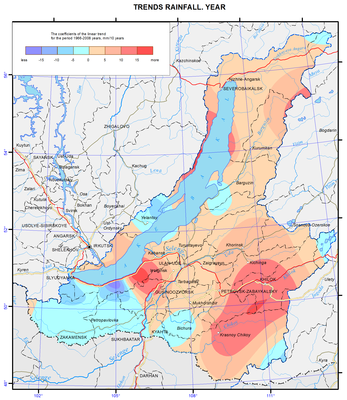
<p>A quite different pattern is observed for the trends in annual precipitation. Positive trends take place approximately on the two thirds of the basin, where there are two places with maximum values exceeding 10-15 mm/10 years – in the basins of the rivers Khilok and Chikoy and in the town of Babushkin and its adjacent mountainous area. On the other hand, negative trends in precipitation with the gradient of -15 mm/ 10 years are observed in the most part of the Khamar-Daban mountain range, southern Buryatia, the Olkhon area, the coastal area of Barguzinsky Bay, and some other territories.</p>]]></content:encoded>
    <dc:publisher>No publisher</dc:publisher>
    <dc:creator>Alexander Ayurzhanaev</dc:creator>
    <dc:rights></dc:rights>
    <dc:date>2014-10-10T01:55:00Z</dc:date>
    <dc:type>Page</dc:type>
  </item>


  <item rdf:about="http://bic.iwlearn.org/en/atlas/atlas/84-trends-rainfall-map">
    <title>084. Trends rainfall map</title>
    <link>http://bic.iwlearn.org/en/atlas/atlas/84-trends-rainfall-map</link>
    <description></description>
    
    <dc:publisher>No publisher</dc:publisher>
    <dc:creator>Alexander Ayurzhanaev</dc:creator>
    <dc:rights></dc:rights>
    <dc:date>2014-10-10T01:55:00Z</dc:date>
    <dc:type>Folder</dc:type>
  </item>


  <item rdf:about="http://bic.iwlearn.org/en/atlas/atlas/83-trends-in-air-temperature-map/trends-in-air-temperature-map">
    <title>Trends in air  temperature map</title>
    <link>http://bic.iwlearn.org/en/atlas/atlas/83-trends-in-air-temperature-map/trends-in-air-temperature-map</link>
    <description></description>
    <content:encoded xmlns:content="http://purl.org/rss/1.0/modules/content/"><![CDATA[<p><img class="image-inline" src="../../../resolveuid/b99a980033dc4346966565e525d63d9e/@@images/image/preview" /></p>
<p><a href="http://bic.iwlearn.org/en/atlas/photos/copy_of__83_TRENDSINAIRTEMPERATURE.png" class="internal-link">Open full size</a></p>
<p align="center"><strong>C</strong><strong>limate change</strong></p>
<p align="center"><strong> </strong></p>
<p>The ratio of a linear trend, which is determined by the least square technique and characterizes the average rate of the climatic variable corresponding to the trend, was used as a measure of intensity of climatic changes within a specified period of time.</p>
<p>Annual temperature of the lower layer of air is used to describe the current climatic changes. The physical sense of this climatic characteristic is determined by an almost linear dependence of longwave radiation coming from the top border of the atmosphere on the temperature of the lower air layer. Given this dependence, the assessment of the indicated temperature is largely analogous to the estimation of the average outgoing longwave radiation, which can be used to determine the speed of heating or cooling of the Earth's surface.</p>
<p>Annual temperature trend values in 1961-2008 were positive and ranged from 0.24° to 0.52° C/10 years, which is an order of magnitude higher than similar ratios calculated on the average for the Northern Hemisphere. Maximum values of the trend are observed in the north of the study area. One of the centers is located in the Barguzinsky reserve. This area (on the northeastern coast of Lake Baikal) is also interesting, as unlike other weather stations it has the same high trends throughout the year. The majority of these locations is characterized by the annual variation of the coefficients describing the linear trend of air temperature, with a peak in February and a minimum in the summer months. July has an asymmetric distribution of trend values. Although they are all statistically significant, their maximum clearly shifts to the territory of Zabaikalsky krai. The foothills of the Khamar-Daban (the Khamar-Daban station) and the upper Lena river (the Kachug station) can be called the local areas of minimal trends during all months of the year.</p>
<p> </p>
<p>A quite different pattern is observed for the trends in annual precipitation. Positive trends take place approximately on the two thirds of the basin, where there are two places with maximum values exceeding 10-15 mm/10 years – in the basins of the rivers Khilok and Chikoy and in the town of Babushkin and its adjacent mountainous area. On the other hand, negative trends in precipitation with the gradient of -15 mm/ 10 years are observed in the most part of the Khamar-Daban mountain range, southern Buryatia, the Olkhon area, the coastal area of Barguzinsky Bay, and some other territories.</p>]]></content:encoded>
    <dc:publisher>No publisher</dc:publisher>
    <dc:creator>Alexander Ayurzhanaev</dc:creator>
    <dc:rights></dc:rights>
    <dc:date>2014-10-10T01:45:00Z</dc:date>
    <dc:type>Page</dc:type>
  </item>


  <item rdf:about="http://bic.iwlearn.org/en/atlas/atlas/83-trends-in-air-temperature-map">
    <title>083. Trends in air  temperature map</title>
    <link>http://bic.iwlearn.org/en/atlas/atlas/83-trends-in-air-temperature-map</link>
    <description></description>
    
    <dc:publisher>No publisher</dc:publisher>
    <dc:creator>Alexander Ayurzhanaev</dc:creator>
    <dc:rights></dc:rights>
    <dc:date>2014-10-10T01:45:00Z</dc:date>
    <dc:type>Folder</dc:type>
  </item>


  <item rdf:about="http://bic.iwlearn.org/en/atlas/atlas/82-tourism-map">
    <title>082. Tourism map</title>
    <link>http://bic.iwlearn.org/en/atlas/atlas/82-tourism-map</link>
    <description></description>
    
    <dc:publisher>No publisher</dc:publisher>
    <dc:creator>Alexander Ayurzhanaev</dc:creator>
    <dc:rights></dc:rights>
    <dc:date>2014-10-10T01:25:00Z</dc:date>
    <dc:type>Folder</dc:type>
  </item>


  <item rdf:about="http://bic.iwlearn.org/en/atlas/atlas/81-religions-map/religions-map">
    <title>Religions map</title>
    <link>http://bic.iwlearn.org/en/atlas/atlas/81-religions-map/religions-map</link>
    <description></description>
    <content:encoded xmlns:content="http://purl.org/rss/1.0/modules/content/"><![CDATA[<p><img class="image-inline" src="../../../resolveuid/3d26c14de33f41b6ad5073b66c147fca/@@images/image/preview" /></p>
<p><a href="http://bic.iwlearn.org/en/atlas/photos/copy_of__81_Religions.png" class="internal-link">Open full size</a></p>
<p align="center"><strong>Religions</strong></p>
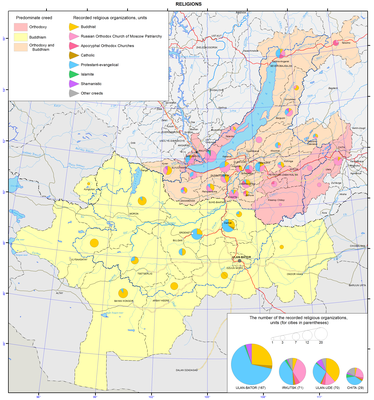
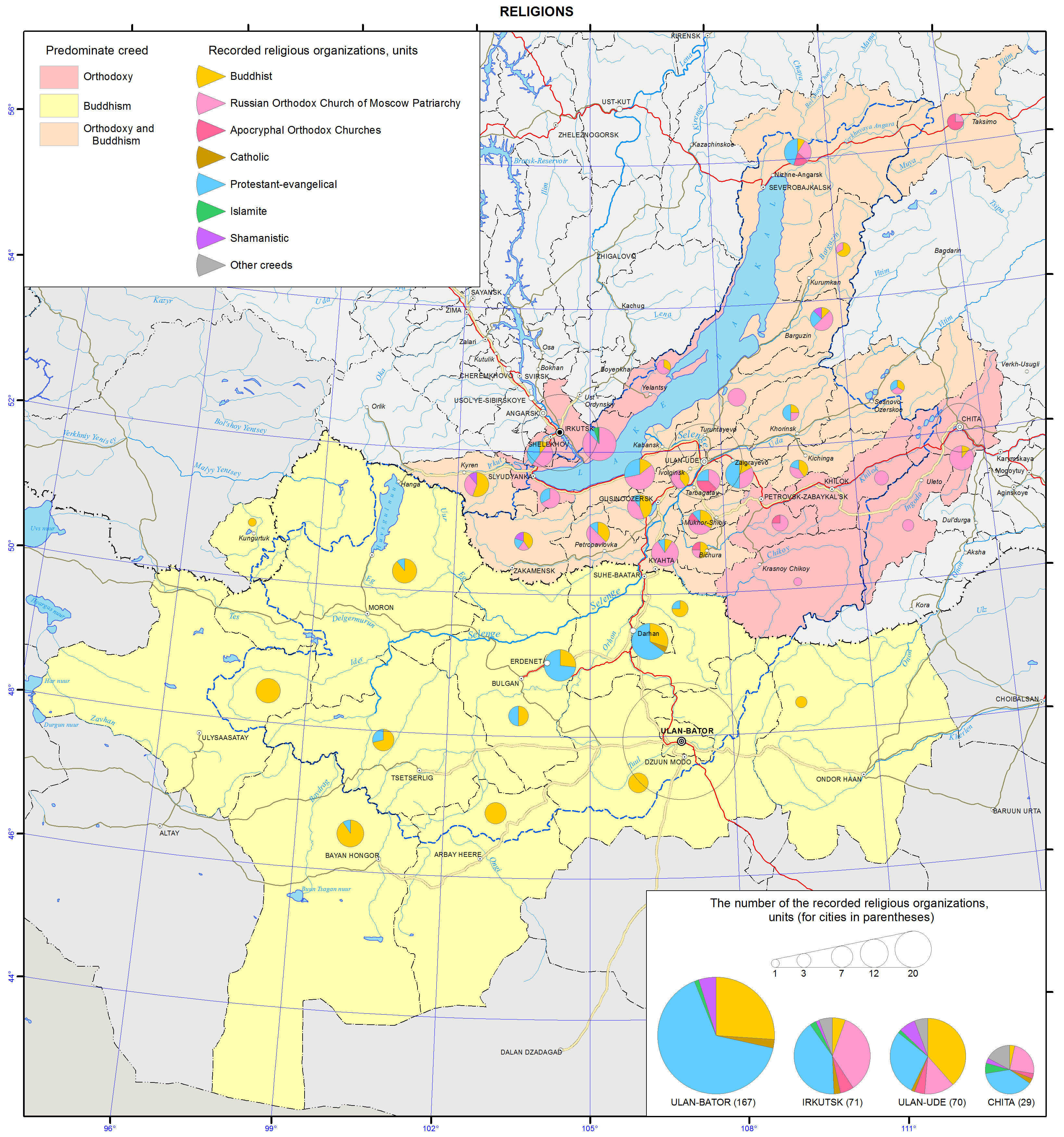
<p>Traditional religions in the Baikal basin include Shamanism, Buddhism in the form of Lamaism, and Russian Orthodox Christianity. Current religious situation is, to a large measure, determined by political reforms that were carried out in Mongolia and Russia in the 1990s. Now, there are a plethora of religious denominations and practices.</p>
<p class="1">The majority of the population is religious. In most cases, undecided and non-believers still associate themselves with a particular traditional religion. In Mongolia, for example, about 90% of the population identify themselves with Buddhism, while 6% - with Shamanism. On the other hand, according to the 2010 census, 61.4% of the population 15 years of age or older identified themselves as believers. Buddhists, Muslims, Shamanists, Christians and adherents of other religions constituted 53, 3, 3, 2, and &lt;1%, respectively. In Buryatia, the most widespread self-identifications are with two religions: Buddhism and Russian Orthodox Christianity. In Zabaikalsky krai and Irkutsk oblast, the overwhelming majority of the people identify themselves as Russian Orthodox Christians, whereas Buddhism holds the lead in Tuva. According to the opinion poll data collected in 2012 by the Nonprofit Research Service “Sreda”, the proportion of residents professing Buddhism in the aforementioned regions constituted, respectively, 20; 6; &lt;1; 62; Christianity: 32; 32; 48; 2 (including Russian Orthodox: 27; 25; 41; 1), Islam: &lt;1; &lt;1; 7; ; &lt;1; Shamanism: 2; &lt;1; 1; 8; and other religions: &lt;1; &lt;1;&lt;1; &lt;1%.</p>
<p>Although religious organizations must register, there are some unregistered groups. They steadily grow in number with the fastest growth among Protestant and Evangelical groups.</p>
<p>The population is tolerant toward different religions. Contradictory and mixed religious views often coexist. <b></b></p>
<p>Buddhism in the Baikal basin (its concepts, rites, rituals, mythology, and spirits) was influenced by the religious customs that had existed before it was introduced in this region.</p>
<p>Buddhist monasteries take an important place in the social (and ecological) life. They organize the dialog with science and education. Not only Buddhist monks, but also secular specialists are invited to give lectures at monasteries. Publishing is a major activity of monastic centers. Much attention is given to the formation and preservation of the cultural memory of the people, as well as to the issues related to the adjustment of the Buddhist teaching to current conditions and its further development, including among the ethnically Russian population. <b></b></p>
<p>Christianity in the Russian part of the Baikal basin is mostly represented by the Russian Orthodox Church. In the Mongolian part of the basin, it is mainly Protestant and Evangelical organizations (90% Protestants, mainly Evangelicals and Baptists, 9% Mormons, 1% Catholics and Russian Orthodox believers).</p>
<p>Christianity views the resolution of environmental issues as a component of the ministerial and missionary services to God. According to the Bible, everything on Earth was created by God. Nature was created to satisfy human needs. However, it is not just a reservoir of resources for egoistic and irresponsible consumption, but a temple, in which an individual serves God. The individual is responsible for his/her thoughts and acts and must treat the nature with care. Life in all its different manifestations has a sacred character; its destruction or disturbance is a challenge to God.</p>
<p class="1">According to Christianity, ecological problems are the consequences of egoistic and consumer impulses. Therefore, ecological activity will fail to reach the desired results, unless people begin to live by Christian commandments. <b></b></p>
<p>Islam (mostly Sunni Islam) has an ethnic character. In the Russian territory, the majority of Muslims are ethnic Tatars. In Mongolia, they are the not-so-numerous Kazakhs, Uzbeks, Uighurs, Tatars, and other Muslim ethnicities.</p>
<p>According to the Quran, the Man and the Nature are the great sacred creations of Allah. People are responsible for the preservation, purity, and beauty of the nature. All living beings on Earth are like the Man. Torturing them is absolutely prohibited. Any good done to an animal is equally beneficial as any good done to the Man. The efforts of the Man to do good to the nature is regarded as a virtue, which helps him or her gain blessings and Paradise in the future life.</p>
<p>Islam pays much attention to the improvement in the condition of Earth with human hands. It poses the question about the union of science and religion in dealing with environmental problems.</p>
<p class="1">Shamanism is the oldest religion of Siberia and Central Asia. It is thought to be originated on Olkhon Island (on Lake Baikal), which is considered to be a sacred place. According to the concepts of Shamanism, there are three worlds: upper (heavenly), middle (terrestrial), and lower (subterranean). Nowadays, Shamanism also includes the followers of Tengrism, a global religion, which demonstrates a tendency towards a philosophical-metaphysical monotheism practiced by early nomadic communities in Mongolia.</p>
<p class="1">A careful use of natural resources is based on the cultural and religious traditions. Local natural sites play an important role in the concepts of the universe. Previously, Shamanism “served” the communal-tribal sphere, and each tribe and clan had their own sacred places, where rituals were conducted. In such places, they built ovoos and tied ribbons to tree branches.</p>
<p class="1">The ecological concepts of other religions in the Baikal basin are also directed towards nature conservation.</p>
<p>According to all religions, the resolution of environmental problems must begin with the spiritual and moral improvement of human beings.</p>]]></content:encoded>
    <dc:publisher>No publisher</dc:publisher>
    <dc:creator>Alexander Ayurzhanaev</dc:creator>
    <dc:rights></dc:rights>
    <dc:date>2014-10-10T00:30:00Z</dc:date>
    <dc:type>Page</dc:type>
  </item>


  <item rdf:about="http://bic.iwlearn.org/en/atlas/atlas/81-religions-map">
    <title>081. Religions map</title>
    <link>http://bic.iwlearn.org/en/atlas/atlas/81-religions-map</link>
    <description></description>
    
    <dc:publisher>No publisher</dc:publisher>
    <dc:creator>Alexander Ayurzhanaev</dc:creator>
    <dc:rights></dc:rights>
    <dc:date>2014-10-10T00:30:00Z</dc:date>
    <dc:type>Folder</dc:type>
  </item>


</rdf:RDF>