<?xml version="1.0" encoding="utf-8" ?>
<rdf:RDF xmlns:rdf="http://www.w3.org/1999/02/22-rdf-syntax-ns#" xmlns:dc="http://purl.org/dc/elements/1.1/" xmlns:syn="http://purl.org/rss/1.0/modules/syndication/" xmlns="http://purl.org/rss/1.0/">


<channel rdf:about="http://bic.iwlearn.org/en/search_rss">
  <title>English</title>
  <link>http://bic.iwlearn.org</link>

  <description>
    
            These are the search results for the query, showing results 62 to 76.
        
  </description>


  <image rdf:resource="http://bic.iwlearn.org/logo.png"/>

  <items>
    <rdf:Seq>
      
        <rdf:li rdf:resource="http://bic.iwlearn.org/en/atlas/atlas/125-non-profit-environmental-organizations-map/non-profit-environmental-organizations-map"/>
      
      
        <rdf:li rdf:resource="http://bic.iwlearn.org/en/atlas/atlas/125-non-profit-environmental-organizations-map"/>
      
      
        <rdf:li rdf:resource="http://bic.iwlearn.org/en/atlas/atlas/123-rare-animals-distribution-map"/>
      
      
        <rdf:li rdf:resource="http://bic.iwlearn.org/en/atlas/atlas/123-rare-animals-distribution-map/copy_of_rare-animals-distribution-map"/>
      
      
        <rdf:li rdf:resource="http://bic.iwlearn.org/en/atlas/atlas/122-rare-animals-distribution-map"/>
      
      
        <rdf:li rdf:resource="http://bic.iwlearn.org/en/atlas/atlas/122-rare-animals-distribution-map/rare-animals-distribution-map"/>
      
      
        <rdf:li rdf:resource="http://bic.iwlearn.org/en/atlas/atlas/121-rare-animals-distribution-map/rare-animals-distribution-map"/>
      
      
        <rdf:li rdf:resource="http://bic.iwlearn.org/en/atlas/atlas/121-rare-animals-distribution-map"/>
      
      
        <rdf:li rdf:resource="http://bic.iwlearn.org/en/atlas/atlas/120-rare-animals-distribution-map"/>
      
      
        <rdf:li rdf:resource="http://bic.iwlearn.org/en/atlas/atlas/120-rare-animals-distribution-map/rare-animals-distribution-map"/>
      
      
        <rdf:li rdf:resource="http://bic.iwlearn.org/en/atlas/atlas/119-distribution-of-rare-animal-species-map/distribution-of-rare-animal-species-map"/>
      
      
        <rdf:li rdf:resource="http://bic.iwlearn.org/en/atlas/atlas/118-distribution-of-rare-animal-species-map/distribution-of-rare-animal-species-map"/>
      
      
        <rdf:li rdf:resource="http://bic.iwlearn.org/en/atlas/atlas/119-distribution-of-rare-animal-species-map"/>
      
      
        <rdf:li rdf:resource="http://bic.iwlearn.org/en/atlas/atlas/118-distribution-of-rare-animal-species-map"/>
      
      
        <rdf:li rdf:resource="http://bic.iwlearn.org/en/atlas/atlas/117-distribution-of-rare-animal-species-map/distribution-of-rare-animal-species-map"/>
      
    </rdf:Seq>
  </items>

</channel>


  <item rdf:about="http://bic.iwlearn.org/en/atlas/atlas/125-non-profit-environmental-organizations-map/non-profit-environmental-organizations-map">
    <title>Non-profit environmental organizations map</title>
    <link>http://bic.iwlearn.org/en/atlas/atlas/125-non-profit-environmental-organizations-map/non-profit-environmental-organizations-map</link>
    <description></description>
    <content:encoded xmlns:content="http://purl.org/rss/1.0/modules/content/"><![CDATA[<p><img class="image-inline" src="../../../resolveuid/f6ab55b305224c44bf91beb880c2f77c/@@images/image/preview" /></p>
<p><a href="http://bic.iwlearn.org/en/atlas/photos/copy_of__125_Nonprofitenvironmentalorganizations.png" class="internal-link">Open full size</a></p>
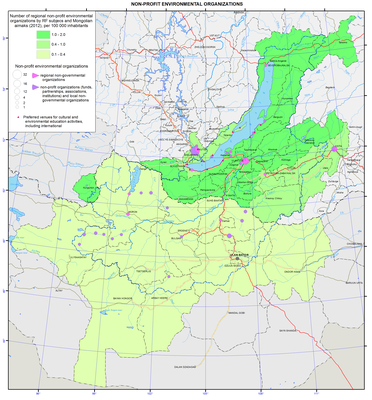
<p align="center"><strong>Environmental non-profit organizations</strong></p>
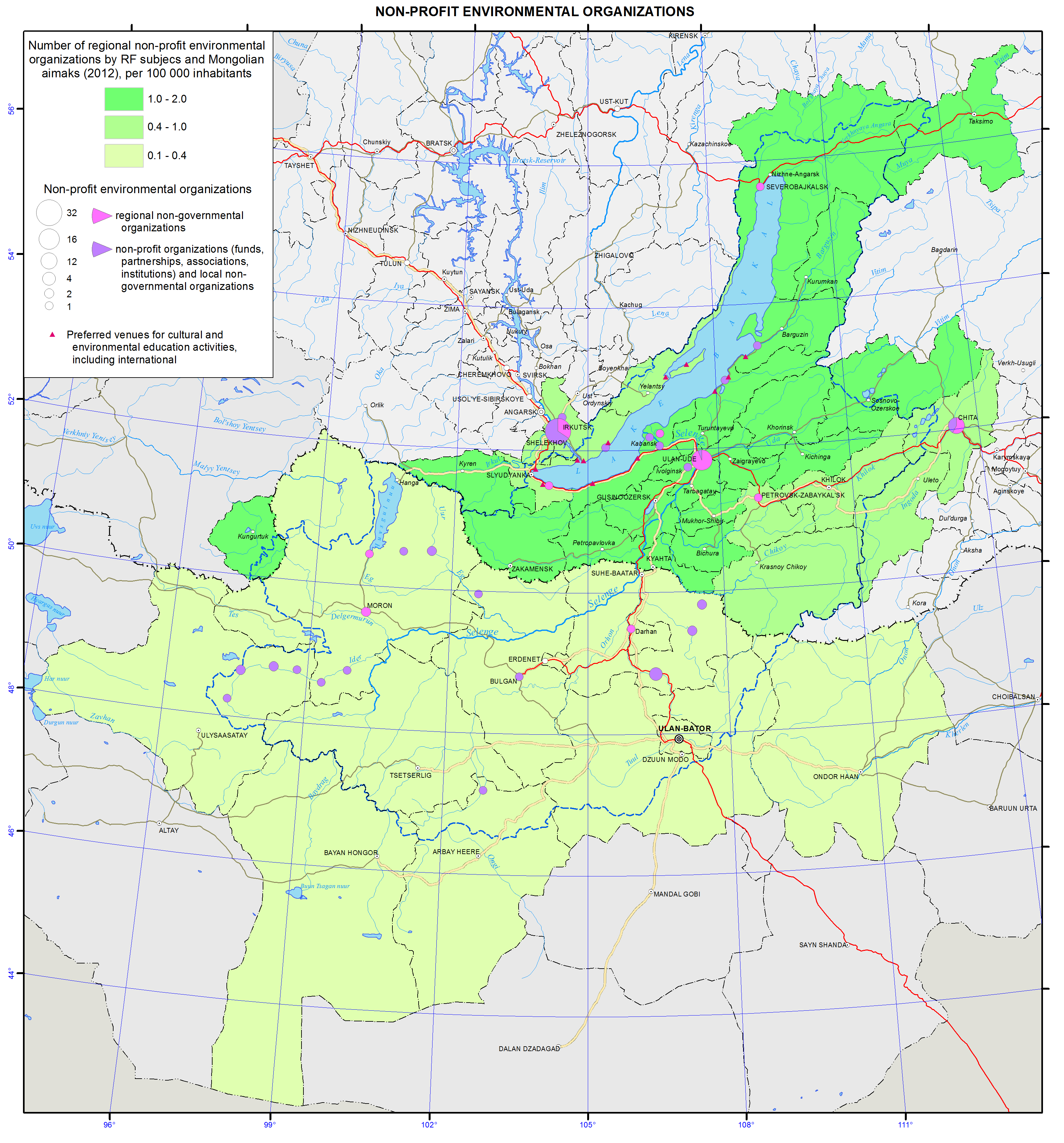
<p>The environmental well-being of the Baikal basin is largely determined by the activities of environmental non-governmental organizations (eco-NGOs). The main purpose of eco-NGOs is to protect nature. They see the foundation for sustainable development of society in nature preservation. Their effectiveness is determined by personal qualities and civic engagement of their activists and, especially, their leaders.</p>
<p>The number of eco-NGOs significantly increased in the 1990s, which was determined by state reforms in Russia and Mongolia and the growing interests of citizens towards the state of the environment.</p>
<p>Eco-NGOs operating in the Baikal basin differ by their territorial status (international, national, inter-regional, regional and local) and organizational and legal forms (community associations: community-based organizations, community-based foundations, community-based institutions, and community movements; nonprofit organizations: autonomous nonprofits, nonprofit foundations, nonprofit partnerships, associations (unions, alliances) of legal persons, and nonprofit institutions).</p>
<p>In Mongolia, the creation of eco-NGOs is mainly associated with the efforts to protect the Selenga and its tributaries from negative impacts of mining, construction of hydro-power plants, and the transfer of the Orkhon water to arid areas of the Gobi desert. Eco-NGOs are also created in all river basins, where open-pit mining operations are active. The largest community associations are the “United Movement of Rivers and Lakes of Mongolia” and “Nature Protection Coalition of Mongolia”. Eco-NGO campaigns usually involve 300-8,000 people.</p>
<p>In the Russian part of the Baikal basin, the organizations defining community-based environmental activities aimed to protect Lake Baikal are the community-based organization “All-Russian Nature Conservation Society” and the public organization “Russian Geographical Society”. Branches of these organizations are located in all the regions of the Baikal basin. In 2012, among the participants of the project initiated by the All-Russian Nature Conservation Society and entitled "Clean Waters of the Baikal Region" were over 60 environmental organizations created at educational institutions of 23 districts of Irkutsk oblast. Members of the Russian Geographical Society include both private individuals and legal persons. A widely known member of the Russian Geographical Society is the “Fund for Protection of Lake Baikal” established by Metropol Group of Companies. A lot of work is done by the nonprofit organization "WWF - Russia" and other all-Russian organization.</p>
<p>As of the beginning of 2013, the total number of registered eco-NGOs in Buryatia, Zabaikalsky krai and Irkutsk oblast was about 100 organizations. The overwhelming majority of them are community associations and community-based organizations.</p>
<p>In Buryatia, the most famous eco-NGOs include regional community associations "The Buryat Regional Association on Baikal", "Baikal Information Center Gran", "Baikal-Eco", "Ecological Association LAT", "Ecological and Humanitarian Center ETNA", "Ecological center The Planet and Delta", "Ecoleague", nonprofit partnership "The Great Baikal Trail - Buryatia", and a local environmental NGO "Turka". In Irkutsk oblast, they include regional nonprofit organizations "Baikal Environmental Wave" (BEW), "The Baikal Ecological Network Association", "Baikal Environmental Patrol", Inter-regional community-based organization "The Great Baikal Trail", private non-state research institution "The Baikal Center of Field Studies “Wildlife of Asia”, nonprofit partnership "Protecting Baikal Together", and the Irkutsk city community organization "Children’s Ecological Union". In Zabaikalsky krai, there is a regional public institution “Public Environmental Center “Dauria”. There are also many other successful organizations.</p>
<p>Regional and local eco-NGOs actively attract volunteers from different countries to implement their projects, so quite often these projects become international.</p>
<p>Information about the work of the most active eco-NGOs operating in the Russian part of the Baikal basin is provided in public reports on the state of Lake Baikal and governmental reports on the state and protection of the environment in Buryatia, Zabaikalsky krai and Irkutsk oblast. Brief descriptions about them in the form of short essays are also presented in the reference book entitled “The White Book”, prepared by the eco-NGO “Ecoleague” and published in 2010.</p>
<p>Among the organizations whose head-quarters are located outside of Russia and Mongolia, the Russian branch of the international non-governmental non-profit organization Greenpeace conducts a very active work on Lake Baikal.</p>
<p>In the Baikal basin, eco-NGOs conduct research, educational, and outreach activities among the population, boost its environmental activity, and involve local communities in the decision-making process. They organize community oversight and participate in the preparation and discussion of laws aimed at optimizing natural resources management. They take part in public hearings on the development of deposits and construction of industrial facilities and participate in the creation of protected areas. They also develop eco-tourism, conduct cleaning works on the lake’s shores and other activities, including the "Days of Baikal". Often, eco-NGOs receive federal or regional funding by winning competitions of socially-oriented projects.</p>
<p>Eco-NGOs help unite the efforts of government, science, business, and society in finding solutions of environmental problems. They become members of public environmental councils in the regions and conduct conferences, round tables, telethons, presentations, seminars, courses, summer schools, etc. In 2013, BEW conducted an international conference in Irkutsk and Listvyanka ("Rivers of Siberia and the Far East",). Also in 2013, the Russian Society for Ecological Economics jointly with the Irkutsk branches of the Russian Geographical Society and All-Russian Nature Conservation Society conducted a conference in Irkutsk entitled “The management of ecological and economic systems: Interaction of government, business, science, and society”.</p>
<p>The creation of eco-NGOs’ coalitions and international cooperation is extremely important for reaching the goals of sustainable development of the regions. It determined the creation of a network of eco-NGOs in Buryatia and Mongolia called "Friends of Baikal" and a long-term cooperation with the US organization "Tahoe-Baikal Institute" to share best practices in natural resources management in the watershed basins of Lake Baikal, Tahoe, Khovsgol, and the Great Lakes. Other joint projects promoting sustainable development of communities of different levels are also being implemented.</p>
<p>It is mostly due to the work of eco-NGOs that Lake Baikal was inscribed on the list of World Heritage Sites, the Baikal Natural Territory was zoned, over 700 kilometers of trails were built, and the operation of several environmentally hazardous production facilities, including the Baikalsk Pulp and Paper Mill, was stopped. On the site of this Pulp and Paper Mill, in December 2013, Russian government decided to create a nature protection complex, which will include a museum and exhibition, as well as information and educational facilities. In order to manage this complex, the government jointly with the Charitable Foundation for Environmental Protection "Green Future" (NF, Moscow) created ANO “Expocenter “Reserves of Russia””. Often, the results of the work of eco-NGOs become the foundation of major federal and regional programs.</p>]]></content:encoded>
    <dc:publisher>No publisher</dc:publisher>
    <dc:creator>Alexander Ayurzhanaev</dc:creator>
    <dc:rights></dc:rights>
    <dc:date>2014-10-14T08:10:00Z</dc:date>
    <dc:type>Page</dc:type>
  </item>


  <item rdf:about="http://bic.iwlearn.org/en/atlas/atlas/125-non-profit-environmental-organizations-map">
    <title>125. Non-profit environmental organizations map</title>
    <link>http://bic.iwlearn.org/en/atlas/atlas/125-non-profit-environmental-organizations-map</link>
    <description></description>
    
    <dc:publisher>No publisher</dc:publisher>
    <dc:creator>Alexander Ayurzhanaev</dc:creator>
    <dc:rights></dc:rights>
    <dc:date>2014-10-14T08:06:42Z</dc:date>
    <dc:type>Folder</dc:type>
  </item>


  <item rdf:about="http://bic.iwlearn.org/en/atlas/atlas/123-rare-animals-distribution-map">
    <title>123. Rare animals distribution. Birds. Coraciiformes, piciformes, passeriformes map</title>
    <link>http://bic.iwlearn.org/en/atlas/atlas/123-rare-animals-distribution-map</link>
    <description></description>
    
    <dc:publisher>No publisher</dc:publisher>
    <dc:creator>Alexander Ayurzhanaev</dc:creator>
    <dc:rights></dc:rights>
    <dc:date>2014-10-14T07:25:00Z</dc:date>
    <dc:type>Folder</dc:type>
  </item>


  <item rdf:about="http://bic.iwlearn.org/en/atlas/atlas/123-rare-animals-distribution-map/copy_of_rare-animals-distribution-map">
    <title>Rare animals distribution. Birds. Coraciiformes, piciformes, passeriformes map</title>
    <link>http://bic.iwlearn.org/en/atlas/atlas/123-rare-animals-distribution-map/copy_of_rare-animals-distribution-map</link>
    <description></description>
    <content:encoded xmlns:content="http://purl.org/rss/1.0/modules/content/"><![CDATA[<p><img class="image-inline" src="../../../resolveuid/476571550438466daf41c1939f618c2f/@@images/image/preview" /></p>
<p><a href="http://bic.iwlearn.org/en/atlas/photos/copy_of__123Rareanimalsdistribution.png" class="internal-link">Open full size</a></p>
<p align="center"><strong>Rare species of fauna</strong></p>
<p align="center"><strong> </strong></p>
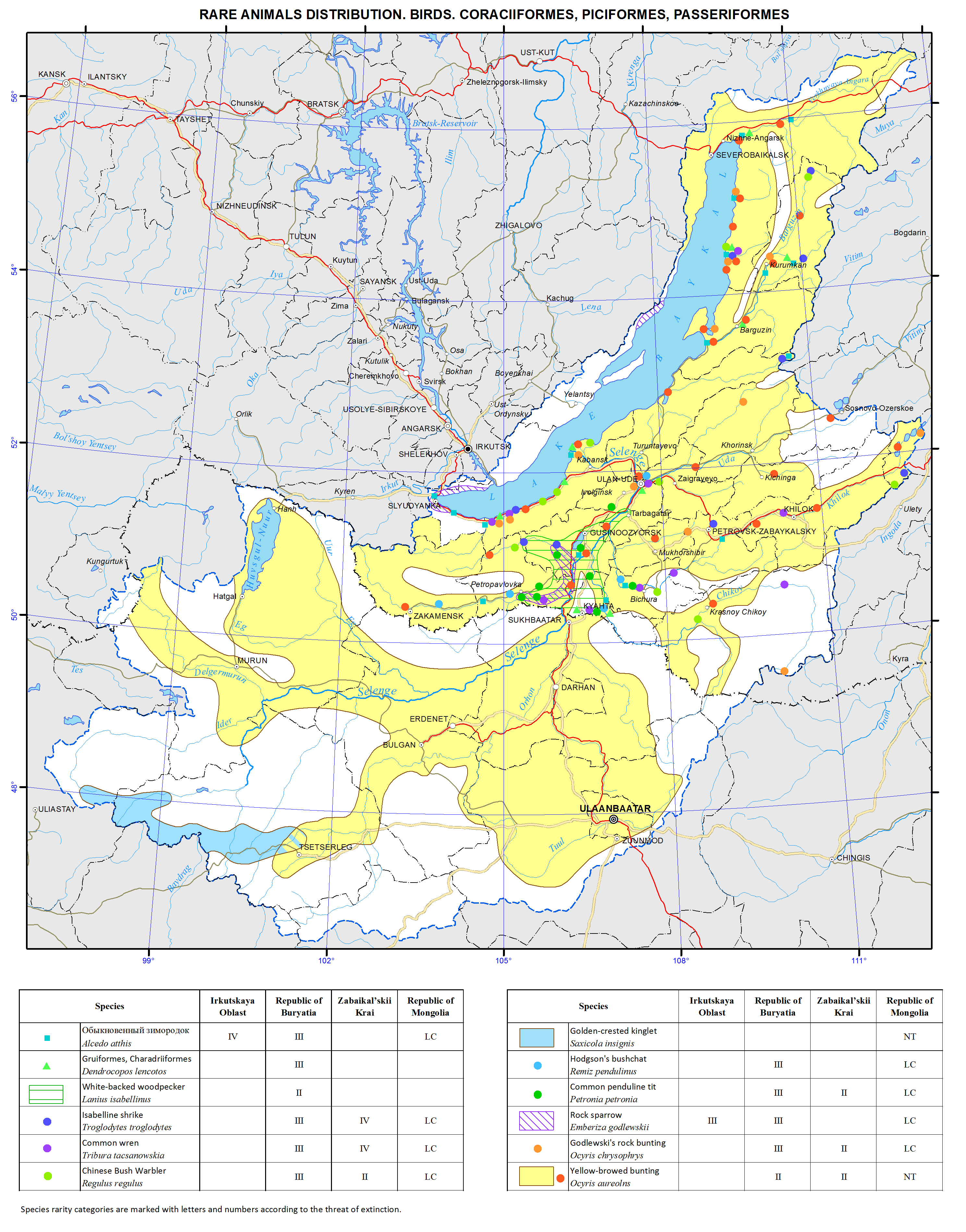
<p>The animal kingdom of the Baikal basin is rich and diverse. The basin’s fauna is unique due to a peculiar geographic location of this region, which explains the extreme diversity of the species composition including many genetically and environmentally heterogeneous elements. In this region, the contact and overlapping of many systemically and ecologically close species and subspecies take place. A large number of forms is represented by the periphery and even isolated populations preserved in the local refugiums since the last glacial period. As a rule, all these species are relatively rare and small in number, and their habitats cover a small territory. Therefore, all of them have been listed in the Red Books and require special protection.</p>
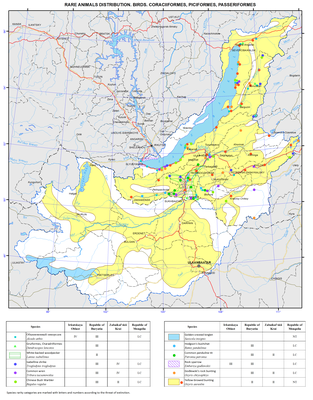
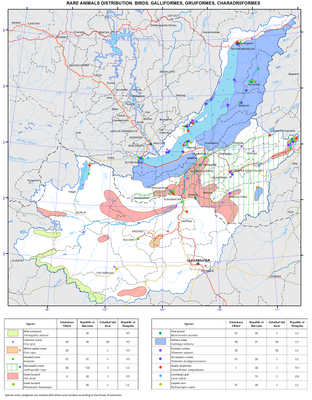
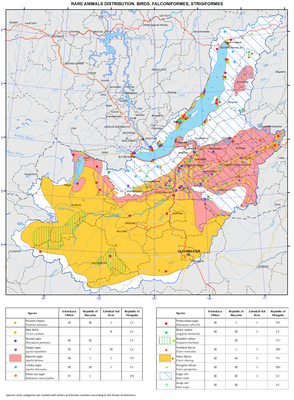
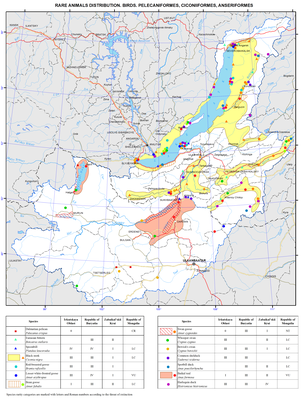
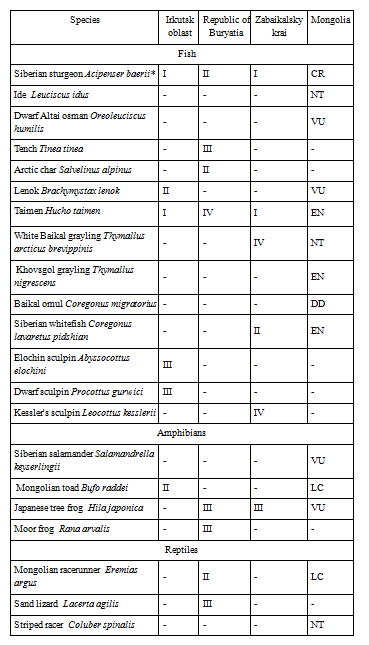
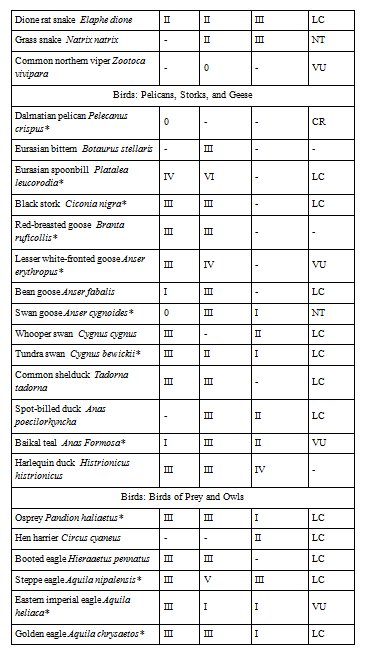
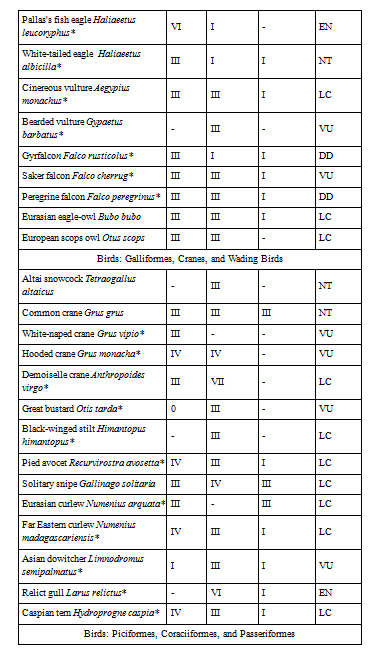
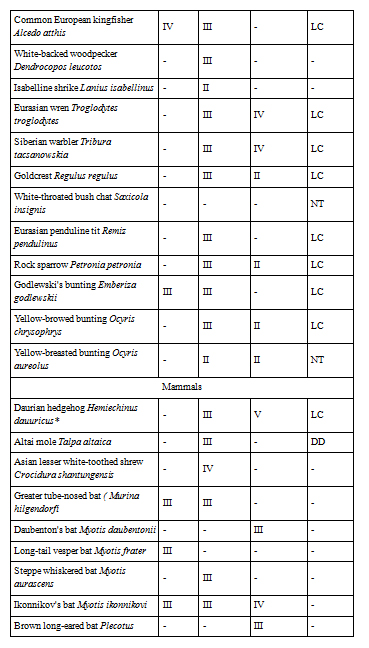
<p class="a">A series of maps of this section provides an insight about the spread of rare species of animals grouped according to their systematic features into separate categories: fish, amphibians and reptiles, birds and mammals. The maps show the main habitats of rare species based on the literature and museum collection research, as well as personal observations of the authors. The maps also show home ranges of certain species.</p>
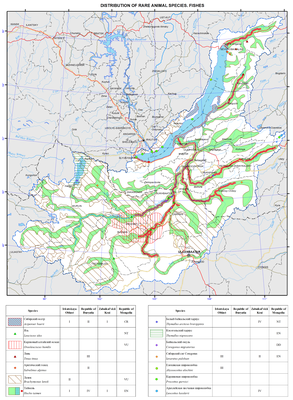
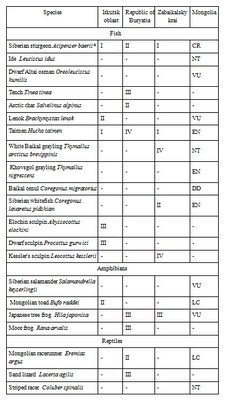
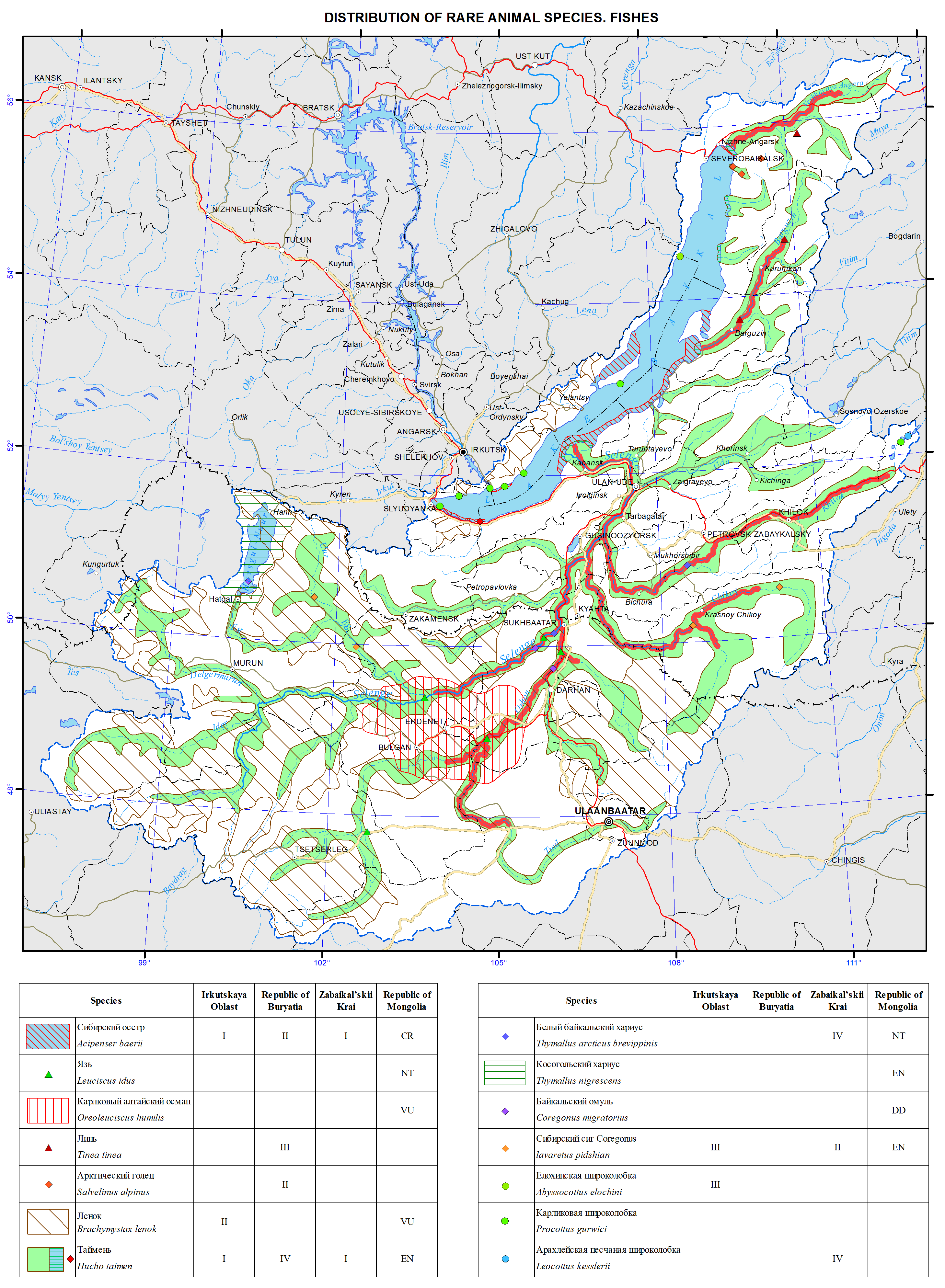
<p class="a">More than 60 species of fish live in rivers and water bodies of the Baikal basin with half of them being endemic or relict species. The indigenous ichthyofauna of the Baikal basin’s rivers and lakes formed on the basis of the species of the boreal piedmont, boreal lowland, and arctic freshwater complexes; only the Siberian sturgeon and tench are remnants of the ancient late Tertiary faunal complex. Species representing other faunal complexes got into these water bodies as a result of introduction or invasion. In Lake Baikal, the level of endemism reaches 55% of all fish species, which is indicative of the autochthonous nature of the formation of the nucleus of the lake’s ichthyofauna. Only 10 species of fish are found in Lake Khovsgol, with half of them being valuable commercial fishery species. More than a half of the fish species listed in the regional Red Books of the Russian Federation and Mongolia are valuable commercial fishery species. However, their number has been significantly reduced due to the intensive human economic activities over the past 100 years. Overfishing, construction of hydro-technical facilities, and water body pollution negatively impacted their population and resulted in the partial loss of habitat. Today, 15 fish species in the Baikal basin require protection and artificial breeding in order to restore their number.</p>
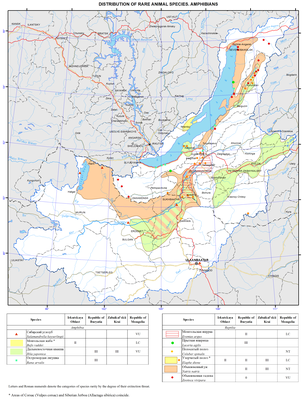
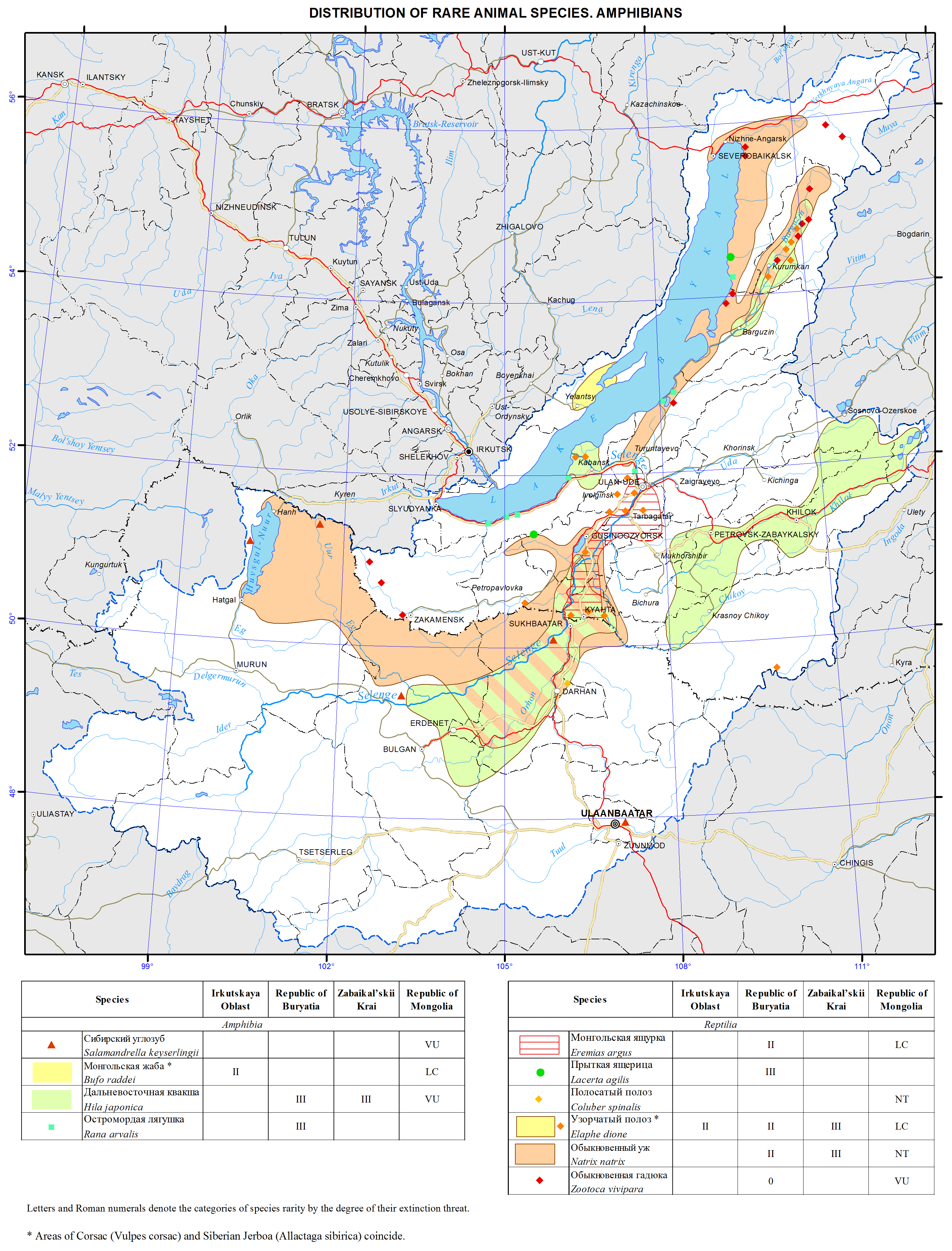
<p>The Baikal basin is characterized by a low diversity of species of the herpetofauna (altogether about 20 species) due to harsh weather conditions in the region and the history of faunal formation. On the other hand, the basin is a place of contact of the habitats of the Western and Eastern Palearctic species, while representatives of the Central Asian and Daur-Mongolian fauna are wedging in from the south. Half of the species inhabiting this area are located on the periphery of their habitats. Anthropogenic transformation of habitats, drainage and contamination of water bodies, frequent fires, high recreational stress, and extermination by humans decrease the number and fragment the habitats of many herpetofauna species. At present, four amphibian species and six reptile species need protection.</p>
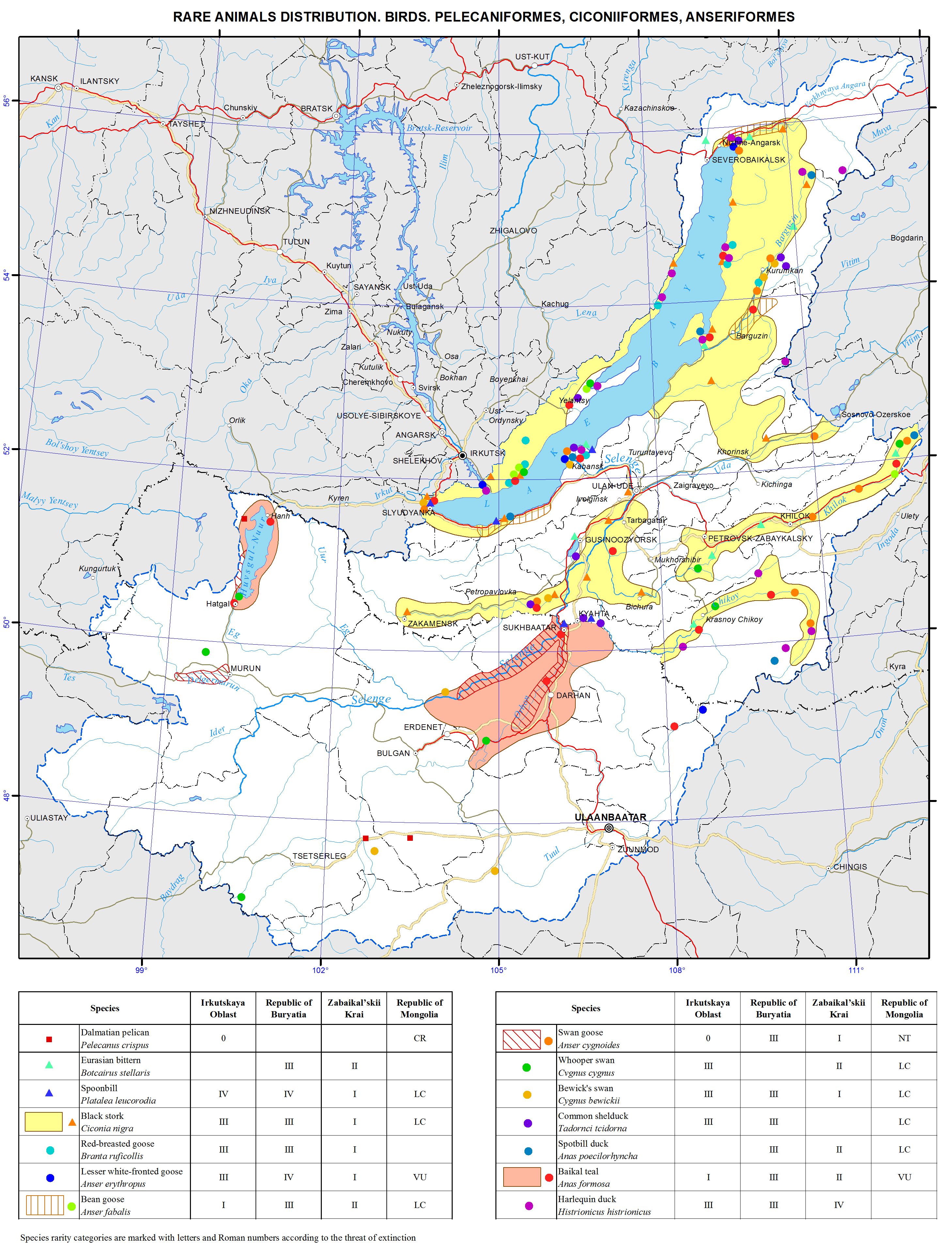
<p>Peculiarity of natural landscapes, climatic and geomorphological conditions, and the historical process of the formation of the ornithofauna resulted in its species diversity. The nucleus of the structure of the population of the basin’s ornithofauna is composed by representatives of the Siberian, Mongolian, Chinese, European and Arctic types of fauna. Transpalearctic species also make up a sizable proportion. Species of the Tibetan and Mediterranean types of fauna make up only a small share of species. Modern ornithofauna of the Baikal basin includes over 400 species; about 100 of them need protection. Human economic activity ambiguously impacts the structure of the ornithofauna. Transformation of the environment as a result of logging, fires, overgrazing, or steppe ploughing may decrease the number of some species, but, on the other hand, it may expand the habitats or the number of other species. Stenobiontic species are affected by economic activity the most. Transformation of habitats, changes in the hydrological regime of certain rivers and Lake Baikal, poaching, logging, fires, and technogenic emissions, all against the backdrop of fluctuations of environmental and climatic conditions, result in the decrease of diversity and number of the majority of bird species.</p>
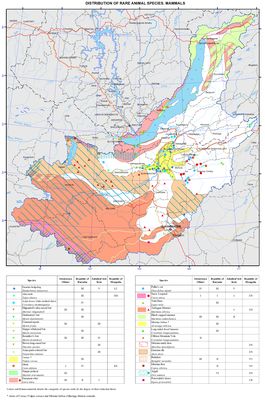
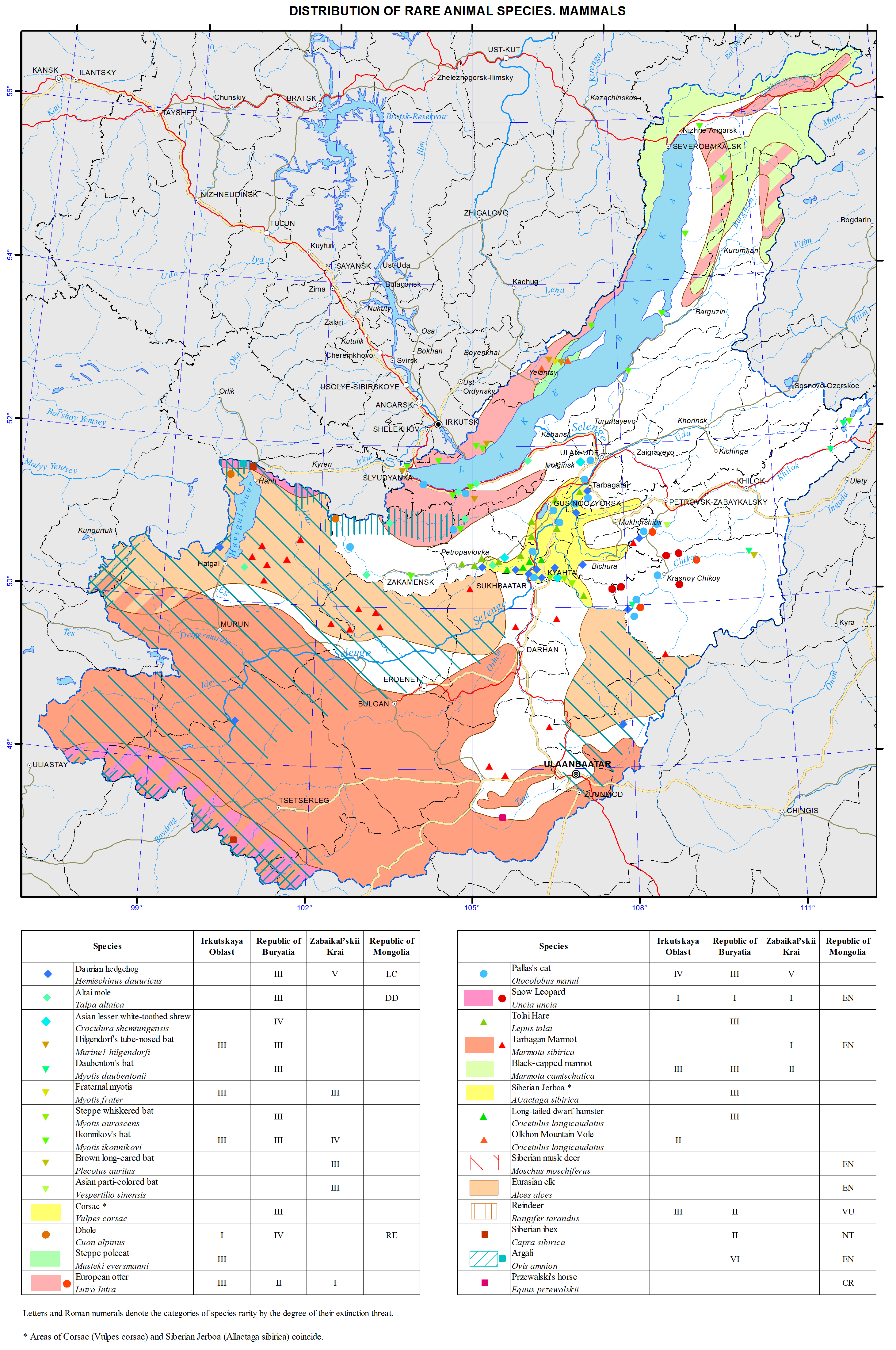
<p>The fauna of mammals is quite specific and diverse including over 90 species. Many of these species are located on the periphery of their ranges. The modern mammal fauna of the basin is represented by almost 20 faunulas, the largest of which in terms of the number of species are the following: the Holarctic arctic boreal, taiga Palearctic, western Palearctic taiga, Holarctic tundra and golets, steppe southern Palearctic, and Central Asian elements, as well as the East Asian and southern Palearctic flying mammals. A small number of species of the basin either acclimatized or followed the humans. Compared to other animals, mammals are more affected by the direct anthropogenic impact. Thus, the majority of mammals listed as rare species in the near past were or still are considered as game animals, but their population was sharply reduced due to unregulated hunting and poaching. It is not uncommon that the activities aimed at preventing zoonotic infectious diseases led to a sharp decrease of infection hosts – rodents. Logging, steppe ploughing, overgrazing, frequent fires, and the fragmentation of natural territories devastatingly impacted the majority of mammalian species inhabiting the Baikal basin. Therefore, over 30 species now require special protection and reproduction.</p>
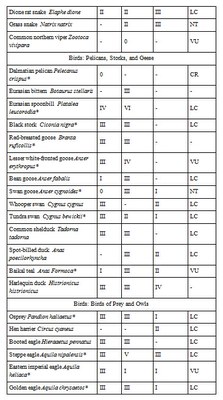
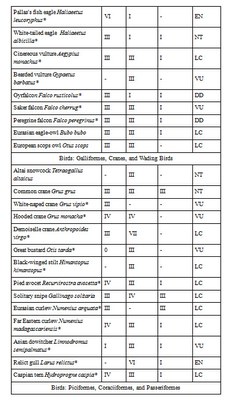
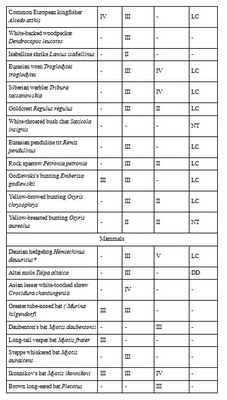
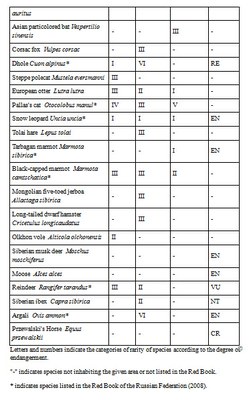
<p>The Red Books of the Russian Federation (2008) and Mongolia (1997), as well as regional Red Books of Irkutsk oblast (2010), Republic of Buryatia (2013), and Zabaikalsky krai (2012) were created to protect rare and endangered species. The categories set forth in the Red Book of the Russian Federation (2008) were used as a basis for the development of the regional categories of rarity and the degree of endangerment. Minor amendments were introduced to reflect regional characteristics of the biota. In particular, two regional categories (VI) and (VII) were included due to geographic features of the Republic of Buryatia (location near state border, existence of major biogeographic boundaries and important migration routes, and so on). The categories of the IUCN were used for rare species of vertebrate animals in Mongolia.</p>
<p> </p>
<p align="center" class="3">References</p>
<p>The Red Book of Zabaikalsky krai: Animals. (2012). Novosibirsk: Novosibirsk Publishing. p 344.</p>
<p>The Red Book of Irkutsk oblast (2010). Irkutsk: Wind of Travel Publishing. p 480.</p>
<p>The Red Book of the Republic of Buryatia: Rare and endangered species of animals, plants, and mushrooms. (2013). Ulan-Ude: BSC SB RAS Publishing. p 688.</p>
<p>The Red Book of the Russian Federation: Animals. (2001). Moscow: Astrel. p 862.</p>
<p>Mongolian Red List of birds. (2006). Ulaanbaatar: ADMON Printing. p 1036.</p>
<p>Mongolian Red List of fish. (2006). Ulaanbaatar: ADMON Printing. p 68.</p>
<p>Mongolian Red List of mammals. (2006). Ulaanbaatar: ADMON Printing. p 96.</p>
<p>Mongolian Red List of reptiles and amphibians. (2006). Ulaanbaatar: ADMON Printing. p 68.</p>]]></content:encoded>
    <dc:publisher>No publisher</dc:publisher>
    <dc:creator>Alexander Ayurzhanaev</dc:creator>
    <dc:rights></dc:rights>
    <dc:date>2014-10-14T07:25:00Z</dc:date>
    <dc:type>Page</dc:type>
  </item>


  <item rdf:about="http://bic.iwlearn.org/en/atlas/atlas/122-rare-animals-distribution-map">
    <title>122. Rare animals distribution. Birds. Galliformes, gruiformes, charadriiformes map</title>
    <link>http://bic.iwlearn.org/en/atlas/atlas/122-rare-animals-distribution-map</link>
    <description></description>
    
    <dc:publisher>No publisher</dc:publisher>
    <dc:creator>Alexander Ayurzhanaev</dc:creator>
    <dc:rights></dc:rights>
    <dc:date>2014-10-14T07:20:00Z</dc:date>
    <dc:type>Folder</dc:type>
  </item>


  <item rdf:about="http://bic.iwlearn.org/en/atlas/atlas/122-rare-animals-distribution-map/rare-animals-distribution-map">
    <title>Rare animals distribution. Birds. Galliformes, gruiformes, charadriiformes map</title>
    <link>http://bic.iwlearn.org/en/atlas/atlas/122-rare-animals-distribution-map/rare-animals-distribution-map</link>
    <description></description>
    <content:encoded xmlns:content="http://purl.org/rss/1.0/modules/content/"><![CDATA[<p><img class="image-inline" src="../../../resolveuid/6b14bccbbc6b465cb4e6f88e499d53cf/@@images/image/preview" /></p>
<p><a href="http://bic.iwlearn.org/en/atlas/photos/copy_of__122_Rareanimalsdistribution.png" class="internal-link">Open full size</a></p>
<p align="center"><strong>Rare species of fauna</strong></p>
<p align="center"><strong> </strong></p>
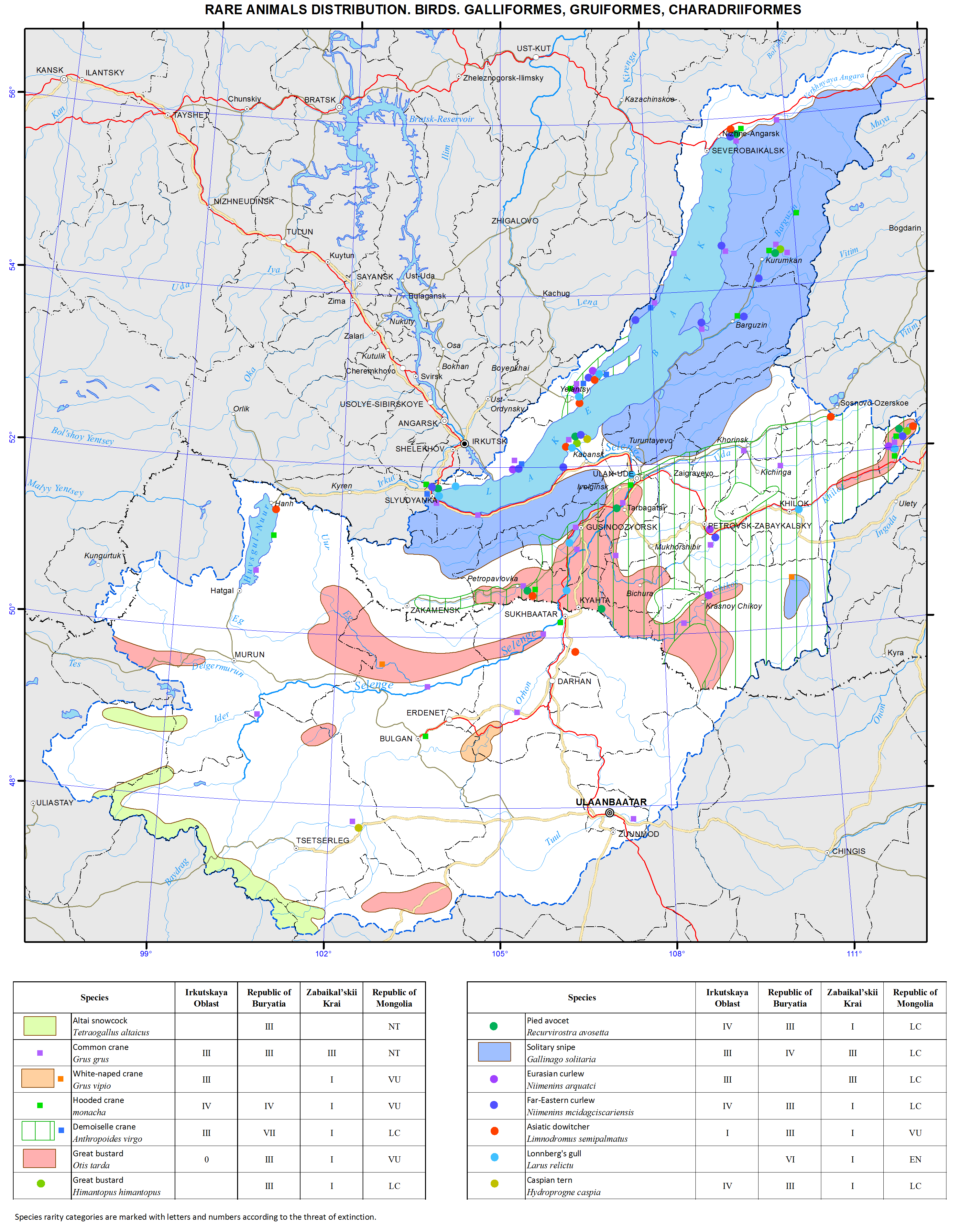
<p>The animal kingdom of the Baikal basin is rich and diverse. The basin’s fauna is unique due to a peculiar geographic location of this region, which explains the extreme diversity of the species composition including many genetically and environmentally heterogeneous elements. In this region, the contact and overlapping of many systemically and ecologically close species and subspecies take place. A large number of forms is represented by the periphery and even isolated populations preserved in the local refugiums since the last glacial period. As a rule, all these species are relatively rare and small in number, and their habitats cover a small territory. Therefore, all of them have been listed in the Red Books and require special protection.</p>
<p class="a">A series of maps of this section provides an insight about the spread of rare species of animals grouped according to their systematic features into separate categories: fish, amphibians and reptiles, birds and mammals. The maps show the main habitats of rare species based on the literature and museum collection research, as well as personal observations of the authors. The maps also show home ranges of certain species.</p>
<p class="a">More than 60 species of fish live in rivers and water bodies of the Baikal basin with half of them being endemic or relict species. The indigenous ichthyofauna of the Baikal basin’s rivers and lakes formed on the basis of the species of the boreal piedmont, boreal lowland, and arctic freshwater complexes; only the Siberian sturgeon and tench are remnants of the ancient late Tertiary faunal complex. Species representing other faunal complexes got into these water bodies as a result of introduction or invasion. In Lake Baikal, the level of endemism reaches 55% of all fish species, which is indicative of the autochthonous nature of the formation of the nucleus of the lake’s ichthyofauna. Only 10 species of fish are found in Lake Khovsgol, with half of them being valuable commercial fishery species. More than a half of the fish species listed in the regional Red Books of the Russian Federation and Mongolia are valuable commercial fishery species. However, their number has been significantly reduced due to the intensive human economic activities over the past 100 years. Overfishing, construction of hydro-technical facilities, and water body pollution negatively impacted their population and resulted in the partial loss of habitat. Today, 15 fish species in the Baikal basin require protection and artificial breeding in order to restore their number.</p>
<p>The Baikal basin is characterized by a low diversity of species of the herpetofauna (altogether about 20 species) due to harsh weather conditions in the region and the history of faunal formation. On the other hand, the basin is a place of contact of the habitats of the Western and Eastern Palearctic species, while representatives of the Central Asian and Daur-Mongolian fauna are wedging in from the south. Half of the species inhabiting this area are located on the periphery of their habitats. Anthropogenic transformation of habitats, drainage and contamination of water bodies, frequent fires, high recreational stress, and extermination by humans decrease the number and fragment the habitats of many herpetofauna species. At present, four amphibian species and six reptile species need protection.</p>
<p>Peculiarity of natural landscapes, climatic and geomorphological conditions, and the historical process of the formation of the ornithofauna resulted in its species diversity. The nucleus of the structure of the population of the basin’s ornithofauna is composed by representatives of the Siberian, Mongolian, Chinese, European and Arctic types of fauna. Transpalearctic species also make up a sizable proportion. Species of the Tibetan and Mediterranean types of fauna make up only a small share of species. Modern ornithofauna of the Baikal basin includes over 400 species; about 100 of them need protection. Human economic activity ambiguously impacts the structure of the ornithofauna. Transformation of the environment as a result of logging, fires, overgrazing, or steppe ploughing may decrease the number of some species, but, on the other hand, it may expand the habitats or the number of other species. Stenobiontic species are affected by economic activity the most. Transformation of habitats, changes in the hydrological regime of certain rivers and Lake Baikal, poaching, logging, fires, and technogenic emissions, all against the backdrop of fluctuations of environmental and climatic conditions, result in the decrease of diversity and number of the majority of bird species.</p>
<p>The fauna of mammals is quite specific and diverse including over 90 species. Many of these species are located on the periphery of their ranges. The modern mammal fauna of the basin is represented by almost 20 faunulas, the largest of which in terms of the number of species are the following: the Holarctic arctic boreal, taiga Palearctic, western Palearctic taiga, Holarctic tundra and golets, steppe southern Palearctic, and Central Asian elements, as well as the East Asian and southern Palearctic flying mammals. A small number of species of the basin either acclimatized or followed the humans. Compared to other animals, mammals are more affected by the direct anthropogenic impact. Thus, the majority of mammals listed as rare species in the near past were or still are considered as game animals, but their population was sharply reduced due to unregulated hunting and poaching. It is not uncommon that the activities aimed at preventing zoonotic infectious diseases led to a sharp decrease of infection hosts – rodents. Logging, steppe ploughing, overgrazing, frequent fires, and the fragmentation of natural territories devastatingly impacted the majority of mammalian species inhabiting the Baikal basin. Therefore, over 30 species now require special protection and reproduction.</p>
<p>The Red Books of the Russian Federation (2008) and Mongolia (1997), as well as regional Red Books of Irkutsk oblast (2010), Republic of Buryatia (2013), and Zabaikalsky krai (2012) were created to protect rare and endangered species. The categories set forth in the Red Book of the Russian Federation (2008) were used as a basis for the development of the regional categories of rarity and the degree of endangerment. Minor amendments were introduced to reflect regional characteristics of the biota. In particular, two regional categories (VI) and (VII) were included due to geographic features of the Republic of Buryatia (location near state border, existence of major biogeographic boundaries and important migration routes, and so on). The categories of the IUCN were used for rare species of vertebrate animals in Mongolia.</p>
<p> </p>
<p align="center" class="3">References</p>
<p>The Red Book of Zabaikalsky krai: Animals. (2012). Novosibirsk: Novosibirsk Publishing. p 344.</p>
<p>The Red Book of Irkutsk oblast (2010). Irkutsk: Wind of Travel Publishing. p 480.</p>
<p>The Red Book of the Republic of Buryatia: Rare and endangered species of animals, plants, and mushrooms. (2013). Ulan-Ude: BSC SB RAS Publishing. p 688.</p>
<p>The Red Book of the Russian Federation: Animals. (2001). Moscow: Astrel. p 862.</p>
<p>Mongolian Red List of birds. (2006). Ulaanbaatar: ADMON Printing. p 1036.</p>
<p>Mongolian Red List of fish. (2006). Ulaanbaatar: ADMON Printing. p 68.</p>
<p>Mongolian Red List of mammals. (2006). Ulaanbaatar: ADMON Printing. p 96.</p>
<p>Mongolian Red List of reptiles and amphibians. (2006). Ulaanbaatar: ADMON Printing. p 68.</p>]]></content:encoded>
    <dc:publisher>No publisher</dc:publisher>
    <dc:creator>Alexander Ayurzhanaev</dc:creator>
    <dc:rights></dc:rights>
    <dc:date>2014-10-14T07:20:00Z</dc:date>
    <dc:type>Page</dc:type>
  </item>


  <item rdf:about="http://bic.iwlearn.org/en/atlas/atlas/121-rare-animals-distribution-map/rare-animals-distribution-map">
    <title>Rare animals distribution. Birds. Falconiformes, strigiformes map</title>
    <link>http://bic.iwlearn.org/en/atlas/atlas/121-rare-animals-distribution-map/rare-animals-distribution-map</link>
    <description></description>
    <content:encoded xmlns:content="http://purl.org/rss/1.0/modules/content/"><![CDATA[<p><img class="image-inline" src="../../../resolveuid/8b079eedcc0f4420a31e63fa87e6fcdb/@@images/image/preview" /></p>
<p><a href="http://bic.iwlearn.org/en/atlas/photos/copy_of__121Rareanimalsdistribution.png" class="internal-link">Open full size</a></p>
<p align="center"><strong>Rare species of fauna</strong></p>
<p align="center"><strong> </strong></p>
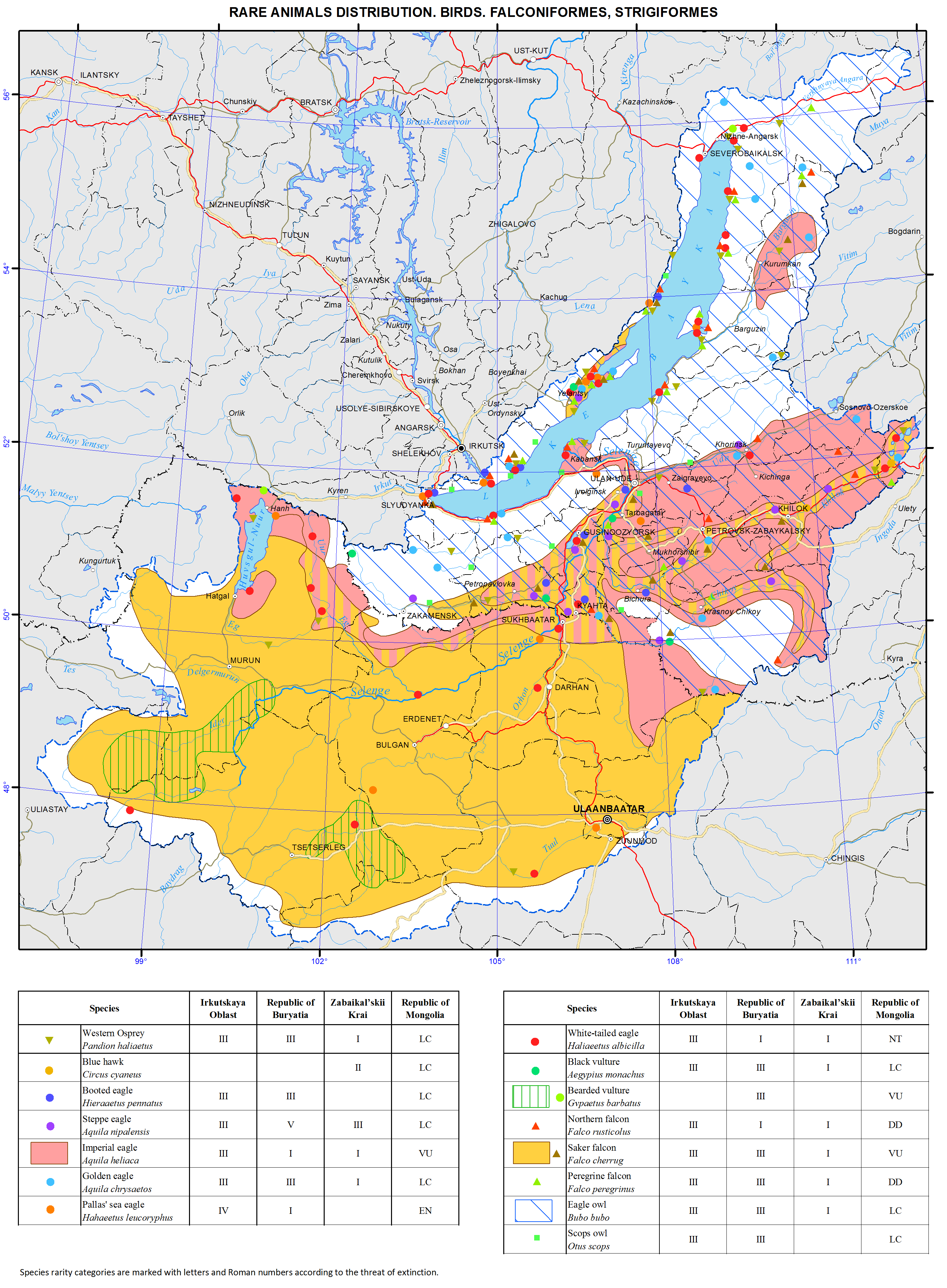
<p>The animal kingdom of the Baikal basin is rich and diverse. The basin’s fauna is unique due to a peculiar geographic location of this region, which explains the extreme diversity of the species composition including many genetically and environmentally heterogeneous elements. In this region, the contact and overlapping of many systemically and ecologically close species and subspecies take place. A large number of forms is represented by the periphery and even isolated populations preserved in the local refugiums since the last glacial period. As a rule, all these species are relatively rare and small in number, and their habitats cover a small territory. Therefore, all of them have been listed in the Red Books and require special protection.</p>
<p class="a">A series of maps of this section provides an insight about the spread of rare species of animals grouped according to their systematic features into separate categories: fish, amphibians and reptiles, birds and mammals. The maps show the main habitats of rare species based on the literature and museum collection research, as well as personal observations of the authors. The maps also show home ranges of certain species.</p>
<p class="a">More than 60 species of fish live in rivers and water bodies of the Baikal basin with half of them being endemic or relict species. The indigenous ichthyofauna of the Baikal basin’s rivers and lakes formed on the basis of the species of the boreal piedmont, boreal lowland, and arctic freshwater complexes; only the Siberian sturgeon and tench are remnants of the ancient late Tertiary faunal complex. Species representing other faunal complexes got into these water bodies as a result of introduction or invasion. In Lake Baikal, the level of endemism reaches 55% of all fish species, which is indicative of the autochthonous nature of the formation of the nucleus of the lake’s ichthyofauna. Only 10 species of fish are found in Lake Khovsgol, with half of them being valuable commercial fishery species. More than a half of the fish species listed in the regional Red Books of the Russian Federation and Mongolia are valuable commercial fishery species. However, their number has been significantly reduced due to the intensive human economic activities over the past 100 years. Overfishing, construction of hydro-technical facilities, and water body pollution negatively impacted their population and resulted in the partial loss of habitat. Today, 15 fish species in the Baikal basin require protection and artificial breeding in order to restore their number.</p>
<p>The Baikal basin is characterized by a low diversity of species of the herpetofauna (altogether about 20 species) due to harsh weather conditions in the region and the history of faunal formation. On the other hand, the basin is a place of contact of the habitats of the Western and Eastern Palearctic species, while representatives of the Central Asian and Daur-Mongolian fauna are wedging in from the south. Half of the species inhabiting this area are located on the periphery of their habitats. Anthropogenic transformation of habitats, drainage and contamination of water bodies, frequent fires, high recreational stress, and extermination by humans decrease the number and fragment the habitats of many herpetofauna species. At present, four amphibian species and six reptile species need protection.</p>
<p>Peculiarity of natural landscapes, climatic and geomorphological conditions, and the historical process of the formation of the ornithofauna resulted in its species diversity. The nucleus of the structure of the population of the basin’s ornithofauna is composed by representatives of the Siberian, Mongolian, Chinese, European and Arctic types of fauna. Transpalearctic species also make up a sizable proportion. Species of the Tibetan and Mediterranean types of fauna make up only a small share of species. Modern ornithofauna of the Baikal basin includes over 400 species; about 100 of them need protection. Human economic activity ambiguously impacts the structure of the ornithofauna. Transformation of the environment as a result of logging, fires, overgrazing, or steppe ploughing may decrease the number of some species, but, on the other hand, it may expand the habitats or the number of other species. Stenobiontic species are affected by economic activity the most. Transformation of habitats, changes in the hydrological regime of certain rivers and Lake Baikal, poaching, logging, fires, and technogenic emissions, all against the backdrop of fluctuations of environmental and climatic conditions, result in the decrease of diversity and number of the majority of bird species.</p>
<p>The fauna of mammals is quite specific and diverse including over 90 species. Many of these species are located on the periphery of their ranges. The modern mammal fauna of the basin is represented by almost 20 faunulas, the largest of which in terms of the number of species are the following: the Holarctic arctic boreal, taiga Palearctic, western Palearctic taiga, Holarctic tundra and golets, steppe southern Palearctic, and Central Asian elements, as well as the East Asian and southern Palearctic flying mammals. A small number of species of the basin either acclimatized or followed the humans. Compared to other animals, mammals are more affected by the direct anthropogenic impact. Thus, the majority of mammals listed as rare species in the near past were or still are considered as game animals, but their population was sharply reduced due to unregulated hunting and poaching. It is not uncommon that the activities aimed at preventing zoonotic infectious diseases led to a sharp decrease of infection hosts – rodents. Logging, steppe ploughing, overgrazing, frequent fires, and the fragmentation of natural territories devastatingly impacted the majority of mammalian species inhabiting the Baikal basin. Therefore, over 30 species now require special protection and reproduction.</p>
<p>The Red Books of the Russian Federation (2008) and Mongolia (1997), as well as regional Red Books of Irkutsk oblast (2010), Republic of Buryatia (2013), and Zabaikalsky krai (2012) were created to protect rare and endangered species. The categories set forth in the Red Book of the Russian Federation (2008) were used as a basis for the development of the regional categories of rarity and the degree of endangerment. Minor amendments were introduced to reflect regional characteristics of the biota. In particular, two regional categories (VI) and (VII) were included due to geographic features of the Republic of Buryatia (location near state border, existence of major biogeographic boundaries and important migration routes, and so on). The categories of the IUCN were used for rare species of vertebrate animals in Mongolia.</p>
<p> </p>
<p align="center" class="3">References</p>
<p>The Red Book of Zabaikalsky krai: Animals. (2012). Novosibirsk: Novosibirsk Publishing. p 344.</p>
<p>The Red Book of Irkutsk oblast (2010). Irkutsk: Wind of Travel Publishing. p 480.</p>
<p>The Red Book of the Republic of Buryatia: Rare and endangered species of animals, plants, and mushrooms. (2013). Ulan-Ude: BSC SB RAS Publishing. p 688.</p>
<p>The Red Book of the Russian Federation: Animals. (2001). Moscow: Astrel. p 862.</p>
<p>Mongolian Red List of birds. (2006). Ulaanbaatar: ADMON Printing. p 1036.</p>
<p>Mongolian Red List of fish. (2006). Ulaanbaatar: ADMON Printing. p 68.</p>
<p>Mongolian Red List of mammals. (2006). Ulaanbaatar: ADMON Printing. p 96.</p>
<p>Mongolian Red List of reptiles and amphibians. (2006). Ulaanbaatar: ADMON Printing. p 68.</p>]]></content:encoded>
    <dc:publisher>No publisher</dc:publisher>
    <dc:creator>Alexander Ayurzhanaev</dc:creator>
    <dc:rights></dc:rights>
    <dc:date>2014-10-14T07:15:00Z</dc:date>
    <dc:type>Page</dc:type>
  </item>


  <item rdf:about="http://bic.iwlearn.org/en/atlas/atlas/121-rare-animals-distribution-map">
    <title>121. Rare animals distribution. Birds. Falconiformes, strigiformes map</title>
    <link>http://bic.iwlearn.org/en/atlas/atlas/121-rare-animals-distribution-map</link>
    <description></description>
    
    <dc:publisher>No publisher</dc:publisher>
    <dc:creator>Alexander Ayurzhanaev</dc:creator>
    <dc:rights></dc:rights>
    <dc:date>2014-10-14T07:10:00Z</dc:date>
    <dc:type>Folder</dc:type>
  </item>


  <item rdf:about="http://bic.iwlearn.org/en/atlas/atlas/120-rare-animals-distribution-map">
    <title>120. Rare animals distribution. Birds. Pelecaniformes, ciconiiformes, anseriformes map</title>
    <link>http://bic.iwlearn.org/en/atlas/atlas/120-rare-animals-distribution-map</link>
    <description></description>
    
    <dc:publisher>No publisher</dc:publisher>
    <dc:creator>Alexander Ayurzhanaev</dc:creator>
    <dc:rights></dc:rights>
    <dc:date>2014-10-14T07:05:00Z</dc:date>
    <dc:type>Folder</dc:type>
  </item>


  <item rdf:about="http://bic.iwlearn.org/en/atlas/atlas/120-rare-animals-distribution-map/rare-animals-distribution-map">
    <title>Rare animals distribution. Birds. Pelecaniformes, ciconiiformes, anseriformes map</title>
    <link>http://bic.iwlearn.org/en/atlas/atlas/120-rare-animals-distribution-map/rare-animals-distribution-map</link>
    <description></description>
    <content:encoded xmlns:content="http://purl.org/rss/1.0/modules/content/"><![CDATA[<p><img class="image-inline" src="../../../resolveuid/fe83558d833347a4a4543be7f1083239/@@images/image/preview" /></p>
<p><a href="http://bic.iwlearn.org/en/atlas/photos/copy_of__120_Rareanimalsdistribution.png" class="internal-link">Open full size</a></p>
<p align="center"><strong>Rare species of fauna</strong></p>
<p align="center"><strong> </strong></p>
<p>The animal kingdom of the Baikal basin is rich and diverse. The basin’s fauna is unique due to a peculiar geographic location of this region, which explains the extreme diversity of the species composition including many genetically and environmentally heterogeneous elements. In this region, the contact and overlapping of many systemically and ecologically close species and subspecies take place. A large number of forms is represented by the periphery and even isolated populations preserved in the local refugiums since the last glacial period. As a rule, all these species are relatively rare and small in number, and their habitats cover a small territory. Therefore, all of them have been listed in the Red Books and require special protection.</p>
<p class="a">A series of maps of this section provides an insight about the spread of rare species of animals grouped according to their systematic features into separate categories: fish, amphibians and reptiles, birds and mammals. The maps show the main habitats of rare species based on the literature and museum collection research, as well as personal observations of the authors. The maps also show home ranges of certain species.</p>
<p class="a">More than 60 species of fish live in rivers and water bodies of the Baikal basin with half of them being endemic or relict species. The indigenous ichthyofauna of the Baikal basin’s rivers and lakes formed on the basis of the species of the boreal piedmont, boreal lowland, and arctic freshwater complexes; only the Siberian sturgeon and tench are remnants of the ancient late Tertiary faunal complex. Species representing other faunal complexes got into these water bodies as a result of introduction or invasion. In Lake Baikal, the level of endemism reaches 55% of all fish species, which is indicative of the autochthonous nature of the formation of the nucleus of the lake’s ichthyofauna. Only 10 species of fish are found in Lake Khovsgol, with half of them being valuable commercial fishery species. More than a half of the fish species listed in the regional Red Books of the Russian Federation and Mongolia are valuable commercial fishery species. However, their number has been significantly reduced due to the intensive human economic activities over the past 100 years. Overfishing, construction of hydro-technical facilities, and water body pollution negatively impacted their population and resulted in the partial loss of habitat. Today, 15 fish species in the Baikal basin require protection and artificial breeding in order to restore their number.</p>
<p>The Baikal basin is characterized by a low diversity of species of the herpetofauna (altogether about 20 species) due to harsh weather conditions in the region and the history of faunal formation. On the other hand, the basin is a place of contact of the habitats of the Western and Eastern Palearctic species, while representatives of the Central Asian and Daur-Mongolian fauna are wedging in from the south. Half of the species inhabiting this area are located on the periphery of their habitats. Anthropogenic transformation of habitats, drainage and contamination of water bodies, frequent fires, high recreational stress, and extermination by humans decrease the number and fragment the habitats of many herpetofauna species. At present, four amphibian species and six reptile species need protection.</p>
<p>Peculiarity of natural landscapes, climatic and geomorphological conditions, and the historical process of the formation of the ornithofauna resulted in its species diversity. The nucleus of the structure of the population of the basin’s ornithofauna is composed by representatives of the Siberian, Mongolian, Chinese, European and Arctic types of fauna. Transpalearctic species also make up a sizable proportion. Species of the Tibetan and Mediterranean types of fauna make up only a small share of species. Modern ornithofauna of the Baikal basin includes over 400 species; about 100 of them need protection. Human economic activity ambiguously impacts the structure of the ornithofauna. Transformation of the environment as a result of logging, fires, overgrazing, or steppe ploughing may decrease the number of some species, but, on the other hand, it may expand the habitats or the number of other species. Stenobiontic species are affected by economic activity the most. Transformation of habitats, changes in the hydrological regime of certain rivers and Lake Baikal, poaching, logging, fires, and technogenic emissions, all against the backdrop of fluctuations of environmental and climatic conditions, result in the decrease of diversity and number of the majority of bird species.</p>
<p>The fauna of mammals is quite specific and diverse including over 90 species. Many of these species are located on the periphery of their ranges. The modern mammal fauna of the basin is represented by almost 20 faunulas, the largest of which in terms of the number of species are the following: the Holarctic arctic boreal, taiga Palearctic, western Palearctic taiga, Holarctic tundra and golets, steppe southern Palearctic, and Central Asian elements, as well as the East Asian and southern Palearctic flying mammals. A small number of species of the basin either acclimatized or followed the humans. Compared to other animals, mammals are more affected by the direct anthropogenic impact. Thus, the majority of mammals listed as rare species in the near past were or still are considered as game animals, but their population was sharply reduced due to unregulated hunting and poaching. It is not uncommon that the activities aimed at preventing zoonotic infectious diseases led to a sharp decrease of infection hosts – rodents. Logging, steppe ploughing, overgrazing, frequent fires, and the fragmentation of natural territories devastatingly impacted the majority of mammalian species inhabiting the Baikal basin. Therefore, over 30 species now require special protection and reproduction.<span> </span></p>
<p>The Red Books of the Russian Federation (2008) and Mongolia (1997), as well as regional Red Books of Irkutsk oblast (2010), Republic of Buryatia (2013), and Zabaikalsky krai (2012) were created to protect rare and endangered species. The categories set forth in the Red Book of the Russian Federation (2008) were used as a basis for the development of the regional categories of rarity and the degree of endangerment. Minor amendments were introduced to reflect regional characteristics of the biota. In particular, two regional categories (VI) and (VII) were included due to geographic features of the Republic of Buryatia (location near state border, existence of major biogeographic boundaries and important migration routes, and so on). The categories of the IUCN were used for rare species of vertebrate animals in Mongolia.</p>
<p> </p>
<p align="center" class="3">References</p>
<p>The Red Book of Zabaikalsky krai: Animals. (2012). Novosibirsk: Novosibirsk Publishing. p 344.</p>
<p>The Red Book of Irkutsk oblast (2010). Irkutsk: Wind of Travel Publishing. p 480.</p>
<p>The Red Book of the Republic of Buryatia: Rare and endangered species of animals, plants, and mushrooms. (2013). Ulan-Ude: BSC SB RAS Publishing. p 688.</p>
<p>The Red Book of the Russian Federation: Animals. (2001). Moscow: Astrel. p 862.</p>
<p>Mongolian Red List of birds. (2006). Ulaanbaatar: ADMON Printing. p 1036.</p>
<p>Mongolian Red List of fish. (2006). Ulaanbaatar: ADMON Printing. p 68.</p>
<p>Mongolian Red List of mammals. (2006). Ulaanbaatar: ADMON Printing. p 96.</p>
<p>Mongolian Red List of reptiles and amphibians. (2006). Ulaanbaatar: ADMON Printing. p 68.</p>]]></content:encoded>
    <dc:publisher>No publisher</dc:publisher>
    <dc:creator>Alexander Ayurzhanaev</dc:creator>
    <dc:rights></dc:rights>
    <dc:date>2014-10-14T07:05:00Z</dc:date>
    <dc:type>Page</dc:type>
  </item>


  <item rdf:about="http://bic.iwlearn.org/en/atlas/atlas/119-distribution-of-rare-animal-species-map/distribution-of-rare-animal-species-map">
    <title>Distribution of rare animal species. Fishes map</title>
    <link>http://bic.iwlearn.org/en/atlas/atlas/119-distribution-of-rare-animal-species-map/distribution-of-rare-animal-species-map</link>
    <description></description>
    <content:encoded xmlns:content="http://purl.org/rss/1.0/modules/content/"><![CDATA[<p><img class="image-inline" src="../../../resolveuid/358bc999a3ea401598cde02ab4006aa9/@@images/image/preview" /></p>
<p><a href="http://bic.iwlearn.org/en/atlas/photos/copy_of__119_Distributionofrareanimalspecies.png" class="internal-link">Open full size</a></p>
<p align="center"><strong>Rare species of fauna</strong></p>
<p align="center"><strong> </strong></p>
<p>The animal kingdom of the Baikal basin is rich and diverse. The basin’s fauna is unique due to a peculiar geographic location of this region, which explains the extreme diversity of the species composition including many genetically and environmentally heterogeneous elements. In this region, the contact and overlapping of many systemically and ecologically close species and subspecies take place. A large number of forms is represented by the periphery and even isolated populations preserved in the local refugiums since the last glacial period. As a rule, all these species are relatively rare and small in number, and their habitats cover a small territory. Therefore, all of them have been listed in the Red Books and require special protection.</p>
<p class="a">A series of maps of this section provides an insight about the spread of rare species of animals grouped according to their systematic features into separate categories: fish, amphibians and reptiles, birds and mammals. The maps show the main habitats of rare species based on the literature and museum collection research, as well as personal observations of the authors. The maps also show home ranges of certain species.</p>
<p class="a">More than 60 species of fish live in rivers and water bodies of the Baikal basin with half of them being endemic or relict species. The indigenous ichthyofauna of the Baikal basin’s rivers and lakes formed on the basis of the species of the boreal piedmont, boreal lowland, and arctic freshwater complexes; only the Siberian sturgeon and tench are remnants of the ancient late Tertiary faunal complex. Species representing other faunal complexes got into these water bodies as a result of introduction or invasion. In Lake Baikal, the level of endemism reaches 55% of all fish species, which is indicative of the autochthonous nature of the formation of the nucleus of the lake’s ichthyofauna. Only 10 species of fish are found in Lake Khovsgol, with half of them being valuable commercial fishery species. More than a half of the fish species listed in the regional Red Books of the Russian Federation and Mongolia are valuable commercial fishery species. However, their number has been significantly reduced due to the intensive human economic activities over the past 100 years. Overfishing, construction of hydro-technical facilities, and water body pollution negatively impacted their population and resulted in the partial loss of habitat. Today, 15 fish species in the Baikal basin require protection and artificial breeding in order to restore their number.</p>
<p>The Baikal basin is characterized by a low diversity of species of the herpetofauna (altogether about 20 species) due to harsh weather conditions in the region and the history of faunal formation. On the other hand, the basin is a place of contact of the habitats of the Western and Eastern Palearctic species, while representatives of the Central Asian and Daur-Mongolian fauna are wedging in from the south. Half of the species inhabiting this area are located on the periphery of their habitats. Anthropogenic transformation of habitats, drainage and contamination of water bodies, frequent fires, high recreational stress, and extermination by humans decrease the number and fragment the habitats of many herpetofauna species. At present, four amphibian species and six reptile species need protection.</p>
<p>Peculiarity of natural landscapes, climatic and geomorphological conditions, and the historical process of the formation of the ornithofauna resulted in its species diversity. The nucleus of the structure of the population of the basin’s ornithofauna is composed by representatives of the Siberian, Mongolian, Chinese, European and Arctic types of fauna. Transpalearctic species also make up a sizable proportion. Species of the Tibetan and Mediterranean types of fauna make up only a small share of species. Modern ornithofauna of the Baikal basin includes over 400 species; about 100 of them need protection. Human economic activity ambiguously impacts the structure of the ornithofauna. Transformation of the environment as a result of logging, fires, overgrazing, or steppe ploughing may decrease the number of some species, but, on the other hand, it may expand the habitats or the number of other species. Stenobiontic species are affected by economic activity the most. Transformation of habitats, changes in the hydrological regime of certain rivers and Lake Baikal, poaching, logging, fires, and technogenic emissions, all against the backdrop of fluctuations of environmental and climatic conditions, result in the decrease of diversity and number of the majority of bird species.</p>
<p>The fauna of mammals is quite specific and diverse including over 90 species. Many of these species are located on the periphery of their ranges. The modern mammal fauna of the basin is represented by almost 20 faunulas, the largest of which in terms of the number of species are the following: the Holarctic arctic boreal, taiga Palearctic, western Palearctic taiga, Holarctic tundra and golets, steppe southern Palearctic, and Central Asian elements, as well as the East Asian and southern Palearctic flying mammals. A small number of species of the basin either acclimatized or followed the humans. Compared to other animals, mammals are more affected by the direct anthropogenic impact. Thus, the majority of mammals listed as rare species in the near past were or still are considered as game animals, but their population was sharply reduced due to unregulated hunting and poaching. It is not uncommon that the activities aimed at preventing zoonotic infectious diseases led to a sharp decrease of infection hosts – rodents. Logging, steppe ploughing, overgrazing, frequent fires, and the fragmentation of natural territories devastatingly impacted the majority of mammalian species inhabiting the Baikal basin. Therefore, over 30 species now require special protection and reproduction.</p>
<p>The Red Books of the Russian Federation (2008) and Mongolia (1997), as well as regional Red Books of Irkutsk oblast (2010), Republic of Buryatia (2013), and Zabaikalsky krai (2012) were created to protect rare and endangered species. The categories set forth in the Red Book of the Russian Federation (2008) were used as a basis for the development of the regional categories of rarity and the degree of endangerment. Minor amendments were introduced to reflect regional characteristics of the biota. In particular, two regional categories (VI) and (VII) were included due to geographic features of the Republic of Buryatia (location near state border, existence of major biogeographic boundaries and important migration routes, and so on). The categories of the IUCN were used for rare species of vertebrate animals in Mongolia.</p>
<p> </p>
<p align="center" class="3">References</p>
<p>The Red Book of Zabaikalsky krai: Animals. (2012). Novosibirsk: Novosibirsk Publishing. p 344.</p>
<p>The Red Book of Irkutsk oblast (2010). Irkutsk: Wind of Travel Publishing. p 480.</p>
<p>The Red Book of the Republic of Buryatia: Rare and endangered species of animals, plants, and mushrooms. (2013). Ulan-Ude: BSC SB RAS Publishing. p 688.</p>
<p>The Red Book of the Russian Federation: Animals. (2001). Moscow: Astrel. p 862.</p>
<p>Mongolian Red List of birds. (2006). Ulaanbaatar: ADMON Printing. p 1036.</p>
<p>Mongolian Red List of fish. (2006). Ulaanbaatar: ADMON Printing. p 68.</p>
<p>Mongolian Red List of mammals. (2006). Ulaanbaatar: ADMON Printing. p 96.</p>
<p>Mongolian Red List of reptiles and amphibians. (2006). Ulaanbaatar: ADMON Printing. p 68.</p>]]></content:encoded>
    <dc:publisher>No publisher</dc:publisher>
    <dc:creator>Alexander Ayurzhanaev</dc:creator>
    <dc:rights></dc:rights>
    <dc:date>2014-10-14T06:55:00Z</dc:date>
    <dc:type>Page</dc:type>
  </item>


  <item rdf:about="http://bic.iwlearn.org/en/atlas/atlas/118-distribution-of-rare-animal-species-map/distribution-of-rare-animal-species-map">
    <title>Distribution of rare animal species. Amphibians map</title>
    <link>http://bic.iwlearn.org/en/atlas/atlas/118-distribution-of-rare-animal-species-map/distribution-of-rare-animal-species-map</link>
    <description></description>
    <content:encoded xmlns:content="http://purl.org/rss/1.0/modules/content/"><![CDATA[<p><img class="image-inline" src="../../../resolveuid/a3505ea8dec34ce3995f73e4f52423d8/@@images/image/preview" /></p>
<p><a href="http://bic.iwlearn.org/en/atlas/photos/copy_of__118Distributionofrareanimalspecies.png" class="internal-link">Open full size</a></p>
<p align="center"><strong>Rare species of fauna</strong></p>
<p align="center"><strong> </strong></p>
<p>The animal kingdom of the Baikal basin is rich and diverse. The basin’s fauna is unique due to a peculiar geographic location of this region, which explains the extreme diversity of the species composition including many genetically and environmentally heterogeneous elements. In this region, the contact and overlapping of many systemically and ecologically close species and subspecies take place. A large number of forms is represented by the periphery and even isolated populations preserved in the local refugiums since the last glacial period. As a rule, all these species are relatively rare and small in number, and their habitats cover a small territory. Therefore, all of them have been listed in the Red Books and require special protection.</p>
<p class="a">A series of maps of this section provides an insight about the spread of rare species of animals grouped according to their systematic features into separate categories: fish, amphibians and reptiles, birds and mammals. The maps show the main habitats of rare species based on the literature and museum collection research, as well as personal observations of the authors. The maps also show home ranges of certain species.</p>
<p class="a">More than 60 species of fish live in rivers and water bodies of the Baikal basin with half of them being endemic or relict species. The indigenous ichthyofauna of the Baikal basin’s rivers and lakes formed on the basis of the species of the boreal piedmont, boreal lowland, and arctic freshwater complexes; only the Siberian sturgeon and tench are remnants of the ancient late Tertiary faunal complex. Species representing other faunal complexes got into these water bodies as a result of introduction or invasion. In Lake Baikal, the level of endemism reaches 55% of all fish species, which is indicative of the autochthonous nature of the formation of the nucleus of the lake’s ichthyofauna. Only 10 species of fish are found in Lake Khovsgol, with half of them being valuable commercial fishery species. More than a half of the fish species listed in the regional Red Books of the Russian Federation and Mongolia are valuable commercial fishery species. However, their number has been significantly reduced due to the intensive human economic activities over the past 100 years. Overfishing, construction of hydro-technical facilities, and water body pollution negatively impacted their population and resulted in the partial loss of habitat. Today, 15 fish species in the Baikal basin require protection and artificial breeding in order to restore their number.</p>
<p>The Baikal basin is characterized by a low diversity of species of the herpetofauna (altogether about 20 species) due to harsh weather conditions in the region and the history of faunal formation. On the other hand, the basin is a place of contact of the habitats of the Western and Eastern Palearctic species, while representatives of the Central Asian and Daur-Mongolian fauna are wedging in from the south. Half of the species inhabiting this area are located on the periphery of their habitats. Anthropogenic transformation of habitats, drainage and contamination of water bodies, frequent fires, high recreational stress, and extermination by humans decrease the number and fragment the habitats of many herpetofauna species. At present, four amphibian species and six reptile species need protection.</p>
<p>Peculiarity of natural landscapes, climatic and geomorphological conditions, and the historical process of the formation of the ornithofauna resulted in its species diversity. The nucleus of the structure of the population of the basin’s ornithofauna is composed by representatives of the Siberian, Mongolian, Chinese, European and Arctic types of fauna. Transpalearctic species also make up a sizable proportion. Species of the Tibetan and Mediterranean types of fauna make up only a small share of species. Modern ornithofauna of the Baikal basin includes over 400 species; about 100 of them need protection. Human economic activity ambiguously impacts the structure of the ornithofauna. Transformation of the environment as a result of logging, fires, overgrazing, or steppe ploughing may decrease the number of some species, but, on the other hand, it may expand the habitats or the number of other species. Stenobiontic species are affected by economic activity the most. Transformation of habitats, changes in the hydrological regime of certain rivers and Lake Baikal, poaching, logging, fires, and technogenic emissions, all against the backdrop of fluctuations of environmental and climatic conditions, result in the decrease of diversity and number of the majority of bird species.</p>
<p>The fauna of mammals is quite specific and diverse including over 90 species. Many of these species are located on the periphery of their ranges. The modern mammal fauna of the basin is represented by almost 20 faunulas, the largest of which in terms of the number of species are the following: the Holarctic arctic boreal, taiga Palearctic, western Palearctic taiga, Holarctic tundra and golets, steppe southern Palearctic, and Central Asian elements, as well as the East Asian and southern Palearctic flying mammals. A small number of species of the basin either acclimatized or followed the humans. Compared to other animals, mammals are more affected by the direct anthropogenic impact. Thus, the majority of mammals listed as rare species in the near past were or still are considered as game animals, but their population was sharply reduced due to unregulated hunting and poaching. It is not uncommon that the activities aimed at preventing zoonotic infectious diseases led to a sharp decrease of infection hosts – rodents. Logging, steppe ploughing, overgrazing, frequent fires, and the fragmentation of natural territories devastatingly impacted the majority of mammalian species inhabiting the Baikal basin. Therefore, over 30 species now require special protection and reproduction.</p>
<p>The Red Books of the Russian Federation (2008) and Mongolia (1997), as well as regional Red Books of Irkutsk oblast (2010), Republic of Buryatia (2013), and Zabaikalsky krai (2012) were created to protect rare and endangered species. The categories set forth in the Red Book of the Russian Federation (2008) were used as a basis for the development of the regional categories of rarity and the degree of endangerment. Minor amendments were introduced to reflect regional characteristics of the biota. In particular, two regional categories (VI) and (VII) were included due to geographic features of the Republic of Buryatia (location near state border, existence of major biogeographic boundaries and important migration routes, and so on). The categories of the IUCN were used for rare species of vertebrate animals in Mongolia.</p>
<p> </p>
<p align="center" class="3">References</p>
<p>The Red Book of Zabaikalsky krai: Animals. (2012). Novosibirsk: Novosibirsk Publishing. p 344.</p>
<p>The Red Book of Irkutsk oblast (2010). Irkutsk: Wind of Travel Publishing. p 480.</p>
<p>The Red Book of the Republic of Buryatia: Rare and endangered species of animals, plants, and mushrooms. (2013). Ulan-Ude: BSC SB RAS Publishing. p 688.</p>
<p>The Red Book of the Russian Federation: Animals. (2001). Moscow: Astrel. p 862.</p>
<p>Mongolian Red List of birds. (2006). Ulaanbaatar: ADMON Printing. p 1036.</p>
<p>Mongolian Red List of fish. (2006). Ulaanbaatar: ADMON Printing. p 68.</p>
<p>Mongolian Red List of mammals. (2006). Ulaanbaatar: ADMON Printing. p 96.</p>
<p>Mongolian Red List of reptiles and amphibians. (2006). Ulaanbaatar: ADMON Printing. p 68.</p>]]></content:encoded>
    <dc:publisher>No publisher</dc:publisher>
    <dc:creator>Alexander Ayurzhanaev</dc:creator>
    <dc:rights></dc:rights>
    <dc:date>2014-10-14T06:55:00Z</dc:date>
    <dc:type>Page</dc:type>
  </item>


  <item rdf:about="http://bic.iwlearn.org/en/atlas/atlas/119-distribution-of-rare-animal-species-map">
    <title>119. Distribution of rare animal species. Fishes map</title>
    <link>http://bic.iwlearn.org/en/atlas/atlas/119-distribution-of-rare-animal-species-map</link>
    <description></description>
    
    <dc:publisher>No publisher</dc:publisher>
    <dc:creator>Alexander Ayurzhanaev</dc:creator>
    <dc:rights></dc:rights>
    <dc:date>2014-10-14T06:55:00Z</dc:date>
    <dc:type>Folder</dc:type>
  </item>


  <item rdf:about="http://bic.iwlearn.org/en/atlas/atlas/118-distribution-of-rare-animal-species-map">
    <title>118. Distribution of rare animal species. Amphibians map</title>
    <link>http://bic.iwlearn.org/en/atlas/atlas/118-distribution-of-rare-animal-species-map</link>
    <description></description>
    
    <dc:publisher>No publisher</dc:publisher>
    <dc:creator>Alexander Ayurzhanaev</dc:creator>
    <dc:rights></dc:rights>
    <dc:date>2014-10-14T06:55:00Z</dc:date>
    <dc:type>Folder</dc:type>
  </item>


  <item rdf:about="http://bic.iwlearn.org/en/atlas/atlas/117-distribution-of-rare-animal-species-map/distribution-of-rare-animal-species-map">
    <title>Distribution of rare animal species. Mammals map</title>
    <link>http://bic.iwlearn.org/en/atlas/atlas/117-distribution-of-rare-animal-species-map/distribution-of-rare-animal-species-map</link>
    <description></description>
    <content:encoded xmlns:content="http://purl.org/rss/1.0/modules/content/"><![CDATA[<p><img class="image-inline" src="../../../resolveuid/c0c7643035c14784872a56082d55d1cc/@@images/image/preview" /></p>
<p><a href="http://bic.iwlearn.org/en/atlas/photos/copy_of__117_Distributionofrareanimalspecies.png" class="internal-link">Open full size</a></p>
<p align="center"><strong>Rare species of fauna</strong></p>
<p align="center"><strong> </strong></p>
<p>The animal kingdom of the Baikal basin is rich and diverse. The basin’s fauna is unique due to a peculiar geographic location of this region, which explains the extreme diversity of the species composition including many genetically and environmentally heterogeneous elements. In this region, the contact and overlapping of many systemically and ecologically close species and subspecies take place. A large number of forms is represented by the periphery and even isolated populations preserved in the local refugiums since the last glacial period. As a rule, all these species are relatively rare and small in number, and their habitats cover a small territory. Therefore, all of them have been listed in the Red Books and require special protection.</p>
<p class="a">A series of maps of this section provides an insight about the spread of rare species of animals grouped according to their systematic features into separate categories: fish, amphibians and reptiles, birds and mammals. The maps show the main habitats of rare species based on the literature and museum collection research, as well as personal observations of the authors. The maps also show home ranges of certain species.</p>
<p class="a">More than 60 species of fish live in rivers and water bodies of the Baikal basin with half of them being endemic or relict species. The indigenous ichthyofauna of the Baikal basin’s rivers and lakes formed on the basis of the species of the boreal piedmont, boreal lowland, and arctic freshwater complexes; only the Siberian sturgeon and tench are remnants of the ancient late Tertiary faunal complex. Species representing other faunal complexes got into these water bodies as a result of introduction or invasion. In Lake Baikal, the level of endemism reaches 55% of all fish species, which is indicative of the autochthonous nature of the formation of the nucleus of the lake’s ichthyofauna. Only 10 species of fish are found in Lake Khovsgol, with half of them being valuable commercial fishery species. More than a half of the fish species listed in the regional Red Books of the Russian Federation and Mongolia are valuable commercial fishery species. However, their number has been significantly reduced due to the intensive human economic activities over the past 100 years. Overfishing, construction of hydro-technical facilities, and water body pollution negatively impacted their population and resulted in the partial loss of habitat. Today, 15 fish species in the Baikal basin require protection and artificial breeding in order to restore their number.</p>
<p>The Baikal basin is characterized by a low diversity of species of the herpetofauna (altogether about 20 species) due to harsh weather conditions in the region and the history of faunal formation. On the other hand, the basin is a place of contact of the habitats of the Western and Eastern Palearctic species, while representatives of the Central Asian and Daur-Mongolian fauna are wedging in from the south. Half of the species inhabiting this area are located on the periphery of their habitats. Anthropogenic transformation of habitats, drainage and contamination of water bodies, frequent fires, high recreational stress, and extermination by humans decrease the number and fragment the habitats of many herpetofauna species. At present, four amphibian species and six reptile species need protection.</p>
<p>Peculiarity of natural landscapes, climatic and geomorphological conditions, and the historical process of the formation of the ornithofauna resulted in its species diversity. The nucleus of the structure of the population of the basin’s ornithofauna is composed by representatives of the Siberian, Mongolian, Chinese, European and Arctic types of fauna. Transpalearctic species also make up a sizable proportion. Species of the Tibetan and Mediterranean types of fauna make up only a small share of species. Modern ornithofauna of the Baikal basin includes over 400 species; about 100 of them need protection. Human economic activity ambiguously impacts the structure of the ornithofauna. Transformation of the environment as a result of logging, fires, overgrazing, or steppe ploughing may decrease the number of some species, but, on the other hand, it may expand the habitats or the number of other species. Stenobiontic species are affected by economic activity the most. Transformation of habitats, changes in the hydrological regime of certain rivers and Lake Baikal, poaching, logging, fires, and technogenic emissions, all against the backdrop of fluctuations of environmental and climatic conditions, result in the decrease of diversity and number of the majority of bird species.</p>
<p>The fauna of mammals is quite specific and diverse including over 90 species. Many of these species are located on the periphery of their ranges. The modern mammal fauna of the basin is represented by almost 20 faunulas, the largest of which in terms of the number of species are the following: the Holarctic arctic boreal, taiga Palearctic, western Palearctic taiga, Holarctic tundra and golets, steppe southern Palearctic, and Central Asian elements, as well as the East Asian and southern Palearctic flying mammals. A small number of species of the basin either acclimatized or followed the humans. Compared to other animals, mammals are more affected by the direct anthropogenic impact. Thus, the majority of mammals listed as rare species in the near past were or still are considered as game animals, but their population was sharply reduced due to unregulated hunting and poaching. It is not uncommon that the activities aimed at preventing zoonotic infectious diseases led to a sharp decrease of infection hosts – rodents. Logging, steppe ploughing, overgrazing, frequent fires, and the fragmentation of natural territories devastatingly impacted the majority of mammalian species inhabiting the Baikal basin. Therefore, over 30 species now require special protection and reproduction.</p>
<p>The Red Books of the Russian Federation (2008) and Mongolia (1997), as well as regional Red Books of Irkutsk oblast (2010), Republic of Buryatia (2013), and Zabaikalsky krai (2012) were created to protect rare and endangered species. The categories set forth in the Red Book of the Russian Federation (2008) were used as a basis for the development of the regional categories of rarity and the degree of endangerment. Minor amendments were introduced to reflect regional characteristics of the biota. In particular, two regional categories (VI) and (VII) were included due to geographic features of the Republic of Buryatia (location near state border, existence of major biogeographic boundaries and important migration routes, and so on). The categories of the IUCN were used for rare species of vertebrate animals in Mongolia.</p>
<p> </p>
<p align="center" class="3">References</p>
<p>The Red Book of Zabaikalsky krai: Animals. (2012). Novosibirsk: Novosibirsk Publishing. p 344.</p>
<p>The Red Book of Irkutsk oblast (2010). Irkutsk: Wind of Travel Publishing. p 480.</p>
<p>The Red Book of the Republic of Buryatia: Rare and endangered species of animals, plants, and mushrooms. (2013). Ulan-Ude: BSC SB RAS Publishing. p 688.</p>
<p>The Red Book of the Russian Federation: Animals. (2001). Moscow: Astrel. p 862.</p>
<p>Mongolian Red List of birds. (2006). Ulaanbaatar: ADMON Printing. p 1036.</p>
<p>Mongolian Red List of fish. (2006). Ulaanbaatar: ADMON Printing. p 68.</p>
<p>Mongolian Red List of mammals. (2006). Ulaanbaatar: ADMON Printing. p 96.</p>
<p>Mongolian Red List of reptiles and amphibians. (2006). Ulaanbaatar: ADMON Printing. p 68.</p>
<p> </p>
<p align="center"><strong><i> </i></strong></p>
<p align="center"><strong><i>Categories of rarity of species and subspecies according to the risk of their extinction</i></strong></p>
<p align="center"><strong><i> (The Irkutsk Oblast, the Buryat Republic and the Zabaikalye Region)</i></strong></p>
<p><strong>Category 0</strong> – apparently extinct</p>
<p><strong>Category I</strong> – near extinct; species (subspecies), the number of animals of which has critically decreased</p>
<p><strong>Category II</strong>– species (subspecies), constantly decreasing in the number of animals</p>
<p><strong>Category III</strong> –species (subspecies), naturally low in the number of animals, distributed sporadically or on a limited territory</p>
<p><strong>Category IV</strong> – species (subspecies) of uncertain status, apparently falling into one of the above categories</p>
<p><strong>Category V</strong> – species (subspecies), which have been restored or undergoing restoration</p>
<p><strong>Category VI</strong> – rare species (subspecies) with irregular occurrence</p>
<p><strong>Category VII </strong>– species (subspecies) apparently secure in the Buryat Republic, but Red Listed in the Russian Federation, Mongolia or the neighbor regions</p>
<p> </p>
<p align="center"><strong><i>Categories of rarity of species and subspecies according to the risk of their extinction</i></strong><strong><i> (Mongolia)</i></strong></p>
<p><strong>Regionally Extinct (RE)</strong></p>
<p><strong>Critically Endangered (CR)</strong></p>
<p><strong>Endangered (EN)</strong></p>
<p><strong>Vulnerable (VU)</strong></p>
<p><strong>Near Threatened (NT)</strong></p>
<p><strong>Least Concern (LC)</strong></p>
<p><strong>Data Deficient (DD)</strong></p>
<p><strong><img class="image-inline" src="../../../../resolveuid/0363cc80277b4ae89f3c30edb64d3cdf/@@images/image/preview" /></strong></p>
<p><strong><a href="http://bic.iwlearn.org/en/photos/117.jpg" class="internal-link">Open full size</a></strong></p>
<p><strong><img class="image-inline" src="../../../../resolveuid/40794457e4574aa3add85ad70fc99159/@@images/image/preview" /></strong></p>
<p><strong><a href="http://bic.iwlearn.org/en/photos/1171.jpg" class="internal-link">Open full size</a></strong></p>
<p><strong><img class="image-inline" src="../../../../resolveuid/6b5f82bc386848dc8f3fbb3b9f764b0d/@@images/image/preview" /></strong></p>
<p><strong><a href="http://bic.iwlearn.org/en/photos/1172.jpg" class="internal-link">Open full size</a></strong></p>
<p><strong><img class="image-inline" src="../../../../resolveuid/c2f01706783e467780766c69643bd4cf/@@images/image/preview" /></strong></p>
<p><strong><a href="http://bic.iwlearn.org/en/photos/1173.jpg" class="internal-link">Open full size</a></strong></p>
<p><strong><img class="image-inline" src="../../../../resolveuid/aace67a3ab6647089ecba3b773352616/@@images/image/preview" /></strong></p>
<p><strong><a href="http://bic.iwlearn.org/en/photos/1174.jpg" class="internal-link">Open full size</a></strong></p>
<p><strong><br /></strong></p>]]></content:encoded>
    <dc:publisher>No publisher</dc:publisher>
    <dc:creator>Alexander Ayurzhanaev</dc:creator>
    <dc:rights></dc:rights>
    <dc:date>2014-10-14T06:50:00Z</dc:date>
    <dc:type>Page</dc:type>
  </item>


</rdf:RDF>