<?xml version="1.0" encoding="utf-8" ?>
<rdf:RDF xmlns:rdf="http://www.w3.org/1999/02/22-rdf-syntax-ns#" xmlns:dc="http://purl.org/dc/elements/1.1/" xmlns:syn="http://purl.org/rss/1.0/modules/syndication/" xmlns="http://purl.org/rss/1.0/">


<channel rdf:about="http://bic.iwlearn.org/en/search_rss">
  <title>English</title>
  <link>http://bic.iwlearn.org</link>

  <description>
    
            These are the search results for the query, showing results 175 to 189.
        
  </description>


  <image rdf:resource="http://bic.iwlearn.org/logo.png"/>

  <items>
    <rdf:Seq>
      
        <rdf:li rdf:resource="http://bic.iwlearn.org/en/friends/russian/conception-of-ngo-network-201cfriends-of-baikal-basin201d"/>
      
      
        <rdf:li rdf:resource="http://bic.iwlearn.org/en/documents/documents/state-reports/2013/state-of-the-environment-report-mongolia-2011-2012-mongolian"/>
      
      
        <rdf:li rdf:resource="http://bic.iwlearn.org/en/documents/documents/complex-reports/2010/integrated-water-management-model-on-the-selenge-river-basin-english"/>
      
      
        <rdf:li rdf:resource="http://bic.iwlearn.org/en/documents/documents/complex-reports/bic-conception-for-mongolia-english"/>
      
      
        <rdf:li rdf:resource="http://bic.iwlearn.org/en/documents/documents/complex-reports/reports-of-the-un-experts-mission-to-khongor-sum-darkhan-uul-aimag-mongolia-english"/>
      
      
        <rdf:li rdf:resource="http://bic.iwlearn.org/en/documents/documents/papers/wild-life-issues-in-mongolia-english"/>
      
      
        <rdf:li rdf:resource="http://bic.iwlearn.org/en/friends/conception-of-ngo-network-201cfriends-of-baikal-basin201d"/>
      
      
        <rdf:li rdf:resource="http://bic.iwlearn.org/en/documents/documents/complex-reports/2013/baikal-basin-transboundry-diagnostic-analysis"/>
      
      
        <rdf:li rdf:resource="http://bic.iwlearn.org/en/atlas/atlas/03-lake-baikal-basin-borders-and-structure-map/lake-baikal-basin-borders-and-structure-map"/>
      
      
        <rdf:li rdf:resource="http://bic.iwlearn.org/en/atlas/atlas/about-the-project/about-the-project-1"/>
      
      
        <rdf:li rdf:resource="http://bic.iwlearn.org/en/atlas/atlas/about-the-project"/>
      
      
        <rdf:li rdf:resource="http://bic.iwlearn.org/en/atlas/atlas/142-aesthetic-image-of-the-baikal-shore-map/aesthetic-image-of-the-baikal-shore-map"/>
      
      
        <rdf:li rdf:resource="http://bic.iwlearn.org/en/atlas/atlas/142-aesthetic-image-of-the-baikal-shore-map"/>
      
      
        <rdf:li rdf:resource="http://bic.iwlearn.org/en/atlas/atlas/141-natural-managment-and-environmental-condition-of-central-ecological-zone-map/natural-managment-and-environmental-condition-of-central-ecological-zone-map"/>
      
      
        <rdf:li rdf:resource="http://bic.iwlearn.org/en/atlas/atlas/141-natural-managment-and-environmental-condition-of-central-ecological-zone-map"/>
      
    </rdf:Seq>
  </items>

</channel>


  <item rdf:about="http://bic.iwlearn.org/en/friends/russian/conception-of-ngo-network-201cfriends-of-baikal-basin201d">
    <title>Conception of NGO Network “Friends of Baikal Basin”</title>
    <link>http://bic.iwlearn.org/en/friends/russian/conception-of-ngo-network-201cfriends-of-baikal-basin201d</link>
    <description></description>
    <content:encoded xmlns:content="http://purl.org/rss/1.0/modules/content/"><![CDATA[<p align="center"><b>Conception of NGO Network “Friends of Baikal Basin”</b></p>
<p align="right"><i>When you have friends you are vast as a steppe, without friends you are narrow as a palm</i></p>
<p align="right"><i>(Mongolian proverb)</i><i> </i></p>
<p align="center"><b><i> </i></b></p>
<p>Today, there are many environmental non-governmental organizations (NGOs) operating in Russia. Many have extensive experience of  successfully implementing projects concerning nature protection, practical aspects of sustainable development, environmental education, and effective forms of self-maintenance. Such experience is very important for the development of public activity, unfortunately this experience is often lacking in regional NGOs which often don’t have the close contacts with colleagues enjoyed by national organizations (Sobolev, 2006).</p>
<p> </p>
<p>Some regions of Russia have reputable environmental organizations which have strong links with governmental organizations. Members of these organizations are experienced in preparing official documents and can find meaningful solutions to ecological problems. The NGO “Baikal Ecological Wave” from Irkutsk city is a good example of such an organization (Yablokov, 2004).</p>
<p> </p>
<p>Well-known scientist Vladimir Yakimets who studied non-governmental organizations in Russia proposes that there have been three hypothetical periods in the development of NGOs in Russia: 1991-1995 “romantic period”, 1996-2000 – “meaningful and controversial period”, 2001 – present (this period doesn’t have a symbolic name because of contradictive evaluation into ongoing processes: decreasing or increasing of public initiatives). The author analyzed this process by investigating the system of interactions between government and civil society in the frame of dominating in Russian research tendencies, which reflect the condition of official and non-official rhetoric in civil society. Such models have some shortcomings and need to be corrected. However, this represents one of the few attempts to study the history and development of non-governmental organizations in Russia (Demidov, 2008).</p>
<p> </p>
<p>Improving the environmental awareness of the public is an important factor in securing the sustainable development of society and non-governmental organizations make great contributions to such processes. These organizations include environmental NGOs which are specifically targeted on nature protection and sustainable management. Their main goals are environmental education, practical preservation of natural objects, leading public ecological control and promoting the alignment of the economy and society to environmental protection and sustainable development. They develop public initiatives and involve the public in decision-making processes.</p>
<p> </p>
<p>Lake Baikal (UNESCO World Heritage Site) has the potential to develop the environmental awareness not only of Irkutsk Oblast’, Republic of Buryatia, Zabaikalsky Krai of Russia, and Mongolia, but of the whole world.</p>
<p> </p>
<p>Implementation of the proposed network can help in strengthening and facilitating cooperation between Russian and Mongolian NGOs in the field of sustainable development of the Baikal Basin.</p>
<p>It should be noted that environmental NGOs play an important role in the facilitation, elaboration and implementation of different projects, such as</p>
<ul>
<li>Nature conservation and improvement;</li>
<li>Facilitating social and educational activities for training of scientific and creative forces in local communities;</li>
<li>Promoting of local community to participate in environmental and natural resources protection and their sustainable use.</li>
</ul>
<p> </p>
<p>Creation of the transboundary NGO network “Friends of Baikal Basin” will be the first step towards enhancing the involvement of civil society in the transboundary collaborative process.</p>
<p> </p>
<p>The network will form structured, well-defined and efficient NGO partnerships to allow for adequate and coordinated representation of civil society in the context of the implementation of the transboundary and national strategy action plan (SAP). Virtual web-based tools for creating and maintaining partnerships will include a website and an email list-serve. It will encourage the membership of community-based organizations (CBOs) and NGOs (registered and non-registered). The virtual partnership will operate in Russian, Mongolian, and English, with country-specific content managed in each country respectively.</p>
<p> </p>
<p>This Friends of Baikal Basin Network will also be engaged under a UNDP/Coca Cola funded, practical, hands-on initiative to benefit Baikal and to see the benefits called “Every Drop Matters”. The Every Drop Matters Project in Russia is part of the regional UNDP-Coke water partnership and is one of the five pilot projects planned in five countries (Russia, Romania, Turkey, Kazakhstan, andCroatia). One of the purposes of the initiative is the protection of drinking water resources and promoting the sustainable economic development of local communities and their water resources, as well as awareness-raising on water issues (Project document, 2010).</p>
<p> </p>
<p align="center"><b>1. Experience of international cooperation of NGOs</b></p>
<p align="center"><b> </b></p>
<p align="center"><b>1.1. Questions of international cooperation of NGOs </b></p>
<p align="center"><b> </b></p>
<p>International cooperation between NGOs started in the former USSR in 1988 through the organization of Nature Protection Brigades and the Socio-Ecological Union. The first step was the joint project with German conservationists “Green Movement” (Larin et al.,). One of its significant breakthroughs was a conference which was organized by the Socio-Ecological Union. This organization later formed the professional – Center for Independent Ecological Programs (CIEP) together with American environmental non-governmental organizations. Many organizations participated at this conference, such as ISAR, Sacred Earth Network, Earth Island Institute, etc. This conference was very important for the Soviet conservation community, especially for leaders and activists of regional NGOs.</p>
<p>At the same time top international environmental NGOs began to work in the country. After the second visit of David McTaggard (one of Greenpeace’s founders) the Greenpeace Department opened in Moscow. At the same time the first international field projects financed by World Wildlife Fund (WWF) began operations.</p>
<p>International collaboration between Russia and Mongolia started during the Soviet era. T.B. Tsyrenova (2011) gave the historical digression of formation and development of both governments cooperation in the field of protection and sustainable use of transboundary water bodies. At the current time the political base of Russia and Mongolia cooperation is an Agreement signed in 1995. This Agreement defined the political and legal framework for the implementation of interstate policy based on principles of “reasonable and equitable use” of transboundary waters. Such cooperation to a large extent ensured the holding of international status of Russia as the guarantor country for preserving the unique UNESCO World Heritage Site – Lake Baikal.</p>
<p>The problem of distribution and sharing of transboundary waters is a big concern for the Mongolian economy given the limited water resources available in the country. On the other hand, cooperation with Russia in the field of sustainable use and protection of water resources give the opportunity to explore the positive Russian experience in scientific and educational studies.</p>
<p>In the Baikal region the active collaboration between Russian and Mongolian NGOs also started from international projects, notable projects include: Davis Plan (1991-1993), Cambridge University project “Preserving of natural and cultural environment of Inner Asia” (1993-1996), project with Scientific Committee of NATO (1994, 1998), TACIS project on technical assistance at the Baikal region (1997-2000), GEF project “Biodiversity conservation in the Baikal region” (1998-2003), etc.</p>
<p>The Tahoe-Baikal Institute (TBI) Summer Environmental Exchange Program worked in the Baikal region from 1992 in the frame of international exchange, where in addition to Russian and American participants projects often included young scientists and conservationists from Mongolia. Besides, some TBI projects have been implemented in the Mongolian portion of Baikal basin. The oldest NGO of our region “Buryat Regional Association on Lake Baikal” has good experience in cooperating with colleagues from Mongolia. It is one of the few examples of effective cooperation between Russian and Mongolian NGOs.</p>
<p align="center"> </p>
<p align="center"><b>1.2. Challenges of cooperation between Russian and Mongolian NGOs</b></p>
<p>The conservation of Lake Baikal’s ecosystem cannot be realized without Russian-Mongolian interaction in the field of transboundary water protection, because the great portion of the Selenga river basin (the main water resource of Lake Baikal) is situated within the territory of Mongolia.</p>
<p>Cooperation between Russian and Mongolian NGOs is far from perfect, something which can be attributed partly to the following factors:</p>
<p>-          State border is a barrier to mobile interaction between Russian and Mongolian NGOs. The distance between Ulan-Ude and Ulan-Bator is about 580 km (about 8 hours drive), but people often spend a lot of time at customs during the border crossing.</p>
<p>-          Language restrictions. Few representatives of environmental NGOs in Russia and Mongolia can speak fluent English. Organizing the communication only on Russian or Mongolian can be complicated.</p>
<p>-          Cooperation between NGOs of Irkutsk Oblast’, Republic of Buryatia, and Zabaikalsky Krai of Russia is not coordinated which does not give the opportunity to organize systematic policy with NGOs of Mongolia.</p>
<p>-          Small budgets of NGOs. Usually, Russian and Mongolian NGOs operate mostly on the basis of small grants.</p>
<p>In conclusion, significant barriers hamper both countries’ ability to move ahead both within their national envelopes and jointly on a robust transboundary level. These barriers include: policy and regulatory gaps, institutional weaknesses, poor utilization of Best Available Techniques and Best Environmental Practices relevant to key issues facing the Baikal Basin, and low levels of awareness of transboundary Baikal Basin issues.</p>
<p align="center"><b> </b></p>
<p align="center"><b>2. Goals and tasks of NGO Network “Friends of Baikal Basin”</b></p>
<p>There were about 80 registered environmental NGOs in the Baikal Region of Russia at the beginning of 2013. A quarter of these are non-profit organizations – autonomous non-profits, non-profit partnerships, coalitions, and unions (Saraev, 2013).</p>
<p> </p>
<p>There are around 25 environmental NGOs in Mongolia right now, with the number of active participants ranging from 300 to 8000 people. People from the countryside (herders, farmers, local people of small settlements, representatives of small tourist companies, etc.) are actively participating in public awareness actions. The activity of Mongolian environmental NGOs is coordinated by Mongolian Nature Protection Coalition (Shirapova, 2010).</p>
<p>Directions of activity of the NGO Network “Friends of Baikal Basin”:</p>
<p>-          Establishing constructive dialogue between government and society in the field of ecological safety and protection of citizens rights for a better environment;</p>
<p>-          Development of relations between NGOs and state authorities on the basis of partnership for solving environmental problems of the transboundary Baikal Basin;</p>
<p>-          Participation of NGOs in realizing the GEF/UNOPS project “Integrated Natural Resource Management in the Baikal Basin Transboundary Ecosystem”;</p>
<p>-          Organizing the Baikal Forum of NGOs;</p>
<p>-          Analysis, summarization and practical implication of Russian and international experience in NGO partnerships</p>
<p>-          Preparing and organizing of joint social actions and activities.</p>
<p>-          Organization and leading the discussions using email list-serve on the base of a web portal <a href="http://www.baikalcenter.info/">www.baikalcenter.info</a> (which will be created by the Baikal Information Center);</p>
<p>-          Creation of a unified register (White Book of Baikal Region) of the CBOs and NGOs (registered and non-registered);</p>
<p>-          Enhancement of relations between NGOs and mass-media;</p>
<p>-          Supporting of purposeful Web sites, publishing and distribution of information bulletins and other information resources about CBOs and NGOs activities for the citizens.</p>
<p> </p>
<p style="text-align: center; "><b>3. How the NGO Network “Friends of Baikal Basin” will work</b></p>
<p>Organization of the transboundary network “Friends of Baikal Basin” will be developed by the Baikal Information Center (BIC) on the BIC web portal <a href="http://www.baikalcenter.info/">www.baikalcenter.info</a> in Russian, Mongolian, and English for creating different discussions. Participants who have problems with registration, communication, etc will receive free consulting.</p>
<p>“White book of the Baikal region - 2010” will be republished and become available on the BIC web portal. Representatives of environmental NGOs of the Baikal Basin will be invited to participate at the interactive Baikal Forum of NGOs. Information will be distributed by list-serve. Thus, environmental NGOs will have constant contact and connections with each other.</p>
<p><b> </b></p>
<p align="center"><b>4. Expected results</b></p>
<p>Implementation of the NGO network “Friends of Baikal Basin” will increase the prestige of NGOs, social responsibilities of businesses, civil activity in the Baikal region, consolidate efforts of government, NGOs and business in order to obtain effective results in complex management of natural resources of Baikal region which will provide sustainable development of tranboundary Baikal Basin.</p>
<p>According to defined tasks we expect the following results:</p>
<p>-          Improvement of interactions between Russian and Mongolian environmental NGOs;</p>
<p>-          Preparing an analytic report detailing activity of environmental NGOs in the transboundary basin;</p>
<p>-          Creation of a platform for discussion of cooperation problems and development of social partnership technologies (public expertise, social project fair, etc.)</p>
<p>-          Conducting regular information exchange between Russian and Mongolian NGOs;</p>
<p>-          Launching special TV programs about activities of NGOs on local TV.</p>
<p>-          NGO network “Friends of Baikal Basin” members are able to quickly respond to pertinent and burning issues;</p>
<p>-          Increasing the number of joint Russia-Mongolian projects and volunteers participate in projects;</p>
<p>-          NGOs take active part in the creation of transboundary protected areas (“Baikal-Hovsgol”).</p>]]></content:encoded>
    <dc:publisher>No publisher</dc:publisher>
    <dc:creator>Alexander Ayurzhanaev</dc:creator>
    <dc:rights></dc:rights>
    <dc:date>2014-12-26T00:51:23Z</dc:date>
    <dc:type>Page</dc:type>
  </item>


  <item rdf:about="http://bic.iwlearn.org/en/documents/documents/state-reports/2013/state-of-the-environment-report-mongolia-2011-2012-mongolian">
    <title>State of the Environment Report MONGOLIA, 2011-2012 (Mongolian)</title>
    <link>http://bic.iwlearn.org/en/documents/documents/state-reports/2013/state-of-the-environment-report-mongolia-2011-2012-mongolian</link>
    <description></description>
    
    <dc:publisher>No publisher</dc:publisher>
    <dc:creator>puntsagsurenchoimpog@yahoo.com</dc:creator>
    <dc:rights></dc:rights>
    <dc:date>2014-12-25T06:06:10Z</dc:date>
    <dc:type>File</dc:type>
  </item>


  <item rdf:about="http://bic.iwlearn.org/en/documents/documents/complex-reports/2010/integrated-water-management-model-on-the-selenge-river-basin-english">
    <title>Integrated Water Management Model on the Selenge River Basin (English)</title>
    <link>http://bic.iwlearn.org/en/documents/documents/complex-reports/2010/integrated-water-management-model-on-the-selenge-river-basin-english</link>
    <description></description>
    
    <dc:publisher>No publisher</dc:publisher>
    <dc:creator>puntsagsurenchoimpog@yahoo.com</dc:creator>
    <dc:rights></dc:rights>
    <dc:date>2014-12-25T03:09:46Z</dc:date>
    <dc:type>File</dc:type>
  </item>


  <item rdf:about="http://bic.iwlearn.org/en/documents/documents/complex-reports/bic-conception-for-mongolia-english">
    <title>BIC Conception for Mongolia (English)</title>
    <link>http://bic.iwlearn.org/en/documents/documents/complex-reports/bic-conception-for-mongolia-english</link>
    <description></description>
    
    <dc:publisher>No publisher</dc:publisher>
    <dc:creator>puntsagsurenchoimpog@yahoo.com</dc:creator>
    <dc:rights></dc:rights>
    <dc:date>2014-12-25T02:10:14Z</dc:date>
    <dc:type>File</dc:type>
  </item>


  <item rdf:about="http://bic.iwlearn.org/en/documents/documents/complex-reports/reports-of-the-un-experts-mission-to-khongor-sum-darkhan-uul-aimag-mongolia-english">
    <title>Reports of the UN experts' mission to Khongor sum, Darkhan-Uul aimag, MONGOLIA (English)</title>
    <link>http://bic.iwlearn.org/en/documents/documents/complex-reports/reports-of-the-un-experts-mission-to-khongor-sum-darkhan-uul-aimag-mongolia-english</link>
    <description></description>
    
    <dc:publisher>No publisher</dc:publisher>
    <dc:creator>puntsagsurenchoimpog@yahoo.com</dc:creator>
    <dc:rights></dc:rights>
    <dc:date>2014-12-25T01:52:47Z</dc:date>
    <dc:type>File</dc:type>
  </item>


  <item rdf:about="http://bic.iwlearn.org/en/documents/documents/papers/wild-life-issues-in-mongolia-english">
    <title>Wild life issues in Mongolia (English)</title>
    <link>http://bic.iwlearn.org/en/documents/documents/papers/wild-life-issues-in-mongolia-english</link>
    <description></description>
    
    <dc:publisher>No publisher</dc:publisher>
    <dc:creator>puntsagsurenchoimpog@yahoo.com</dc:creator>
    <dc:rights></dc:rights>
    <dc:date>2014-12-23T16:29:34Z</dc:date>
    <dc:type>File</dc:type>
  </item>


  <item rdf:about="http://bic.iwlearn.org/en/friends/conception-of-ngo-network-201cfriends-of-baikal-basin201d">
    <title>Conception of NGO network «Friends of Baikal Basin»</title>
    <link>http://bic.iwlearn.org/en/friends/conception-of-ngo-network-201cfriends-of-baikal-basin201d</link>
    <description></description>
    <content:encoded xmlns:content="http://purl.org/rss/1.0/modules/content/"><![CDATA[<p align="center"><strong>Conception of NGO network «Friends of Baikal Basin»</strong></p>
<p align="right"><i>When you have friends you are vast as a steppe, without friends you are narrow as a palm</i></p>
<p align="right"><i>(Mongolian proverb)</i><i> </i></p>
<p align="center"><strong><i> </i></strong></p>
<p>Today, there are many environmental non-governmental organizations (NGOs) operating in Russia. Many have extensive experience of  successfully implementing projects concerning nature protection, practical aspects of sustainable development, environmental education, and effective forms of self-maintenance. Such experience is very important for the development of public activity, unfortunately this experience is often lacking in regional NGOs which often don’t have the close contacts with colleagues enjoyed by national organizations (Sobolev, 2006).</p>
<p> </p>
<p>Some regions of Russia have reputable environmental organizations which have strong links with governmental organizations. Members of these organizations are experienced in preparing official documents and can find meaningful solutions to ecological problems. The NGO “Baikal Ecological Wave” from Irkutsk city is a good example of such an organization (Yablokov, 2004).</p>
<p> </p>
<p>Well-known scientist Vladimir Yakimets who studied non-governmental organizations in Russia proposes that there have been three hypothetical periods in the development of NGOs in Russia: 1991-1995 “romantic period”, 1996-2000 – “meaningful and controversial period”, 2001 – present (this period doesn’t have a symbolic name because of contradictive evaluation into ongoing processes: decreasing or increasing of public initiatives). The author analyzed this process by investigating the system of interactions between government and civil society in the frame of dominating in Russian research tendencies, which reflect the condition of official and non-official rhetoric in civil society. Such models have some shortcomings and need to be corrected. However, this represents one of the few attempts to study the history and development of non-governmental organizations in Russia (Demidov, 2008).</p>
<p> </p>
<p>Improving the environmental awareness of the public is an important factor in securing the sustainable development of society and non-governmental organizations make great contributions to such processes. These organizations include environmental NGOs which are specifically targeted on nature protection and sustainable management. Their main goals are environmental education, practical preservation of natural objects, leading public ecological control and promoting the alignment of the economy and society to environmental protection and sustainable development. They develop public initiatives and involve the public in decision-making processes.</p>
<p> </p>
<p>Lake Baikal (UNESCO World Heritage Site) has the potential to develop the environmental awareness not only of Irkutsk Oblast’, Republic of Buryatia, Zabaikalsky Krai of Russia, and Mongolia, but of the whole world.</p>
<p> </p>
<p>Implementation of the proposed network can help in strengthening and facilitating cooperation between Russian and Mongolian NGOs in the field of sustainable development of the Baikal Basin.</p>
<p>It should be noted that environmental NGOs play an important role in the facilitation, elaboration and implementation of different projects, such as</p>
<ul>
<li>Nature conservation and improvement;</li>
<li>Facilitating social and educational activities for training of scientific and creative forces in local communities;</li>
<li>Promoting of local community to participate in environmental and natural resources protection and their sustainable use.</li>
</ul>
<p> </p>
<p>Creation of the transboundary NGO network “Friends of Baikal Basin” will be the first step towards enhancing the involvement of civil society in the transboundary collaborative process.</p>
<p> </p>
<p>The network will form structured, well-defined and efficient NGO partnerships to allow for adequate and coordinated representation of civil society in the context of the implementation of the transboundary and national strategy action plan (SAP). Virtual web-based tools for creating and maintaining partnerships will include a website and an email list-serve. It will encourage the membership of community-based organizations (CBOs) and NGOs (registered and non-registered). The virtual partnership will operate in Russian, Mongolian, and English, with country-specific content managed in each country respectively.</p>
<p> </p>
<p>This Friends of Baikal Basin Network will also be engaged under a UNDP/Coca Cola funded, practical, hands-on initiative to benefit Baikal and to see the benefits called “Every Drop Matters”. The Every Drop Matters Project in Russia is part of the regional UNDP-Coke water partnership and is one of the five pilot projects planned in five countries (Russia, Romania, Turkey, Kazakhstan, andCroatia). One of the purposes of the initiative is the protection of drinking water resources and promoting the sustainable economic development of local communities and their water resources, as well as awareness-raising on water issues (Project document, 2010).</p>
<p> </p>
<p align="center"><strong>1. Experience of international cooperation of NGOs</strong></p>
<p align="center"><strong> </strong></p>
<p align="center"><strong>1.1. Questions of international cooperation of NGOs </strong></p>
<p align="center"><strong> </strong></p>
<p>International cooperation between NGOs started in the former USSR in 1988 through the organization of Nature Protection Brigades and the Socio-Ecological Union. The first step was the joint project with German conservationists “Green Movement” (Larin et al.,). One of its significant breakthroughs was a conference which was organized by the Socio-Ecological Union. This organization later formed the professional – Center for Independent Ecological Programs (CIEP) together with American environmental non-governmental organizations. Many organizations participated at this conference, such as ISAR, Sacred Earth Network, Earth Island Institute, etc. This conference was very important for the Soviet conservation community, especially for leaders and activists of regional NGOs.</p>
<p>At the same time top international environmental NGOs began to work in the country. After the second visit of David McTaggard (one of Greenpeace’s founders) the Greenpeace Department opened in Moscow. At the same time the first international field projects financed by World Wildlife Fund (WWF) began operations.</p>
<p>International collaboration between Russia and Mongolia started during the Soviet era. T.B. Tsyrenova (2011) gave the historical digression of formation and development of both governments cooperation in the field of protection and sustainable use of transboundary water bodies. At the current time the political base of Russia and Mongolia cooperation is an Agreement signed in 1995. This Agreement defined the political and legal framework for the implementation of interstate policy based on principles of “reasonable and equitable use” of transboundary waters. Such cooperation to a large extent ensured the holding of international status of Russia as the guarantor country for preserving the unique UNESCO World Heritage Site – Lake Baikal.</p>
<p>The problem of distribution and sharing of transboundary waters is a big concern for the Mongolian economy given the limited water resources available in the country. On the other hand, cooperation with Russia in the field of sustainable use and protection of water resources give the opportunity to explore the positive Russian experience in scientific and educational studies.</p>
<p>In the Baikal region the active collaboration between Russian and Mongolian NGOs also started from international projects, notable projects include: Davis Plan (1991-1993), Cambridge University project “Preserving of natural and cultural environment of Inner Asia” (1993-1996), project with Scientific Committee of NATO (1994, 1998), TACIS project on technical assistance at the Baikal region (1997-2000), GEF project “Biodiversity conservation in the Baikal region” (1998-2003), etc.</p>
<p>The Tahoe-Baikal Institute (TBI) Summer Environmental Exchange Program worked in the Baikal region from 1992 in the frame of international exchange, where in addition to Russian and American participants projects often included young scientists and conservationists from Mongolia. Besides, some TBI projects have been implemented in the Mongolian portion of Baikal basin. The oldest NGO of our region “Buryat Regional Association on Lake Baikal” has good experience in cooperating with colleagues from Mongolia. It is one of the few examples of effective cooperation between Russian and Mongolian NGOs.</p>
<p align="center"> </p>
<p align="center"><strong>1.2. Challenges of cooperation between Russian and Mongolian NGOs</strong></p>
<p>The conservation of Lake Baikal’s ecosystem cannot be realized without Russian-Mongolian interaction in the field of transboundary water protection, because the great portion of the Selenga river basin (the main water resource of Lake Baikal) is situated within the territory of Mongolia.</p>
<p>Cooperation between Russian and Mongolian NGOs is far from perfect, something which can be attributed partly to the following factors:</p>
<p>-          State border is a barrier to mobile interaction between Russian and Mongolian NGOs. The distance between Ulan-Ude and Ulan-Bator is about 580 km (about 8 hours drive), but people often spend a lot of time at customs during the border crossing.</p>
<p>-          Language restrictions. Few representatives of environmental NGOs in Russia and Mongolia can speak fluent English. Organizing the communication only on Russian or Mongolian can be complicated.</p>
<p>-          Cooperation between NGOs of Irkutsk Oblast’, Republic of Buryatia, and Zabaikalsky Krai of Russia is not coordinated which does not give the opportunity to organize systematic policy with NGOs of Mongolia.</p>
<p>-          Small budgets of NGOs. Usually, Russian and Mongolian NGOs operate mostly on the basis of small grants.</p>
<p>In conclusion, significant barriers hamper both countries’ ability to move ahead both within their national envelopes and jointly on a robust transboundary level. These barriers include: policy and regulatory gaps, institutional weaknesses, poor utilization of Best Available Techniques and Best Environmental Practices relevant to key issues facing the Baikal Basin, and low levels of awareness of transboundary Baikal Basin issues.</p>
<p align="center"><strong> </strong></p>
<p align="center"><strong>2. Goals and tasks of NGO Network “Friends of Baikal Basin”</strong></p>
<p>There were about 80 registered environmental NGOs in the Baikal Region of Russia at the beginning of 2013. A quarter of these are non-profit organizations – autonomous non-profits, non-profit partnerships, coalitions, and unions (Saraev, 2013).</p>
<p> </p>
<p>There are around 25 environmental NGOs in Mongolia right now, with the number of active participants ranging from 300 to 8000 people. People from the countryside (herders, farmers, local people of small settlements, representatives of small tourist companies, etc.) are actively participating in public awareness actions. The activity of Mongolian environmental NGOs is coordinated by Mongolian Nature Protection Coalition (Shirapova, 2010).</p>
<p>Directions of activity of the NGO Network “Friends of Baikal Basin”:</p>
<p>-          Establishing constructive dialogue between government and society in the field of ecological safety and protection of citizens rights for a better environment;</p>
<p>-          Development of relations between NGOs and state authorities on the basis of partnership for solving environmental problems of the transboundary Baikal Basin;</p>
<p>-          Participation of NGOs in realizing the GEF/UNOPS project “Integrated Natural Resource Management in the Baikal Basin Transboundary Ecosystem”;</p>
<p>-          Organizing the Baikal Forum of NGOs;</p>
<p>-          Analysis, summarization and practical implication of Russian and international experience in NGO partnerships</p>
<p>-          Preparing and organizing of joint social actions and activities.</p>
<p>-          Organization and leading the discussions using email list-serve on the base of a web portal <a href="http://www.baikalcenter.info/">www.baikalcenter.info</a> (which will be created by the Baikal Information Center);</p>
<p>-          Creation of a unified register (White Book of Baikal Region) of the CBOs and NGOs (registered and non-registered);</p>
<p>-          Enhancement of relations between NGOs and mass-media;</p>
<p>-          Supporting of purposeful Web sites, publishing and distribution of information bulletins and other information resources about CBOs and NGOs activities for the citizens.</p>
<p> </p>
<p style="text-align: center; "><strong>3. How the NGO Network “Friends of Baikal Basin” will work</strong></p>
<p>Organization of the transboundary network “Friends of Baikal Basin” will be developed by the Baikal Information Center (BIC) on the BIC web portal <a href="http://www.baikalcenter.info/">www.baikalcenter.info</a> in Russian, Mongolian, and English for creating different discussions. Participants who have problems with registration, communication, etc will receive free consulting.</p>
<p>“White book of the Baikal region - 2010” will be republished and become available on the BIC web portal. Representatives of environmental NGOs of the Baikal Basin will be invited to participate at the interactive Baikal Forum of NGOs. Information will be distributed by list-serve. Thus, environmental NGOs will have constant contact and connections with each other.</p>
<p><strong> </strong></p>
<p align="center"><strong>4. Expected results</strong></p>
<p>Implementation of the NGO network “Friends of Baikal Basin” will increase the prestige of NGOs, social responsibilities of businesses, civil activity in the Baikal region, consolidate efforts of government, NGOs and business in order to obtain effective results in complex management of natural resources of Baikal region which will provide sustainable development of tranboundary Baikal Basin.</p>
<p>According to defined tasks we expect the following results:</p>
<p>-          Improvement of interactions between Russian and Mongolian environmental NGOs;</p>
<p>-          Preparing an analytic report detailing activity of environmental NGOs in the transboundary basin;</p>
<p>-          Creation of a platform for discussion of cooperation problems and development of social partnership technologies (public expertise, social project fair, etc.)</p>
<p>-          Conducting regular information exchange between Russian and Mongolian NGOs;</p>
<p>-          Launching special TV programs about activities of NGOs on local TV.</p>
<p>-          NGO network “Friends of Baikal Basin” members are able to quickly respond to pertinent and burning issues;</p>
<p>-          Increasing the number of joint Russia-Mongolian projects and volunteers participate in projects;</p>
<p>-          NGOs take active part in the creation of transboundary protected areas (“Baikal-Hovsgol”).</p>]]></content:encoded>
    <dc:publisher>No publisher</dc:publisher>
    <dc:creator>Alexander Ayurzhanaev</dc:creator>
    <dc:rights></dc:rights>
    <dc:date>2014-12-23T08:30:00Z</dc:date>
    <dc:type>Page</dc:type>
  </item>


  <item rdf:about="http://bic.iwlearn.org/en/documents/documents/complex-reports/2013/baikal-basin-transboundry-diagnostic-analysis">
    <title>Baikal basin transboundry diagnostic analysis</title>
    <link>http://bic.iwlearn.org/en/documents/documents/complex-reports/2013/baikal-basin-transboundry-diagnostic-analysis</link>
    <description></description>
    
    <dc:publisher>No publisher</dc:publisher>
    <dc:creator>puntsagsurenchoimpog@yahoo.com</dc:creator>
    <dc:rights></dc:rights>
    <dc:date>2014-12-21T13:37:48Z</dc:date>
    <dc:type>File</dc:type>
  </item>


  <item rdf:about="http://bic.iwlearn.org/en/atlas/atlas/03-lake-baikal-basin-borders-and-structure-map/lake-baikal-basin-borders-and-structure-map">
    <title>003. Lake Baikal basin borders and structure map</title>
    <link>http://bic.iwlearn.org/en/atlas/atlas/03-lake-baikal-basin-borders-and-structure-map/lake-baikal-basin-borders-and-structure-map</link>
    <description></description>
    <content:encoded xmlns:content="http://purl.org/rss/1.0/modules/content/"><![CDATA[<p><img class="image-inline" src="../../../../resolveuid/2a4350aa556d461fbd3f1cf4e29c0f43/@@images/image/preview" /></p>
<p><a href="http://bic.iwlearn.org/en/photos/copy_of__03_LakeBaikalbasinbordersandstructure.png" class="internal-link">Open full size</a></p>
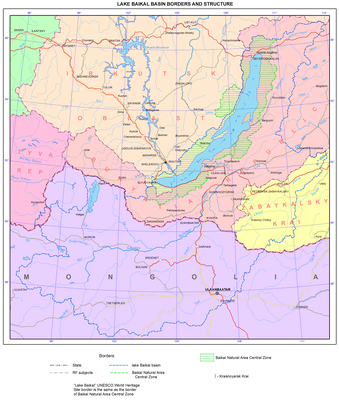
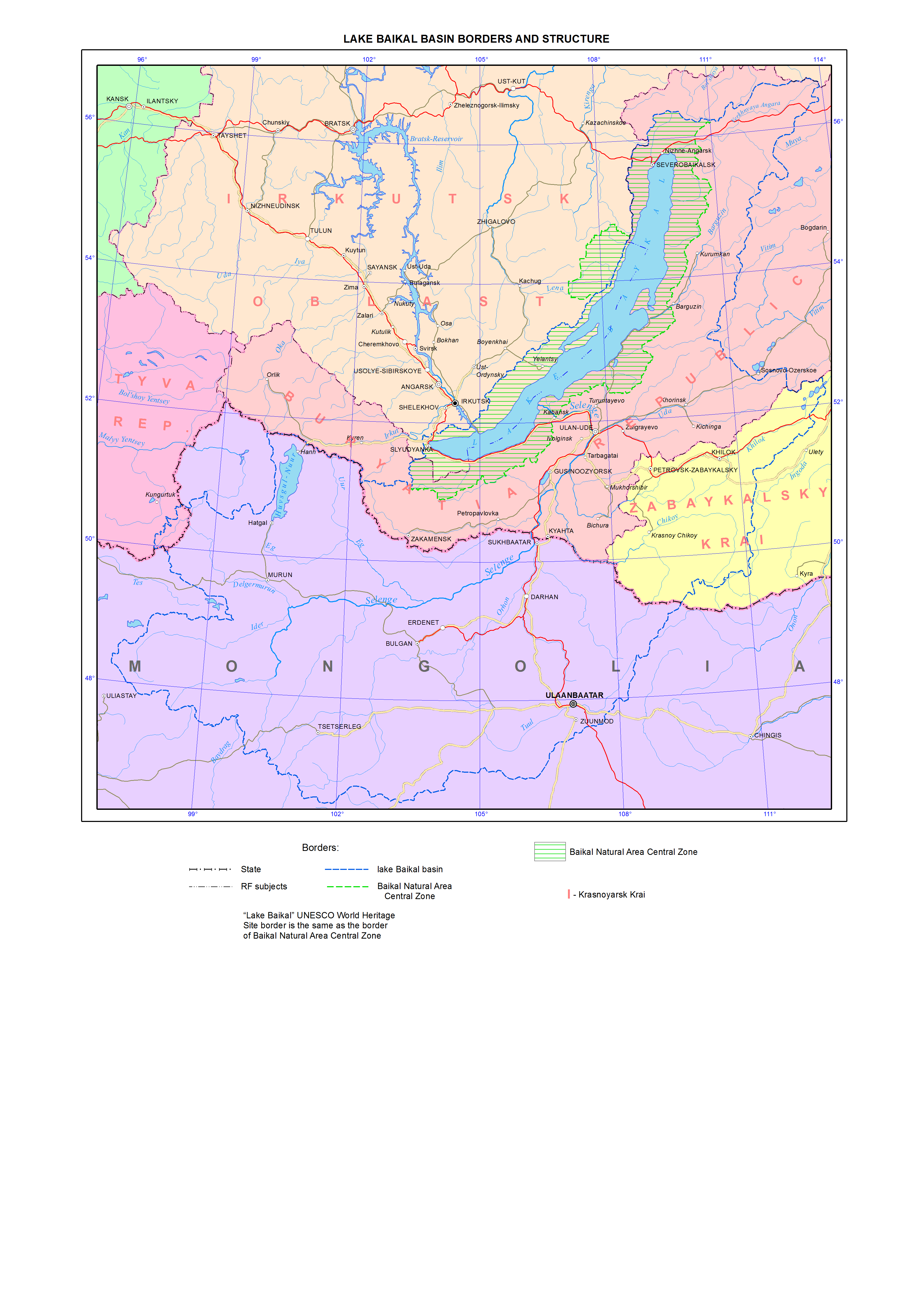
<p class="a" style="text-align: justify; ">Patterns of territorial combinations of conditions and factors of the development of environmental problems in the Baikal basin are, to a large extent, determined by the basin’s location in the northern temperate latitudes of Eurasia, in its inner ultracontinental sector, and by its natural isolation from adjacent territories. The Baikal basin has all the features of the landscape and ecological integrity and economic and cultural unity. The region is home to one of the world's major watershed divides between the catchment areas of the Arctic Ocean (the Yenisei and Lena basins), Pacific Ocean (the Amur basin), and the drainless region of Central Asia. It is precisely here, on orographic barriers, where airflows from the Atlantic and Pacific Oceans, the Arctic, and southern territories subside.</p>
<p class="a" style="text-align: justify; ">Lake Baikal is the oldest, deepest, and largest by volume lake among the great rift lakes of the world. The lake is situated at an elevation of 455.5 meters above sea level, between 51°28’ - 55°47’N and 103°43’ - 109°58’E. The Baikal basin's catchment area is located in the heart of Asia on the territory of two states – Russia and Mongolia - between 46°20’ - 56°40’N and 96°50’ - 114°10’E. It has an elongated shape stretching from southwest to northeast. The total area of the Baikal basin is 576.5 sq. km, including the water area of Lake Baikal - 31.7 sq. km. 44.6 % of the catchment area is located in the Russian Federation (31.8 % in the Republic of Buryatia, 10.2 % in Zabaikalsky krai, 2.2 % in Irkutsk oblast, and 0.4 % in the Republic of Tuva) and 55.4 % in Mongolia. About 53 % of the volume of river water is formed in Buryatia, 27 % in Mongolia, 16 % in Zabaikalsky krai, and 4 % in Irkutsk oblast.</p>
<p style="text-align: justify; ">In general, due to its geographical and geopolitical location, as well as natural, resource, economic, ethnic, cultural, and human resources potential and the lake itself, the Baikal basin represents a key strategic region in eastern Russia and northern Mongolia - a major foothold for social and economic development of the two countries. However, such development has its own peculiarities, because the Baikal basin has a special regime of natural resources management. The fact that Lake Baikal and its surrounding territory was listed as a UNESCO World Heritage Site has attracted attention of the global community. It also underlined the role of the great lake as both a unique natural phenomenon and a place for establishing a recreation zone of the planetary significance, as well as a source of the exclusively eco-oriented land management and business in the future. Over the long term, in the context of the growing deficit of freshwater in the world, Lake Baikal’s water will become the most important strategic resource of the world. Therefore, the water factor of development is a priority. Reproduction and recovery of the lake’s water take place on the territory of the whole Baikal basin, which predetermines a particular attention towards nature protection in this region and dictates the prohibition of numerous types of production in order to prevent environmental pollution and preserve the Baikal water for humankind. Presently, the necessity of nature protection activities for maintaining the unmatched biological and landscape diversity of the lake's basin has emerged as a result of the intensive use of natural resources in different parts of the basin, where anthropogenic impact of varying degree and type is observed. Only responsible use of the complex of adaptive techniques and methods of organization of economic activity with due consideration to the special environmental and resource-related role and strategic importance of the Baikal region can make it, as early as in the first third of the 21st century, one of the full-fledged subjects of economic, geopolitical, and geo-demographic processes and relations of global significance. The Ecological Atlas of the Baikal Basin will be quite helpful in this endeavor. For the first time ever, the maps of this Atlas will reflect spatial patterns of the development of the environmental situation within the whole catchment basin of Lake Baikal and its water area, which makes it possible to define and substantiate the directions of environmentally balanced and sustainable territorial development of Russia and Mongolia in the future.</p>]]></content:encoded>
    <dc:publisher>No publisher</dc:publisher>
    <dc:creator>Alexander Ayurzhanaev</dc:creator>
    <dc:rights></dc:rights>
    <dc:date>2014-12-08T07:25:00Z</dc:date>
    <dc:type>Page</dc:type>
  </item>


  <item rdf:about="http://bic.iwlearn.org/en/atlas/atlas/about-the-project/about-the-project-1">
    <title>   About the project</title>
    <link>http://bic.iwlearn.org/en/atlas/atlas/about-the-project/about-the-project-1</link>
    <description></description>
    <content:encoded xmlns:content="http://purl.org/rss/1.0/modules/content/"><![CDATA[<p><img class="image-inline" src="../../../../resolveuid/919a5f09931346e38d46061930c14f29/@@images/image/preview" /></p>
<p><a href="http://bic.iwlearn.org/en/photos/0.png" class="internal-link">Open full size</a></p>
<p class="a"><strong>Editorial Council</strong></p>
<p class="a">N. S. KASIMOV</p>
<p class="a">M. V. SLIPENCHUK</p>
<p class="a">A. K. TULOKHONOV (Chair)</p>
<p class="a">V. M. PLYUSNIN (Deputy Chair)</p>
<p class="a">S. V. KUDELYA (Deputy Chair)</p>
<p class="a">S. ENKH-AMGALAN</p>
<p class="a">D. DORZHGOTOV</p>
<p class="a">S. OYUN</p>
<p class="a">B. TULGA</p>
<p class="a">Z. BATBOLD</p>
<p class="a">R. R. GIZATULIN</p>
<p class="a">A. M. AMIRKHANOV</p>
<p class="a">B. O. MAMAEV</p>
<p class="a">Z. TSOGTBAATAR</p>
<p class="a">O. E. KRAVCHUK</p>
<p class="a">O. A. POLYAKOV</p>
<p class="a">Y. P. SAFYANOV</p>
<p class="a">A. V. LBOV</p>
<p class="a">A. N. BESHENTSEV (Executive Secretary)</p>
<p class="a"> </p>
<p class="a"><strong>Editorial Board</strong></p>
<p class="a">V. M. PLYUSNIN, Dr.Sc. Geogr., (Co-chair, Editor-in-Chief)</p>
<p class="a">D. DORZHGOTOV, Academician of the Mongolian Academy of Sciences, (Co-chair)</p>
<p class="a">A. R. BATUEV, Dr.Sc. Geogr., (Deputy Chair, Executive Editor)</p>
<p class="a">E. Z. GARMAEV, Dr.Sc. Geogr., (Deputy Chair)</p>
<p class="a">L. M. KORYTNY, Dr.Sc. Geogr., (Deputy Chair, Executive Editor)</p>
<p class="a">Z. OYUUNGEREL, Dr.Sc. Geogr., (Deputy Chair, Executive Editor)</p>
<p class="a">V. S. TIKUNOV, Dr.Sc. Geogr., (Deputy Chair)</p>
<p class="a">D. ENKHTAIVAN, Dr.Sc. Geogr., (Deputy Chair, Executive Editor)</p>
<p class="a">V. N. BOGDANOV, Cand.Sc. Geogr., (Executive Secretary)</p>
<p class="a">A. V. ARGUCHINTSEVA, Dr.Sc. Tech.</p>
<p class="a">A. N. BESHENTSEV, Dr.Sc. Geogr.</p>
<p class="a">S. R. CHALOV, Cand.Sc. Geogr.</p>
<p class="a">I. A. BELOZERTSEVA, Cand.Sc. Geogr.</p>
<p class="a">G. DAVAA, Dr.Sc. Geogr.</p>
<p class="a">T. I. ZABORTSEVA, Dr.Sc. Geogr.</p>
<p class="a">E. E. KONONOV, Cand.Sc. Geogr.</p>
<p class="a">T. I. KUZNETSOV, Cand.Sc. Geogr.</p>
<p class="a">K. G. LEVI, Dr.Sc. Geol.</p>
<p class="a">T. V. KHODZHER, Dr.Sc. Geogr.</p>
<p class="a">S. SHIYREV-ADYA, Dr.Sc. Geogr.</p>
<p class="a">M. N. SHIMARAEV, Dr.Sc. Geogr.</p>
<p class="a"> </p>
<p class="a" style="text-align: justify; "><i>Dear Reader </i><i> </i></p>
<p class="a" style="text-align: justify; "><i> </i></p>
<p class="a" style="text-align: justify; "><i>Geographical maps offering a clear picture of how great and at the same time how tiny our world of Planet Earth is accompany one's life journey for the most of its part. Earth still has places, where wonderful landscapes of untouched nature have been preserved. Among them is Lake Baikal - one of the most beautiful places attracting tourists from all over the world.</i><i> </i></p>
<p class="a" style="text-align: justify; "><i>In 1996, by UNESCO’s decision Lake Baikal was listed as a World Heritage Site. In doing so, Russia and Mongolia jointly with the international community took responsibility to protect its nature. However, both the lake itself and its surrounding territory, where over three million people live, cannot be turned into a nature reserve. In our plans, here there should be a modern, high-tech, and environmentally friendly economy ensuring the necessary living standards for the local community.</i><i> </i></p>
<p class="a" style="text-align: justify; "><i>A poor and deprived individual cannot protect the environment. He or she is more concerned about providing food, clothes, and other necessary resources for oneself and family. From this perspective, the Baikal basin has all the riches to have spiritually and materially affluent people living on its shores.</i><i> </i></p>
<p class="a" style="text-align: justify; "><i>In order to achieve this, both local residents and visitors should have ample information to develop the economy and address social issues. This Atlas has been created precisely for this purpose. It includes data about the structure and wealth of mineral resources, flora, and fauna, climate, and hydrosphere. Some of the maps feature information, which helps understand the impact of the anthropogenic activity on the environment.</i><i> </i></p>
<p class="a" style="text-align: justify; "><i> </i></p>
<p class="a" style="text-align: justify; "><i>A. K. Tulokhonov, Chair of Editorial Council </i><i> </i></p>
<p class="a" style="text-align: justify; "><i> </i></p>
<p class="a" style="text-align: justify; "> </p>
<p class="a" style="text-align: justify; "><i>About the Project</i><i> </i></p>
<p class="a" style="text-align: justify; "><i> </i></p>
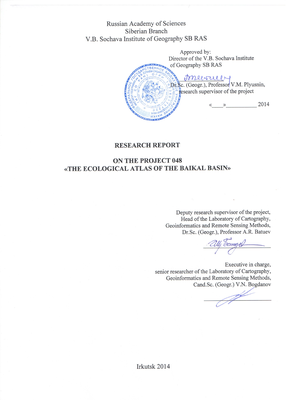
<p class="a" style="text-align: justify; "><i>The Project "The Ecological Atlas of the Baikal Basin" has been commissioned by and implemented with the support of the Global Environment Facility. It aims to integrate current information and knowledge about the key factors driving the development of the environmental situation in the Baikal basin and the existing state of natural environment. It presents this information in a form, which is adequate for addressing the issues of economically and environmentally balanced development of the region. </i><i> </i></p>
<p class="a" style="text-align: justify; "><i>The Atlas considers the Baikal basin as a special trans-border and inter-regional development system and part of the all-Russian and all-Mongolian territorial development systems. Therefore, the creation of the Atlas required an integrated study of environmental problems from both territorial and content-related perspectives. From the territorial perspective, the formed structure of the Atlas </i><i><br /> </i><i>database comprehensively localizes municipalities of the second level (city and municipal districts) on the Russian part of the Baikal basin and aimags on the Mongolian part. In terms of the content, the combination of economic, social, demographic, natural resource, and biotic factors of the development of the environmental situation became possible thanks to a purposefully developed and integrated program of environmental mapping. The state-of-the-art developments in the thematic atlas mapping, GIS-technologies, remote sensing techniques, and constantly supplemented and updated databases of the research organizations-executing agencies of the Project, such as the V.B. Sochava Institute of Geography SB RAS, Limnological Institute SB RAS, Institute of the Earth's Crust SB RAS, Irkutsk State University (Irkutsk), Baikal Institute of Nature Management SB RAS (Ulan-Ude), Institute of Natural Resources, Ecology and Cryology SB RAS (Chita), and the Sh. Tsegmid Institute of Geography of the Mongolian Academy of Sciences (Ulaanbaatar) were used to create this Atlas.</i><i> </i></p>
<p class="a" style="text-align: justify; "><i>The mapping of the Baikal basin was carried out using two main scale levels: 1:5 000 000 for physical maps and 1: 6 000 000 for the maps showing social and economic factors of the development of the environmental situation. The thematic database of the map series had the following requirements: it must be contemporaneous, i.e. its quantitative data on all variables must belong to the same point in time; sufficiently detailed; positionally accurate; completely compatible with other data; adequately reflect the nature of phenomena; and be available to users. When developing the content of the maps, even when referring to individual topics, not to mention complex characteristics, the task was not just to show the actual state of the mapped phenomenon or process, but also to emphasize the patterns in their development and highlight the dynamic aspects as far as possible. For the first time ever, the Atlas reflects spatial patterns of the development of the environmental situation within the whole catchment basin of Lake Baikal and its water area, which makes it possible to define and substantiate the directions for environmentally balanced and sustainable territorial development in the future. </i><i> </i></p>
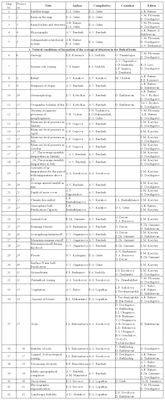
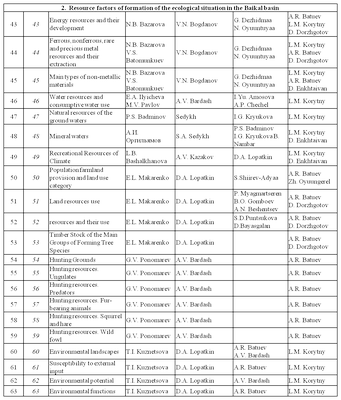
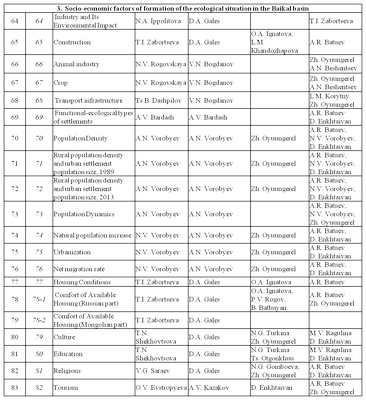
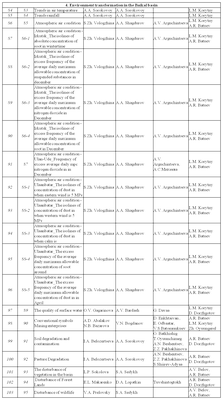
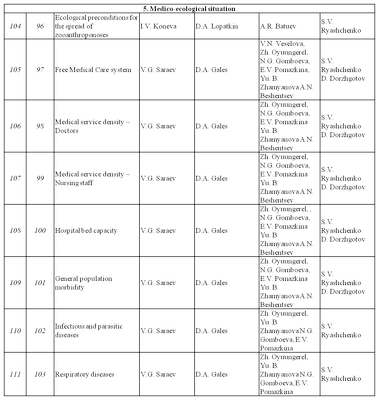
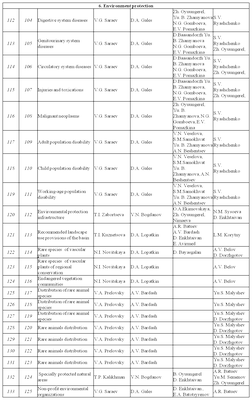
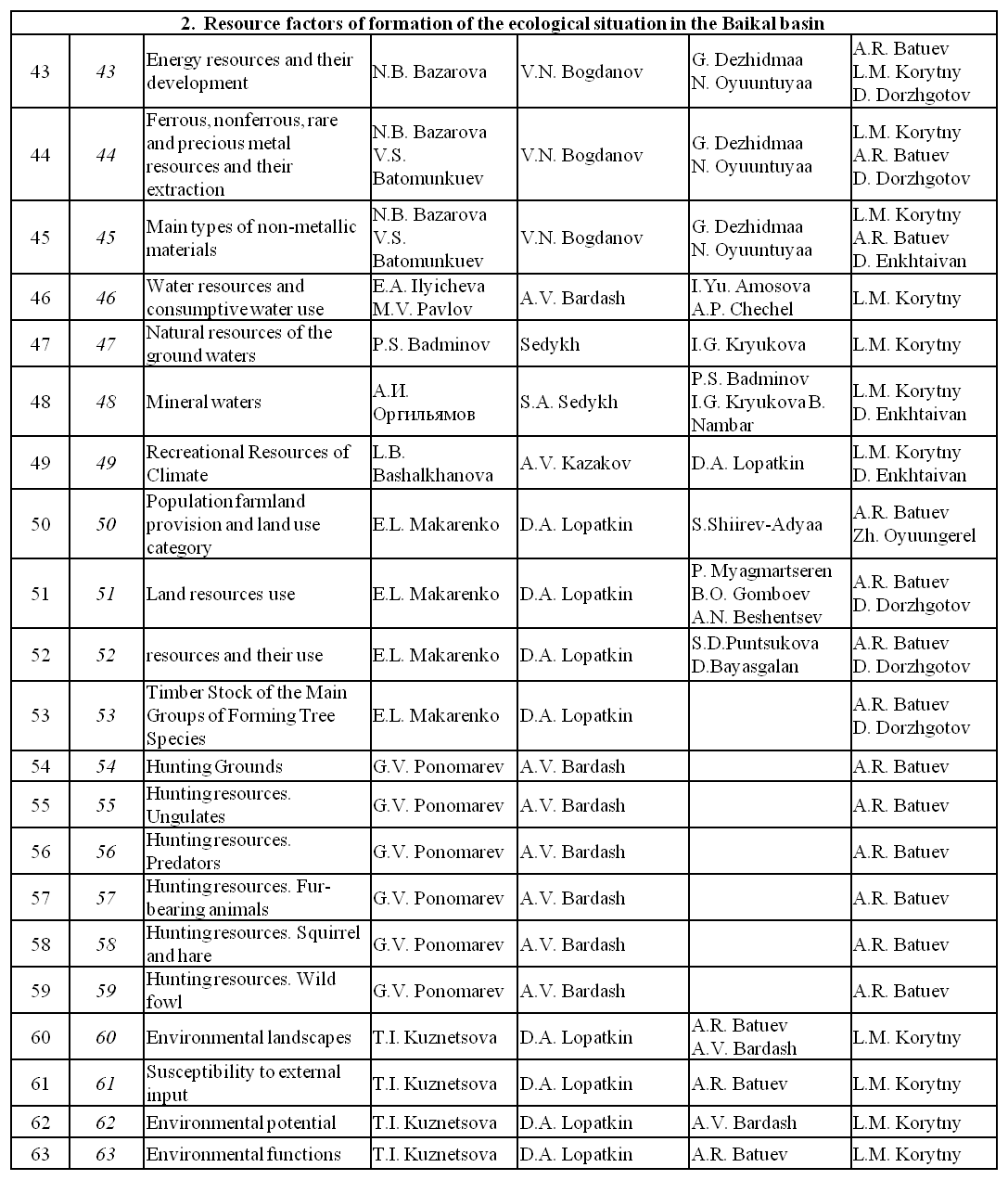
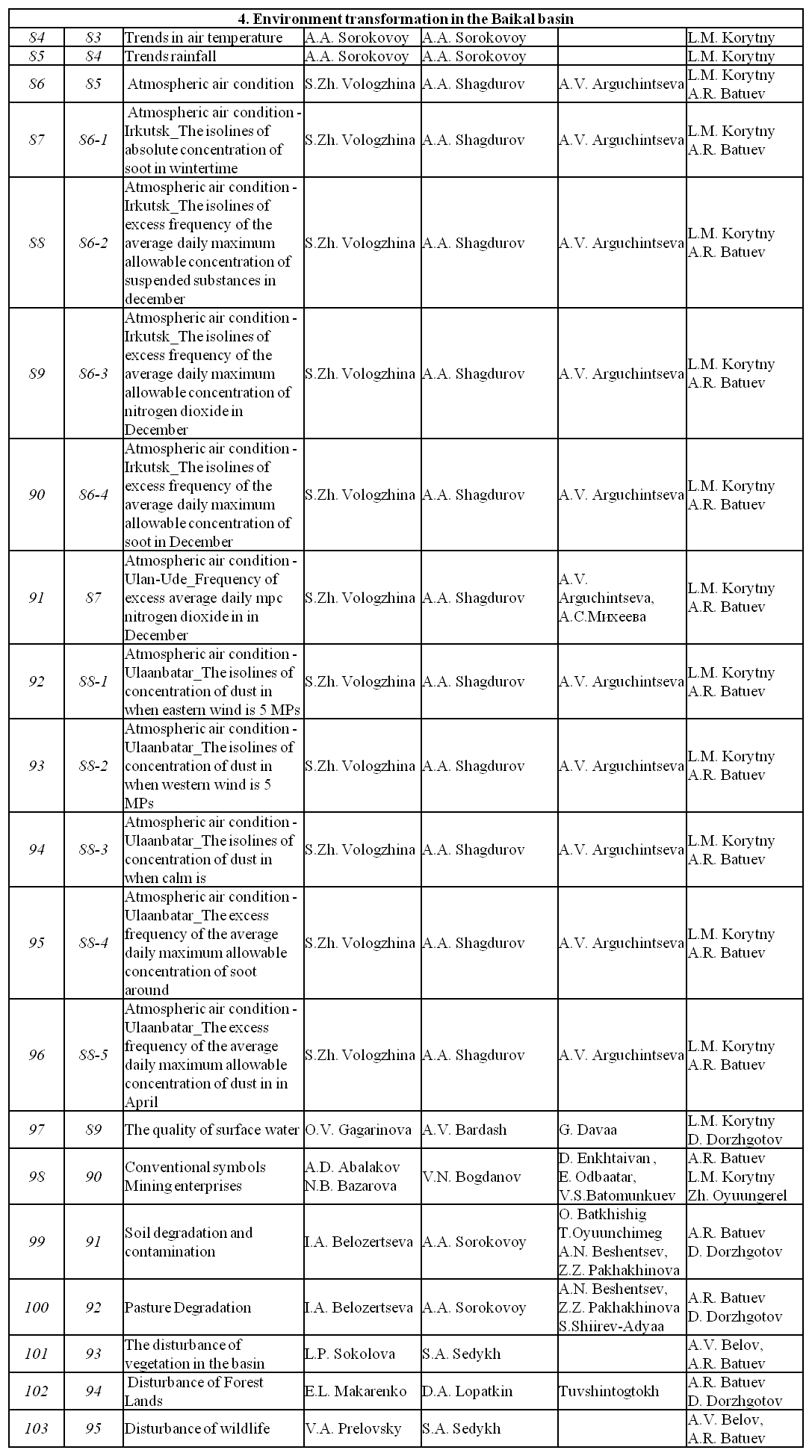
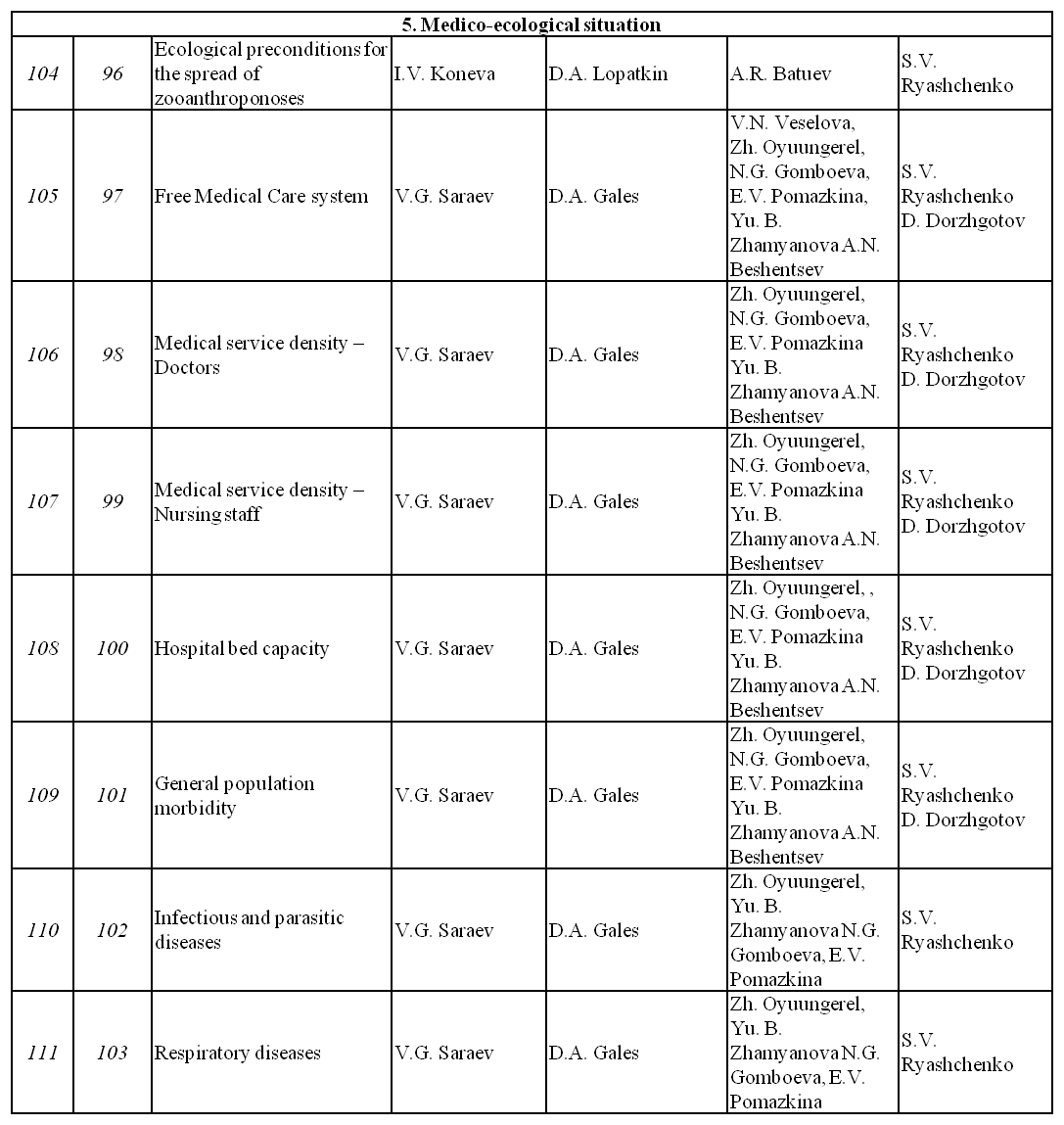
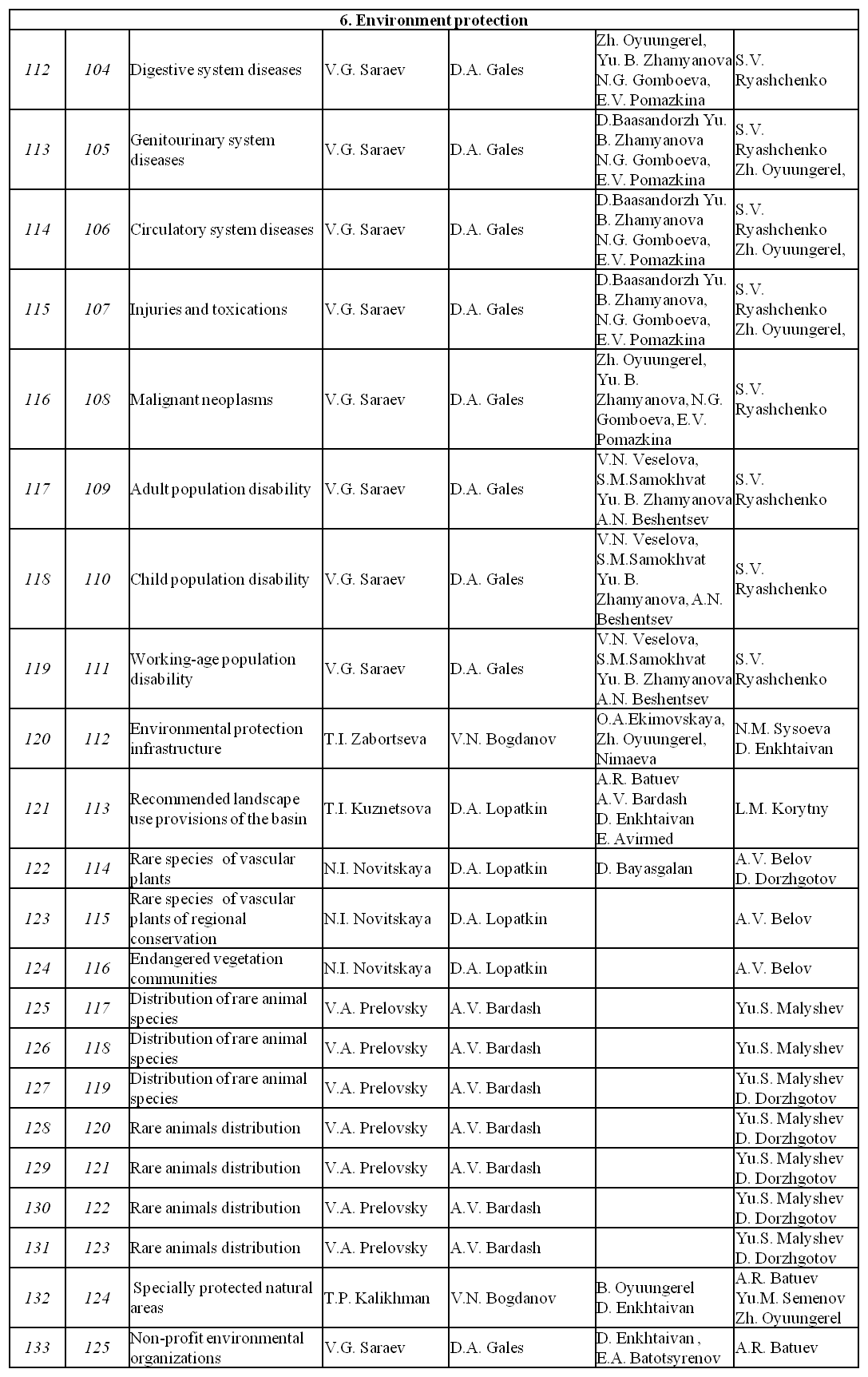
<p class="a" style="text-align: justify; "><i>Structurally, the Atlas consists of eight blocs, including an introduction and seven thematic sections: 1) Natural conditions of the development of the environmental situation; 2) Resource factors of the development of the environmental situation; 3) Socio-economic factors of the development of the environmental situation; 4) Environmental transformation; 5) Medico-ecological situation, 6) Environmental protection; and 7) Ecological state of Lake Baikal. </i><i> </i></p>
<p class="a" style="text-align: justify; "><i>The Atlas is published in digital and hard-copy formats. A digital copy of the Atlas will be incorporated as an electronic resource with a database into the Geoportal of the Baikal Region, which is being created by the Global Environment Facility. A hard-copy of the Atlas will be released as a fundamental reference atlas.</i><i> </i></p>
<p class="a" style="text-align: justify; "><i>The Atlas is a collective work of many scientists who are experts in various fields of knowledge. The maps were created using library and published statistical materials provided not only by research institutions, but also by government authorities of the regions of the Russian Federation: Irkutsk oblast, Republic of Buryatia and Zabaikalsky krai, as well as research organizations and government authorities of Mongolia, and the authors of the Atlas are </i><i><br /> </i><i>deeply grateful for it.</i><i> </i></p>
<p class="a" style="text-align: justify; "><i> </i></p>
<p class="a" style="text-align: justify; "><i>V. M. Plyusnin, Chair of Editorial Board</i><i> </i></p>
<p align="center"> </p>
<p align="center"><span>List of Creators</span></p>
<p style="text-align: left; "><img class="image-inline" src="../../../../resolveuid/04c1f8f55c82417bb037939ae3d545be/@@images/image/preview" /></p>
<p style="text-align: left; "><a href="http://bic.iwlearn.org/en/photos/1.png" class="internal-link">Open full size</a></p>
<p style="text-align: left; "><img class="image-inline" src="../../../../resolveuid/a8db3187025f414aa113f089f8348298/@@images/image/preview" /></p>
<p style="text-align: left; "><a href="http://bic.iwlearn.org/en/photos/copy_of_2.png" class="internal-link">Open full size</a></p>
<p style="text-align: left; "><img class="image-inline" src="../../../../resolveuid/8a95db494775414787e70359d25b53de/@@images/image/preview" /></p>
<p style="text-align: left; "><a href="http://bic.iwlearn.org/en/photos/copy_of_3.png" class="internal-link">Open full size</a></p>
<p style="text-align: left; "><img class="image-inline" src="../../../../resolveuid/7d20d2ffe061475286eb49d4651c4782/@@images/image/preview" /></p>
<p style="text-align: left; "><a href="http://bic.iwlearn.org/en/photos/copy_of_4.png" class="internal-link">Open full size</a></p>
<p style="text-align: left; "><img class="image-inline" src="../../../../resolveuid/1ab7fb7b8cd64ed19af7cf004284bc5f/@@images/image/preview" /></p>
<p style="text-align: left; "><a href="http://bic.iwlearn.org/en/photos/copy_of_5.png" class="internal-link">Open full size</a></p>
<p style="text-align: left; "><img class="image-inline" src="../../../../resolveuid/c2faf8c328bc4c37bf6b2e3da4908b9a/@@images/image/preview" /></p>
<p style="text-align: left; "><a href="http://bic.iwlearn.org/en/photos/copy_of_6.png" class="internal-link">Open full size</a></p>
<p style="text-align: left; "><a href="http://bic.iwlearn.org/en/photos/copy_of_6.png" class="internal-link"></a><img class="image-inline" src="../../../../resolveuid/d32432c42ca243389126e305c8d209a1/@@images/image/preview" /></p>
<p style="text-align: left; "><a href="http://bic.iwlearn.org/en/photos/copy_of_7.png" class="internal-link">Open full size</a></p>]]></content:encoded>
    <dc:publisher>No publisher</dc:publisher>
    <dc:creator>Alexander Ayurzhanaev</dc:creator>
    <dc:rights></dc:rights>
    <dc:date>2014-10-24T02:05:00Z</dc:date>
    <dc:type>Page</dc:type>
  </item>


  <item rdf:about="http://bic.iwlearn.org/en/atlas/atlas/about-the-project">
    <title>About the project</title>
    <link>http://bic.iwlearn.org/en/atlas/atlas/about-the-project</link>
    <description></description>
    
    <dc:publisher>No publisher</dc:publisher>
    <dc:creator>Alexander Ayurzhanaev</dc:creator>
    <dc:rights></dc:rights>
    <dc:date>2014-10-22T06:47:24Z</dc:date>
    <dc:type>Folder</dc:type>
  </item>


  <item rdf:about="http://bic.iwlearn.org/en/atlas/atlas/142-aesthetic-image-of-the-baikal-shore-map/aesthetic-image-of-the-baikal-shore-map">
    <title>Aesthetic image of the Baikal shore map</title>
    <link>http://bic.iwlearn.org/en/atlas/atlas/142-aesthetic-image-of-the-baikal-shore-map/aesthetic-image-of-the-baikal-shore-map</link>
    <description></description>
    <content:encoded xmlns:content="http://purl.org/rss/1.0/modules/content/"><![CDATA[<p><img class="image-inline" src="../../../../resolveuid/3b706d3bc9bc4e7092fe3dbd6318a455/@@images/image/preview" /></p>
<p><a href="http://bic.iwlearn.org/en/photos/copy2_of__142_AESTHETICIMAGEOFTHEBAIKALSHORE.png" class="internal-link">Open full size</a></p>
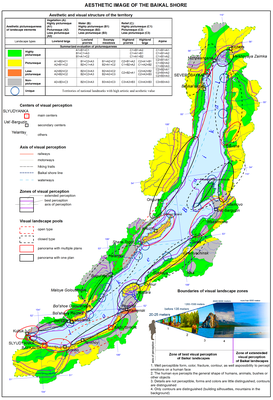
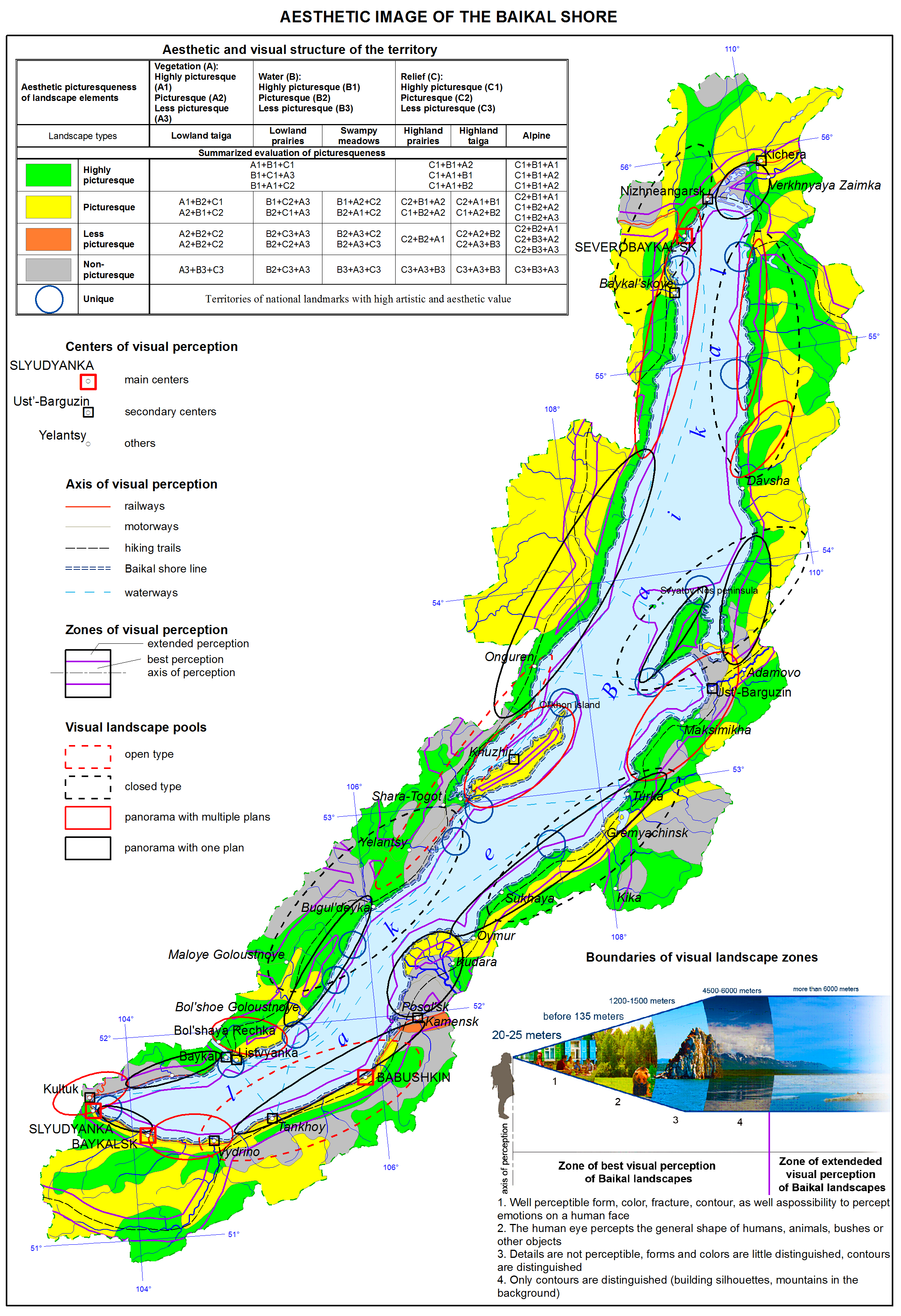
<p class="a" style="text-align: center; "><b>The Aesthetic Image of the Baikal Coastal Area</b></p>
<p class="a">Riviera - an aesthetically holistic coastal territory, where, provided that the specifics of visual perception are duly considered, the integrity, beauty, and picturesqueness of spatial processes of interaction between settlements and the coast is reflected through the development of cultural recreation landscapes.</p>
<p class="a">The map of the coastal organization is created as a result of the landscape and architectural assessment that evaluated not only functional and utilitarian requirements reflecting current transportation, communication, and settlement situations, but also aesthetic, architectural, and artistic (scenic) qualities of landscapes and conditions of their development within the belt of the best visual perception.</p>
<p>Structurally, this map represents a system of landscape and architectural centers, axes, zones, and basins. Two zones are identified in the belt of visual perception (approx. 8 km wide): the zone of the best visual perception and the zone for developing visual perception (inset) that include the main types of natural landscapes assessed by their aesthetic value. Segments of the Baikal coastal area are considered as the landscape and architectural basins. Visually, they are relatively homogeneous and located within the open or closed angles of view from recreation centers and settlements and from some segments of highways.</p>]]></content:encoded>
    <dc:publisher>No publisher</dc:publisher>
    <dc:creator>Alexander Ayurzhanaev</dc:creator>
    <dc:rights></dc:rights>
    <dc:date>2014-10-15T08:05:00Z</dc:date>
    <dc:type>Page</dc:type>
  </item>


  <item rdf:about="http://bic.iwlearn.org/en/atlas/atlas/142-aesthetic-image-of-the-baikal-shore-map">
    <title>142. Aesthetic image of the Baikal shore map</title>
    <link>http://bic.iwlearn.org/en/atlas/atlas/142-aesthetic-image-of-the-baikal-shore-map</link>
    <description></description>
    
    <dc:publisher>No publisher</dc:publisher>
    <dc:creator>Alexander Ayurzhanaev</dc:creator>
    <dc:rights></dc:rights>
    <dc:date>2014-10-15T08:02:48Z</dc:date>
    <dc:type>Folder</dc:type>
  </item>


  <item rdf:about="http://bic.iwlearn.org/en/atlas/atlas/141-natural-managment-and-environmental-condition-of-central-ecological-zone-map/natural-managment-and-environmental-condition-of-central-ecological-zone-map">
    <title>Natural managment and environmental condition of central ecological zone map</title>
    <link>http://bic.iwlearn.org/en/atlas/atlas/141-natural-managment-and-environmental-condition-of-central-ecological-zone-map/natural-managment-and-environmental-condition-of-central-ecological-zone-map</link>
    <description></description>
    <content:encoded xmlns:content="http://purl.org/rss/1.0/modules/content/"><![CDATA[<p><img class="image-inline" src="../../../../resolveuid/21728bd36dac488cb470339c94e9a1b1/@@images/image/preview" /></p>
<p><a href="http://bic.iwlearn.org/en/photos/copy_of__141_NaturalmanagmentandenvironmentalconditionofCEZ.png" class="internal-link">Open full size</a></p>
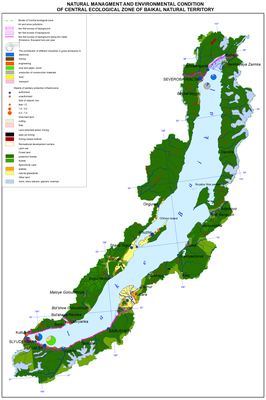
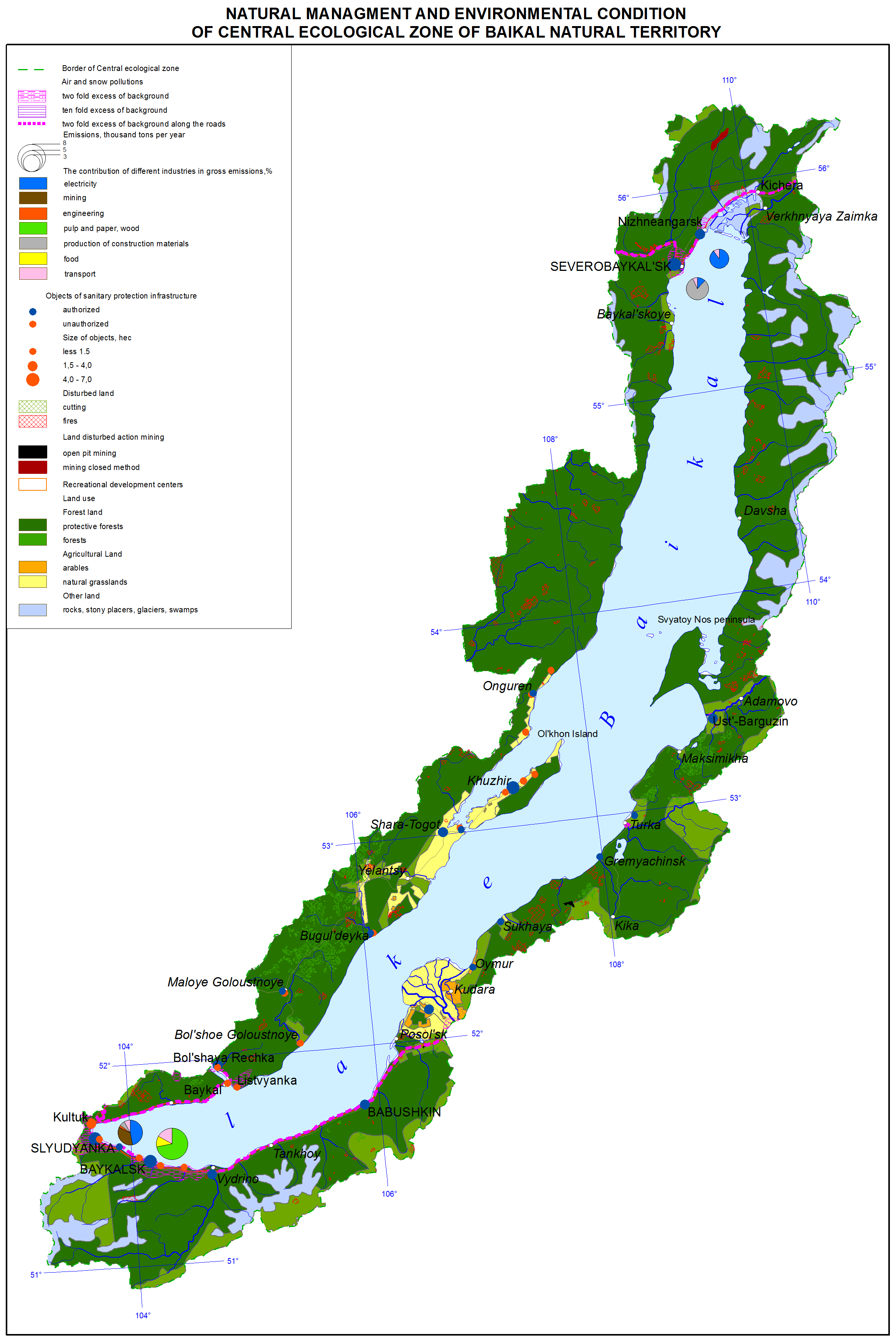
<p align="center"><strong>Ecological state of the Central Ecological Zone of the Baikal Natural Territory</strong></p>
<p>The Central Ecological Zone of the Baikal Natural Territory (CEZ BNT) includes Lake Baikal itself with its islands, the adjacent water protection zone, and specially protected natural areas (SPNA) (Federal Law No. 94-FZ “On Protection of Lake Baikal” dated May 1, 1999). Its boundaries coincide with the boundary of the World Natural Heritage site “Lake Baikal” and follow the outer boundaries of the Baikal-Lena, Barguzinsky, and Baikalsky reserves (zapovedniks), Pribaikalsky, Zabaikalsky, and Tunkinsky national parks, Frolikhinsky, Pribaikalsky, Enkhaluksky, and Snezhinsky nature-sanctuaries (zakazniks), as well as the main watersheds of the Primorsky, Baikalsky, Verkhne-Angarsky, Barguzinsky, Golondinsky, Ulan-Burgasy, Morskoy, and Khamar-Daban ridges. The main function of the central ecological zone is to preserve the unique ecological system of Lake Baikal and to prevent the negative impact of economic and other activity on its state.</p>
<p class="BodyTextIndent2">The main sources of the atmospheric impact on Lake Baikal are industrial enterprises located in the basin and on the shores of the lake, and sections of the Trans-Siberian Railway and Baikal-Amur Mainline. Air emissions from industrial enterprises and boiler stations of the towns of Baikalsk, Slyudyanka, Severobaikalsk, and Nizhneangarsk and villages located in the Baikal basin have the highest probability of falling into the lake. Air transport products from the Irkutsk-Cheremkhovo agglomeration constitute a much smaller part of the total air pollution over Lake Baikal because of the remoteness and a large number of calms and fogs. Emissions of sulfur dioxide, nitrogen oxides, hydrogen sulphide and hydrocarbon, methyl mercaptan, formaldehyde, and phenol, produced by coastal enterprises have a negative impact on the ecological situation.</p>
<p>On the northern shore of Lake Baikal a single zone of the atmospheric pollution distribution, stretched along Lake Baikal, is formed. Its area for the town of Severobaikalsk amounts to approximately 150 km, and for Nizhneangarsk – to 60 km. Despite the fact that the content of certain impurities tends to decrease, the level of air pollution remains high.</p>
<p>The snow cover, having a high sorption capacity, is the most informative object in identifying the technogenic pollution of the atmosphere. According to the data of the Irkutsk Territorial Administration for Hydrometeorology and Environmental Monitoring, in the CEZ BNT there are several zones of technogenic pollution with the solids concentration in snow ranging from 0.5 to 10 g/kg. Mineralization of snow waters near the sources may exceed the background one by 10 times. The maximum amount of solids in snow reaches 200 g/m<sup>2</sup>. Zones with increased concentration of calcium, magnesium, sodium, and potassium were identified. Concerning the cations, which are soluble in snow, the predominance of sodium and potassium was revealed. The maximum values ​​of the insoluble residue of snow associated with the operation of CHP plants, boiler stations, and stove heating, are registered in the vicinity of Kultuk and Sludyanka; as regards the soluble residue, its maximum values are recorded in the area around Baikalsk. The total area of snow pollution with chemical elements extends 60 km from the southeast to the northwest with a width of 10-15 km.</p>
<p>In connection with the spontaneous development of tourism on the shores of Lake Baikal in the CEZ BNT, one of the most pressing issues is the problem of collecting, processing, and recycling of solid household wastes. Most of the garbage goes to disposal sites, both approved and unauthorized.</p>
<p>Within the CEZ BNT, cement and quartz raw materials, facing and ornamental stones, and different kinds of building materials are produced with local environmental disturbances. Significant anthropogenic changes of the natural environment (felled and burnt areas, etc.) are also observed near settlements, roads, and tourist centers and camps.</p>
<p>In order to establish a long-term strategy for the organization of the use of the CEZ BNT, which would ensure a sustainable development and preservation of the unique ecological system of Lake Baikal through reducing the anthropogenic impact and preventing the damage, a technique and scheme of territorial planning of the CEZ BNT was developed [Plyusnin and Vladimirov, 2013].<b> </b></p>
<p align="center"><b> </b></p>
<p align="center">References</p>
<p>Plyusnin, V. M., Vladimirov, I. N. (2013). <i>Territorial planning of the Central Ecological Zone of the Baikal Natural Territory</i>. Novosibirsk: Geo. p 407.</p>]]></content:encoded>
    <dc:publisher>No publisher</dc:publisher>
    <dc:creator>Alexander Ayurzhanaev</dc:creator>
    <dc:rights></dc:rights>
    <dc:date>2014-10-15T08:00:00Z</dc:date>
    <dc:type>Page</dc:type>
  </item>


  <item rdf:about="http://bic.iwlearn.org/en/atlas/atlas/141-natural-managment-and-environmental-condition-of-central-ecological-zone-map">
    <title>141. Natural managment and environmental condition of central ecological zone map</title>
    <link>http://bic.iwlearn.org/en/atlas/atlas/141-natural-managment-and-environmental-condition-of-central-ecological-zone-map</link>
    <description></description>
    
    <dc:publisher>No publisher</dc:publisher>
    <dc:creator>Alexander Ayurzhanaev</dc:creator>
    <dc:rights></dc:rights>
    <dc:date>2014-10-15T07:57:30Z</dc:date>
    <dc:type>Folder</dc:type>
  </item>


</rdf:RDF>