<?xml version="1.0" encoding="utf-8" ?>
<rdf:RDF xmlns:rdf="http://www.w3.org/1999/02/22-rdf-syntax-ns#" xmlns:dc="http://purl.org/dc/elements/1.1/" xmlns:syn="http://purl.org/rss/1.0/modules/syndication/" xmlns="http://purl.org/rss/1.0/">


<channel rdf:about="http://bic.iwlearn.org/en/search_rss">
  <title>English</title>
  <link>http://bic.iwlearn.org</link>

  <description>
    
            These are the search results for the query, showing results 1 to 15.
        
  </description>


  <image rdf:resource="http://bic.iwlearn.org/logo.png"/>

  <items>
    <rdf:Seq>
      
        <rdf:li rdf:resource="http://bic.iwlearn.org/en/photos/Team.jpg"/>
      
      
        <rdf:li rdf:resource="http://bic.iwlearn.org/en/atlas/atlas-of-the-baikal-basin-mng"/>
      
      
        <rdf:li rdf:resource="http://bic.iwlearn.org/en/atlas/atlas-of-the-baikal-basin-rus"/>
      
      
        <rdf:li rdf:resource="http://bic.iwlearn.org/en/atlas/atlas-of-the-baikal-basin-eng"/>
      
      
        <rdf:li rdf:resource="http://bic.iwlearn.org/en/documents/state-of-the-environment-report-the-lake-baikal-basin"/>
      
      
        <rdf:li rdf:resource="http://bic.iwlearn.org/en/photos/site.jpg"/>
      
      
        <rdf:li rdf:resource="http://bic.iwlearn.org/en/documents/documents/papers/hydrochemical-and-microbiological-characteristics-of-bog-ecosystems-on-the-isthmus-of-svyatoi-nos-peninsula-lake-baikal-english"/>
      
      
        <rdf:li rdf:resource="http://bic.iwlearn.org/en/documents/documents/papers/economic-geographical-characteristics-of-the-development-of-economic-entities-owned-by-the-population-of-the-republic-of-buryatia-eng"/>
      
      
        <rdf:li rdf:resource="http://bic.iwlearn.org/en/documents/state-of-the-environment-report-the-lake-baikal-basin-1"/>
      
      
        <rdf:li rdf:resource="http://bic.iwlearn.org/en/documents/report-1"/>
      
      
        <rdf:li rdf:resource="http://bic.iwlearn.org/en/documents"/>
      
      
        <rdf:li rdf:resource="http://bic.iwlearn.org/en/documents/state-of-the-environment-report-the-lake-baikal-basin-1/state-regulation-and-public-movement-of-environmental-protection-and-nature-management/summary"/>
      
      
        <rdf:li rdf:resource="http://bic.iwlearn.org/en/documents/state-of-the-environment-report-the-lake-baikal-basin-1/state-regulation-and-public-movement-of-environmental-protection-and-nature-management/5-6-environmental-non-governmental-organizations"/>
      
      
        <rdf:li rdf:resource="http://bic.iwlearn.org/en/photos/5.6.9.JPG"/>
      
      
        <rdf:li rdf:resource="http://bic.iwlearn.org/en/photos/5.6.8.JPG"/>
      
    </rdf:Seq>
  </items>

</channel>


  <item rdf:about="http://bic.iwlearn.org/en/photos/Team.jpg">
    <title>Team.jpg</title>
    <link>http://bic.iwlearn.org/en/photos/Team.jpg</link>
    <description></description>
    
    <dc:publisher>No publisher</dc:publisher>
    <dc:creator>Zorigma</dc:creator>
    <dc:rights></dc:rights>
    <dc:date>2015-09-24T03:31:59Z</dc:date>
    <dc:type>Image</dc:type>
  </item>


  <item rdf:about="http://bic.iwlearn.org/en/atlas/atlas-of-the-baikal-basin-mng">
    <title>Atlas of the Baikal Basin (MNG)</title>
    <link>http://bic.iwlearn.org/en/atlas/atlas-of-the-baikal-basin-mng</link>
    <description></description>
    
    <dc:publisher>No publisher</dc:publisher>
    <dc:creator>Dmitry Popov</dc:creator>
    <dc:rights></dc:rights>
    <dc:date>2015-08-20T23:41:42Z</dc:date>
    <dc:type>File</dc:type>
  </item>


  <item rdf:about="http://bic.iwlearn.org/en/atlas/atlas-of-the-baikal-basin-rus">
    <title>Atlas of the Baikal basin (RUS)</title>
    <link>http://bic.iwlearn.org/en/atlas/atlas-of-the-baikal-basin-rus</link>
    <description></description>
    
    <dc:publisher>No publisher</dc:publisher>
    <dc:creator>Dmitry Popov</dc:creator>
    <dc:rights></dc:rights>
    <dc:date>2015-08-20T23:34:02Z</dc:date>
    <dc:type>File</dc:type>
  </item>


  <item rdf:about="http://bic.iwlearn.org/en/atlas/atlas-of-the-baikal-basin-eng">
    <title>Atlas of the Baikal Basin (ENG)</title>
    <link>http://bic.iwlearn.org/en/atlas/atlas-of-the-baikal-basin-eng</link>
    <description></description>
    
    <dc:publisher>No publisher</dc:publisher>
    <dc:creator>Dmitry Popov</dc:creator>
    <dc:rights></dc:rights>
    <dc:date>2015-08-20T23:26:27Z</dc:date>
    <dc:type>File</dc:type>
  </item>


  <item rdf:about="http://bic.iwlearn.org/en/documents/state-of-the-environment-report-the-lake-baikal-basin">
    <title>State of the environment report the lake Baikal basin</title>
    <link>http://bic.iwlearn.org/en/documents/state-of-the-environment-report-the-lake-baikal-basin</link>
    <description></description>
    
    <dc:publisher>No publisher</dc:publisher>
    <dc:creator>Zorigma</dc:creator>
    <dc:rights></dc:rights>
    <dc:date>2015-07-13T05:34:39Z</dc:date>
    <dc:type>File</dc:type>
  </item>


  <item rdf:about="http://bic.iwlearn.org/en/photos/site.jpg">
    <title>site.jpg</title>
    <link>http://bic.iwlearn.org/en/photos/site.jpg</link>
    <description></description>
    
    <dc:publisher>No publisher</dc:publisher>
    <dc:creator>Zorigma</dc:creator>
    <dc:rights></dc:rights>
    <dc:date>2015-06-29T01:27:54Z</dc:date>
    <dc:type>Image</dc:type>
  </item>


  <item rdf:about="http://bic.iwlearn.org/en/documents/documents/papers/hydrochemical-and-microbiological-characteristics-of-bog-ecosystems-on-the-isthmus-of-svyatoi-nos-peninsula-lake-baikal-english">
    <title>Hydrochemical and Microbiological Characteristics of Bog Ecosystems on the Isthmus of Svyatoi Nos Peninsula (Lake Baikal) (English)</title>
    <link>http://bic.iwlearn.org/en/documents/documents/papers/hydrochemical-and-microbiological-characteristics-of-bog-ecosystems-on-the-isthmus-of-svyatoi-nos-peninsula-lake-baikal-english</link>
    <description></description>
    
    <dc:publisher>No publisher</dc:publisher>
    <dc:creator>Zorigma</dc:creator>
    <dc:rights></dc:rights>
    <dc:date>2015-06-16T02:59:00Z</dc:date>
    <dc:type>File</dc:type>
  </item>


  <item rdf:about="http://bic.iwlearn.org/en/documents/documents/papers/economic-geographical-characteristics-of-the-development-of-economic-entities-owned-by-the-population-of-the-republic-of-buryatia-eng">
    <title>Economic-Geographical Characteristics of the Development of Economic Entities Owned by the Population of the Republic of Buryatia (English)</title>
    <link>http://bic.iwlearn.org/en/documents/documents/papers/economic-geographical-characteristics-of-the-development-of-economic-entities-owned-by-the-population-of-the-republic-of-buryatia-eng</link>
    <description></description>
    
    <dc:publisher>No publisher</dc:publisher>
    <dc:creator>Zorigma</dc:creator>
    <dc:rights></dc:rights>
    <dc:date>2015-06-16T02:57:31Z</dc:date>
    <dc:type>File</dc:type>
  </item>


  <item rdf:about="http://bic.iwlearn.org/en/documents/state-of-the-environment-report-the-lake-baikal-basin-1">
    <title>State of the environment report the lake Baikal basin</title>
    <link>http://bic.iwlearn.org/en/documents/state-of-the-environment-report-the-lake-baikal-basin-1</link>
    <description></description>
    
    <dc:publisher>No publisher</dc:publisher>
    <dc:creator>Zorigma</dc:creator>
    <dc:rights></dc:rights>
    <dc:date>2015-04-24T08:30:56Z</dc:date>
    <dc:type>Folder</dc:type>
  </item>


  <item rdf:about="http://bic.iwlearn.org/en/documents/report-1">
    <title>Report.</title>
    <link>http://bic.iwlearn.org/en/documents/report-1</link>
    <description></description>
    <content:encoded xmlns:content="http://purl.org/rss/1.0/modules/content/"><![CDATA[]]></content:encoded>
    <dc:publisher>No publisher</dc:publisher>
    <dc:creator>Zorigma</dc:creator>
    <dc:rights></dc:rights>
    <dc:date>2015-04-24T07:41:29Z</dc:date>
    <dc:type>Collection</dc:type>
  </item>


  <item rdf:about="http://bic.iwlearn.org/en/documents">
    <title>Report</title>
    <link>http://bic.iwlearn.org/en/documents</link>
    <description></description>
    
    <dc:publisher>No publisher</dc:publisher>
    <dc:creator>Sergey Kudelya</dc:creator>
    <dc:rights></dc:rights>
    <dc:date>2015-04-24T07:41:29Z</dc:date>
    <dc:type>Folder</dc:type>
  </item>


  <item rdf:about="http://bic.iwlearn.org/en/documents/state-of-the-environment-report-the-lake-baikal-basin-1/state-regulation-and-public-movement-of-environmental-protection-and-nature-management/summary">
    <title>Summary</title>
    <link>http://bic.iwlearn.org/en/documents/state-of-the-environment-report-the-lake-baikal-basin-1/state-regulation-and-public-movement-of-environmental-protection-and-nature-management/summary</link>
    <description></description>
    <content:encoded xmlns:content="http://purl.org/rss/1.0/modules/content/"><![CDATA[<p align="center"><b>SUMMARY</b></p>
<p style="text-align: justify; "><span>Lake Baikal is the largest (23 thousand km</span><sup>3</sup><span>) freshwater lake on the planet, with the volume equal to the total runoff of all Russian rivers for a seven-year period and the total runoff of all Eurasian rivers for a three-year period. In 2013, the state of Lake Baikal ecosystem did not undergo any significant changes, and the quality of its waters has remained stable for decades and far exceeds the requirements for drinking water.</span></p>
<p style="text-align: justify; ">In 2013, during the lake filling period the water level indicators were within the mean annual values ​​due to controlled discharge. The water levels did not exceed the levels defined by the Resolution of the Government of the Russian Federation № 234 of March 26, 2001 “On the maximum water levels of Lake Baikal during the implementation of economic and other activities”.</p>
<p style="text-align: justify; ">In 2013, there was a 7% reduction in the total runoff of the five largest rivers within the Lake Baikal basin. The runoff of the rivers Barguzin and Turka decreased by 10%, and that of the rivers Upper Angara and Tyya decreased by 45% and 18%, respectively. On the other hand, the runoff of the Selenga river increased by 9%. In recent years, the fluctuations in the runoff have not exceeded the average long-term fluctuations.</p>
<p style="text-align: justify; ">The average annual air temperature in 2013 was close to the average long-term values, despite significant temperature anomalies observed in some months. Only in the southern part of Irkutsk region the average annual air temperature was higher by 1-1.5 °C.</p>
<p style="text-align: justify; ">In Mongolia, climate change became more noticeable, manifested in the form of more frequent droughts and zuds (severe winters), progressing desertification and water scarcity.</p>
<p style="text-align: justify; ">The 46% decrease in wastewater discharge by Baikalsk Pulp and Paper Mill in 2013, as compared with 2012, due to closure of the main production facilities, helped to improve the water quality of Lake Baikal at the control site 100 meters away from the underwater discharge point.</p>
<p style="text-align: justify; ">Compared with 2012, the input of contaminants into the lake by the 5 most studied rivers (Selenga, Barguzin, Turka, Upper Angara, and Tyyl) increased in 2013. The input of suspended solids, dissolved minerals and petrochemicals increased by 24%, 12%, and 31%, respectively. At the same time, the input of volatile phenols, surfactants and copper reduced significantly – by 55%, 80% and 31%, respectively. The input of easily oxidizable and oxidation-resistant substances, phenolics and asphaltenes remained almost at the same level.</p>
<p style="text-align: justify; ">Exceedances of the maximum permissible concentrations were recorded for 13 out of 17 hydrochemical indicators measured in 2012-2013. In general, hydrological and climatic conditions were the main factors affecting the quality of surface waters within Lake Baikal basin in 2013. The exceptions were the rivers Modonkul (Zakamensky district of the Republic of Buryatia) and Kyakhtinka (Kyakhtinsky district of the Republic of Buryatia) due to intensive anthropogenic impact.</p>
<p style="text-align: justify; ">The Selenga River remained the major supplier of controlled substances into the lake. In 2013, the river brought 87.6% of suspended solids, and 78.0% each of dissolved minerals, oxidation-resistant and easily oxidizable organic substances. The major anthropogenic impact on the river water composition comes from the industrial hubs of the cities Ulaanbaatar, Erdenet and Darkhan, as well as the numerous gold mining enterprises in Mongolia. In Russia, the main impact comes from the Ulan-Ude industrial hub.</p>
<p style="text-align: justify; ">In 2012-2013, no significant changes were observed in the subsurface hydrosphere of Lake Baikal basin.</p>
<p style="text-align: justify; ">The amounts of air emissions in 2013 remained similar to those in the previous years. In both Mongolia and Russia, the main sources of air pollution were enterprises of the energy sector and vehicles. Another significant source of pollution was Selenginsk Pulp and Paper Mill located in close proximity to the lake.</p>
<p style="text-align: justify; ">The intensification of research on hydrocarbon systems of Lake Baikal involving submersibles «Mir» has helped to clarify the spatial distribution of hydrocarbon-oxidizing microorganisms and their ability to process petroleum hydrocarbons entering the lake from natural oil seepages, as well as to explore the distribution and mechanisms of formation of gas hydrate deposits at the bottom of Lake Baikal. This international expedition was the result of cooperation of the international community for conservation of the unique lake.</p>
<p style="text-align: justify; ">The intensity of dangerous endogenous geological processes in 2013 was low, and compared with 2008, when the ten-year maximum total seismic energy was recorded, the geological activity was 500 times less in 2013.</p>
<p style="text-align: justify; ">The existing network of the sites monitoring dangerous endogenous and exogenous geological processes is insufficient. The results of performed observations provide only fragmentary data on the regime of hazardous processes in separate areas. To implement reliable monitoring and forecasting of hazardous endogenous and exogenous geological processes, the number of monitoring stations must be increased by an order of magnitude throughout the basin.</p>
<p style="text-align: justify; ">In Mongolia, due to a combination of rising temperatures, reduced atmospheric precipitation, growing livestock population and other factors, the processes of degradation of steppe and forest ecosystems have intensified and the areas affected by desertification have expanded. One of the factors of degradation of pasture lands in Mongolia is the increased number of goats, associated with the growth in production of high-quality wool (cashmere), which is in demand around the world.</p>
<p style="text-align: justify; ">The bulk of the forest resources of the basin are located within its Russian part (about 90%) and, based on the assessment of the current situation, timber harvest is expected to increase. This is facilitated by the following factors: growing demand for and prices of forest products, including larch timber, in the foreign markets, and increasing illegal logging.</p>
<p style="text-align: justify; ">The forested land area in Mongolia is insignificant. Deforestation is an ongoing problem that has several reasons: legal and illegal logging, forest fires, and insect infestation. These problems are typical for the Russian part of the basin too, but to a lesser extent. However, in both Mongolian and Russian parts of the basin, preserving forests and reforestation are the tasks that require urgent action.</p>
<p style="text-align: justify; ">The extent of mining operations within Lake Baikal basin decreased in 2013, when compared with 2012. This was due the environmental restrictions over the use of natural resources within Baikal Natural Territory (the Law «On Protection of Lake Baikal»). At the same time in 2012-2013, coal production increased at the coal deposits of Buryatia and Zabaikalsky Krai, far from the Central Ecological Zone of BNT.</p>
<p style="text-align: justify; ">In Mongolia, along with a general increase in extraction of mineral resources, the share of illegal mining, especially mining of gold, increased significantly. Illegal gold mining is common in Tuv soum of Zamaar aimag, Bulgan soum of Burenhangay aimag and Tsenkher soum of Arkhangai aimag (Selenga river basin).</p>
<p style="text-align: justify; ">The total population of the Russian part of Lake Baikal basin is 1058.5 thousand people (according to the Russian Census of 2010). Most of the population is concentrated within the Republic of Buryatia. Increased birthrate and reduced mortality resulted in a population growth in 2012-2013. While the total population of Mongolia is 2930.3 thousand people, 65.4% of it lives within the lake basin. The total population growth in 2013 was 2.2%. More than 43% of the entire population lives in Ulaanbaatar city.</p>
<p style="text-align: justify; ">Planned development of a tourist and recreational complex in the basin can provide significant commercial, fiscal and social effects, as well as to compensate for the economic losses of the Irkutsk region and the Republic of Buryatia due to environmental restrictions of economic activity. At the same time, the complex would increase the anthropogenic pressure on the coastal ecosystem of Lake Baikal. The government of the Republic of Buryatia, Irkutsk Region and Zabaikalsky Krai need to utilize the successful experience of Mongolia in state regulation of tourism sector.</p>
<p style="text-align: justify; ">Despite a certain economic growth and improved standard of living in both Russia and Mongolia, the challenges of sustainable development in the region can only be addressed taking into account mutual interests. Among them is the responsibility for damage caused to transboundary natural resources. The Selenga River belongs to such natural resources, being the main tributary of Lake Baikal - a World Natural Heritage Site.</p>
<p style="text-align: justify; ">Russian scientists have developed economic instruments for replenishing international environmental foundations established for protection of the natural environment within a transboundary basin (exemplified by the Selenga River basin). The creation of the Baikal Environmental Fund will ensure the accumulation of resource payments and provide target funding for conservation and restoration of natural objects and biodiversity, implementation of innovations related to environmentally sustainable development in the region.</p>
<p style="text-align: justify; ">Thus, the population of Russia and Mongolia living within the basin of Lake Baikal is facing the challenges of sustainable socio-economic development under conditions of the harsh climate, thermal and electric power shortages, high transport costs, low level of economic innovation, high dependence on natural resources and, more importantly, the contradiction between economic development of the region and the need to protect the environment.</p>]]></content:encoded>
    <dc:publisher>No publisher</dc:publisher>
    <dc:creator>Zorigma</dc:creator>
    <dc:rights></dc:rights>
    <dc:date>2015-04-24T07:20:42Z</dc:date>
    <dc:type>Page</dc:type>
  </item>


  <item rdf:about="http://bic.iwlearn.org/en/documents/state-of-the-environment-report-the-lake-baikal-basin-1/state-regulation-and-public-movement-of-environmental-protection-and-nature-management/5-6-environmental-non-governmental-organizations">
    <title>5.6  Environmental non-governmental organizations</title>
    <link>http://bic.iwlearn.org/en/documents/state-of-the-environment-report-the-lake-baikal-basin-1/state-regulation-and-public-movement-of-environmental-protection-and-nature-management/5-6-environmental-non-governmental-organizations</link>
    <description></description>
    <content:encoded xmlns:content="http://purl.org/rss/1.0/modules/content/"><![CDATA[<p align="center"><b>5.6  Environmental non-governmental organizations</b></p>
<p style="text-align: justify; ">The rights and duties of non-governmental and other non-profit organizations in the field of environmentalism are legally defined in Article 12 of the Federal law «On environmental protection» (№ 7-FL of January 10, 2002).</p>
<p style="text-align: justify; ">Baikal region has more than 100 registered environmental non-government organizations (NGOs). Environmentally-oriented NGOs of Baikal region are among the most active ones in Russia [4,6,11].</p>
<p style="text-align: justify; "><b> <i>Irkutsk region. </i></b>In 2012, Irkutsk-based «Baikal Ecological Wave», a regional non-government organization, organized and held scientific «Baikal expedition», which relied on the involvement of other non-governmental organizations, the local population, academic and educational institutions, to assess the current state of bays of Lake Baikal and to identify indicators of their current state. The members of the project discovered high concentrations of phosphates (up to 0.25 mg/dm<sup>3</sup>), large-scale proliferation of <i>Spirogyra</i> and blue-green algae (<i>Anabaena lemmermanni</i>). In Chivykuysky Bay, they identified excessive proliferation of Elodea, which at some places had the biomass concentration of 26 kg/m<sup>2</sup>. The amount of liquid wastes discharged by tourists in the village of Monakhovo was estimated at 160 tons over a season.</p>
<p style="text-align: justify; ">The NGO conducted:</p>
<p style="text-align: justify; ">-  the conference «The role of civil society in sustainable development of local communities» and webinars on the topic in the villages of Bolshoe Goloustnoe, Maloe Goloustnoe and the town of Baikalsk with the support from the municipal administrations;</p>
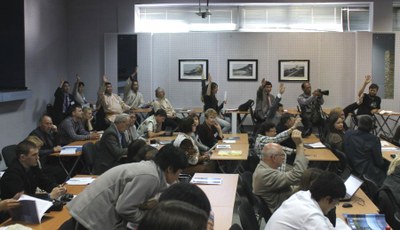
<p style="text-align: justify; ">-  8<sup>th</sup> International conference «Rivers of Siberia and the Far East» (together with WWF), the results of which were published in form of the conference proceedings (pic. 5.6.1).</p>
<p style="text-align: center; "><img class="image-inline" src="../../../resolveuid/62b56d90df1e48129ac7b2e6dec7b862/@@images/image/preview" /> <span> </span></p>
<p align="center">Pic. 5.6.1 A conference session</p>
<p style="text-align: justify; ">In 2013, «Baikal expedition» was continued and resulted in the following outputs:</p>
<p style="text-align: justify; ">-  the assessment of species distribution on Olkhon island was carried out for <i>Astragalus</i> and <i>Craniospermum </i>listed in the Red Books of endangered species of the Russian Federation and Irkutsk region;</p>
<p style="text-align: justify; ">-  the state of the relict grove of <i>Populus suaveolens</i> in the delta of the Goloustnaya river was examined;</p>
<p style="text-align: justify; ">-  the calendar «Save the plants of Olkhon sandy coast» and the postcard «Relict poplar grove» were published.</p>
<p style="text-align: justify; ">The inter-regional non-governmental organization «Greater Baikal Path» (with the support of the group of companies  En+) in 2013 conducted:</p>
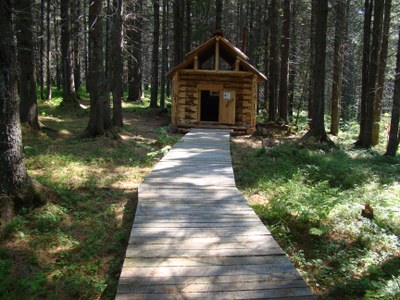
<p style="text-align: justify; ">-  winter project (March 20-29), in which volunteers from Moscow, Murmansk and Kemerovo cities participated. The project participants removed snow off a 500-meter stretch of the path in the village of Tankhoi in Baikalsk Nature Reserve (pic. 5.6.2), and made a board on book-crossing for the visiting center;</p>
<p style="text-align: justify; ">-  on May 25-26, a team of 12 volunteers participated in the reconstruction and clearing of a spring located at the 26<sup>th</sup> km of Baikalsk highway. The campaign was supported by the group of companies En+. The volunteers constructed a bowl for collecting water, cleared the water path, and reconstructed the steps leading to the spring;</p>
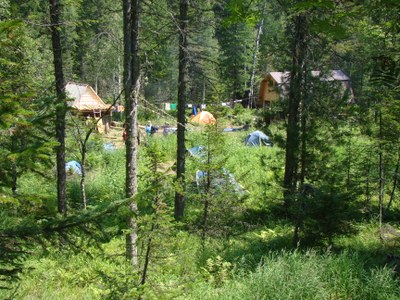
<p style="text-align: justify; ">-  four summer projects were realized, all dealing with the construction of the tourist paths «The path to clean Baikal», «The path to the waterfall land», «Deep into Khamar-Daban-1» (pic. 5.6.3) and «Fairytale land-1» within the Baikalo-Lensky reserve.</p>
<p align="center"><img class="image-inline" src="../../../resolveuid/11fcfa1e46c147ec8b42c5fe09549ae4/@@images/image/preview" /></p>
<p align="center">Pic. 5.6.2 A stretch of a path for the people with reduced mobility</p>
<p align="center"><img class="image-inline" src="../../../resolveuid/ba68883f7f5840a4b4a6e9ef72e6cb3a/@@images/image/preview" /></p>
<p align="center">Pic. 5.6.3 A volunteer camp in Baikalsk Nature Reserve</p>
<p style="text-align: justify; ">On March 28-29, 2012, the non-profit partnership organization «Let’s conserve Baikal together» held the regional children’s environmental festival «Baikal kaleidoscope». The participants of the festival were school children of Irkutsky (2 teams), Slyudyansky, Usolsky, Cheremkhovsky (2 teams), Shelekhovsky, Olkhonsky, Taishetsky, Ust-Kutsky and Angarsky districts of Irkutsk region and the team of Irkutsk Palace of Art. In 2012, the number of participants rose to 96 people, thanks to the financial support of the group of companies En+.</p>
<p style="text-align: justify; ">On March 27-28, 2013, the same organization again conducted the regional children’s environmental festival «Baikal kaleidoscope», in which 14 teams from 8 districts of Irkutsk region took part.  The festival took place in Baikalsk city.</p>
<p style="text-align: justify; ">In 2012, the Center of Additional Education for Children of Irkutsk region conducted the convent of school forestry associations (June 22-26). The 11th convent of school forestry associations of Irkutsk region was held at the Irkutsk sports and recreation complex. The co-organizers of the convent were the Forest Management Agency of Irkutsk region and the Forest Protection Agency of Irkutsk Region. The general sponsor was «Yilim-Group». There were 45 teams from the region’s state autonomous institutions, municipal educational institutions as well as teams from Krasnoyarsk city, Altai region, Zabaikalsky Krai and the Republic of Buryatia.</p>
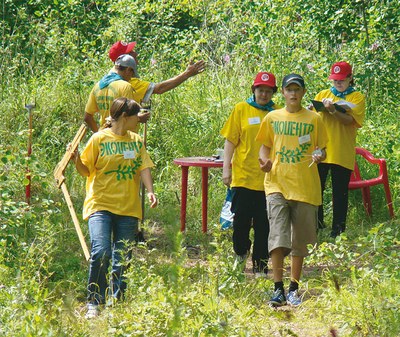
<p style="text-align: justify; ">The Center co-organized the 12<sup>th</sup> regional convent of school forestry associations held (pic. 5.6.4) on July 1-5, 2013. 46 teams took part on the meeting - 39 teams from Irkutsk region, 7 teams from Altaisky, Zabaikalsky, Krasnoyarsky, Omsky, and Novosibirsky regions and the Republics of Buryatia and Sakha-Yakutia. Awards were distributed in the categories «Best school forestry association», «Young zoologist», «Young botanist», «Forest pathfinders», and the category of best means of visual agitation «Lets save forest alive».</p>
<p style="text-align: center; "><img class="image-inline" src="../../../resolveuid/a0c263659152442486d65e4364a4d1be/@@images/image/preview" /></p>
<p align="center">Pic. 5.6.4 Participants of the 12<sup>th</sup> regional convent of school forestry associations</p>
<p style="text-align: justify; ">Irkutsk cinema fund organized the 11th Baikal international festival of documentary and popular-science movies Man and Nature». 116 movies from 28 countries were screened. Apart from the Russian movie-makers who presented 54 movies at the festival, film directors from Austria, Germany, Israel, Spain, Russia, the USA and Japan brought their films.</p>
<p style="text-align: justify; ">The official opening of the 1<sup>st</sup> Water Forum of the participants of the project «Pure waters of Pribaikalie – public water-protection movement» took place on November 30, 2012. The administration of Rosprirodnadzor in Irkutsk region was one of the partners of the water-protection project, launched by the regional branch of the All-Russian Society for Nature Protection. This project was implemented with the support of the Ministry of Natural Resources and the Ministry of Education of Irkutsk region and was recognized as one of the best among socially significant projects. The participants of the «Pure waters of Pribaikalie» included more than 60 environmental associations working at educational institutions of 22 administrative units of the region. During the stay in summer camps and while taking part in expeditions, school children had an opportunity to acquire skills of research work and water body passportization.  The 1st Water Forum was attended by young environmentalists from Ust-Kut, Bratsk, Irkutsk, Cheremkhovo, Sayansk, Ust-Orda Buryat autonomous okrug, Slyudyanka, Kyutunsky, Usolsky and other districts of the Irkutsk region.</p>
<p style="text-align: justify; ">In 2013, the 12<sup>th</sup> Baikal international festival of documentary and popular-science movies «Man and Nature» was conducted. Movies were screened during the period from April 1 to October 30, 2013. The documentary «The great Siberian rivers Lena» directed by Pavel Fattakhutdinov received «The best documentary» award, while the popular science film «Thin Ice» by David Sington and Simon Lamba (Great Britain, New Zealand) received «The best popular science movie» award.</p>
<p style="text-align: justify; "><b><i>Republic of Buryatia. </i></b>The regional non-governmental organization «Gran» is executing a joint UNDP and Coca-Cola project «Every drop matters» (2010 – 2013). The project is intended to preserve water resources, ensure access to pure drinking water, develop ecotourism, and strengthen the sense of environmental responsibility in local people. During the four-year project period, the organizations – grant winners implemented 40 subprojects in Ulan-Ude city and districts of the Republic of Buryatia and Irkutsk region (pic. 5.6.5). Within the framework of the project, «Gran» has published a book for junior and middle school children – «Baikal chest». The book was recommended by Ministry of Education and Science of the Republic of Buryatia to be used as a supplementary school-book.</p>
<p align="center"><img class="image-inline" src="../../../resolveuid/d5fc69b3bdf749ad9bfd951c358b993c/@@images/image/preview" /></p>
<p align="center">Pic. 5.6.5 The environmental campaign “Bon-aqua for Baikal”</p>
<p style="text-align: justify; ">In 2013, «Gran» implemented the project «Why does nerpa cry?». Within the framework of the project, an exposition was created featuring nerpa and composed of the colorful dioramas «Nerpa rookery» with stuffed nerpas from the museum funds and «Winter lair» with a stuffed calf; various children’s activities were organized, including master-classes (sculpturing of nerpa figurines, painting of souvenir magnets in form of nerpa, etc.), games, contests and screening of a movie on nerpa.</p>
<p style="text-align: justify; ">The non-commercial partnership «Greater Baikal Path - Buryatia» organized the following activities in 2012:</p>
<p style="text-align: justify; ">-  launched cooperation with colleges and universities of the Republic, based on the obtained positive experience of educational activities in orphanages;</p>
<p style="text-align: justify; ">-  an ascent to Munku Sardyk Peak. Pollution of White Irkut River was detected, this is because many drivers and mountain climbers use the ice covered channel of the river as a road while ascending, up to the point of confluence of the rivers Muguvek and White Irkut;</p>
<p style="text-align: justify; ">-  construction of the infrastructure on the Sleeping Lion Mountain (Tarbagataisky district) was continued, and it was second year since the works commenced;</p>
<p style="text-align: justify; ">-  an expedition to Shumak (natural park of the regional significance) was organized.</p>
<p style="text-align: justify; ">In 2013, the partnership «Greater Baikal Path – Buryatia» performed works on improving the existing paths (Maksimikha – Ust-Barguzin; Khoito-Gol - Shumal; Arshan – Verkhnyaya Berezovka). Illegal cutting was taking place near the tourist camp Maksimikha. During the three-week period, participants of the work camp cleared the path off cutting waste and placed markings on trees. A model path was built on a stretch between the localities Arshan and Verkhnyaya Beresovka. Within the framework of the ecotourism forum «Baikal+20», a master-class for guests was held at the path. The path is equipped with the modern infrastructure elements - entrance ensembles, signs, viewpoints, and information stands. A stretch of the Moscow highway between the villages Tankhoi and Pereemnaya was explored. Many elements of the old infrastructure have remained intact and the path could be used for building a bicycle road.</p>
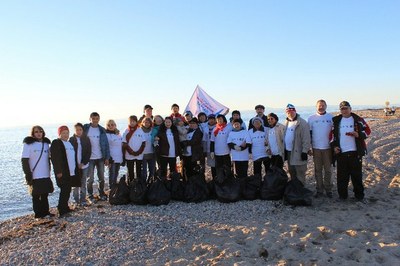
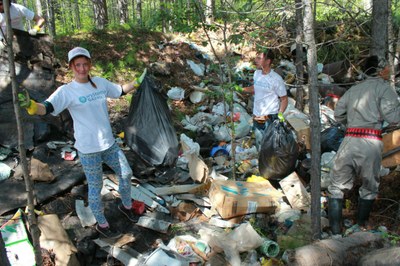
<p style="text-align: justify; ">The team of the project «Let’s conserve Lake Baikal» opened its 10<sup>th</sup> anniversary camp season of the International Baikal Shore Volunteer Service. From July 18 to August 15, 2012 the camp was visited by 47 people. Intensive work of cleaning the shore was done - piles of garbage were excavated and sorted, 43 m<sup>3</sup> of glass, 28.3 m<sup>3</sup> of plastic, 14.6 m<sup>3</sup> of tin and 68.6 m<sup>3</sup> of mixed garbage were collected and shifted for proper disposal (pic. 5.6.6).</p>
<p align="center"><img class="image-inline" src="../../../resolveuid/c677b94d03e245fabede3dfe943bb29d/@@images/image/preview" /></p>
<p align="center">Pic. 5.6.6 Garbage collection</p>
<p style="text-align: justify; ">In 2012, the Lake Baikal Conservation Foundation organized:</p>
<p style="text-align: justify; ">- the ecological camp «Khakusy»;</p>
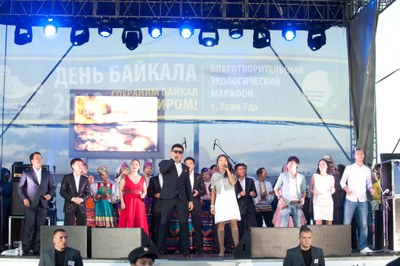
<p style="text-align: justify; ">- the first charity marathon «Preserve Lake Baikal together with the whole world», devoted to the Day of Baikal, was organized on August 17 in cooperation with the Ministry of Natural Resources of the Republic of Buryatia. The raised funds (1 million rubles) would be spent during the next summer season on cleaning and providing necessary facilities at the places of public recreation on the shores of Lake Baikal (in particular, in the towns of Gremyachinsk and Goryachinsk in Pribakalsky district) (pic. 5.7.7).</p>
<p style="text-align: center; "><img class="image-inline" src="../../../resolveuid/0355e0dea2f54c67bb46d8bb6294d685/@@images/image/preview" /></p>
<p style="text-align: justify; ">Pic. 5.6.7 Participants of the first charity marathon «Preserve Lake Baikal together with the whole world»<b> </b></p>
<p style="text-align: justify; ">In 2013, the Fund initiated the research expedition «TransEurasian flight Leman – Baikal». The expedition’s objectives were to develop new methods and devices for air and water sounding, enhance knowledge on the impact of forest fires on carbon cycle, develop proposals on complex environmental protection measures for the area covered by the expedition and attract public attention to the environmental issues common to Europe and Asia.</p>
<p style="text-align: justify; ">Besides, the Fund supported implementation of the following projects:</p>
<p style="text-align: justify; ">-  a winter expedition of the Student’s Science Society of the Geography Department of Moscow State University was organized in the Republic of Buryatia;</p>
<p style="text-align: justify; ">-  an exposition devoted to the expedition «The submersibles MIR in Lake Baikal» was installed in the National Museum of the Republic of Buryatia;</p>
<p style="text-align: justify; ">-  a joint expedition with the Far East Expedition Center of the Russian Geographical Society with the objective of studying the population dynamics of Baikal nerpa;</p>
<p style="text-align: justify; ">-  the environmental campaign «Clean Ice of Lake Baikal» in Barguzinsky district of the Republic of Buryatia;</p>
<p style="text-align: justify; ">-  the international forum on ecology and tourism «Ecotourism in Lake Baikal region».</p>
<p style="text-align: justify; ">In 2013, the Buryat Branch of the Russian Geographical Society took part in the following activities;</p>
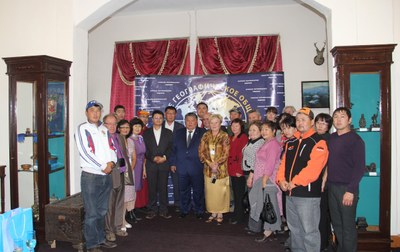
<p style="text-align: justify; ">-  the expedition «In the footsteps of Przhevalsky» (in the honor of the 150th anniversary of the first expedition) (pic. 5.6.8);</p>
<p style="text-align: justify; ">-  summer schools in geography and environmental sciences on the basis of the international ecological and educational center «Istomino» (pic. 5.6.9).</p>
<p style="text-align: center; "><img class="image-inline" src="../../../resolveuid/e383587c474d4b7b91b9162ca8e2295d/@@images/image/preview" /></p>
<p align="center"><b> </b><b> </b></p>
<p align="center">Pic. 5.6.8 Participants of the expedition at the museum of the town of Kyakhta</p>
<p align="center"><img class="image-inline" src="../../../resolveuid/2d1f4016bd31409b938fa1e50cd88314/@@images/image/preview" /></p>
<p align="center">Pic. 5.6.9 A session of the summer ecological school at the conference hall of the International Ecological and Educational Center “Istomino”</p>
<p style="text-align: justify; ">Mongolian Environmental Civil Council (MECC) was established in 2008 at the First National Conference of Non-Governmental Organizations. MECC with 700 NGOs being its members and branches in 21 aimags can be called an umbrella organization. Supreme authority of MECC is the national council of environmental NGOs that convenes once in two years. At the convention, the board of directors and supervisory boards of MECC are selected and policy documents for the next two years are discussed.</p>
<p style="text-align: justify; ">MECC's main functions are the provision of information and services to non-governmental organizations engaged in environmental activities and coordination of cooperation between the government and other organizations [12].</p>
<p style="text-align: justify; ">Besides MECC, there are other NGOs, such as «Greenpeace Mongolia», «Gal-Undesten association», «Golomt TSEKH», «United Movement of Mongolian Rivers and Lakes», «MUEM», «Nogoon Has», «Restoration management», «United TMT movement», «The future without nuclear radiation», that are active in the field of environmental protection. At the web site of the Environmental Information Center, there is a list of Mongolian environmental NGOs with description of their work and directors’ names.</p>
<p style="text-align: justify; ">In addition, within the framework of the project «Integrated Natural Resource Management in the Baikal Basin Transboundary Ecosystem», in 2014 the NGO «Mongolian Water Forum – Ushelts» initiated the establishement of a network of the environmental NGOs that work within the Lake Baikal and Selenga river basins. The list of organizations united into the network is available in the «Friends» section of the «Baikal Information Center» web portal.</p>
<p style="text-align: justify; "><span> </span></p>
<p style="text-align: justify; "><b>Bibliography</b></p>
<p style="text-align: justify; "><span>1. Convention on Biological Diversity </span><a href="http://www.cbd.int/countries/default.shtml_country=mn">www.cbd.int/countries/default.shtml_country=mn</a></p>
<p style="text-align: justify; ">2. Convention on Biological Diversity <a href="http://www.cbd.int/countries/default.shtml">www.cbd.int/countries/default.shtml</a> country=ru</p>
<p style="text-align: justify; ">3. Transboundary diagnostic analysis of the Lake Baikal basin   http//Baikal. Iwlearn.org<b> </b></p>
<p style="text-align: justify; ">4. State report “On the state of Lake Baikal and measures for its protection in 2013” – Irkutsk. Siberian Branch of “Rosgeolfond”, 2014. – 462 pp.: <a href="http://www.mnr.gov.ru/regulatory/list.php?part=1258">http://www.mnr.gov.ru/regulatory/list.php?part=1258</a></p>
<p style="text-align: justify; ">5. Mikheeva A.S., Tulokhonov A.K., Ptitsyn A.B., Tsybekmitova G.T. / Institutional mechanisms of regulating nature management within transboundary territories/ In the book “Environmental cooperation in the transboundary regions: Russia – China – Mongolia”. Chita, Poisk Publishing. 2012. - Part 2. - p. 52-60.</p>
<p style="text-align: justify; ">6. State report “On the state of Lake Baikal and measures for its protection in 2012” – Irkutsk. Siberian Branch of “Rosgeolfond”, 2013. – 436 pp.: <a href="http://www.mnr.gov.ru/regulatory/list.php?part=1258">http://www.mnr.gov.ru/regulatory/list.php?part=1258</a></p>
<p style="text-align: justify; ">7. ФГУНПП «Росгеолфонд», <a href="http://geol.irk.ru/baikal/">http://geol.irk.ru/baikal/</a></p>
<p style="text-align: justify; ">8. Журнал «Мир Байкала», <a href="http://www.mirbaikala.ru/">www.mirbaikala.ru</a></p>
<p style="text-align: justify; ">9. Природа Забайкальского края, <a href="http://www.nature.chita.ru/">http://www.nature.chita.ru</a>)</p>
<p style="text-align: justify; ">10. A website of the “Green Earth – Green Future” NGO, “Ecological education: Environment – friendly children”, <a href="http://veg.mn/page/50">http://veg.mn/page/50</a></p>
<p style="text-align: justify; "><a href="http://veg.mn/page/50"></a><span>11. White book of Baikal basin, </span><a href="http://bic.iwlearn.org/en/ru/druzya/belaya-kniga-basseina-ozera-baikal-obschestvennye-organizacii">http://bic.iwlearn.org/ru/druzya/belaya-kniga-basseina-ozera-baikal-obschestvennye-organizacii</a></p>
<p style="text-align: justify; ">12.  Environmental Information Center, Environmental organizations, human resources information center, Database of NGOs, <a href="http://www.eic.mn/orgstaff/nongovernment.php">http://www.eic.mn/orgstaff/nongovernment.php</a></p>]]></content:encoded>
    <dc:publisher>No publisher</dc:publisher>
    <dc:creator>Zorigma</dc:creator>
    <dc:rights></dc:rights>
    <dc:date>2015-04-24T07:18:27Z</dc:date>
    <dc:type>Page</dc:type>
  </item>


  <item rdf:about="http://bic.iwlearn.org/en/photos/5.6.9.JPG">
    <title>5.6.9.JPG</title>
    <link>http://bic.iwlearn.org/en/photos/5.6.9.JPG</link>
    <description></description>
    
    <dc:publisher>No publisher</dc:publisher>
    <dc:creator>Zorigma</dc:creator>
    <dc:rights></dc:rights>
    <dc:date>2015-04-24T07:17:44Z</dc:date>
    <dc:type>Image</dc:type>
  </item>


  <item rdf:about="http://bic.iwlearn.org/en/photos/5.6.8.JPG">
    <title>5.6.8.JPG</title>
    <link>http://bic.iwlearn.org/en/photos/5.6.8.JPG</link>
    <description></description>
    
    <dc:publisher>No publisher</dc:publisher>
    <dc:creator>Zorigma</dc:creator>
    <dc:rights></dc:rights>
    <dc:date>2015-04-24T07:17:13Z</dc:date>
    <dc:type>Image</dc:type>
  </item>


</rdf:RDF>