<?xml version="1.0" encoding="utf-8" ?>
<rdf:RDF xmlns:rdf="http://www.w3.org/1999/02/22-rdf-syntax-ns#" xmlns:dc="http://purl.org/dc/elements/1.1/" xmlns:syn="http://purl.org/rss/1.0/modules/syndication/" xmlns="http://purl.org/rss/1.0/">


<channel rdf:about="http://bic.iwlearn.org/search_rss">
  <title>Байкальский информационный центр</title>
  <link>http://bic.iwlearn.org</link>

  <description>
    
            These are the search results for the query, showing results 1 to 15.
        
  </description>


  <image rdf:resource="http://bic.iwlearn.org/logo.png"/>

  <items>
    <rdf:Seq>
      
        <rdf:li rdf:resource="http://bic.iwlearn.org/en/friends/zabaikalsky-regionalbranch-of-russian-geographical-society-russia-zabaykalsky-krai"/>
      
      
        <rdf:li rdf:resource="http://bic.iwlearn.org/en/news/the-baikal-project/8e1906b56dbe1bbf60145a075edae0c3"/>
      
      
        <rdf:li rdf:resource="http://bic.iwlearn.org/en/friends/youth-foundation-revival-of-the-earth-siberian-russia-irkutsk-region"/>
      
      
        <rdf:li rdf:resource="http://bic.iwlearn.org/en/friends/wwf-mongolia-mongolia"/>
      
      
        <rdf:li rdf:resource="http://bic.iwlearn.org/en/news/the-baikal-project/c0b42fe16b6f993ef9c7201ca19479cb"/>
      
      
        <rdf:li rdf:resource="http://bic.iwlearn.org/en/news/the-baikal-project/c2c1d7f80734114d672560e8b0e62b5e"/>
      
      
        <rdf:li rdf:resource="http://bic.iwlearn.org/en/atlas/atlas/111-working-age-population-disability-map/working-age-population-disability-map"/>
      
      
        <rdf:li rdf:resource="http://bic.iwlearn.org/en/documents-1/working-out-of-methodology-of-definition-of-flashpoints-of-pollution-of-pool-of-lake-baikal"/>
      
      
        <rdf:li rdf:resource="http://bic.iwlearn.org/en/documents/documents/complex-reports/2014/working-out-of-methodology-of-definition-of-flashpoints-of-pollution-of-pool-of-lake-baikal"/>
      
      
        <rdf:li rdf:resource="http://bic.iwlearn.org/en/documents/documents/papers/wild-life-issues-in-mongolia-english"/>
      
      
        <rdf:li rdf:resource="http://bic.iwlearn.org/en/1"/>
      
      
        <rdf:li rdf:resource="http://bic.iwlearn.org/en/friends/wcs-mongolia-mongolia"/>
      
      
        <rdf:li rdf:resource="http://bic.iwlearn.org/en/atlas/atlas/46-water-resources-and-consumptive-water-use-map/water-resources-and-consumptive-water-use-map"/>
      
      
        <rdf:li rdf:resource="http://bic.iwlearn.org/en/documents/documents/complex-reports/2013/water-quality-of-the-kharaa-river-basin-mongolia-pollution-threats-and-hotspots-assessment"/>
      
      
        <rdf:li rdf:resource="http://bic.iwlearn.org/en/documents-1/water-quality-of-the-kharaa-river-basin-mongolia-pollution-threats-and-hotspots-assessment"/>
      
    </rdf:Seq>
  </items>

</channel>


  <item rdf:about="http://bic.iwlearn.org/en/friends/zabaikalsky-regionalbranch-of-russian-geographical-society-russia-zabaykalsky-krai">
    <title>Zabaikalsky regional branch of Russian geographical society (Russia, Zabaykalsky krai)</title>
    <link>http://bic.iwlearn.org/en/friends/zabaikalsky-regionalbranch-of-russian-geographical-society-russia-zabaykalsky-krai</link>
    <description></description>
    <content:encoded xmlns:content="http://purl.org/rss/1.0/modules/content/"><![CDATA[<p align="center"><strong>ZABAIKALSKY REGIONAL BRANCH OF</strong></p>
<p align="center"><strong>RUSSIAN GEOGRAPHICAL SOCIETY</strong></p>
<p><span style="text-decoration: underline;">Contact information:</span></p>
<p>672007, Trans-Baikal Territory, Chita, ul. Grandma, 129.</p>
<p>Naturally, the Faculty of Geography, Department of Geography</p>
<p>Tel. / Fax (3022) 32-34-68</p>
<p>E-mail: zorgo-chita@mail.ru</p>
<p>Website: http://chita.rgo.ru/</p>
<p><span style="text-decoration: underline;">Chairman of the Department</span>: Konstantinov Alexandr Vasilievich, konstant1956@mail.ru,</p>
<p>Scientific Secretary: Pomazkova Nadezhda Viktorovna, naste2@yandex.ru</p>
<p>Zabaikalky branch of the Russian Geographical Society opened in Chita July 16 1894, called the Chita branch of the Imperial Russian Geographical Society Priamursky and became one of the first regional divisions of the Company.</p>
<p>Branch created at the initiative of political exile, A.K. Kuznetsova and physician N.V. Kirillov with the support of the military governor of the Zabaikalsky region E.O. Matsevskogo, who became its first chairman.</p>
<p>Today Zabaikalskoe department - a structural unit of the Russian Geographical Society. It comprised 112 full members.</p>
<p><span style="text-decoration: underline;">Main activities:</span></p>
<p>- Scientific and practical conferences, seminars, lectures and other academic activities in the field of geography, ecology and related sciences;</p>
<p>- The organization of scientific research and expeditions, would promote geography and related sciences;</p>
<p>- Promotion of local history, ethnography, toponymic work, the study of history, geography; as well as the preservation of world and national natural and cultural heritage, protection of nature and its monuments;</p>
<p>- Dissemination of geographical knowledge, promotion of domestic and world geography.</p>
<p><span style="text-decoration: underline;">Implementation of projects</span></p>
<p>Annual regional ecological action «To protect nature - to love the motherland», which has been held for 7 years, the Trans-Baikal region. The name of the action were the words of the famous writer Prishvin. It includes a range of educational activities, the purpose of which - the education of ecological culture and patriotism among children and youth, as a factor in preserving the unique nature and culture of Transbaikalia, environmental security of the person and the cross-border region as a whole.</p>
<p><span style="text-decoration: underline;">The main objectives of the campaign:</span></p>
<p>- Attract the attention of children and students of educational institutions, all residents of our region to environmental issues as complex socially significant, successful resolution of which will determine the future development of the Trans-Baikal region;</p>
<p>- Education of preschool children and students a sense of pride and responsibility for nature Trans-Baikal Territory as part of the Motherland;</p>
<p>- Promotion of real environmental actions in everyday life of each resident Territory;</p>
<p>- To consolidate the efforts of collectives of educational institutions, parents, professionals in ecology and conservation of the media (the media), representatives of the local administration to solve environmental problems of their region;</p>
<p>- Dissemination of experience in the region of educational institutions to educate environmental culture of pupils.</p>
<p>The contest «Fotosnayper» which was held from April 20 to November 20, 2012 Trans-Baikal regional branch of the Russian Geographical Society. In the contest was attended by 28 people, including adults and children from different parts of the Transbaikal, have sent 235 pictures of various themes.</p>]]></content:encoded>
    <dc:publisher>No publisher</dc:publisher>
    <dc:creator>Alexander Ayurzhanaev</dc:creator>
    <dc:rights></dc:rights>
    <dc:date>2015-02-06T07:50:00Z</dc:date>
    <dc:type>Page</dc:type>
  </item>


  <item rdf:about="http://bic.iwlearn.org/en/news/the-baikal-project/8e1906b56dbe1bbf60145a075edae0c3">
    <title>Zabaikalsky National Park</title>
    <link>http://bic.iwlearn.org/en/news/the-baikal-project/8e1906b56dbe1bbf60145a075edae0c3</link>
    <description>Meeting in Zabaikalsky National Park</description>
    <content:encoded xmlns:content="http://purl.org/rss/1.0/modules/content/"><![CDATA[<p style="text-align: justify;">On 28 July, 2012 a meeting between the Project manager Sergey Kudelya and Director of Zabaikalsky National Park Michael Ovdin. The areas of cooperation were identified and joint action plan was discussed during the meeting.</p>]]></content:encoded>
    <dc:publisher>No publisher</dc:publisher>
    <dc:creator>Sergey Kudelya</dc:creator>
    <dc:rights></dc:rights>
    <dc:date>2013-03-02T08:05:29Z</dc:date>
    <dc:type>Feed Item</dc:type>
  </item>


  <item rdf:about="http://bic.iwlearn.org/en/friends/youth-foundation-revival-of-the-earth-siberian-russia-irkutsk-region">
    <title>Youth foundation «Revival of the earth Siberian» (Russia, Irkutsk region)</title>
    <link>http://bic.iwlearn.org/en/friends/youth-foundation-revival-of-the-earth-siberian-russia-irkutsk-region</link>
    <description></description>
    <content:encoded xmlns:content="http://purl.org/rss/1.0/modules/content/"><![CDATA[<p align="center"><b>YOUTH FOUNDATION</b></p>
<p align="center"><b>«REVIVAL OF THE EARTH SIBERIAN»</b></p>
<p><span style="text-decoration: underline;">Contact information:</span></p>
<p>Irkutsk, Furie st., 10, office 301</p>
<p>30/04/71, 31/04/71</p>
<p>E-mail: root@fvzs.ru;</p>
<p>Website: http://www.fvzs.ru</p>
<p><span style="text-decoration: underline;">Year of registration:</span> August 15, 1995</p>
<p>President of the Foundation: Tvorogova Elena</p>
<p>Target groups: civil society organizations, enterprising citizens, authorities</p>
<p>community, youth associations and initiatives</p>
<p><span style="text-decoration: underline;">Main activities:</span></p>
<p>- Development of civil initiatives of the population;</p>
<p>- Educational programs;</p>
<p>- The development of local self-government.</p>]]></content:encoded>
    <dc:publisher>No publisher</dc:publisher>
    <dc:creator>Alexander Ayurzhanaev</dc:creator>
    <dc:rights></dc:rights>
    <dc:date>2015-02-06T07:37:18Z</dc:date>
    <dc:type>Page</dc:type>
  </item>


  <item rdf:about="http://bic.iwlearn.org/en/friends/wwf-mongolia-mongolia">
    <title>WWF Mongolia (Mongolia)</title>
    <link>http://bic.iwlearn.org/en/friends/wwf-mongolia-mongolia</link>
    <description></description>
    <content:encoded xmlns:content="http://purl.org/rss/1.0/modules/content/"><![CDATA[<p style="text-align: center; "><b>WWF MONGOLIA</b></p>
<p style="text-align: center; "><b><img class="image-inline" src="../../resolveuid/3ef0e75faa1d49feb27095f251628ee2/@@images/image/preview" /></b></p>
<p><span style="text-decoration: underline;">Contact details: </span>Amar Street-4, SBD-8, PO Box-115, PO-20A Ulaanbaatar  210620A,  Mongolia</p>
<p>Tel: +976 11 311 659</p>
<p>Fax : +976 11 310 237</p>
<p>Website http://mongolia.panda.org</p>
<p>e-mail <a href="mailto:info@wwf.mn">info@wwf.mn</a><span style="text-decoration: underline;"></span></p>
<p><span style="text-decoration: underline;">Year of </span>Establishment 1992<span style="text-decoration: underline;"></span></p>
<p><span style="text-decoration: underline;">Head of the organization</span> Mr. Chimedochir Bazarsad<span style="text-decoration: underline;"></span></p>
<p><span style="text-decoration: underline;">Scope of the activities</span><span style="text-decoration: underline;"></span></p>
<p>-         Target species conservation</p>
<p>-         Freshwater ecosystem conservation</p>
<p>-         Education for sustainable development</p>
<p>-         Protected area management</p>
<p><span style="text-decoration: underline;">Mission</span> To stop the degradation of the planet's natural environment and to build a future in which humans live in harmony with nature, by:</p>
<p>-         conserving the world's biological diversity</p>
<p>-         ensuring that the use of renewable natural resources is sustainable promoting the reduction of pollution and wasteful consumption.</p>
<p><span style="text-decoration: underline;">List of the environmental related projects implemented</span><span style="text-decoration: underline;"></span></p>
<p>-         Biodiversity Gap Analyses of Mongolia</p>
<p>-         Protected Areas Management Plans</p>
<p>-         Integrated River-basin management plans</p>
<p>-         Number of conservation projects on target species and education.</p>]]></content:encoded>
    <dc:publisher>No publisher</dc:publisher>
    <dc:creator>Alexander Ayurzhanaev</dc:creator>
    <dc:rights></dc:rights>
    <dc:date>2015-02-09T03:48:54Z</dc:date>
    <dc:type>Page</dc:type>
  </item>


  <item rdf:about="http://bic.iwlearn.org/en/news/the-baikal-project/c0b42fe16b6f993ef9c7201ca19479cb">
    <title>Workshop on transboundary diagnostic analysis</title>
    <link>http://bic.iwlearn.org/en/news/the-baikal-project/c0b42fe16b6f993ef9c7201ca19479cb</link>
    <description>A Workshop on transboundary diagnostic analysis was held in Ulan-Ude on 18-19 September 2012.</description>
    <content:encoded xmlns:content="http://purl.org/rss/1.0/modules/content/"><![CDATA[<p style="text-align: justify;">In the frameworks of the UNDP/GEF project "Integrated Natural Resource Management in the Baikal Basin Transboundary Ecosystem" the Workshop on TDA (transboundary diagnostic analysis) revision was held in Ulan-Ude on 18-19 September 2012. The initial TDA document was prepared in 2008-2009.<br />The workshop was participated by TDA consultant and scientific advisory group leader, Mrs. Saskia Marijnissen, "Integrated Natural Resource Management in the Baikal Basin Transboundary Ecosystem" Project Manager Sergey Kudelya, National Project Technical Director (Russian Federation) Alexander Shekhovtsov, National Project Technical Director (Mongolia) Munkhbat Tserendorj and also representative of ANO “Centre for International Projects”, Russian and Mongolian experts.<br />The preliminary TDA results, which were prepared by Russian and Mongolian experts in 2008-2009, will be specified during the final TDA revision. This document will be used for Russian Federation and Mongolia Strategic Action Programme preparation.</p>
<p><a href="http://www.binm.ru/novosti_instituta.php">http://www.binm.ru/novosti_instituta.php</a></p>
<p><a href="http://edikbat.livejournal.com/104996.html">http://edikbat.livejournal.com/104996.html</a></p>]]></content:encoded>
    <dc:publisher>No publisher</dc:publisher>
    <dc:creator>Sergey Kudelya</dc:creator>
    <dc:rights></dc:rights>
    <dc:date>2013-03-02T08:05:29Z</dc:date>
    <dc:type>Feed Item</dc:type>
  </item>


  <item rdf:about="http://bic.iwlearn.org/en/news/the-baikal-project/c2c1d7f80734114d672560e8b0e62b5e">
    <title>Workshop on tourism development in protected natural areas</title>
    <link>http://bic.iwlearn.org/en/news/the-baikal-project/c2c1d7f80734114d672560e8b0e62b5e</link>
    <description></description>
    <content:encoded xmlns:content="http://purl.org/rss/1.0/modules/content/"><![CDATA[<p style="text-align: justify;">A workshop on tourism development in protected natural areas of Buryatia was held in the small hall of the People's Khural of the Republic of Buryatia on December 10, 2012.</p>
<p style="text-align: justify;">The event was part of the Baikal International Conference "Ecology. Education. Tourism" and was supported by the UNDP/GEF project "Integrated Natural Resource Management in the Baikal Basin Transboundary Ecosystem", Global Nature Fund, the Administration of the Head of the Republic of Buryatia and the Government of Buryatia, the Ministry of Natural Resources of the Republic of Buryatia and the NGO "Baikal Information Center "Gran".</p>
<p style="text-align: justify;">According to the organizers, the development of sustainable tourism has become an important trend in activity protected areas. How to combine the increased flow of visitors and conservation of unique natural areas, minimize risk, and make nature closer and clearer - these are the questions that now need to be answered.</p>
<p style="text-align: justify;">The president of Global Nature fund Mrs. Marion Hammerl and board member Ranveig Eckhoff shared their vision of prospects for development of nature tourism.</p>
<p style="text-align: justify;">Author: Eduard Batotsyrenov, Baikal Institute of Nature Managment SB RAS</p>
<p style="text-align: justify;"><a class="external-link" href="http://baikal24.ru">http://baikal24.ru</a></p>
<p style="text-align: justify;"><a class="external-link" href="http://www.visitburyatia.ru/news/section-105/item-2854/">http://www.visitburyatia.ru/news/section-105/item-2854/ </a></p>]]></content:encoded>
    <dc:publisher>No publisher</dc:publisher>
    <dc:creator>Sergey Kudelya</dc:creator>
    <dc:rights></dc:rights>
    <dc:date>2013-03-02T08:05:28Z</dc:date>
    <dc:type>Feed Item</dc:type>
  </item>


  <item rdf:about="http://bic.iwlearn.org/en/atlas/atlas/111-working-age-population-disability-map/working-age-population-disability-map">
    <title>Working-age population disability map</title>
    <link>http://bic.iwlearn.org/en/atlas/atlas/111-working-age-population-disability-map/working-age-population-disability-map</link>
    <description></description>
    <content:encoded xmlns:content="http://purl.org/rss/1.0/modules/content/"><![CDATA[<p><img class="image-inline" src="../../../resolveuid/9fa73668abee4a6dbb7645f7037df021/@@images/image/preview" /></p>
<p><a href="http://bic.iwlearn.org/en/atlas/photos/copy_of__111_Workingagepopulationdisability.png" class="internal-link">Open full size</a></p>
<p align="center"><strong>Healthcare</strong><strong> </strong></p>
<p align="center"><strong> </strong></p>
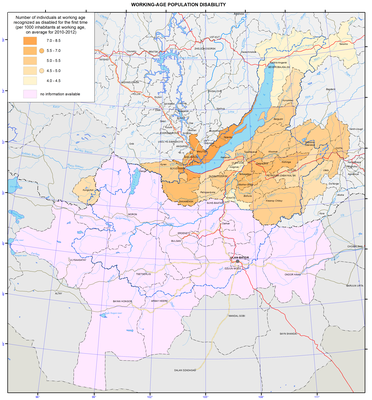
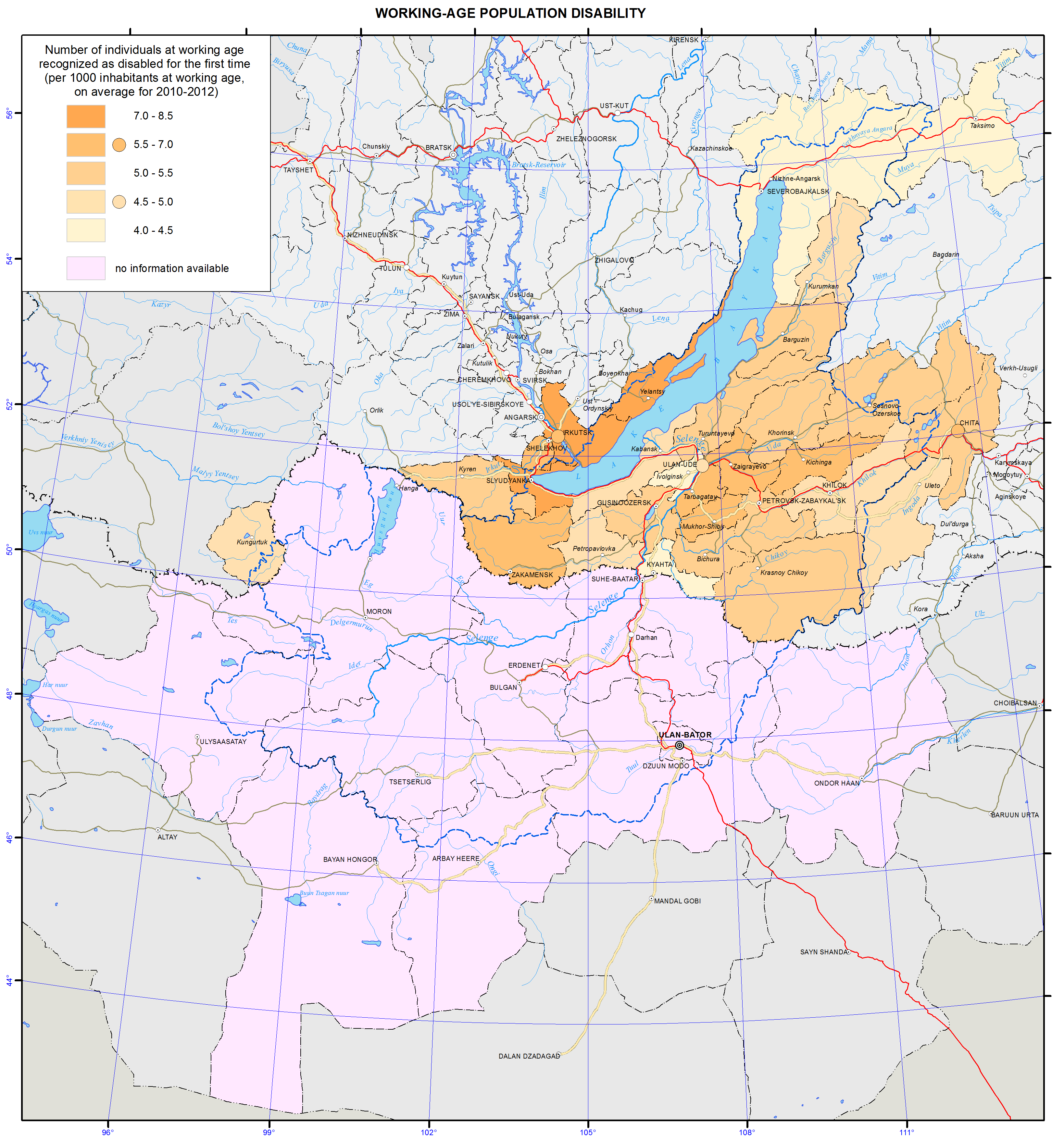
<p>Harsh climatic conditions across the entire territory of the Baikal basin and the surface and ground water used for drinking and food purposes that do not meet the drinking water quality standards (first and foremost in Mongolia and Buryatia) coupled with atmospheric emissions from industrial facilities and motor vehicles (in some parts of the territory) are responsible for the state of human health influencing the organization of healthcare. The ecological situation becomes substantially worse during winter months, which is encouraged by the topography of the terrain. In Mongolia, the spring period is very hard time to bear, with sharp temperature differences, abrupt variations in atmospheric pressure, and frequent dust and magnetic storms.</p>
<p class="NormalWeb">The organizational pattern of healthcare in Russia and Mongolia has much in common. This is a result of the cooperation of the two countries in this sphere and the fact that medical education and healthcare in Mongolia are organized using Russian experience. Today, Mongolian medical facilities operate on the principles of the state-private partnership concurrent with the demonopolization of the state system of medical services. The country has a mandatory and voluntary medical insurance system, in which state-owned and private medical institutions take part. The country also has various health institutes and centers.</p>
<p class="a">The territory of the Baikal basin is experiencing a deficit of medical workers. As of 2012, the availability of physicians varied from 13.8 to 30.1 per 10,000 people in Russian districts and from 16.1 to 29.0 per 10,000 people in Mongolian aimags. The availability of nurses varies from 25.1 to 112.2 per 10,000 people in Russian districts and from 26.4 to 38.2 per 10,000 people in Mongolian aimags. In Ulan-Ude, these indicators have the values of 53.9 and 117.3, while in Ulaanbaatar – 44.1 and 41.2, respectively.</p>
<p>The ratio of doctors and nurses in the Russian part of the basin is between 1:2 to 1:4, while in the Mongolian part it does not exceed 1:2. The World Health Organization (WHO) recommends that this ratio should be 1:4. A narrowing of this indicator causes imbalances in the healthcare system thereby limiting possibilities for further development of the after-treatment, casework and rehabilitation services.</p>
<p>Target indicators of healthcare activity are the standard volume of medical care per inhabitant. Currently, there are plans to decrease the per capita volume of in-patient services and increase the per capita volume of the hospital-replacing care. Accordingly, the number of hospital beds available 27/7 will decrease, while the number of beds in day hospitals will grow. Overall, the available number of hospital beds complies with the calculated standards and meets the demand of the population for the in-patient medical aid.</p>
<p class="ConsPlusNormal">As of today, in Russia, there is an array of problems relating to the high level of illnesses and disability incidences among the population, and these indicators are continuously growing. Such a situation is the result of inadequate preventive measures. Another important contributing factor to this situation is the increase of the proportion of elderly population and the improved effectiveness of illness detection using new diagnostic methods in the process of the increased number of medical checkups.</p>
<p class="ConsPlusNormal">The leading illnesses in the structure of morbidity are respiratory illnesses, bloodstream, eye, and digestive and musculoskeletal system diseases, as well as traumas. For many years, circulatory system diseases, neoplasms, and injuries have been the main causes of mortality and disability among the population.</p>
<p class="a">A complex of anthropogenic environmental factors contributes to the growth of morbidity and disability rates among the population with the most important one being air pollution. According to the WHO, atmospheric air pollution is the cause of up to 23% of all illnesses. The amount of pollutant emissions in the atmosphere produced by static sources in different administrative divisions in the Baikal basin differs by more than a thousand times. The most polluted air in the Baikal basin is in the Selenginsky district of Buryatia.</p>
<p>The health of the population and further development of healthcare depend on ecological, social, and economic factors. These problems can be resolved only through comprehensive approaches to the improvement of the quality of life of the population.</p>
<p>The strategic goal of the healthcare systems of Russia and Mongolia is to build a system, which ensures the quality and accessibility of medical services, primarily first aid, and increases the efficiency of medical services, based on the improvement of territorial planning of healthcare. The volume, types, and quality of these services should correspond to the rate of morbidity, population requirements, and the latest achievements of medical science, based on perfecting the system of territorial planning of public health services.</p>]]></content:encoded>
    <dc:publisher>No publisher</dc:publisher>
    <dc:creator>Alexander Ayurzhanaev</dc:creator>
    <dc:rights></dc:rights>
    <dc:date>2014-10-14T03:10:00Z</dc:date>
    <dc:type>Page</dc:type>
  </item>


  <item rdf:about="http://bic.iwlearn.org/en/documents-1/working-out-of-methodology-of-definition-of-flashpoints-of-pollution-of-pool-of-lake-baikal">
    <title>Working out of methodology of definition of "flashpoints" of pollution of pool of Lake Baikal</title>
    <link>http://bic.iwlearn.org/en/documents-1/working-out-of-methodology-of-definition-of-flashpoints-of-pollution-of-pool-of-lake-baikal</link>
    <description></description>
    
    <dc:publisher>No publisher</dc:publisher>
    <dc:creator>Alexander Ayurzhanaev</dc:creator>
    <dc:rights></dc:rights>
    <dc:date>2015-03-02T04:28:32Z</dc:date>
    <dc:type>File</dc:type>
  </item>


  <item rdf:about="http://bic.iwlearn.org/en/documents/documents/complex-reports/2014/working-out-of-methodology-of-definition-of-flashpoints-of-pollution-of-pool-of-lake-baikal">
    <title>Working out of methodology of definition of "flashpoints" of pollution of pool of Lake Baikal</title>
    <link>http://bic.iwlearn.org/en/documents/documents/complex-reports/2014/working-out-of-methodology-of-definition-of-flashpoints-of-pollution-of-pool-of-lake-baikal</link>
    <description></description>
    <content:encoded xmlns:content="http://purl.org/rss/1.0/modules/content/"><![CDATA[<p><img class="image-inline" src="../../../../../resolveuid/3e83b4fb90114d089411b3249cb6dee6/@@images/image/preview" /></p>
<p><span>For the given project as "hot" points pollution/infection sources will beconsidered only. Those sources of pollution ("hot" points) which could becharacterized by national experts as "hot" points by means of quantity indicators,will be subjected for estimation and prioritization on the basis of the offeredmethodology. As to those revealed sources of pollution which could not becharacterized by national experts as "hot" points by means of quantity indicatorsthey can be presented by corresponding qualitative description.</span></p>
<div><a href="http://bic.iwlearn.org/en/documents-1/working-out-of-methodology-of-definition-of-flashpoints-of-pollution-of-pool-of-lake-baikal" class="internal-link">Download file</a></div>]]></content:encoded>
    <dc:publisher>No publisher</dc:publisher>
    <dc:creator>Alexander Ayurzhanaev</dc:creator>
    <dc:rights></dc:rights>
    <dc:date>2015-03-02T04:29:35Z</dc:date>
    <dc:type>Page</dc:type>
  </item>


  <item rdf:about="http://bic.iwlearn.org/en/documents/documents/papers/wild-life-issues-in-mongolia-english">
    <title>Wild life issues in Mongolia (English)</title>
    <link>http://bic.iwlearn.org/en/documents/documents/papers/wild-life-issues-in-mongolia-english</link>
    <description></description>
    
    <dc:publisher>No publisher</dc:publisher>
    <dc:creator>puntsagsurenchoimpog@yahoo.com</dc:creator>
    <dc:rights></dc:rights>
    <dc:date>2014-12-23T16:29:34Z</dc:date>
    <dc:type>File</dc:type>
  </item>


  <item rdf:about="http://bic.iwlearn.org/en/1">
    <title>Welcome to the baikal basin information center</title>
    <link>http://bic.iwlearn.org/en/1</link>
    <description></description>
    <content:encoded xmlns:content="http://purl.org/rss/1.0/modules/content/"><![CDATA[<p style="text-align: justify; "><strong><span><span><span><span>Байкал Информационный центр (BIC) </span></span></span></span><br /><span><span><span><span>создан в рамках реализации проекта Озеро Байкал </span></span></span></span><br /></strong><a class="external-link" href="http://baikal.iwlearn.org/en"><span class="external-link"><span><span><span><span>( </span></span></span></span></span><span class="external-link"><span><span><span><span><span>ПРООН ГЭФ- </span></span></span></span></span><span><span><span><span><span>"Комплексное управление природными ресурсами в бассейне Байкала трансграничном экосистемы"</span></span></span></span></span></span><span><span><span><span> )</span></span></span></span></a></p>
<p><span><span><span><span>Байкальский информационный центр реализует следующие функции:</span></span></span></span></p>
<ol>
<li><span><span><span><span>Повышение осведомленности общественности о ключевых вопросах и проблемах бассейна озера Байкал</span></span></span></span></li>
<li><span><span><span><span>Подготовка и публикация доклада за двухгодичный период "О состоянии окружающей среды в бассейне озера Байкал"</span></span></span></span></li>
<li><span><span><span><span>Поддержка согласованной программы гидрохимического мониторинга бассейна озера Байкал</span></span></span></span></li>
<li><span><span><span><span>Создание и поддержка Атласа в бассейне озера Байкал</span></span></span></span></li>
<li><span><span><span><span>Расчет водного баланса озера Байкал</span></span></span></span></li>
<li><span><span><span><span>Моделирование переноса загрязняющих веществ в водной системе бассейна озера Байкал </span></span></span></span><br /><span><span><span><span>и уведомления водопользователей, которые расположены ниже по течению</span></span></span></span></li>
<li><span><span><span><span>Поддержка сети НПО «Друзья озера Байкал бассейна"</span></span></span></span></li>
</ol>
<p> </p>
<p style="text-align: center; "><b>Team of BIC</b></p>
<p style="text-align: center; "><b><img class="image-inline" src="../resolveuid/ed5d4d9d46db4f34bb630532aacb4088/@@images/image/mini" /></b></p>
<p style="text-align: center; "><a href="http://bic.iwlearn.org/en/photos/Team.jpg" class="internal-link">Open the page</a></p>
<div class="kssattr-target-parent-fieldname-text-7b771016bef44d3f8437d52b9f58984e kssattr-macro-rich-field-view kssattr-templateId-widgets/rich kssattr-atfieldname-text " id="parent-fieldname-text-7b771016bef44d3f8437d52b9f58984e">
<p style="text-align: center; "><img class="image-inline" src="../resolveuid/c62bdb7ff5874860b84903f193604149/@@images/image/preview" /></p>
<p style="text-align: center; "><span><span><span><span><a href="http://bic.iwlearn.org/en/photos/site.jpg" class="internal-link">Развернуть картинку</a></span></span></span></span></p>
</div>]]></content:encoded>
    <dc:publisher>No publisher</dc:publisher>
    <dc:creator>Dmitry Popov</dc:creator>
    <dc:rights></dc:rights>
    <dc:date>2013-03-02T07:30:00Z</dc:date>
    <dc:type>Page</dc:type>
  </item>


  <item rdf:about="http://bic.iwlearn.org/en/friends/wcs-mongolia-mongolia">
    <title>WCS Mongolia (Mongolia)</title>
    <link>http://bic.iwlearn.org/en/friends/wcs-mongolia-mongolia</link>
    <description></description>
    <content:encoded xmlns:content="http://purl.org/rss/1.0/modules/content/"><![CDATA[<p align="center"><b>WCS MONGOLIA</b></p>
<p> </p>
<p><span style="text-decoration: underline;">Contact details: </span>San Business Centre</p>
<p>Suite 201, 29- Amar Street, Baga toiruu 14200</p>
<p>8<sup>th</sup> khoroo, Sukhbaatar District,Ulaanbaatar, Mongolia</p>
<p>(976)11-323719;</p>
<p>(976)11-331310</p>
<p>Website http://mongolia.wcs.org/<span style="text-decoration: underline;"></span></p>
<p><span style="text-decoration: underline;">Year of Establishment</span> 2003</p>
<p><span style="text-decoration: underline;">Head of the organization</span> Ann Edwards<span style="text-decoration: underline;"></span></p>
<p><span style="text-decoration: underline;">Scope of the </span>activities With a commitment to protect 25 percent of the world’s biodiversity, we address four of the biggest issues facing wildlife and wild places: climate change; natural resource exploitation; the connection between wildlife health and human health; and the sustainable development of human livelihoods<span style="text-decoration: underline;"></span></p>
<p><span style="text-decoration: underline;">Mission </span>WCS saves wildlife and wild places worldwide through science, conservation action, education, and inspiring people to value nature.  <span style="text-decoration: underline;"></span></p>
<p><span style="text-decoration: underline;">List of the environmental related projects implemented</span></p>
<p>-         Sustainable Conservation Approaches in Priority Ecosystems in Daurian Steppe (SCAPES)</p>
<p>-         Influenza Research and Surveillance in cooperation with MCEIRS</p>
<p>-         Research on Saiga antelope</p>
<p>-         Biodiversity researches in Omnogobi aimag in cooperation with «Oyu Tolgoi» Company</p>
<p>-         Public awareness activities on environmental law enforcement in cooperation with RARE.</p>
<p><span style="text-decoration: underline;">Major results</span></p>
<p>- Environmental patrolling system by joint group</p>
<p>- Protected areas management plans are in place and implementation</p>
<p>- Better environmental policy frameworks developed by local governments</p>
<p>- Research studies on biological diversity.</p>]]></content:encoded>
    <dc:publisher>No publisher</dc:publisher>
    <dc:creator>Alexander Ayurzhanaev</dc:creator>
    <dc:rights></dc:rights>
    <dc:date>2015-02-09T03:44:16Z</dc:date>
    <dc:type>Page</dc:type>
  </item>


  <item rdf:about="http://bic.iwlearn.org/en/atlas/atlas/46-water-resources-and-consumptive-water-use-map/water-resources-and-consumptive-water-use-map">
    <title>Water resources and consumptive water use map</title>
    <link>http://bic.iwlearn.org/en/atlas/atlas/46-water-resources-and-consumptive-water-use-map/water-resources-and-consumptive-water-use-map</link>
    <description></description>
    <content:encoded xmlns:content="http://purl.org/rss/1.0/modules/content/"><![CDATA[<p><img class="image-inline" src="../../../resolveuid/86495cfb5da141959b6184ef5070c772/@@images/image/preview" /></p>
<p><a href="http://bic.iwlearn.org/en/atlas/photos/copy_of__46_Waterresourcesandconsumptivewateruse.png" class="internal-link">Open full size</a></p>
<p align="center"><strong>Water resources and water consumption</strong></p>
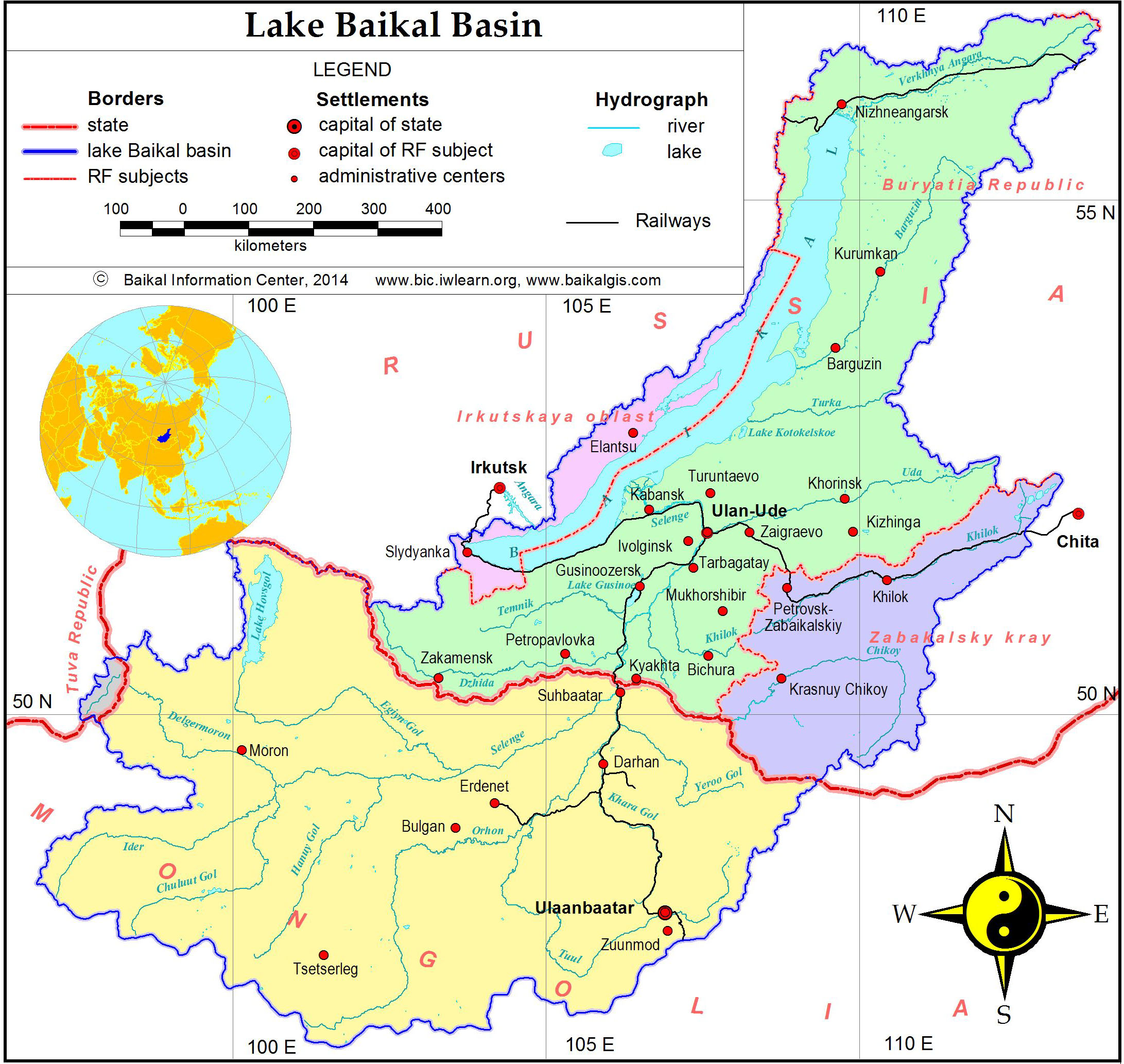
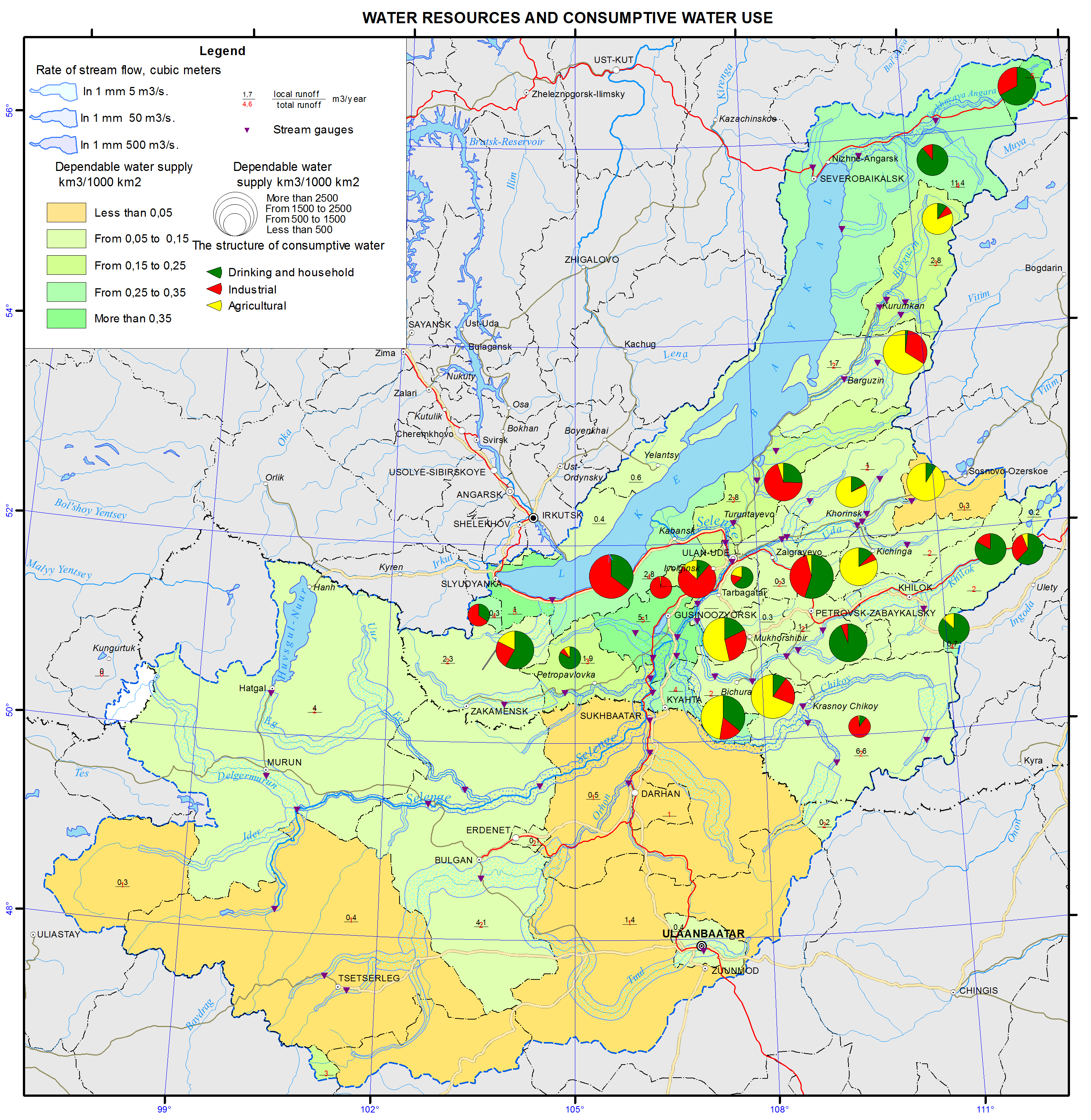
<p>The river network of the Baikal basin comprises about 10.4 thousand streams. The catchment area of Lake Baikal is asymmetrical; large river systems drain the south-eastern and north-eastern parts of the basin. The most significant river systems are the Selenga river and its right tributaries, namely, the Chikoy, Khilok, and Uda rivers, as well as the Barguzin and Upper Angara rivers. About 53% of river waters are formed in the territory of the Republic of Buryatia, 27% ​​- in the territory of Mongolia, 16% - in the territory of Zabaikalsky krai, and 4% - in Irkutsk oblast. Annually about 60 km<sup>3</sup>of water flow in and out of Lake Baikal with water streams and through the Angara river.</p>
<p>The origins of most rivers are located on slopes of mountain ranges at altitudes of 1200-1400 m. Therefore, in the upper reaches, and for many rivers along their entire length, they are of mountain character. Riverbeds with deep erosional incisions are rocky. Within the greater part of their valleys a floodplain is almost absent. Only large rivers in the middle and lower reaches have a character close to the plain one [Hydroclimate… , 2013].</p>
<p>The most ancient river systems drain the western slopes of the mountains surrounding Lake Baikal; they are the Sarma, Buguldeika, and Anga rivers. The class of such systems also includes basins of the largest Selenga and Barguzin rivers. The river systems of the south-eastern and northern macroslopes of Lake Baikal, namely, the Utulik, Tyya, Upper Angara, Turka, etc., are relatively young.</p>
<p>Methods of structural hydrography were used to compile a map of the rate of stream flow. Calculations of the river flow were made for the entire river network of the basin and were based on the close connection between the structure of the river network and its average rate of stream flow at any point of the system [Amosova, Ilyicheva, and Korytny, 2012]. Based on topographic maps, a graph of the river network was constructed, and then structural parameters for each point of the confluence of streams were calculated. Structural modules, representing the ratio of the water flow rate (Q, m<sup>3</sup>/s) to the structural measure at the given point, were determined. Data of reference materials on all hydrometeorological sections on the average long-term runoff from 105 gauges served as initial hydrological information [Surface water resources ..., 1972; Hydrological ..., 1977].</p>
<p>The rate of stream flow of the river systems is shown as an along-riverbed scale band (curve). This technique is usually called the method of localized diagrams, which is a method of cartographic representation of phenomena that have a continuous or linear (band) distribution. In the present case, the curves are referred to a linear element of the space, i.e. to a riverbed. The curves are drawn on both sides of the riverbed; they are proportional to the stream flow. The width of the curves varies along the length of a river and at the points of confluence with tributaries, depending on their rate of stream flow. Three gradations of the rate of stream flow are distinguished due to the large range of water flow rates (more than 500 m<sup>3</sup>/s, 50-500 m<sup>3</sup>/s, and 5-50 m<sup>3</sup>/s), which largely corresponds to the division of rivers according to their size. The mapping starts with the average long-term water flow rate of at least 5 m<sup>3</sup>/s, as values of lower rate of stream flow are difficult to represent [Korytny, 2001].</p>
<p>Within the boundaries of the administrative units, the volumes of local and general stream flow are calculated. Available water supply of the territory with the local stream flow is shown using five gradations. Mountain areas with the river systems of the northern and southern parts of the Baikal depression are characterized by the largest water supply. Administrative units of the Mongolian part of the Selenga river basin are generally poorly provided with local resources of river flow (less than 0.05 and 0.05-0.15 km<sup>3</sup> per year).</p>
<p>The structure of water consumption is displayed using pie charts, the diameter of which corresponds to the volume of water consumption, and the area of sectors corresponds to the water use for various purposes, expressed as a percentage. On the whole, for the Baikal basin water consumption amounted to 502.050 thousand m<sup>3</sup> in 2011, of which 56.440 thousand m<sup>3 </sup>were taken for drinking and household purposes, 389.170 thousand m<sup>3</sup> - for production, and 56.440 thousand m<sup>3</sup>– for agricultural purposes. The main share of the river waters is drawn from the rivers of the Selenga basin. The largest consumers in the basin are the cities of Ulan-Ude and Severobaikalsk.<b></b></p>
<p align="center">References</p>
<p>Amosova, I.Yu., Ilyicheva, E.A., and Korytny, L.M. (2012). <i>Structural-and-hydrographic patterns of the river network structure of the Baikal Natural Territory.</i> www.channel2012.ru. Tomsk.</p>
<p><i>Hydrological regime of the Selenga basin rivers and methods of its calculation.</i> (1977). Ed. by V.A. Semenov and B. Myagmarzhav. Leningrad: Gidrometeoizdat, 237 p.</p>
<p><i>Hydroclimate studies of the Baikal Natural Territory.</i> (2013). Ed. by L.M. Korytny.  Novosibirsk: Akademicheskoe izd-vo “GEO”, 186 p.</p>
<p>Korytny, L.M. (1972). <i>The basin concept in nature management.</i> Irkutsk: Izd-vo IG SB RAS, 2001, 163 p.</p>
<p><i>Surface water resources of the USSR.</i> Vol. 16, issue 3. Leningrad: Gidrometeoizdat, 595 p.</p>]]></content:encoded>
    <dc:publisher>No publisher</dc:publisher>
    <dc:creator>Alexander Ayurzhanaev</dc:creator>
    <dc:rights></dc:rights>
    <dc:date>2014-10-08T03:20:00Z</dc:date>
    <dc:type>Page</dc:type>
  </item>


  <item rdf:about="http://bic.iwlearn.org/en/documents/documents/complex-reports/2013/water-quality-of-the-kharaa-river-basin-mongolia-pollution-threats-and-hotspots-assessment">
    <title>Water quality of the Kharaa river basin, Mongolia: pollution threats and hotspots assessment.</title>
    <link>http://bic.iwlearn.org/en/documents/documents/complex-reports/2013/water-quality-of-the-kharaa-river-basin-mongolia-pollution-threats-and-hotspots-assessment</link>
    <description></description>
    <content:encoded xmlns:content="http://purl.org/rss/1.0/modules/content/"><![CDATA[<p style="text-align: center; "><img class="image-inline" src="../../../../../resolveuid/bf9fa65bc0ed44dc86bb716ff5d635d6/@@images/image/preview" /></p>
<p>This report presents results of water quality assessment of the Selenge River Basin (Mongolia),with specific emphasis on assessment of pollution threats and pollution hotspots in the KharaaRiver Basin.</p>
<p>The study was conducted in the framework of UNESCO-executed activities under the UNDPGEFProject on “Integrated Natural Resources Management in the Baikal Basin TransboundaryEcosystem” (Mongolia and Russia). The project objective is to spearhead integrated naturalresources management of Lake Baikal Basin, ensuring ecosystem resilience and reduced waterquality threats in the context of sustainable economic development. The project is executed byUNOPS. UNESCO’s International Hydrological Programme (IHP) is an international executingpartner for the project.This study was carried out by UNESCO, in collaboration with the National Water Committee ofMongolia, Mongolia Water Forum-Uskhelts and a national team of experts.</p>
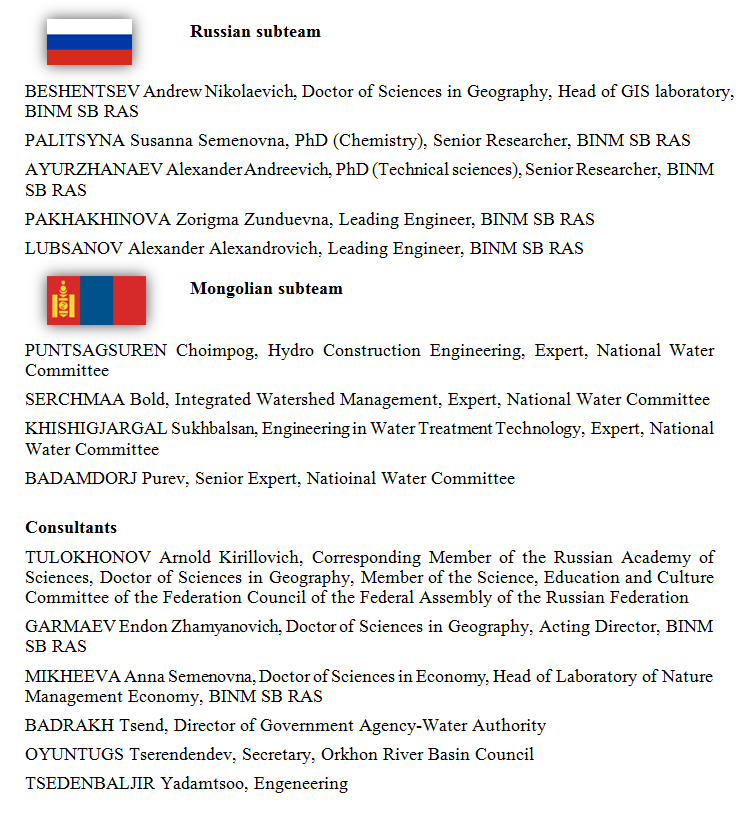
<p>The study and reportpreparation was coordinated by Sarantuyaa Zandaryaa, Division of Water Sciences, UNESCO.The national team of experts was coordinated by Tsend Badrakh, National Water Committee ofMongolia, and comprised the following experts: Batimaa Punsalmaa, Mongolia Water Forum- Uskhelts; Erdenbayar Yadamsuren, Central Laboratory for Environment and Meteorology;Tumurstooj Dashdorj, Institute of Meteorology, Hydrology and Environment; OyuntugsTserendendev, National Water Committee of Mongolia; and Davaadalai Batnasan, MongoliaWater Forum-Uskhelts. Tserendolgor Munkhtsetseg, Mongolia Water Forum - Uskhelts, assistedin the preparation of the report for publishing.</p>
<p><a href="http://bic.iwlearn.org/en/documents-1/water-quality-of-the-kharaa-river-basin-mongolia-pollution-threats-and-hotspots-assessment" class="internal-link">Download file</a></p>
<p> </p>]]></content:encoded>
    <dc:publisher>No publisher</dc:publisher>
    <dc:creator>Alexander Ayurzhanaev</dc:creator>
    <dc:rights></dc:rights>
    <dc:date>2015-03-02T01:32:30Z</dc:date>
    <dc:type>Page</dc:type>
  </item>


  <item rdf:about="http://bic.iwlearn.org/en/documents-1/water-quality-of-the-kharaa-river-basin-mongolia-pollution-threats-and-hotspots-assessment">
    <title>Water Quality of the Kharaa River Basin, Mongolia: Pollution threats and hotspots assessment</title>
    <link>http://bic.iwlearn.org/en/documents-1/water-quality-of-the-kharaa-river-basin-mongolia-pollution-threats-and-hotspots-assessment</link>
    <description></description>
    
    <dc:publisher>No publisher</dc:publisher>
    <dc:creator>Alexander Ayurzhanaev</dc:creator>
    <dc:rights></dc:rights>
    <dc:date>2015-03-02T01:24:37Z</dc:date>
    <dc:type>File</dc:type>
  </item>


</rdf:RDF>