<?xml version="1.0" encoding="utf-8" ?>
<rdf:RDF xmlns:rdf="http://www.w3.org/1999/02/22-rdf-syntax-ns#" xmlns:dc="http://purl.org/dc/elements/1.1/" xmlns:syn="http://purl.org/rss/1.0/modules/syndication/" xmlns="http://purl.org/rss/1.0/">


<channel rdf:about="http://bic.iwlearn.org/search_rss">
  <title>Байкальский информационный центр</title>
  <link>http://bic.iwlearn.org</link>

  <description>
    
            These are the search results for the query, showing results 201 to 215.
        
  </description>


  <image rdf:resource="http://bic.iwlearn.org/logo.png"/>

  <items>
    <rdf:Seq>
      
        <rdf:li rdf:resource="http://bic.iwlearn.org/en/friends/irkutsk-regional-public-organization-baikal-environment-network-association-russia-irkutsk-region"/>
      
      
        <rdf:li rdf:resource="http://bic.iwlearn.org/en/friends/irkutsk-city-public-organization-baikal-environmental-education-russia-irkutsk-region"/>
      
      
        <rdf:li rdf:resource="http://bic.iwlearn.org/en/friends/irkutsk-regional-branch-russian-geographical-society-russia-irkutsk-region"/>
      
      
        <rdf:li rdf:resource="http://bic.iwlearn.org/en/documents/state-of-the-environment-report-the-lake-baikal-basin-1/general-conditions-of-the-baikal-lake-basin/introduction"/>
      
      
        <rdf:li rdf:resource="http://bic.iwlearn.org/en/documents-1/international-scientific-conference-deltas-genesis-dynamics-modelling-and-sustainable-development-english"/>
      
      
        <rdf:li rdf:resource="http://bic.iwlearn.org/en/documents/documents/proceedings/2014/international-scientific-conference-deltas-genesis-dynamics-modelling-and-sustainable-development-english-1"/>
      
      
        <rdf:li rdf:resource="http://bic.iwlearn.org/en/documents/documents/proceedings/2013/integrated-water-management-plan-mongolia-english"/>
      
      
        <rdf:li rdf:resource="http://bic.iwlearn.org/en/documents/documents/state-reports/2012/integrated-water-management-natioinal-report-volume-iii-mongolian"/>
      
      
        <rdf:li rdf:resource="http://bic.iwlearn.org/en/documents/documents/state-reports/2012/integrated-water-management-natioinal-report-volume-ii-english"/>
      
      
        <rdf:li rdf:resource="http://bic.iwlearn.org/en/documents/documents/state-reports/2012/integrated-water-management-natioinal-report-volume-i-english"/>
      
      
        <rdf:li rdf:resource="http://bic.iwlearn.org/en/documents/documents/complex-reports/2010/integrated-water-management-model-on-the-selenge-river-basin-english"/>
      
      
        <rdf:li rdf:resource="http://bic.iwlearn.org/en/atlas/atlas/107-injuries-and-toxications-map/injuries-and-toxications-map"/>
      
      
        <rdf:li rdf:resource="http://bic.iwlearn.org/en/atlas/atlas/102-infectious-and-parasitic-diseases-map/infectious-and-parasitic-diseases-map"/>
      
      
        <rdf:li rdf:resource="http://bic.iwlearn.org/en/atlas/atlas/64-industry-and-its-environmental-impact-map/industry-and-its-environmental-impact-map"/>
      
      
        <rdf:li rdf:resource="http://bic.iwlearn.org/en/documents/documents/papers/Increment%20annual%20rings%20of%20Khentei-Chikoy%20highlands%20Pinus%20Sylvestris%20L.%20trees%20-rus.pdf"/>
      
    </rdf:Seq>
  </items>

</channel>


  <item rdf:about="http://bic.iwlearn.org/en/friends/irkutsk-regional-public-organization-baikal-environment-network-association-russia-irkutsk-region">
    <title>Irkutsk regional public organization «Baikal environment network association» (Russia, Irkutsk region)</title>
    <link>http://bic.iwlearn.org/en/friends/irkutsk-regional-public-organization-baikal-environment-network-association-russia-irkutsk-region</link>
    <description></description>
    <content:encoded xmlns:content="http://purl.org/rss/1.0/modules/content/"><![CDATA[<p align="center"><b>IRKUTSK REGIONAL PUBLIC ORGANIZATION</b></p>
<p align="center"><b>«</b><b>BAIKAL ENVIRONMENT NETWORK ASSOCIATION</b><b>»</b></p>
<p align="center"><b> </b></p>
<p><span style="text-decoration: underline;">Contact information:</span></p>
<p>664082, Irkutsk, m / p Universitetsky, 92-93</p>
<p>Tel. / Fax: +7 (3952) 51-20-82</p>
<p>E-mail: elena.kuzevanova@gmail.com</p>
<p>Website: www.ecosystema2008.narod.ru</p>
<p><span style="text-decoration: underline;">Director</span>: Kuzevanova Elena Nikolaevna</p>
<p><span style="text-decoration: underline;">Year of establishment:</span> September 1, 2000</p>
<p><span style="text-decoration: underline;">The purposes of creation:</span> the continuation of the ecological, educational, educational, informational activities initiated members of the organization in the international project TACIS «Ecological Information and Public Awareness Promotion in the Lake Baikal Region» (1998-2000 gg.)</p>
<p><span style="text-decoration: underline;">Main activities</span></p>
<p>- Participate in the development, testing and implementation of environmental programs, learning and teaching materials for pre-school, school and higher education, advanced training;</p>
<p>- Promotion of a population environmentally oriented of attitudes, traditions and skills;</p>
<p>- Promoting public access to information, including by means of modern communication technologies;</p>
<p>- Partnership in the field of information and educational exchange with public education and environmental organizations, including international ones;</p>
<p>- Development, publication and implementation of programs, training manuals Baykalovedeniyu and ecology.</p>
<p><span style="text-decoration: underline;">Implementation of projects</span></p>
<p>Of 2009-2010. - Grant «Baikal school for young researchers for people living in remote areas of the Irkutsk Region»;</p>
<p>2010 - The project «Preparation and publication of a special course» of Baykalovedenie. Living world of Lake Baikal. Man and the Baikal. 6 (7) classes» (E.N. Kuzevanova authors, V.N. Sergeev);</p>
<p>2011 - present - preparation and participation in the regional experimental testing programs Baykalovedenie in educational institutions of the Irkutsk region;</p>
<p>2012 - Development and publication of a manual «Baikal fun» (authors T.N. Kliment'ev, N.V. Stenina);</p>
<p>2013 - preparation and publication together with the Baikal Museum ISC SB RAS methodological guide for a special course on baykalovedeniyu "Contour maps of Lake Baikal" (by the development of E.N. Kuzevanova).</p>
<p><span style="text-decoration: underline;">Up, Lessons and Prospects</span></p>
<p>The successful operation of the organization - the result of many years of cooperation with research institutes of the Irkutsk Scientific Center of the Russian Academy of Sciences, specialists of ministries and departments of the Irkutsk region: the Ministry of Ecology and Natural Resources, the Legislative Assembly, the Ministry of Education and its departments, the Government of</p>
<p>Irkutsk region, international educational and environmental projects, participation in conferences, forums and exchange programs.</p>
<p>The main direction of the future work of the organization is to develop and improve the international exchange, training programs and workshops, courses Baykalovedenie, ecology, nature conservation.</p>]]></content:encoded>
    <dc:publisher>No publisher</dc:publisher>
    <dc:creator>Alexander Ayurzhanaev</dc:creator>
    <dc:rights></dc:rights>
    <dc:date>2015-02-06T07:01:18Z</dc:date>
    <dc:type>Page</dc:type>
  </item>


  <item rdf:about="http://bic.iwlearn.org/en/friends/irkutsk-city-public-organization-baikal-environmental-education-russia-irkutsk-region">
    <title>Irkutsk city -public organization «Baikal environmental education» (Russia, Irkutsk region)</title>
    <link>http://bic.iwlearn.org/en/friends/irkutsk-city-public-organization-baikal-environmental-education-russia-irkutsk-region</link>
    <description></description>
    <content:encoded xmlns:content="http://purl.org/rss/1.0/modules/content/"><![CDATA[<p align="center"><b>IRKUTSK CITY -PUBLIC ORGANIZATION</b></p>
<p align="center"><b>«BAIKAL ENVIRONMENTAL EDUCATION»</b></p>
<p align="center"><b> </b></p>
<p><span style="text-decoration: underline;">Contact information:</span></p>
<p>664056, Irkutsk, Sverdlovsk district, Mukhina st, 2 and</p>
<p>Tel. (3952) 41-98-61</p>
<p>E-mail: igoobep@rambler.ru</p>
<p><span style="text-decoration: underline;">Director:</span> Markov Sergey Yurievich</p>
<p><span style="text-decoration: underline;">The purposes of creation:</span> education and the formation of public ecological and patriotic consciousness in the field of wildlife, culture, historical and geological sites.</p>
<p><span style="text-decoration: underline;">Main activities:</span> creation and distribution of training and education, environmental, ethnographic, geographic, and other picture, video and software for educational institutions and anyone interested in cinema as a means of teaching and learning. Seminars, courses on the theory of the subject and field days to practice shooting.</p>
<p>The organization's activities carried out throughout the Irkutsk region and Buryatia.</p>]]></content:encoded>
    <dc:publisher>No publisher</dc:publisher>
    <dc:creator>Alexander Ayurzhanaev</dc:creator>
    <dc:rights></dc:rights>
    <dc:date>2015-02-06T06:58:07Z</dc:date>
    <dc:type>Page</dc:type>
  </item>


  <item rdf:about="http://bic.iwlearn.org/en/friends/irkutsk-regional-branch-russian-geographical-society-russia-irkutsk-region">
    <title>Irkutsk  regional branch Russian geographical society (Russia, Irkutsk region)</title>
    <link>http://bic.iwlearn.org/en/friends/irkutsk-regional-branch-russian-geographical-society-russia-irkutsk-region</link>
    <description></description>
    <content:encoded xmlns:content="http://purl.org/rss/1.0/modules/content/"><![CDATA[<p align="center"><strong>IRKUTSK  REGIONAL BRANCH</strong></p>
<p align="center"><strong>RUSSIAN GEOGRAPHICAL SOCIETY</strong></p>
<p><span style="text-decoration: underline;">Contact information:</span></p>
<p>664033, Irkutsk, Ulan-batarskaya st., 1, Institute of Geography of  V.B. Sochava</p>
<p>Tel. (3952) 42-64-60</p>
<p>Fax (3952) 42-27-17</p>
<p>E-mail: tyara@irigs.irk.ru; postman@irigs.irk.ru; kor@irigs.irk.ru</p>
<p>Website: http://irkutsk.rgo.ru/</p>
<p><span style="text-decoration: underline;">Chairman</span>: Korytny Leonid Markusovich</p>
<p><span style="text-decoration: underline;">Scientific Secretary:</span> Myasnikov Svetlana Ivanovna</p>
<p style="text-align: center; "><img class="image-inline" src="../../resolveuid/69c84b05102a4c48997c7b418dd2c406/@@images/image/preview" /></p>
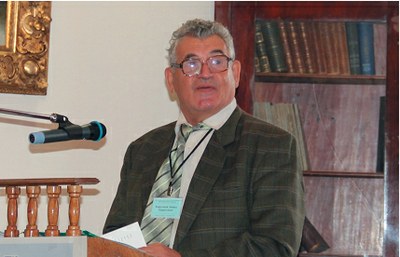
<p align="center">Chairman of the IRB RGS Leonid Markusovich Korytny</p>
<p>East-Siberian department of the Imperial Russian Geographical Society was founded in 1851 on the initiative of Governor N.N. Muravev (later Muravev-Amursky). It was formed only six years after the organization of the Geographical Society and has long been one of the most powerful centers for the study of nature, geography, ethnography, the Far East and Siberia.</p>
<p><span style="text-decoration: underline;">The main activities:</span> promotion of local history and geographical knowledge. Members of the Irkutsk branch actively published, hold meetings devoted to geographical problems. Kernel compartment is at the Institute of Geography of the Russian Academy of Sciences, Irkutsk regional museum. Actively involved in the work of the Faculty of History of Irkutsk State University, Mining Faculty of Irkutsk State Technical University, Department of Geography teaching academy.</p>
<p><span style="text-decoration: underline;">Implementation of projects</span></p>
<p>Chairman of the Board of Trustees, the governor of Irkutsk region Sergey Eroschenko noted that in 2013, the department has successfully implemented the planned program of activities.</p>
<p>Support regional Board of Trustees in 2014 will have 15 projects totaling 1,365,000 rubles. «Priority is given to school local history projects, and projects of the «heartland» of the region – Ust- Kut, Zhigalovo Zalarinsky District», - said Leonid Markusovich.</p>]]></content:encoded>
    <dc:publisher>No publisher</dc:publisher>
    <dc:creator>Alexander Ayurzhanaev</dc:creator>
    <dc:rights></dc:rights>
    <dc:date>2015-02-06T06:55:00Z</dc:date>
    <dc:type>Page</dc:type>
  </item>


  <item rdf:about="http://bic.iwlearn.org/en/documents/state-of-the-environment-report-the-lake-baikal-basin-1/general-conditions-of-the-baikal-lake-basin/introduction">
    <title>Introduction</title>
    <link>http://bic.iwlearn.org/en/documents/state-of-the-environment-report-the-lake-baikal-basin-1/general-conditions-of-the-baikal-lake-basin/introduction</link>
    <description></description>
    <content:encoded xmlns:content="http://purl.org/rss/1.0/modules/content/"><![CDATA[<p align="center"><strong>INTRODUCTION</strong><span> </span></p>
<p style="text-align: justify; ">Lake Baikal was included in the world heritage list by a UNESCO resolution in 1996. Thereby Russia and Mongolia together with the world community pledged to protect the lake. The lake and the adjacent area inhabited by more than 3 million people have all the necessary resources for the people in the region to be spiritually and materially wealthy. Therefore, a modern high-tech economy needs to be build that would support a high standard of living and environmentally sustainable development of the unique region. Among other measures aimed at achieving that, the local citizens and guests should be provided with reliable and objective information about the state of the environment, economy and social sphere in the region. The present report was written to serve the purpose.</p>
<p style="text-align: justify; ">An effective policy in the field of environmental protection and rational use of natural resources within the transboundary basin of Lake Baikal can be securely implemented only if a common information space is established over the two countries. The present report is the first attempt to combine information resources of the Russian Federation and Mongolia for creating a complete socio-natural picture of the great lake’s geosystem.</p>
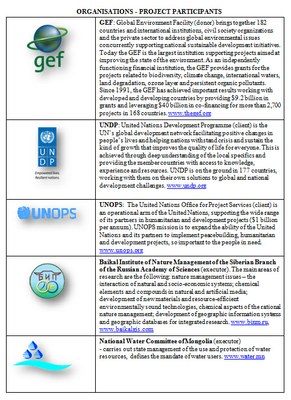
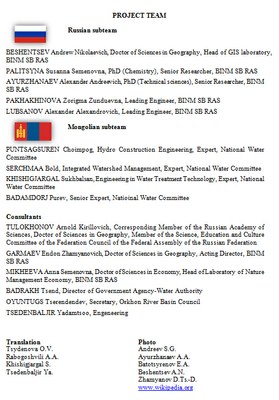
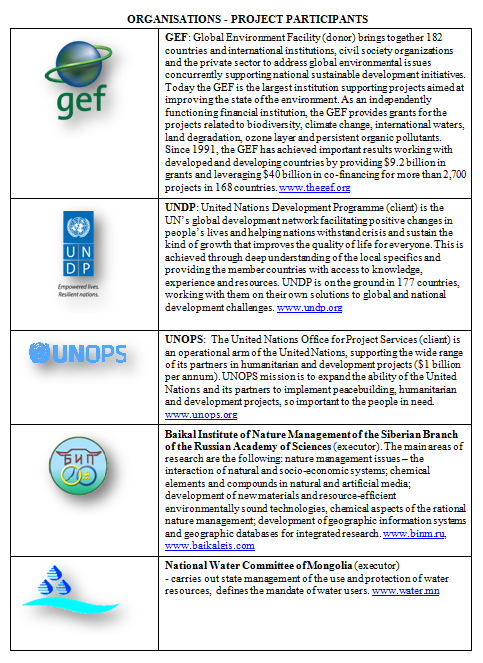
<p style="text-align: justify; ">The report was created upon request and with the assistance from the United Nations Development Programme and Global Environment Facility aimed at facilitating the integrated management of natural resources within Lake Baikal basin for achieving ecosystem resilience and improving water quality within the wider context of sustainable development. With the purpose of creating the report, a Russian-Mongolian team was formed consisting of highly qualified researchers and government officials dealing with the issues of sustainable development of the transboundary area.</p>
<p style="text-align: justify; ">The content of the report is based on the Russian and Mongolian official documents published in 2012-2014 – state reports on the state of the environment, strategic reports - as well as fundamental and applied research conducted in the frameworks of the UNDP project «Integrated management of natural resources of the transboundary ecosystem of Lake Baikal»</p>
<p style="text-align: center; "><img class="image-inline" src="../../../resolveuid/1f745f667d174ca082ed8c80fa658df8/@@images/image/preview" /></p>
<p style="text-align: center; "><img class="image-inline" src="../../../resolveuid/944f7e1cba1947f4b21a3805a5a2dfa0/@@images/image/preview" /></p>
<p style="text-align: center; "><a href="http://bic.iwlearn.org/en/documents/photos/copy45_of_.jpg" class="internal-link">Open full size</a></p>
<p style="text-align: center; "><img class="image-inline" src="../../../resolveuid/cf18dbe37c794a0c9a2a65302d7e93d4/@@images/image/preview" /></p>
<p style="text-align: center; "><a href="http://bic.iwlearn.org/en/documents/photos/copy46_of_.jpg" class="internal-link">Open full size</a></p>
<p align="center"> </p>
<p align="center"><strong>THE LIST OF ABBREVIATIONS</strong></p>
<p> </p>
<p>BINM Baikal Institute of Nature Management</p>
<p>BNT Baikal Natural Territory</p>
<p>BPPM Baikalsk Pulp and Paper Mill</p>
<p>CEZ Central Ecological Zone</p>
<p>FSA Federal State Agency</p>
<p>GDP Gross Domestic Product</p>
<p>GEF Global Environment Facility</p>
<p>GIS Geo Information System</p>
<p>JSC Joint Stock Company</p>
<p>LLC Limited Liability Company</p>
<p>MECC Mongolian Environmental Civil Council</p>
<p>MNT Mongolian Tugrik</p>
<p>MPC Maximum Permissible Concentration</p>
<p>NGO Non-Governmental Organization</p>
<p>PM Particulate Matter</p>
<p>SB RAS Siberian Branch of the Russian Academy of Sciences</p>
<p>SEZ Special Economic Zone</p>
<p>SPNT Specially Protected Natural Territories</p>
<p>SPPM Selenginsk Pulp and Paper Mill</p>
<p>UES United Energy System</p>
<p>UNDP United Nations Development Programme</p>
<p>UNESCO United Nations Educational, Scientific and Cultural Organization</p>
<p>WHO World Health Organization</p>]]></content:encoded>
    <dc:publisher>No publisher</dc:publisher>
    <dc:creator>Zorigma</dc:creator>
    <dc:rights></dc:rights>
    <dc:date>2015-04-23T03:35:00Z</dc:date>
    <dc:type>Page</dc:type>
  </item>


  <item rdf:about="http://bic.iwlearn.org/en/documents-1/international-scientific-conference-deltas-genesis-dynamics-modelling-and-sustainable-development-english">
    <title>International scientific conference «Deltas genesis, dynamics, modelling and sustainable development» (english).</title>
    <link>http://bic.iwlearn.org/en/documents-1/international-scientific-conference-deltas-genesis-dynamics-modelling-and-sustainable-development-english</link>
    <description></description>
    
    <dc:publisher>No publisher</dc:publisher>
    <dc:creator>Alexander Ayurzhanaev</dc:creator>
    <dc:rights></dc:rights>
    <dc:date>2015-02-27T07:40:48Z</dc:date>
    <dc:type>File</dc:type>
  </item>


  <item rdf:about="http://bic.iwlearn.org/en/documents/documents/proceedings/2014/international-scientific-conference-deltas-genesis-dynamics-modelling-and-sustainable-development-english-1">
    <title>International scientific conference «Deltas genesis, dynamics, modelling and sustainable development» (english).</title>
    <link>http://bic.iwlearn.org/en/documents/documents/proceedings/2014/international-scientific-conference-deltas-genesis-dynamics-modelling-and-sustainable-development-english-1</link>
    <description></description>
    <content:encoded xmlns:content="http://purl.org/rss/1.0/modules/content/"><![CDATA[<p style="text-align: center; "><img class="image-inline" src="../../../../../resolveuid/52d5ec9a9142435886a3d6d7f2fd7db5/@@images/image/preview" /></p>
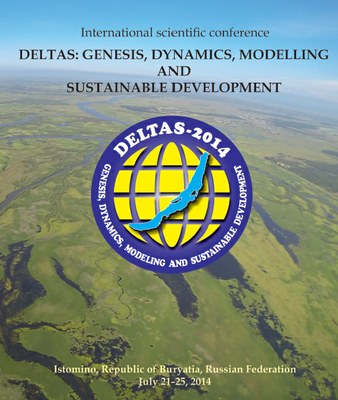
<p>The Conference allowed scientists and experts to get acquainted with the latest worldachievements in the field of hydrology, geomorphology and biogeochemistry of river delta systems.The participants of the conference are the world's leading schools on river deltaic systems.The participants presented papers on theoretical and experimental developments in the field of deltaformation processes, river morphology, engineering design, biogeochemistry, ecology andlimnology. The works on mathematical modeling in deltaic systems were well represented too.</p>
<p><a href="http://bic.iwlearn.org/en/documents-1/international-scientific-conference-deltas-genesis-dynamics-modelling-and-sustainable-development-english" class="internal-link">Download file</a></p>]]></content:encoded>
    <dc:publisher>No publisher</dc:publisher>
    <dc:creator>Alexander Ayurzhanaev</dc:creator>
    <dc:rights></dc:rights>
    <dc:date>2015-02-27T07:42:11Z</dc:date>
    <dc:type>Page</dc:type>
  </item>


  <item rdf:about="http://bic.iwlearn.org/en/documents/documents/proceedings/2013/integrated-water-management-plan-mongolia-english">
    <title>Integrated Water Management Plan, MONGOLIA (English)</title>
    <link>http://bic.iwlearn.org/en/documents/documents/proceedings/2013/integrated-water-management-plan-mongolia-english</link>
    <description></description>
    
    <dc:publisher>No publisher</dc:publisher>
    <dc:creator>puntsagsurenchoimpog@yahoo.com</dc:creator>
    <dc:rights></dc:rights>
    <dc:date>2014-12-30T01:31:38Z</dc:date>
    <dc:type>File</dc:type>
  </item>


  <item rdf:about="http://bic.iwlearn.org/en/documents/documents/state-reports/2012/integrated-water-management-natioinal-report-volume-iii-mongolian">
    <title>Integrated Water Management Natioinal Report, Volume III (Mongolian)</title>
    <link>http://bic.iwlearn.org/en/documents/documents/state-reports/2012/integrated-water-management-natioinal-report-volume-iii-mongolian</link>
    <description></description>
    
    <dc:publisher>No publisher</dc:publisher>
    <dc:creator>puntsagsurenchoimpog@yahoo.com</dc:creator>
    <dc:rights></dc:rights>
    <dc:date>2014-12-30T01:01:49Z</dc:date>
    <dc:type>File</dc:type>
  </item>


  <item rdf:about="http://bic.iwlearn.org/en/documents/documents/state-reports/2012/integrated-water-management-natioinal-report-volume-ii-english">
    <title>Integrated Water Management Natioinal Report, Volume II (English)</title>
    <link>http://bic.iwlearn.org/en/documents/documents/state-reports/2012/integrated-water-management-natioinal-report-volume-ii-english</link>
    <description></description>
    
    <dc:publisher>No publisher</dc:publisher>
    <dc:creator>puntsagsurenchoimpog@yahoo.com</dc:creator>
    <dc:rights></dc:rights>
    <dc:date>2014-12-30T01:00:01Z</dc:date>
    <dc:type>File</dc:type>
  </item>


  <item rdf:about="http://bic.iwlearn.org/en/documents/documents/state-reports/2012/integrated-water-management-natioinal-report-volume-i-english">
    <title>Integrated Water Management Natioinal Report, Volume I (English)</title>
    <link>http://bic.iwlearn.org/en/documents/documents/state-reports/2012/integrated-water-management-natioinal-report-volume-i-english</link>
    <description></description>
    
    <dc:publisher>No publisher</dc:publisher>
    <dc:creator>puntsagsurenchoimpog@yahoo.com</dc:creator>
    <dc:rights></dc:rights>
    <dc:date>2014-12-30T00:58:47Z</dc:date>
    <dc:type>File</dc:type>
  </item>


  <item rdf:about="http://bic.iwlearn.org/en/documents/documents/complex-reports/2010/integrated-water-management-model-on-the-selenge-river-basin-english">
    <title>Integrated Water Management Model on the Selenge River Basin (English)</title>
    <link>http://bic.iwlearn.org/en/documents/documents/complex-reports/2010/integrated-water-management-model-on-the-selenge-river-basin-english</link>
    <description></description>
    
    <dc:publisher>No publisher</dc:publisher>
    <dc:creator>puntsagsurenchoimpog@yahoo.com</dc:creator>
    <dc:rights></dc:rights>
    <dc:date>2014-12-25T03:09:46Z</dc:date>
    <dc:type>File</dc:type>
  </item>


  <item rdf:about="http://bic.iwlearn.org/en/atlas/atlas/107-injuries-and-toxications-map/injuries-and-toxications-map">
    <title>Injuries and toxications map</title>
    <link>http://bic.iwlearn.org/en/atlas/atlas/107-injuries-and-toxications-map/injuries-and-toxications-map</link>
    <description></description>
    <content:encoded xmlns:content="http://purl.org/rss/1.0/modules/content/"><![CDATA[<p><img class="image-inline" src="../../../resolveuid/b1536411b08143dcaccefe57abf13fe3/@@images/image/preview" /></p>
<p><a href="http://bic.iwlearn.org/en/atlas/photos/copy_of__107_Injuriesandtoxications.png" class="internal-link">Open full size</a></p>
<p align="center"><strong>Healthcare</strong><strong> </strong></p>
<p align="center"><strong> </strong></p>
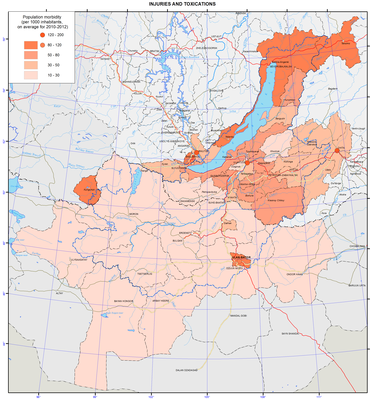
<p>Harsh climatic conditions across the entire territory of the Baikal basin and the surface and ground water used for drinking and food purposes that do not meet the drinking water quality standards (first and foremost in Mongolia and Buryatia) coupled with atmospheric emissions from industrial facilities and motor vehicles (in some parts of the territory) are responsible for the state of human health influencing the organization of healthcare. The ecological situation becomes substantially worse during winter months, which is encouraged by the topography of the terrain. In Mongolia, the spring period is very hard time to bear, with sharp temperature differences, abrupt variations in atmospheric pressure, and frequent dust and magnetic storms.</p>
<p class="NormalWeb">The organizational pattern of healthcare in Russia and Mongolia has much in common. This is a result of the cooperation of the two countries in this sphere and the fact that medical education and healthcare in Mongolia are organized using Russian experience. Today, Mongolian medical facilities operate on the principles of the state-private partnership concurrent with the demonopolization of the state system of medical services. The country has a mandatory and voluntary medical insurance system, in which state-owned and private medical institutions take part. The country also has various health institutes and centers.</p>
<p class="a">The territory of the Baikal basin is experiencing a deficit of medical workers. As of 2012, the availability of physicians varied from 13.8 to 30.1 per 10,000 people in Russian districts and from 16.1 to 29.0 per 10,000 people in Mongolian aimags. The availability of nurses varies from 25.1 to 112.2 per 10,000 people in Russian districts and from 26.4 to 38.2 per 10,000 people in Mongolian aimags. In Ulan-Ude, these indicators have the values of 53.9 and 117.3, while in Ulaanbaatar – 44.1 and 41.2, respectively.</p>
<p>The ratio of doctors and nurses in the Russian part of the basin is between 1:2 to 1:4, while in the Mongolian part it does not exceed 1:2. The World Health Organization (WHO) recommends that this ratio should be 1:4. A narrowing of this indicator causes imbalances in the healthcare system thereby limiting possibilities for further development of the after-treatment, casework and rehabilitation services.</p>
<p>Target indicators of healthcare activity are the standard volume of medical care per inhabitant. Currently, there are plans to decrease the per capita volume of in-patient services and increase the per capita volume of the hospital-replacing care. Accordingly, the number of hospital beds available 27/7 will decrease, while the number of beds in day hospitals will grow. Overall, the available number of hospital beds complies with the calculated standards and meets the demand of the population for the in-patient medical aid.</p>
<p class="ConsPlusNormal">As of today, in Russia, there is an array of problems relating to the high level of illnesses and disability incidences among the population, and these indicators are continuously growing. Such a situation is the result of inadequate preventive measures. Another important contributing factor to this situation is the increase of the proportion of elderly population and the improved effectiveness of illness detection using new diagnostic methods in the process of the increased number of medical checkups.</p>
<p class="ConsPlusNormal">The leading illnesses in the structure of morbidity are respiratory illnesses, bloodstream, eye, and digestive and musculoskeletal system diseases, as well as traumas. For many years, circulatory system diseases, neoplasms, and injuries have been the main causes of mortality and disability among the population.</p>
<p class="a">A complex of anthropogenic environmental factors contributes to the growth of morbidity and disability rates among the population with the most important one being air pollution. According to the WHO, atmospheric air pollution is the cause of up to 23% of all illnesses. The amount of pollutant emissions in the atmosphere produced by static sources in different administrative divisions in the Baikal basin differs by more than a thousand times. The most polluted air in the Baikal basin is in the Selenginsky district of Buryatia.</p>
<p>The health of the population and further development of healthcare depend on ecological, social, and economic factors. These problems can be resolved only through comprehensive approaches to the improvement of the quality of life of the population.</p>
<p>The strategic goal of the healthcare systems of Russia and Mongolia is to build a system, which ensures the quality and accessibility of medical services, primarily first aid, and increases the efficiency of medical services, based on the improvement of territorial planning of healthcare. The volume, types, and quality of these services should correspond to the rate of morbidity, population requirements, and the latest achievements of medical science, based on perfecting the system of territorial planning of public health services.</p>]]></content:encoded>
    <dc:publisher>No publisher</dc:publisher>
    <dc:creator>Alexander Ayurzhanaev</dc:creator>
    <dc:rights></dc:rights>
    <dc:date>2014-10-14T02:45:00Z</dc:date>
    <dc:type>Page</dc:type>
  </item>


  <item rdf:about="http://bic.iwlearn.org/en/atlas/atlas/102-infectious-and-parasitic-diseases-map/infectious-and-parasitic-diseases-map">
    <title>Infectious and parasitic diseases map</title>
    <link>http://bic.iwlearn.org/en/atlas/atlas/102-infectious-and-parasitic-diseases-map/infectious-and-parasitic-diseases-map</link>
    <description></description>
    <content:encoded xmlns:content="http://purl.org/rss/1.0/modules/content/"><![CDATA[<p><img class="image-inline" src="../../../resolveuid/9301c927659a44f18468af82d153b030/@@images/image/preview" /></p>
<p><a href="http://bic.iwlearn.org/en/atlas/photos/copy_of__102_Infectiousandparasiticdiseases.png" class="internal-link">Open full size</a></p>
<p align="center"><strong>Healthcare</strong><strong> </strong></p>
<p align="center"><strong> </strong></p>
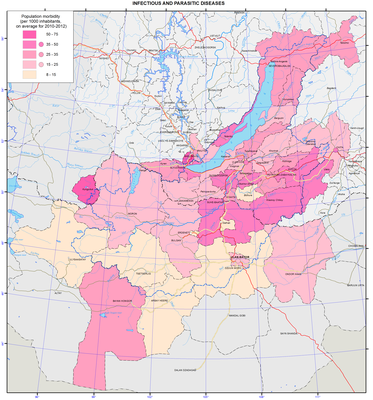
<p>Harsh climatic conditions across the entire territory of the Baikal basin and the surface and ground water used for drinking and food purposes that do not meet the drinking water quality standards (first and foremost in Mongolia and Buryatia) coupled with atmospheric emissions from industrial facilities and motor vehicles (in some parts of the territory) are responsible for the state of human health influencing the organization of healthcare. The ecological situation becomes substantially worse during winter months, which is encouraged by the topography of the terrain. In Mongolia, the spring period is very hard time to bear, with sharp temperature differences, abrupt variations in atmospheric pressure, and frequent dust and magnetic storms.</p>
<p class="NormalWeb">The organizational pattern of healthcare in Russia and Mongolia has much in common. This is a result of the cooperation of the two countries in this sphere and the fact that medical education and healthcare in Mongolia are organized using Russian experience. Today, Mongolian medical facilities operate on the principles of the state-private partnership concurrent with the demonopolization of the state system of medical services. The country has a mandatory and voluntary medical insurance system, in which state-owned and private medical institutions take part. The country also has various health institutes and centers.</p>
<p class="a">The territory of the Baikal basin is experiencing a deficit of medical workers. As of 2012, the availability of physicians varied from 13.8 to 30.1 per 10,000 people in Russian districts and from 16.1 to 29.0 per 10,000 people in Mongolian aimags. The availability of nurses varies from 25.1 to 112.2 per 10,000 people in Russian districts and from 26.4 to 38.2 per 10,000 people in Mongolian aimags. In Ulan-Ude, these indicators have the values of 53.9 and 117.3, while in Ulaanbaatar – 44.1 and 41.2, respectively.</p>
<p>The ratio of doctors and nurses in the Russian part of the basin is between 1:2 to 1:4, while in the Mongolian part it does not exceed 1:2. The World Health Organization (WHO) recommends that this ratio should be 1:4. A narrowing of this indicator causes imbalances in the healthcare system thereby limiting possibilities for further development of the after-treatment, casework and rehabilitation services.</p>
<p>Target indicators of healthcare activity are the standard volume of medical care per inhabitant. Currently, there are plans to decrease the per capita volume of in-patient services and increase the per capita volume of the hospital-replacing care. Accordingly, the number of hospital beds available 27/7 will decrease, while the number of beds in day hospitals will grow. Overall, the available number of hospital beds complies with the calculated standards and meets the demand of the population for the in-patient medical aid.</p>
<p class="ConsPlusNormal">As of today, in Russia, there is an array of problems relating to the high level of illnesses and disability incidences among the population, and these indicators are continuously growing. Such a situation is the result of inadequate preventive measures. Another important contributing factor to this situation is the increase of the proportion of elderly population and the improved effectiveness of illness detection using new diagnostic methods in the process of the increased number of medical checkups.</p>
<p class="ConsPlusNormal">The leading illnesses in the structure of morbidity are respiratory illnesses, bloodstream, eye, and digestive and musculoskeletal system diseases, as well as traumas. For many years, circulatory system diseases, neoplasms, and injuries have been the main causes of mortality and disability among the population.</p>
<p class="a">A complex of anthropogenic environmental factors contributes to the growth of morbidity and disability rates among the population with the most important one being air pollution. According to the WHO, atmospheric air pollution is the cause of up to 23% of all illnesses. The amount of pollutant emissions in the atmosphere produced by static sources in different administrative divisions in the Baikal basin differs by more than a thousand times. The most polluted air in the Baikal basin is in the Selenginsky district of Buryatia.</p>
<p>The health of the population and further development of healthcare depend on ecological, social, and economic factors. These problems can be resolved only through comprehensive approaches to the improvement of the quality of life of the population.</p>
<p>The strategic goal of the healthcare systems of Russia and Mongolia is to build a system, which ensures the quality and accessibility of medical services, primarily first aid, and increases the efficiency of medical services, based on the improvement of territorial planning of healthcare. The volume, types, and quality of these services should correspond to the rate of morbidity, population requirements, and the latest achievements of medical science, based on perfecting the system of territorial planning of public health services.</p>]]></content:encoded>
    <dc:publisher>No publisher</dc:publisher>
    <dc:creator>Alexander Ayurzhanaev</dc:creator>
    <dc:rights></dc:rights>
    <dc:date>2014-10-13T06:50:00Z</dc:date>
    <dc:type>Page</dc:type>
  </item>


  <item rdf:about="http://bic.iwlearn.org/en/atlas/atlas/64-industry-and-its-environmental-impact-map/industry-and-its-environmental-impact-map">
    <title>Industry and Its environmental impact map</title>
    <link>http://bic.iwlearn.org/en/atlas/atlas/64-industry-and-its-environmental-impact-map/industry-and-its-environmental-impact-map</link>
    <description></description>
    <content:encoded xmlns:content="http://purl.org/rss/1.0/modules/content/"><![CDATA[<p><img class="image-inline" src="../../../resolveuid/d05b4397c3f24c3bb86e32d2904c4076/@@images/image/preview" /></p>
<p><a href="http://bic.iwlearn.org/en/atlas/photos/copy_of__64_IndustryandItsEnvironmentalImpact.png" class="internal-link">Open full size</a></p>
<p align="center"><strong>Industrial and its impact on the environment</strong></p>
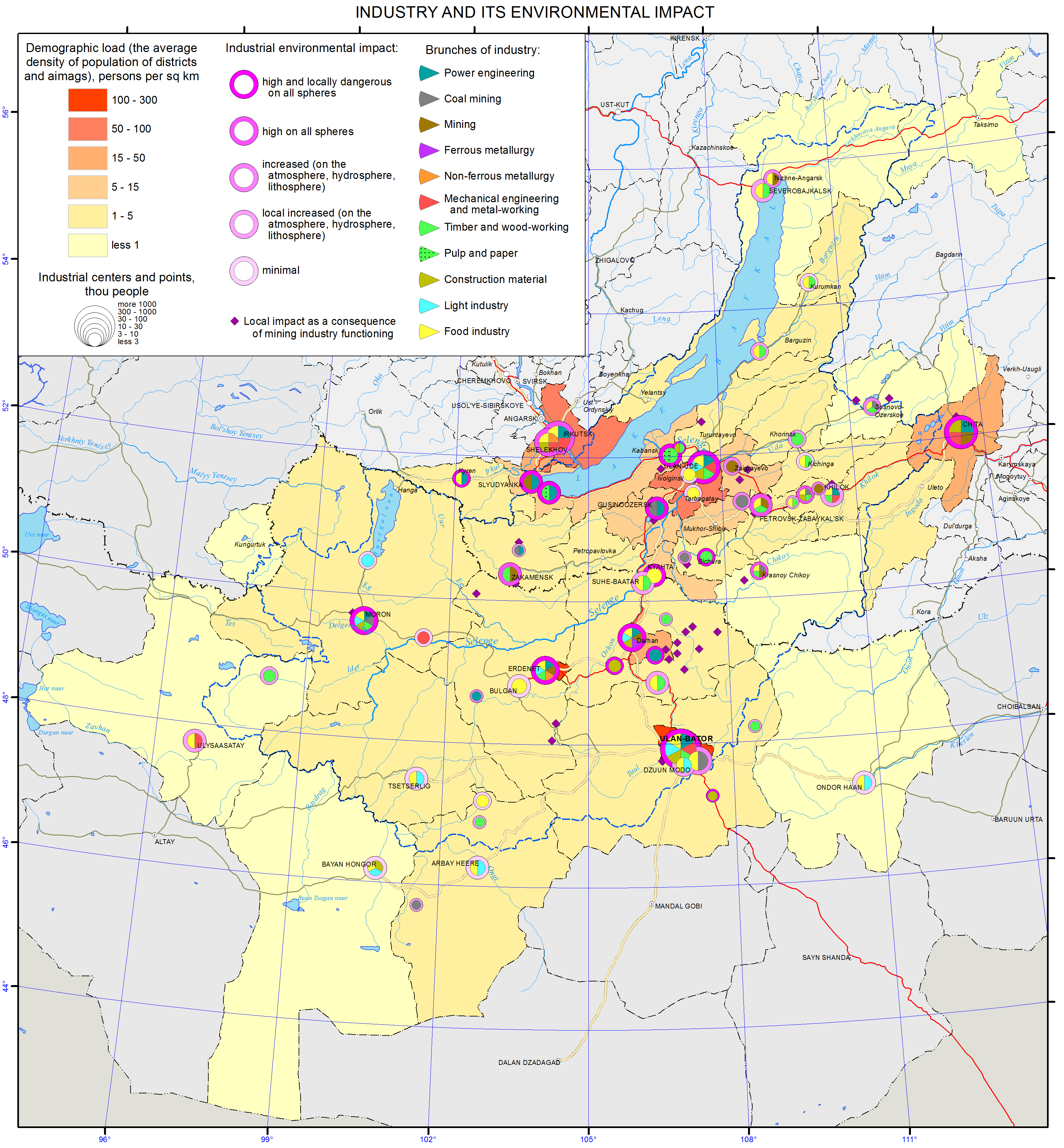
<p>Today, economic activity significantly influences the environment, and the main impact factor is the industry. The higher the concentration of industrial facilities, the more extensive the area of environmental changes is. This can be seen in the Baikal basin. Any change in one of the areas of the environment is reflected in the other (lithosphere disturbances indirectly affect the surface water and groundwater regimes, predetermining the dust and gas pollution, etc.).</p>
<p>The map “Industry and its impact on the environment” presents the results of the research of the industrial impact on the environment in the Baikal basin. The object of the map is an industrial center, as it is one of the most common forms of the territorial organization of industrial production representing a local group of companies (within the boundaries of a settlement).</p>
<p>The map depicts industrial centers with symbols. The symbol’s size shows the total population, the inner sectors – industry branches, circled sectors – the dominant impact on the environmental components. The areas disturbed by the mining industry (open-pits, waste heaps, dumps, etc.) and emissions (for large settlements) are shown separately. The areas with a maximum impact on the environment are identified based on the analysis of the industry’s impact on different environments.</p>
<p>The research results make it possible to draw the following conclusions.</p>
<p>The maximum industry impact on the environment is registered in the Republic of Buryatia. The impact on the environment is observed in all its settlements. The areas of the maximum negative impact on all environments are the Zakamensky, Kyakhtinsky, Gusinoozersky, Nizhne-Selenginsky and Ulan-Ude industrial hubs.</p>
<p>Major industries have negative impacts, e.g. the fuel and energy, mining, pulp and paper, and food industries. The main pollutants are the Ulan-Ude Central Heating Power Plant (CHPP)-1, Aviation Plant, Locomotive Repair Plant, glass factory, Selenginsky Pulp and Cardboard Mill, as well as light and food industries. Large and medium-sized waste dumps of consumer and industrial waste also significantly damage the environment [Impact...].</p>
<p>In Zabaikalsky krai, there is a local impact on the environment by the electrical energy, mining, and food industries. The largest area of a negative impact on the environment is the Chita industrial hub, where the main polluters are fuel-and-energy companies (the Chita Thermal Power Plant (TPP)-1 and TPP -2), mechanical engineering and metalworking plants, and transportation.</p>
<p>Industrial development in the part of Irkutsk oblast included into the Baikal basin is rather weak with the exception of the towns of Baikalsk and Slyudyanka. Here, the main polluters are mining (marble mining), transportation, and energy companies. In Baikalsk, the main source of pollution – the Baikalsk Pulp and Paper Mill – is currently closed, but the consequences of its activities in the form of pollution of the adjacent portion of the lake and the huge volume of stockpiled solid wastes still remain. Fuel and energy companies and transportation still significantly contribute to the air pollution. The administrative center of Irkutsk oblast – Irkutsk – has been continuously listed as one of the most polluted cities. The main air pollutants in Irkutsk are vehicle exhaust gas (52% of emissions) and unfiltered thermal power supply (46% of emissions). Manufacturing is responsible for about 2% of all emissions. Under certain circulatory patterns, some portion of atmospheric pollutants from Irkutsk can get into the Baikal basin and the lake’s water area. Therefore, according to the environmental zoning, this city is included into the zone of atmospheric impact. Irkutsk Aviation Plant is the main source of wastewater discharge into the Angara river, while the Irkutsk Furniture Factory — into the Irkut river. However, this pollution does not get into the Baikal catchment area. A growing number of unauthorized landfill sites around the city represents a particular problem. In the Olkhon district, the major source of environmental pollution is recreational activity resulting in the problem associated with the disposal of solid waste.</p>
<p>In Mongolia, among the main areas of industrial impact on the environment are industrial centers, where the majority of population is concentrated and industrial enterprises are located (Ulaanbaatar, Darkhan, Erdenet, etc.), as well as local mining areas and light industry companies (wool and leather processing). In Mongolia, the impact of industry on water resources is particularly acute. In the last 20 years, out of five thousand rivers and lakes 852 rivers and 1,131 lakes have dried up due to mining [Basayev]. In addition, intensive water pollution (water quality of Pollution Class 3-4) is observed in all selected areas and large industrial centers. The main water pollutants are oil products and phenols. Increased oxidation is also registered.</p>
<p>Uneven economic development of the territory is accompanied by an unequal impact on the environment. As a result, the most negative impact takes place in large industrial centers with a high concentration of industrial enterprises that are characterized by significant emissions of air pollutants and large-volume wastewater discharges. The natural resources potential of the area has determined the development of the mining industry, which poses the greatest risk of pollution by toxic substances from tailings ponds to the land and surface and groundwater.<b></b></p>
<p> </p>
<p align="center">References</p>
<p>The Information Portal Lake Baikal.<i> Impact of economic activities on the environment</i>. Retrieved from http://www.baikal-center.ru/books/element.php?ID=1387#</p>
<p>Basayev, S. Gold Rush in Mongolia hurts Lake Baikal. <i>Buryatia.Asia. </i>Retrieved from <a href="http://buryatia.asia/zolotodobyvayushhaya-promyshlennost-mongolii-udarila-po-ekologii-ozera-bajkal/">http://buryatia.asia/zolotodobyvayushhaya-promyshlennost-mongolii-udarila-po-ekologii-ozera-bajkal/</a></p>]]></content:encoded>
    <dc:publisher>No publisher</dc:publisher>
    <dc:creator>Alexander Ayurzhanaev</dc:creator>
    <dc:rights></dc:rights>
    <dc:date>2014-10-09T02:30:00Z</dc:date>
    <dc:type>Page</dc:type>
  </item>


  <item rdf:about="http://bic.iwlearn.org/en/documents/documents/papers/Increment%20annual%20rings%20of%20Khentei-Chikoy%20highlands%20Pinus%20Sylvestris%20L.%20trees%20-rus.pdf">
    <title>Increment annual rings of Khentei-Chikoy highlands Pinus Sylvestris L. trees (rus).</title>
    <link>http://bic.iwlearn.org/en/documents/documents/papers/Increment%20annual%20rings%20of%20Khentei-Chikoy%20highlands%20Pinus%20Sylvestris%20L.%20trees%20-rus.pdf</link>
    <description></description>
    
    <dc:publisher>No publisher</dc:publisher>
    <dc:creator>Alexander Ayurzhanaev</dc:creator>
    <dc:rights></dc:rights>
    <dc:date>2014-03-28T13:15:00Z</dc:date>
    <dc:type>File</dc:type>
  </item>


</rdf:RDF>